

The Cruz Velacuy Andean Tradition is one of the most vibrant and genuine celebrations in Cusco. This festival perfectly encapsulates the syncretism of the Andean culture. It blends Catholic fervor with deep-rooted pre-Hispanic reverence for nature. We invite you to venture into the meaning, rituals, and dates of this ancestral celebration. It is an experience of profound cultural immersion.
A Celebration of Faith and Cultural Fusion
The Cruz Velacuy Andean Tradition is a profound manifestation of faith and culture. The name translates from Quechua as «veiling of the cross.» Festivity has its roots in colonial times. Catholic evangelization merged with Andean beliefs. This gave rise to a unique and powerful tradition. It highlights the religious heritage and the cultural richness of the Andean people. The tradition is widely spread across Southern Peru.
What is the Origin and Meaning of Cruz Velacuy?
- The veneration of the cross was introduced by Christianity.
- The Andean cosmovision already viewed mountains (Apus) as divinities.
- The Spanish placed crosses on sacred Inca places.
- Local communities reinterpreted the cross.
- They blended it with their ancestral traditions.
- The cross became the protective spirit of the community.
How does the Cross relate to the Andean Apus?
- The Apus are the spirits of the mountains. They control weather and provide life.
- The Christian cross symbolically replaced these ancient deities.
- The Andean people adopted the cross.
- They imbued it with the protective function of the Apus.
- The cross is seen as the guardian of the village and the fields.
The Communal Core: The System of Cargos and the Mayordomo
The organization of the Cruz Velacuy Andean Tradition relies on the communal cargo system. This ancient system ensures the perpetuity of the tradition. It is a major social commitment.
Who is the Mayordomo or Carguyoq?
- The Host: The Mayordomo or Carguyoq is the sponsor of the festival.
- The Responsibility: This sponsor assumes all organizational expenses. This includes the music, food, chicha, and traditional dances.
- The Honor: Assuming the cargo is a profound social honor. It signifies status and commitment to the community.
- The Tradition: The Carguyoq often volunteers years in advance.
The Core Rituals: Vigil, Festival, and Procession
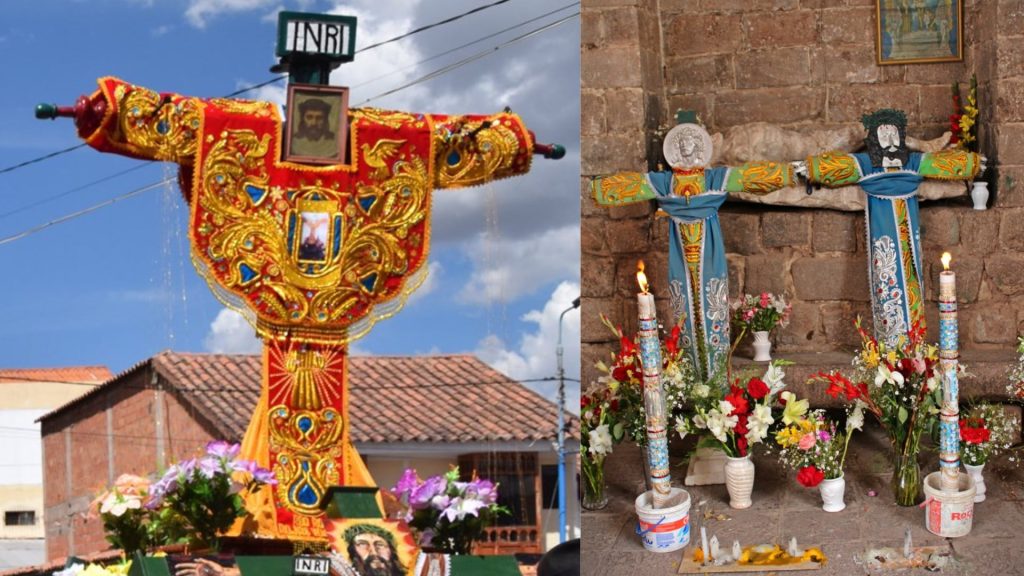
The all-night vigil is the central moment of the festivity. This takes place on the night of May 2nd. The cross is honored with various ceremonies that fuse solemnity and popular joy.
How is the Vigil of the Cross celebrated?
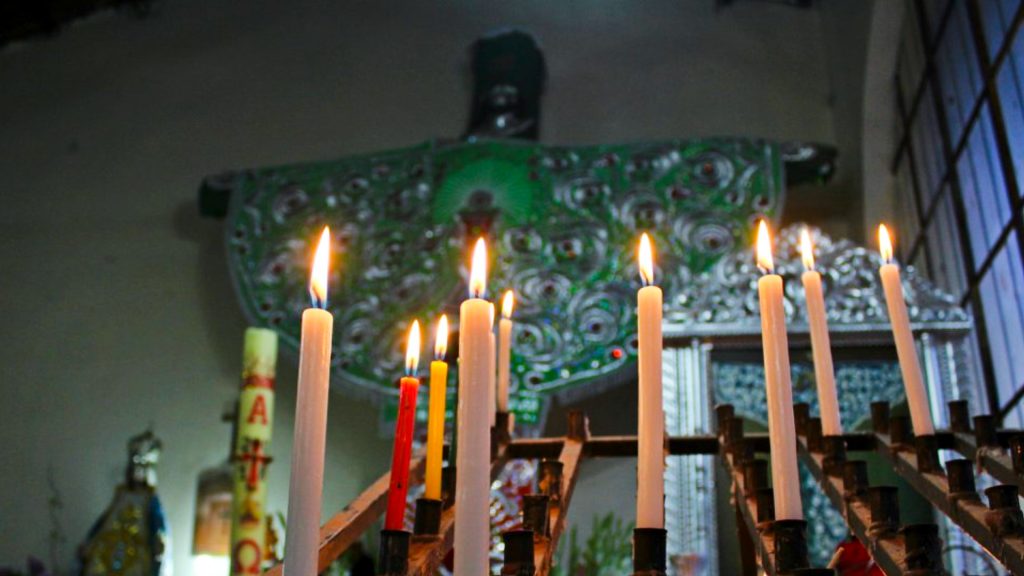
- Altars: Devotees set up altars with candles, flowers, and incense.
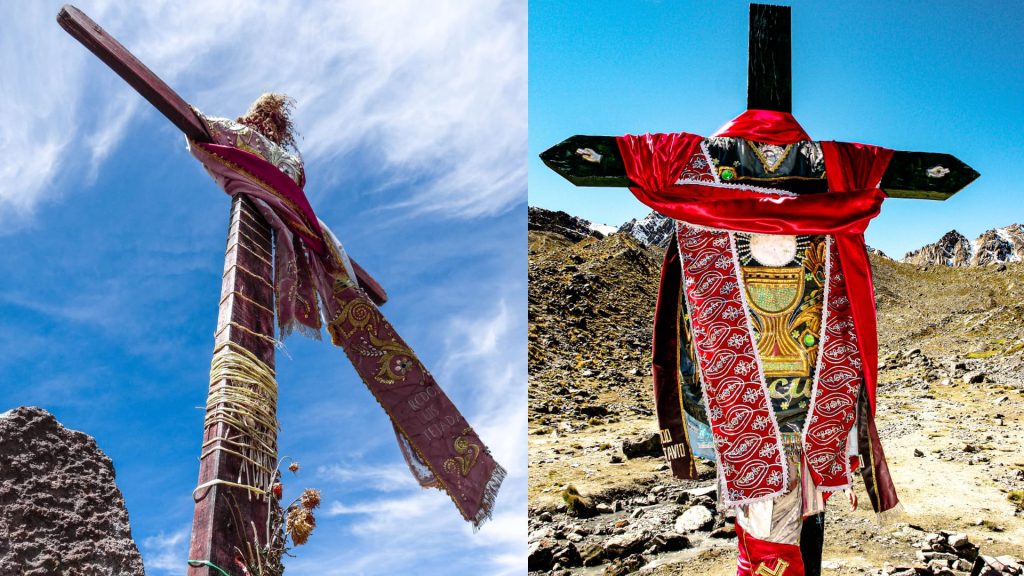
- Adornment: The cross is adorned with embroidered cloth and mirrors. These symbolize protection and spirituality.
- Vigil: Participants pray and sing through the night. This takes place in an atmosphere of devotion.
- Processions: Masses and processions with traditional music are common.
What happens during the Popular Festival?
- Feast: The night is filled with music and dance.
- Godparents: The cross’s families and godparents organize large gatherings.
- Typical Food: Traditional foods are served, such as roast suckling pig. Other specialties include chiriuchu and tamales.
- Traditional Drinks: Attendees enjoy chicha de jora and frutillada.
- Music: Musical groups liven up the evening with huaynos and marineras.
When is the final procession and blessing?
- The festivity continues on May 3rd.
- The cross is carried in a solemn procession.
- It is taken to local temples to receive a blessing.
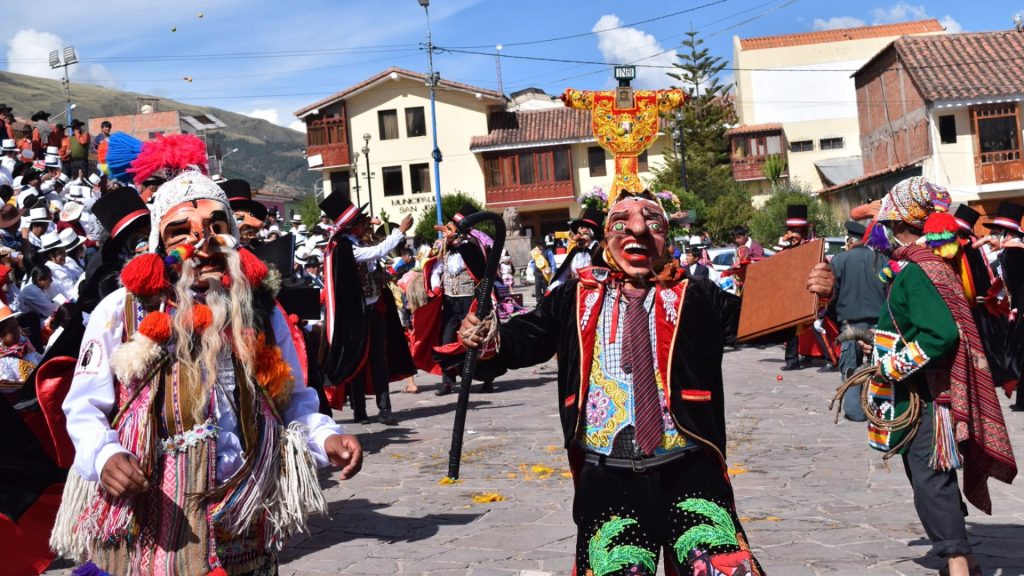
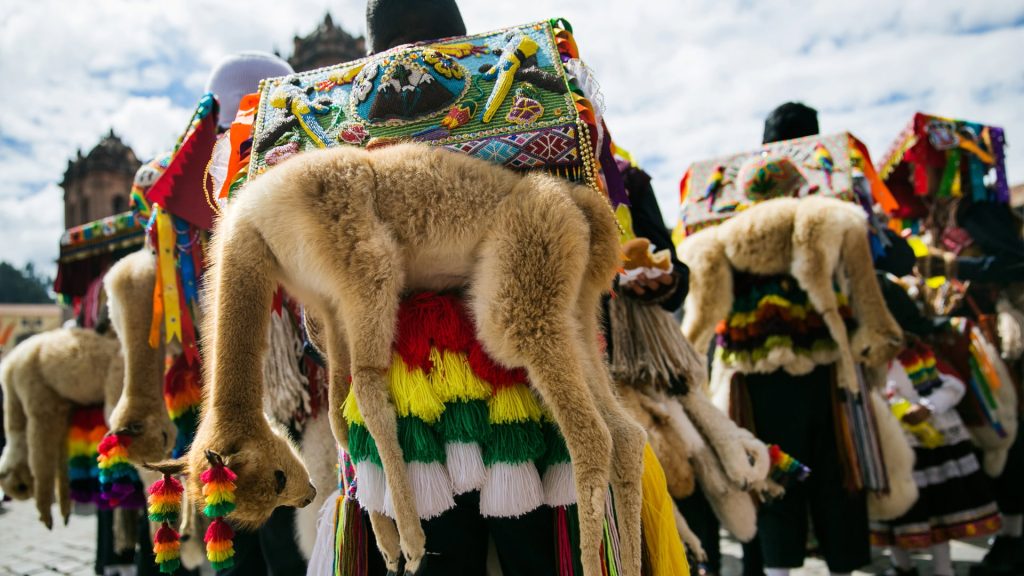
- Devotees wear colorful typical costumes.
- In some cases, the cross remains on a hill until the next celebration.
Where to Experience the Cruz Velacuy
The Cruz Velacuy Andean Tradition is widespread in the Cusco region. It is celebrated in the city and surrounding areas. This offers travelers various unique experiences. May is an ideal month to visit.
Which neighborhoods and towns are best to visit?
- Barrio de San Blas: This traditional sector of Cusco celebrates with great local fervor.
- Sacsayhuamán Surroundings: Many crosses on the surrounding hills are carried in procession by the faithful.
- Sacred Valley: Towns like Pisac and Ollantaytambo keep this tradition alive.
- Rural Communities: We often recommend exploring less touristy, authentic communities.
A Link between Sacred and Everyday Life
The Cruz Velacuy Andean Tradition is a unique experience. It is a powerful link between the sacred and everyday life. The festival unites communities in a space of faith and fraternity. It shows how ancestral traditions thrive in modern times. We are your local, direct operator committed to immersion. Book your cultural tour with us and discover the soul of Peru. Book your Half Day City Tour In Cusco today!