
Frequently Asked Questions: Booking and logistics
The Inca Trail requires booking 6 to 9 months in advance, as government permits are highly limited (500 per day, including all staff). This strict regulation ensures the preservation of the trail.
For other renowned treks like Salkantay or Lares, we recommend booking at least 3 months ahead, especially if your travel dates coincide with the high season (May to September). Early booking guarantees your preferred departure date and ensures meticulous service planning.
Unfortunately, Inca Trail permits are non-transferable and non-refundable. Once a permit is issued by the government with your specific name and date, changes are strictly forbidden.
If you need to change your date, you must cancel and rebook, which involves purchasing a new, full-price permit, subject to availability. Please check your travel insurance policy, as some cover non-refundable tour costs.
Due to the government’s strict policy, the Inca Trail permit fee is non-refundable. Ali Peru Treks will refund any remaining payments, excluding the permit cost and the initial deposit made to secure your booking.
We highly recommend purchasing comprehensive travel insurance that explicitly covers trek cancellation due to unforeseen medical or personal emergencies. Our team provides clear advice on insurance at the time of booking.
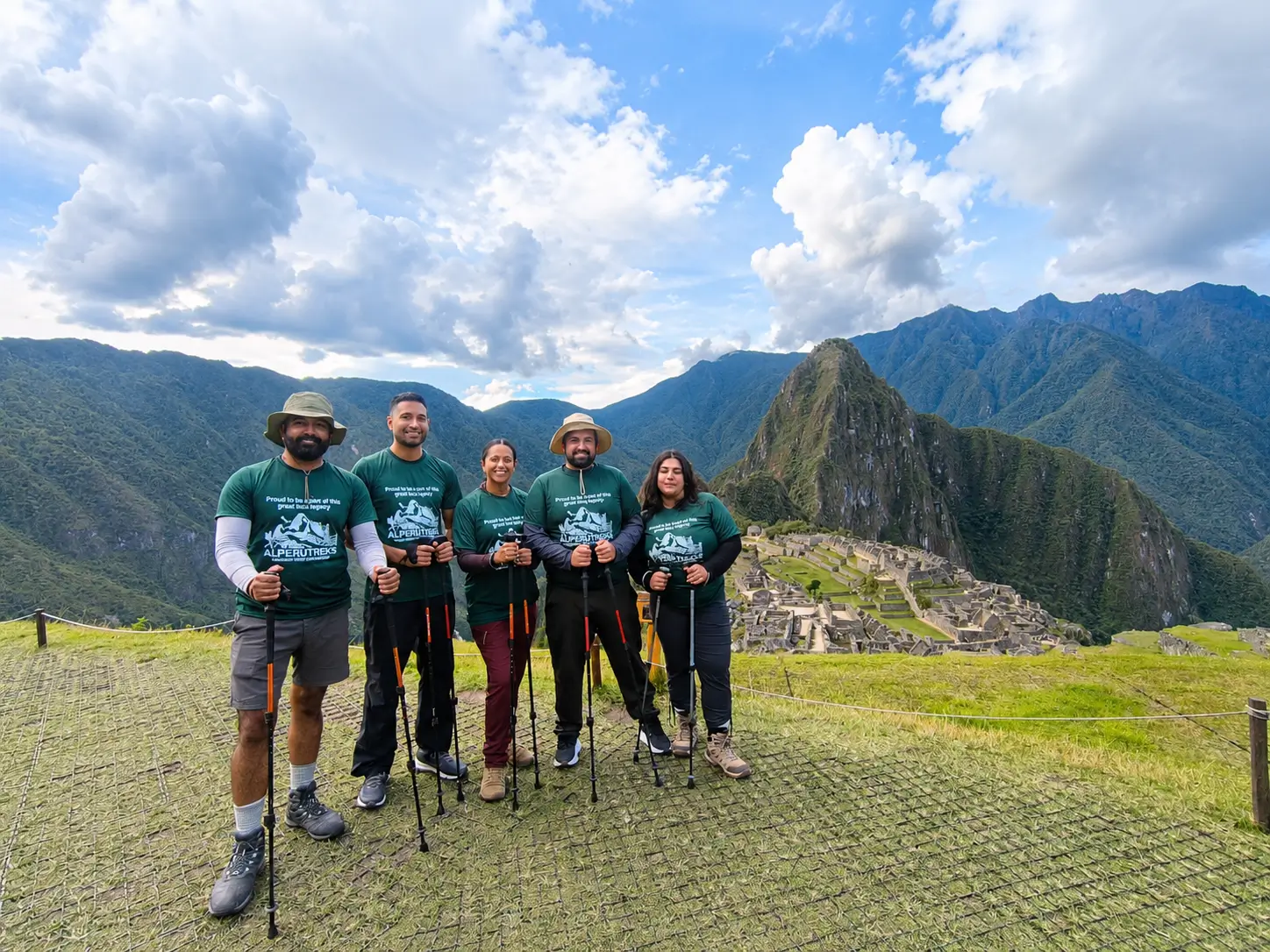
The Inca Trail is the legendary ancient pilgrimage route leading directly to Machu Picchu. This 4-day trek covers 42 kilometers (26 miles) of original paved Incan pathways, passing through high mountain passes, cloud forests, and several remote Inca ruins like Phuyupatamarca and Wiñay Wayna.
It offers an unparalleled combination of history, challenge, and breathtaking Andean scenery.
Expect challenging hiking days (6–8 hours daily), spectacular landscapes, and nights spent camping under the stars in high-quality tents provided by Ali Peru Treks. You will experience:
Expertise: Guided tours through ruins by our certified, local professionals.
Meticulous Service: Gourmet meals prepared by dedicated cooks.
Logistics: All camping gear (except sleeping bags), entry fees, and transportation included. The final reward is entering Machu Picchu through the Sun Gate (Inti Punku) at dawn.
The Inca Trail is rated moderately difficult. It requires a good level of physical fitness due to steep ascents, descents, and high altitude. The most challenging point is the ascent to the highest pass, Warmiwañusca (Dead Woman’s Pass), at 4,200 meters (13,780 feet). We strongly recommend proper training (cardiovascular workouts) for two months before your trip.
You can check real-time permit availability directly on the Peruvian government’s official Ministry of Culture website. Alternatively, contact the Ali Peru Treks booking team.
As an authorized operator, we maintain a live connection to the permit system and can confirm openings for your preferred dates immediately. Availability is crucial, so do not delay checking.
Our experienced team of porters, all under fair wage contracts (Sustainable and Responsible Tourism policy), carries all the communal camping equipment. This includes tents, cooking gear, food, and dining tents.
You will only carry your personal daypack containing water, snacks, cameras, and essential personal items.
You can safely leave any non-essential luggage (suitcases, travel bags) at your hotel or hostel in Cusco. Most hotels offer secure storage free of charge for clients undertaking a trek.
Ali Peru Treks can also store your items securely at our dedicated office facility if you prefer. Everything will be ready for you upon your return.
The mandatory pre-trek briefing, held the evening before departure at our office, is essential for meticulous preparation. During the 90-minute session, your guide will:
Review the itinerary, including daily distances and altitudes.
Inspect your gear and issue rented equipment.
Discuss altitude sickness prevention.
Collect any final payments and answer all remaining questions.
We strongly recommend a minimum of two full days (48 hours) of acclimatization in Cusco (3,400m / 11,152 ft) before starting any major high-altitude trek.
This allows your body to adjust to the reduced oxygen levels, significantly mitigating the risk of altitude sickness. Use these days for light activities like visiting the city center or the Sacred Valley (which is at a lower altitude).
Common symptoms include headaches, nausea, loss of appetite, and dizziness. Prevention is key:
Acclimatize: Spend 2+ days in Cusco.
Hydrate: Drink plenty of water and coca tea.
Avoid: Alcohol, heavy meals, and strenuous activity on arrival day. Your Ali Peru Treks guide is trained in high-altitude medicine and carries oxygen tanks for emergencies.
Safety is our top priority and part of our meticulous service. All Ali Peru Treks guides are certified in wilderness first aid and high-altitude rescue. We carry satellite phones or radios for remote communication and portable oxygen tanks.
Our porters maintain continuous communication regarding trail conditions. We also adhere strictly to the Peruvian government’s guidelines for all organized treks.
While there is no official upper age limit, participants should be in good physical health. The minimum age for the Inca Trail is 8 years old.
All minors must be accompanied by an adult who signs a liability waiver. We recommend that participants over 65 consult a doctor and choose a private tour option for a customized pace.
Our dedicated trek chefs provide full, multi-course meals (breakfast, lunch, dinner) that are surprisingly gourmet and abundant. You can expect a mix of traditional Peruvian and international cuisine, all prepared hygienically and designed for high-altitude energy.
We easily accommodate all dietary restrictions (vegetarian, vegan, gluten-free, etc.), just inform us during booking.
No, internet connection and cell phone signal are generally non-existent on the majority of the Inca Trail route. This is intentional, allowing for a genuine, immersive experience. Your guide carries satellite communication for emergencies only. Enjoy the digital detox! You will regain connection upon reaching Machu Picchu or Aguas Calientes.
We provide high-quality, professional equipment, reflecting our commitment to premium service:
Tents: North Face or similar 4-season tents (used for only 2 people, ensuring space).
Meals: Dining tent, tables, chairs, and all cooking supplies.
Safety: First-aid kit and oxygen tank.
Inclusions: Duffel bags for porters to carry your personal belongings (limit 7kg/15 lbs).
While you are welcome to bring your own, we highly recommend renting one of our specialized, high-quality, down sleeping bags rated for -15°C (5°F). These are professional, clean, and perfectly suited for the Andean climate.
Rental costs are provided during the booking process. We also offer inflatable air mattresses for added comfort.
We offer several secure payment methods for your convenience:
Wire Transfers: Direct bank transfer (requires lead time).
Credit/Debit Cards: Via secure online platforms (Visa, MasterCard, Amex).
PayPal: Fast and secure, though fees may apply. We require a deposit at the time of booking, with the remaining balance due during the mandatory pre-trek briefing in Cusco.
Feature
Inca Trail
Salkantay Trek
Duration
4 Days
4 or 5 Days
Permits
Highly Regulated (6-9 months)
No Limit (Easier to book)
Difficulty
Moderate to Difficult
Difficult (Higher Altitude)
Scenery
Inca Ruins and History
Mountain Peaks and Nature
Both lead to Machu Picchu, but Salkantay offers dramatic, high-altitude scenery, while the Inca Trail offers historical immersion.
If the Inca Trail is fully booked, we recommend two fantastic alternatives that still provide an authentic, high-quality trekking experience to Machu Picchu:
Salkantay Trek (4D/5D): A demanding, scenic route crossing the Salkantay Pass (4,650m).
Lares Trek (4D): A cultural trek through traditional Quechua communities, focused on local interaction and heritage.
Inca Quarry Trail (4D): A historical route visiting sites like Ollantaytambo before reaching Aguas Calientes.