Salkantay Trek 5 Days to Machu Picchu
The Salkantay Trek 5 Days is a camping trek from the high Andes to Machu Picchu. It crosses the Salkantay Pass at about 4,630 m (15,190 ft) in the shadow of the glaciated Salkantay peak and visits the turquoise Humantay Lake. From the pass you descend into cloud forest and coffee country, see Machu Picchu from the Inca site of Llactapata, and finish with a guided tour of the citadel.
Over five days and four nights you’ll hike about 70 km (43 miles). You spend three nights in mountain camps and one night in a hotel in Aguas Calientes. Horses carry the camping gear and your duffel bag, a cook prepares every meal on the trail, and no Inca Trail permit is needed. That makes Salkantay the classic choice when Inca Trail permits are sold out, or when you want bigger mountain scenery.
Overview
Salkantay Trek 5 Days Overview
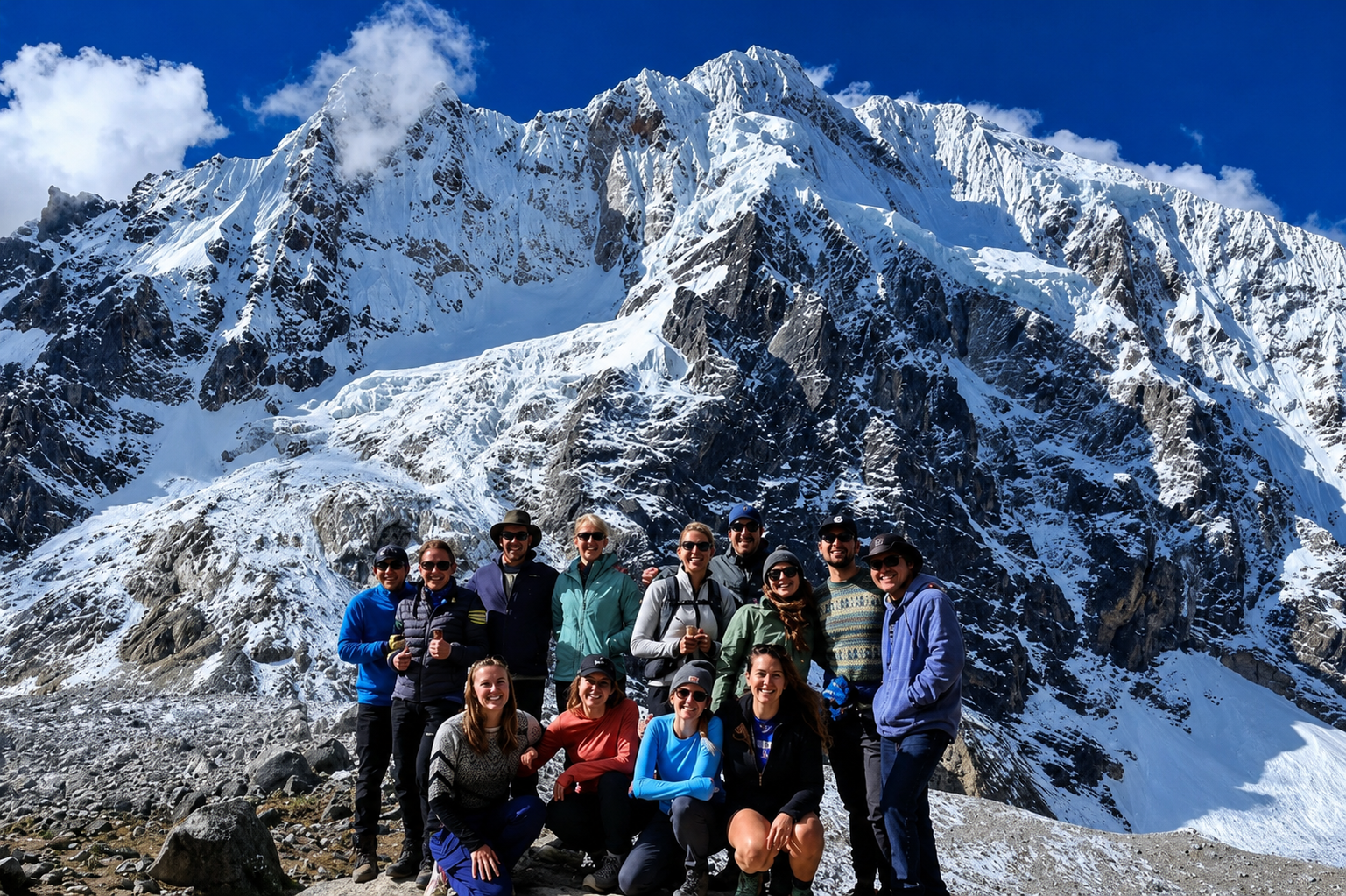
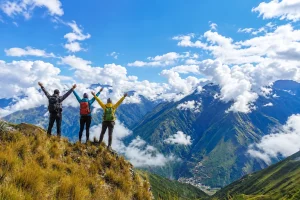
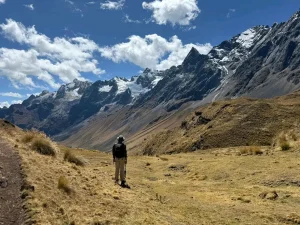
Salkantay is the highest peak of the Vilcabamba range, at about 6,271 m (20,574 ft). In Quechua it is often translated as “Savage Mountain”. The trek passes right beneath its glaciers. Few routes to Machu Picchu cover so much change in so little time: puna grasslands and glacial views on Days 1 and 2, then warm cloud forest, fruit orchards and coffee farms on Days 3 and 4. National Geographic listed the Salcantay Route first in its 2011 roundup of alternate routes to Machu Picchu.
This is a demanding trek. The second day climbs to the pass and then descends more than 1,700 m (5,600 ft). We plan the itinerary around that effort. On Night 1 we camp at Salkantaypampa, closer to the pass, which shortens the climb on Day 2. On Night 3 we camp at Lucmabamba, where lunch, camp and the coffee farm visit are all in one place, so you get a relaxed afternoon before the long final day.
Tour Highlights
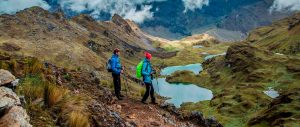
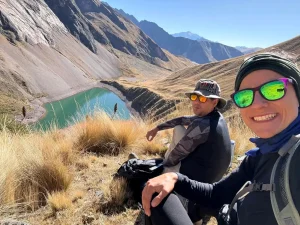
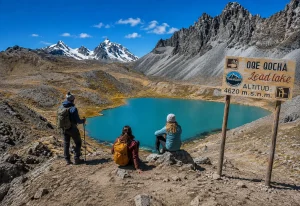
- Humantay Lake. Hike to a glacier-fed lake at about 4,200 m (13,780 ft) on Day 1, after the morning day-trip crowds have gone.
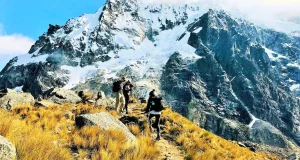
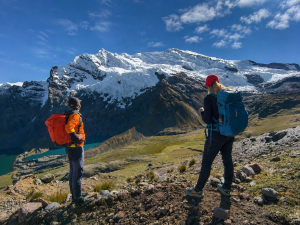
- Camp beneath Salkantay. Spend the first night at Salkantaypampa with close-up views of the glaciers.
- Cross the Salkantay Pass. Reach the highest point of the trek at about 4,630 m (15,190 ft), with a short traditional offering to the mountain led by your guide.
- From ice to cloud forest. Drop from snow and rock into a forest of orchids, bromeliads and giant ferns in a single day.
- Coffee farm visit. Pick, roast and taste coffee with a local family at Lucmabamba.
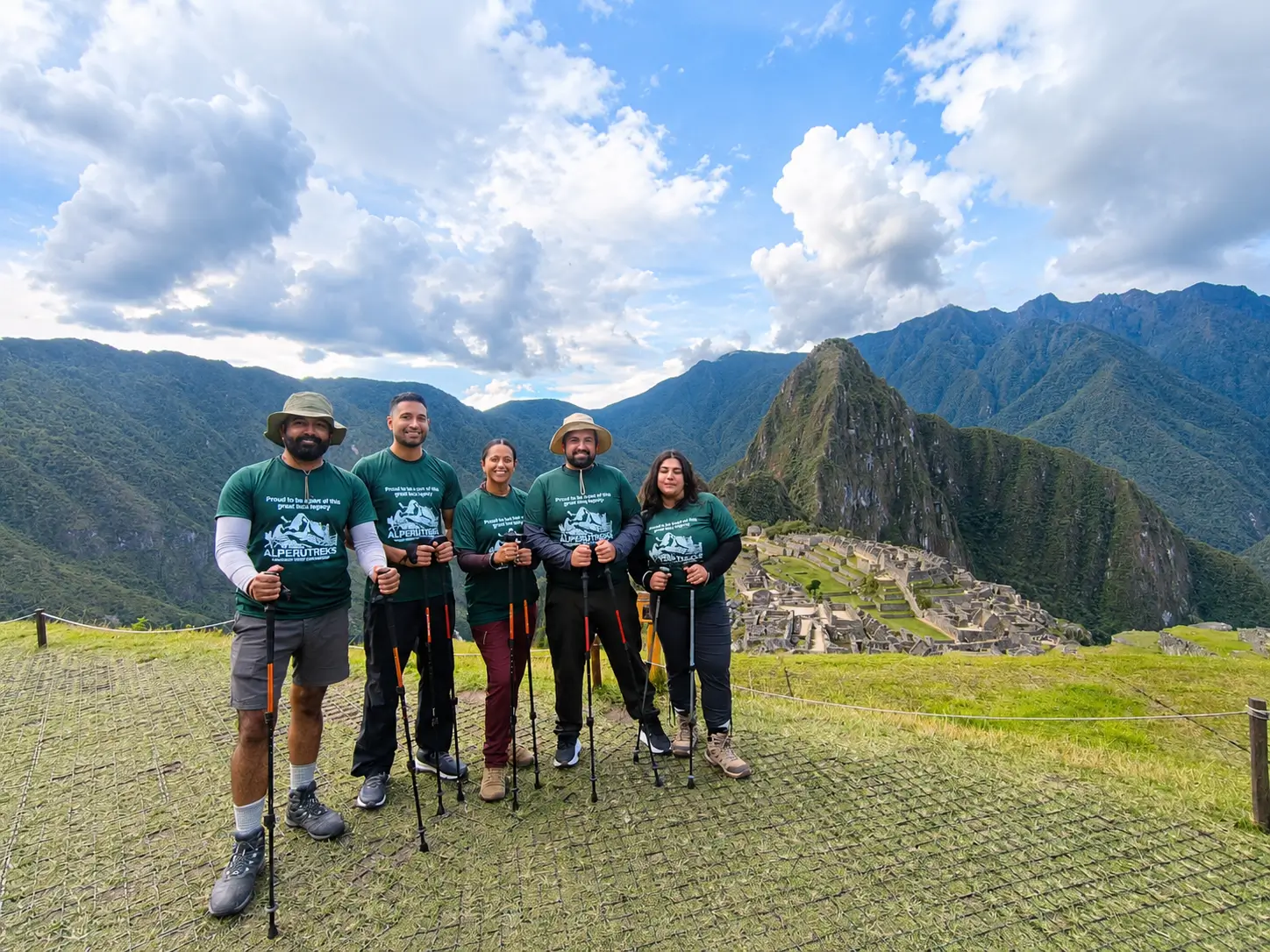
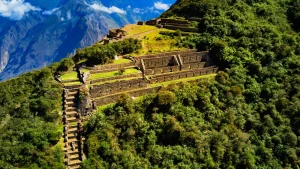
- Machu Picchu from Llactapata. See the citadel and Huayna Picchu across the valley from an Inca site that few visitors reach.
- Guided tour of Machu Picchu. End with an in-depth tour of the citadel on Circuit 2.
Trip Facts at a Glance
| Detail | Salkantay Trek 5 Days |
| Duration | 5 days, 4 nights (3 nights camping, 1 night in a hotel) |
| Total trekking distance | About 70 km (43 mi) |
| Highest point | Salkantay Pass, about 4,630 m (15,190 ft) |
| Lowest point | Hidroeléctrica, about 1,800 m (5,900 ft) |
| Difficulty | Challenging (Day 2 is the hardest day) |
| Start and finish | Hotel pickup in Cusco; return to your Cusco hotel |
| Group size | 2 to 12 travelers (usually 2 to 8) |
| Support | Guide, cook and kitchen team, muleteers and horses |
| Permits | No Inca Trail permit required |
| Machu Picchu | Guided tour on Circuit 2 (Circuit 3 if Circuit 2 is sold out) |
| Return | Train from Aguas Calientes to Ollantaytambo, private transfer to Cusco |
| Season | Year-round, including February |
| Price | From US$650 per person (group service) |
Who This Trek Is For
The Salkantay Trek is a good fit for fit, active travelers who want a real mountain experience on the way to Machu Picchu. You should be comfortable hiking six to nine hours a day on mountain trails for four days in a row, and sleeping at camps that drop to freezing in the highlands. You don’t need technical climbing skills, but acclimatization is essential. Plan at least two full days in Cusco before you start.
Salkantay Trek vs Inca Trail
| Salkantay Trek 5 Days | Classic Inca Trail 4 Days | |
| Highest point | About 4,630 m (15,190 ft) | 4,215 m (13,830 ft) |
| Distance | About 70 km (43 mi) | About 42 km (26 mi) |
| Permits | Not required | Government permit required; limited daily numbers |
| Nights | 3 camping + 1 hotel | 3 camping |
| Scenery | Glaciers, high lake, cloud forest, coffee farms | Inca sites, cloud forest, Sun Gate arrival |
| Arrival at Machu Picchu | By bus from Aguas Calientes on Day 5 | On foot through the Sun Gate |
| February | Open | Closed |
Still deciding? Read our Salkantay Trek vs Inca Trail comparison or see the Classic Inca Trail 4 Days. If you have one day less, the Salkantay Trek 4 Days covers the same route at a faster pace.
Why Hike Salkantay with Ali Peru Treks
- Locally owned and operated. We are a Cusco-based operator and run our own departures. We don’t pass travelers to other agencies, and a confirmed booking for two travelers departs with two travelers.
- Good food on the trail. Our cooks prepare hot breakfasts, lunches and dinners, plus afternoon tea and snacks. Vegetarian, vegan and gluten-free diets are covered at no extra cost.
- Comfortable camps. We use four-season tents designed for four people, shared by two, plus a dining tent with tables and chairs and a pillow for every hiker.
- Prepared for altitude. Each group carries emergency oxygen, a full first aid kit and a satellite phone.
- Small groups. A maximum of 12 travelers, usually 2 to 8.
Fair treatment of our team. We pay our guides, cooks and muleteers fairly and promptly, and we work to keep the trail clean.
Itinerary
Salkantay Trek 5 Days Itinerary
Day 1: Cusco to Soraypampa, Humantay Lake and Salkantaypampa
We pick you up at your hotel at about 4:30 AM and drive about two hours to the village of Mollepata for breakfast. Mollepata is also the last place to buy snacks and small supplies. A further hour by road brings us to Soraypampa, at about 3,900 m (12,800 ft), beneath the glaciers of Humantay and Salkantay.
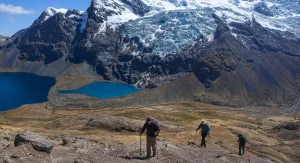
From Soraypampa we hike to Humantay Lake: about 30 minutes on gentle ground, then an hour of steady climbing. The lake sits at about 4,200 m (13,780 ft), fed by the glacier above it. Your guide explains the geology and the lake’s meaning in Andean tradition. After about an hour’s descent, lunch is ready at Soraypampa.
In the afternoon, we walk about two hours up the valley to our camp at Salkantaypampa, about 4,100 m (13,450 ft), facing Salkantay. Your tents are already set up when you arrive, with hot drinks waiting. It is a cold, clear place to watch the evening light on the glacier before dinner.
| Day 1 Details | |
| Hiking distance | About 11 km (6.8 mi) |
| Hiking time | 5 to 6 hours |
| Highest point | Humantay Lake, about 4,200 m (13,780 ft) |
| Camp | Salkantaypampa, about 4,100 m (13,450 ft) |
| Meals | Breakfast, lunch, afternoon tea, dinner |
| Difficulty | Moderate (acclimatization day) |
Day 2: Salkantay Pass, Wayracmachay and Collpapampa
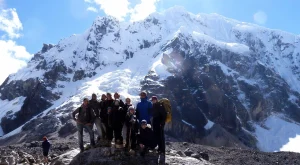
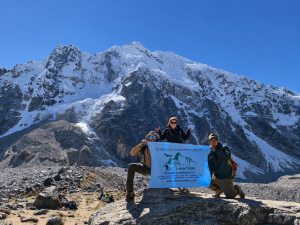
We wake you early with hot coca tea at your tent. After breakfast, we climb the switchbacks known as the Seven Snakes (Siete Culebras), about three hours of steady ascent to the Salkantay Pass, about 4,630 m (15,190 ft). At the top, your guide leads a short offering to the Apu (mountain spirit) while you take in the hanging glaciers of Salkantay.
The descent to Wayracmachay, about 3,900 m (12,800 ft), takes around three hours, and a hot lunch is waiting there. In the afternoon, a further two and a half hours of walking brings a dramatic change: the air warms, rock and snow give way to cloud forest, and orchids, mosses and giant ferns line the trail. We camp at Collpapampa, about 2,900 m (9,510 ft).
| Day 2 Details | |
| Hiking distance | About 18 km (11.2 mi) |
| Hiking time | 7 to 9 hours |
| Highest point | Salkantay Pass, about 4,630 m (15,190 ft) |
| Camp | Collpapampa, about 2,900 m (9,510 ft) |
| Meals | Breakfast, lunch, dinner |
| Difficulty | Challenging (the hardest day of the trek) |
Day 3: Collpapampa to La Playa and Lucmabamba Coffee Farm
Today is gentler. We follow the Santa Teresa River downstream through cloud forest, waterfalls and small farms growing passion fruit, bananas and avocados, passing the settlement of La Playa. We reach our camp at Lucmabamba, about 2,000 m (6,560 ft), in time for lunch. Lunch and camp are in the same place, so you can rest, wash and take a siesta in the early afternoon.
Later in the afternoon, we visit a family-run organic coffee farm next to camp. You’ll learn how coffee is grown, then help pick, roast and grind the beans before tasting the result. Dinner is at camp.
| Day 3 Details | |
| Hiking distance | About 16 km (9.9 mi) |
| Hiking time | 7 to 8 hours |
| Starting point | Collpapampa, about 2,900 m (9,510 ft) |
| Camp | Lucmabamba, about 2,000 m (6,560 ft) |
| Activity | Organic coffee farm visit |
| Meals | Breakfast, lunch, dinner |
| Difficulty | Moderate |
Day 4: Lucmabamba to Llactapata, Hidroeléctrica and Aguas Calientes
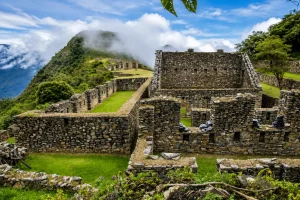
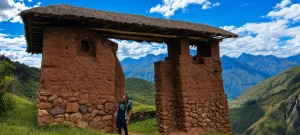
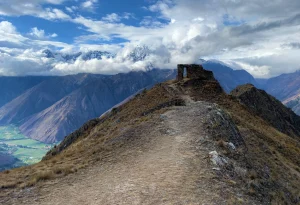
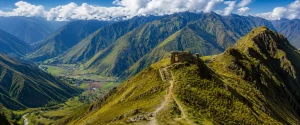
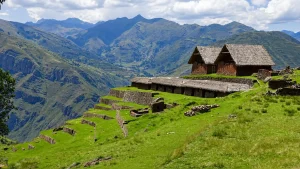
We start early to climb in the cooler morning air. A section of Inca path leads uphill for about three hours through dense forest to the ridge above Lucmabamba. From the ridge you get your first view of Machu Picchu. A little further on is the Llactapata archaeological site, about 2,750 m (9,020 ft). Hiram Bingham first recorded it in 1912. It lies about 5 km (3 miles) west of Machu Picchu and gives a rare side view of the citadel and Huayna Picchu across the valley.
From Llactapata, a steep descent of two to two and a half hours leads down to the Aobamba Valley and Hidroeléctrica, about 1,800 m (5,900 ft), where we share a final lunch with the trail team. The last stretch is a mostly flat walk of about two and a half to three hours beside the railway and the Urubamba (Vilcanota) River to Aguas Calientes, at 2,040 m (6,690 ft). We check in to the hotel and have dinner in town.
| Day 4 Details | |
| Hiking distance | About 24 km (15 mi), the longest day by distance |
| Hiking time | 7 to 9 hours |
| Highest point | Llactapata area, about 2,750 m (9,020 ft) |
| Overnight | 3-star hotel in Aguas Calientes, 2,040 m (6,690 ft) |
| Meals | Breakfast, lunch, dinner |
| Difficulty | Moderate (long day with a steep descent) |
Day 5: Machu Picchu Guided Tour and Return to Cusco
After an early breakfast, leave your duffel bag at the hotel and take only a small daypack. Go up to Machu Picchu by bus (about 25 to 30 minutes) or on foot up the stairs from the valley floor. Your entry time is printed on your Machu Picchu ticket.
Inside the citadel, at 2,430 m (7,970 ft), your guide leads a tour of about two to three hours on Circuit 2. You start at the panoramic viewpoints for the classic photo of Machu Picchu, then walk through the urban sector, its temples and plazas. If Circuit 2 is sold out for your date, we book Circuit 3. See how the Machu Picchu circuits work.
If you added Huayna Picchu (2,693 m / 8,835 ft) or Machu Picchu Mountain, you’ll climb at the time shown on that ticket.
Take the bus back down to Aguas Calientes at least two hours before your train. Lunch is on your own. The train to Ollantaytambo takes about two hours, and our driver meets you at the station for the drive of about two hours back to your hotel in Cusco.
| Day 5 Details | |
| Main activity | Guided tour of Machu Picchu (about 2 to 3 hours) |
| Machu Picchu altitude | 2,430 m (7,970 ft) |
| Optional | Huayna Picchu, 2,693 m (8,835 ft), or Machu Picchu Mountain |
| Return | Train to Ollantaytambo (about 2 hours), private transfer to Cusco (about 2 hours) |
| Meals | Breakfast |
| Difficulty | Easy |
Includes
What’s Included in the Salkantay Trek 5 Days
Included
- Pre-trek briefing in Cusco the evening before your trek,at 6:00 p.m., your guide will visit you directly at your hotel to give you a detailed overview of the entire route and answer all of your questions.
- Professional English-speaking guide with university training in tourism and Andean history
- Cook and kitchen team preparing all meals on the trek, with vegetarian, vegan and gluten-free options at no extra cost
- Muleteers and horses to carry the group equipment, food and your duffel bag
- Duffel bag for up to 7 kg (15 lb) of personal gear, carried by horses
- Four-season mountain tents (four-person tents shared by two), dining tent with table and chairs, and full kitchen equipment
- Sleeping pillow, rain poncho and backpack rain cover
- Meals: 5 breakfasts, 4 lunches, 4 dinners and afternoon tea with snacks on camping days
- Drinking water, boiled and filtered, from lunch on Day 1 until the end of the trek
- Organic coffee farm visit at Lucmabamba on Day 3
- Private transport from your Cusco hotel to the trailhead
- One night at a 3-star hotel in Aguas Calientes (Night 4)
- Machu Picchu entrance ticket (Circuit 2, or Circuit 3 if Circuit 2 is sold out) and a guided tour
- Bus ticket down from Machu Picchu to Aguas Calientes
- Return train ticket from Aguas Calientes to Ollantaytambo (Expedition or Voyager class)
- Private transfer from Ollantaytambo station to your hotel in Cusco
- Emergency oxygen, first aid kit.
Not Included
- Sleeping bag (available to rent)
- Trekking poles (available to rent)
- Bus ticket up from Aguas Calientes to Machu Picchu, or walk up instead
- Lunch on Day 5 in Aguas Calientes
- Huayna Picchu or Machu Picchu Mountain tickets
- Travel insurance (required, see Travel Information)
- Tips for your guide, cooks and muleteers
- Hot showers at camps, where offered by local families for a small fee
- Snacks, drinks and personal expenses
Optional Extras and Upgrades
- Trekking poles: US$15 per pair
- Sleeping Bag Rental: $25 USD per person
- Huayna Picchu or Machu Picchu Mountain: US$80 per person, subject to availability
- Train upgrade: available on request
Packing List
Salkantay Trek Packing List
You’ll organize your gear in three places. Your daypack stays with you while you hike. Your duffel bag (7 kg / 15 lb, provided at the briefing) travels by horse and is waiting at each camp. Everything else stays at your hotel in Cusco or in our office storage. For a full gear guide, see our Salkantay Trek packing list.
Your Daypack
Use a 25 to 30 L pack. Machu Picchu does not allow bags larger than 40 × 35 × 20 cm (16 × 14 × 8 in), so a small pack also saves you a trip to the storage lockers on Day 5.
- Original passport, the same one used for your booking, plus your student card if you booked a student rate
- Water: 2 to 3 liters in reusable bottles or a hydration bladder. Bring your own water for the first morning; we provide drinking water from lunch on Day 1.
- Rain jacket or poncho. Rain is possible in the cloud forest in any month.
- Warm layer, hat and gloves for the pass on Day 2
- Sun protection: high-SPF sunscreen, sun hat and sunglasses
- Snacks for the climbs
- Toilet paper and a small bag to pack out waste
- Headlamp, in case you reach camp near dusk on Day 2
- Cash in soles (around S/ 300–500) for tips, showers, snacks and drinks
Your Duffel Bag (Carried by Horses)
The limit is 7 kg (15 lb), and it includes your sleeping bag (about 2 kg). We keep to this limit to protect our horses and muleteers.
- Sleeping bag rated to about –15°C / 5°F (rentals available)
- Cold-weather layers: thermal base layers, a warm fleece and a down jacket. The first two nights can drop to freezing.
- Clothing: three moisture-wicking shirts, two pairs of hiking pants, underwear and four pairs of wool hiking socks
- Camp shoes: light sneakers or sandals
- Quick-dry towel and a basic toiletry kit with biodegradable soap
- Power bank. There is no electricity at the camps.
Health and Personal Care
- Insect repellent, especially for Days 3 and 4 in the cloud forest
- Lip balm and moisturizer. The highland air is very dry.
- Hand sanitizer and wet wipes
- Personal medication, including any altitude medication prescribed by your doctor, and a small blister kit
Footwear and Trekking Poles
- Waterproof, broken-in hiking boots with good ankle support. Don’t start the trek in new boots.
- Trekking poles are a big help on the long descents of Days 2 and 4. Walking sticks are not allowed inside Machu Picchu, so leave them at your hotel on Day 5.
Travel Info
Important Travel Information for the Salkantay Trek Peru
Pre-Trek Briefing
Attendance is mandatory. Your guide meets you in Cusco at 6:00 the evening before the trek, at a place we confirm when you book. At the briefing you meet your group, go through each day of the route, the safety plan and the weather forecast, and receive your duffel bag.
Bring your passport. Anything you won’t need on the trek can be left at your hotel or in our office storage.
How Difficult Is the Salkantay Trek 5 Days
We rate this trek as challenging. Day 2 is the hardest day: about three hours of climbing to 4,630 m (15,190 ft), followed by a long descent of about 1,700 m (5,600 ft) to camp. Day 4 is the longest day by distance, at about 24 km (15 miles), with a steep descent from Llactapata followed by a flat walk beside the railway.
Regular cardio training and long hikes with some climbing in the months before your trip make a real difference.
Altitude and Acclimatization
The trek spends its first two days above 3,900 m (12,800 ft). Arrive in Cusco, at about 3,400 m (11,150 ft), at least two full days before the trek. Walk slowly, drink plenty of water and avoid alcohol in your first days. Coca tea is a traditional local remedy many travelers find helpful.
Talk to your doctor about altitude medication before you travel. Your guide checks how everyone is feeling every day and carries emergency oxygen. If symptoms don’t improve, the safest response is to descend. See our guide to acclimatizing in Cusco.
Weather and Best Time to Go
- Dry season (April or May to October): The most stable weather and the clearest views of Salkantay and Humantay. Nights in the highlands are very cold.
- Rainy season (November to March): Greener scenery, fewer people and more rain, with the heaviest rain usually from January to March. Trails can be muddy and slippery.
- Open year-round: Unlike the Inca Trail, the Salkantay Trek doesn’t close in February.
Expect a wide range of conditions in five days. Nights at Salkantaypampa can fall below freezing, while days in the cloud forest are warm and humid, often around 25°C (77°F).
Permits and Booking
The Salkantay Trek doesn’t require an Inca Trail permit. Machu Picchu entrance tickets and train seats are limited, though, especially from May to August. We recommend booking two to three months ahead, and earlier if you want Huayna Picchu or Machu Picchu Mountain.
Camps, Showers and Hotel
You’ll spend three nights at mountain camps with basic toilet facilities and one night at a 3-star hotel in Aguas Calientes with a private bathroom and hot shower. At some camps, such as Collpapampa, local families offer hot showers for a small fee paid locally. There is no electricity at the camps, so bring a power bank.
Travel Insurance
Ali Peru Treks requires all Salkantay hikers to have travel insurance. Your policy should cover trekking up to 5,000 m (16,400 ft), emergency evacuation, medical care, and trip cancellation or delay.
Machu Picchu Rules to Know
- Bags larger than 40 × 35 × 20 cm (16 × 14 × 8 in) are not allowed inside.
- Walking sticks, tripods, selfie sticks and umbrellas are not allowed.
- Food and drinks are not allowed in the citadel.
- Entry is at the time printed on your ticket.
Wildlife and Plants Along the Route
In the high Andes, look for Andean condors overhead (one of the largest flying birds in the world), along with vizcachas among the rocks and the occasional Andean fox. The highland slopes are covered in ichu grass and patches of Polylepis woodland, among the highest-growing trees in the world.
In the cloud forest you’ll find orchids, including the waqanki, bromeliads and many hummingbird species. With luck, you may also see the Andean cock-of-the-rock, Peru’s national bird. Spectacled bears live in these forests but are rarely seen.
Responsible Travel
- We pack out all trash and ask you to do the same.
- Stay on the trail, don’t feed animals and don’t pick plants, especially orchids.
- Bring reusable water bottles. We don’t use single-use plastic bottles on our treks.
- Respect the duffel weight limit. It protects the horses that carry your gear.
Map
Salkantay Trek Map and Elevation Profile
The Salkantay Trek starts at Soraypampa, at the end of the road from Mollepata. It visits Humantay Lake, then climbs up the valley to Salkantaypampa and over the Salkantay Pass. From the pass it descends through Wayracmachay to Collpapampa and follows the Santa Teresa River down to La Playa and Lucmabamba. On Day 4 it climbs over the ridge to Llactapata, drops into the Aobamba Valley at Hidroeléctrica and follows the railway to Aguas Calientes, below Machu Picchu.


Price
Salkantay Trek 5 Days Price
All prices are per person in US dollars and include the services listed under What’s Included.
Group Service
| Service | Price per person |
| Shared group departure (2 to 12 travelers) | US$650 |
Private Service
| Group size | Price per person |
| 2 travelers | US$950 |
| 3 travelers | US$900 |
| 4 travelers | US$850 |
| 5 travelers | US$800 |
| 6 travelers | US$750 |
| 7 travelers | US$700 |
| 8 or more travelers | US$650 |
Discounts and Extras
- Student and youth discount: US$30 off per person for current university students and travelers aged 17 and under. Email a clear copy of your student ID or passport when you book.
- Trekking poles: US$15 per pair
- Sleeping bag rental: price on request
- Huayna Picchu or Machu Picchu Mountain: US$80 per person, subject to availability
Machu Picchu tickets and train seats are limited, so book early for May to August. Contact us to check your dates.
Faq
Salkantay Trek 5 Days FAQs
It is a challenging trek. Day 2 is the hardest: a climb of about three hours to the 4,630 m (15,190 ft) pass, followed by a long descent. Day 4 is the longest day, at about 24 km (15 miles). Good fitness and at least two days of acclimatization in Cusco are essential.
For most people, yes. The Salkantay Pass is about 400 m (1,300 ft) higher than Dead Woman’s Pass on the Inca Trail, and the total distance is longer.
The Salkantay Pass, at about 4,630 m (15,190 ft), reached on Day 2. The highest camp is Salkantaypampa, at about 4,100 m (13,450 ft).
No. Unlike the Inca Trail, the Salkantay route doesn’t require a government trekking permit. You still need a Machu Picchu entrance ticket, which is included.
Two to three months ahead is usually enough. Book earlier for May to August, or if you want Huayna Picchu or Machu Picchu Mountain.
The dry season, from about April or May to October, has the clearest mountain views. The trek is open all year, including February, but expect rain and muddy trails from January to March.
Yes. We hike to Humantay Lake on the afternoon of Day 1, after most day-trip groups have left.
Three nights in four-season tents at Salkantaypampa, Collpapampa and Lucmabamba, and one night in a 3-star hotel in Aguas Calientes.
No, but both are available to rent. Trekking poles cost US$15 per pair.
Up to 7 kg (15 lb) in the duffel bag we provide, including your sleeping bag. You carry only a daypack.
Yes. All meals from breakfast on Day 1 to breakfast on Day 5 are included, except lunch on Day 5. We also serve afternoon tea with snacks on camping days.
Yes. We provide boiled and filtered water from lunch on Day 1. Bring your own water for the first morning, plus reusable bottles or a hydration bladder.
The camps have basic toilets. At some camps, such as Collpapampa, local families offer hot showers for a small fee. Your hotel in Aguas Calientes has a private bathroom.
Your guide monitors the group daily and carries emergency oxygen and a first aid kit. If symptoms don’t improve, the guide will arrange a descent, which is the most effective treatment.
Yes. Ali Peru Treks requires insurance that covers trekking up to 5,000 m (16,400 ft) and emergency evacuation.
No. The Sun Gate arrival is part of the Inca Trail. On the Salkantay Trek you reach Aguas Calientes on Day 4 and go up to Machu Picchu by bus or on foot on Day 5.
A minimum of 2 and a maximum of 12 travelers, usually 2 to 8.
By train from Aguas Calientes to Ollantaytambo (about two hours), then by private van to your hotel in Cusco (about two hours).
Featured Tours & Treks
Discover hand-picked tours and treks to Machu Picchu and Peru’s most unforgettable destinations.
What Our Travelers Say About Ali Perú Treks
Discover the experiences of travelers who have explored Peru with Ali Perú Treks. From the legendary Inca Trail to the breathtaking landscapes of the Andes and the wonders of Machu Picchu, our guests share their stories, honest feedback, and unforgettable moments. Their reviews reflect our commitment to personalized service, knowledgeable local guides, and meaningful adventures crafted with care from start to finish.
Our Blogs
Blogs that provide information and tips for planning the perfect trip to Peru and Machu Picchu.