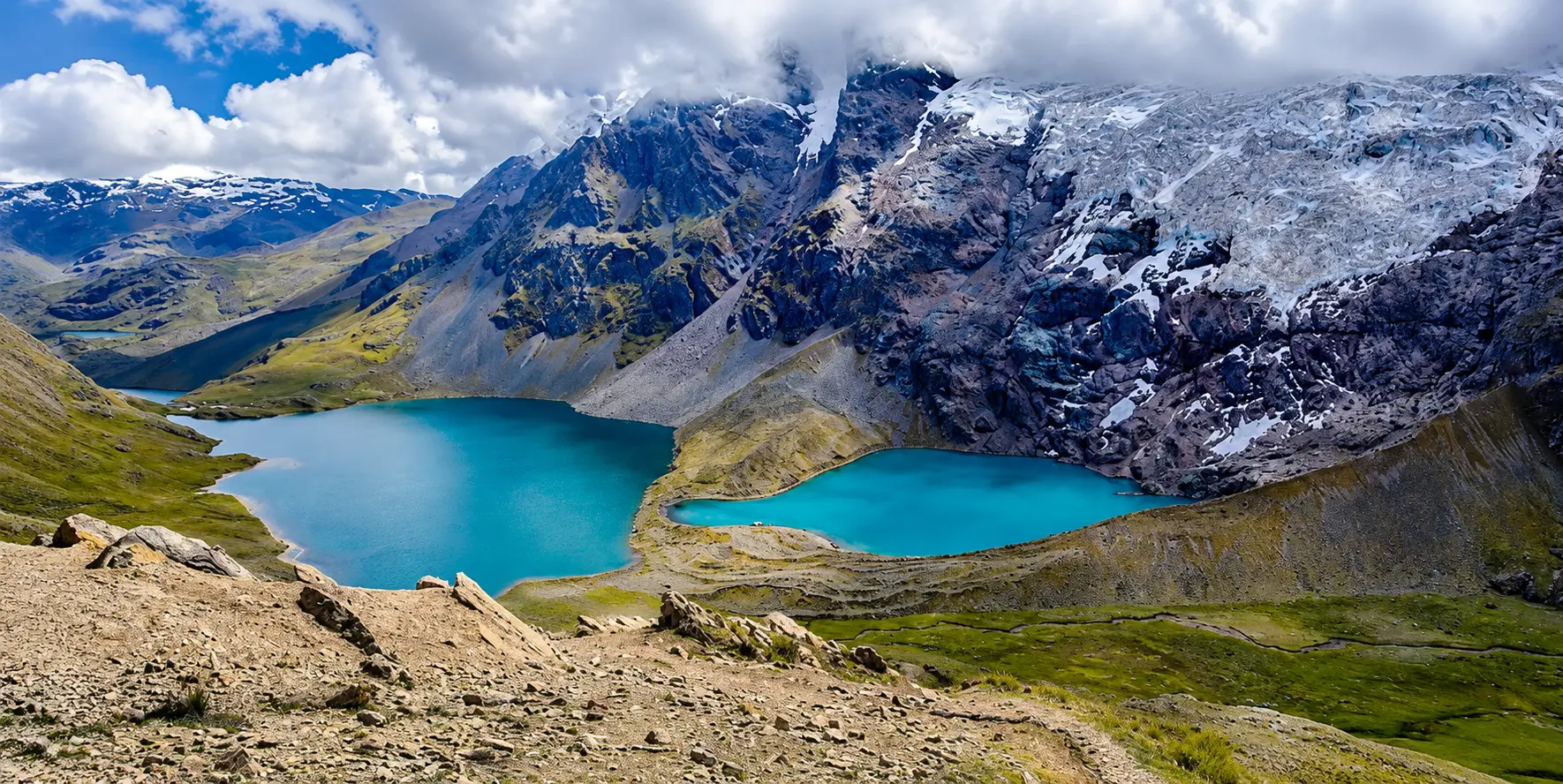
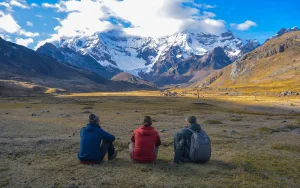
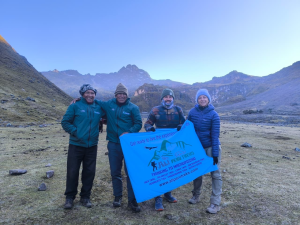
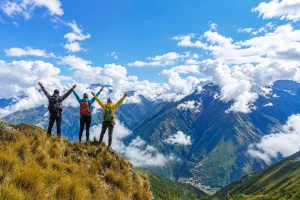
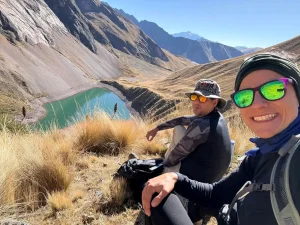
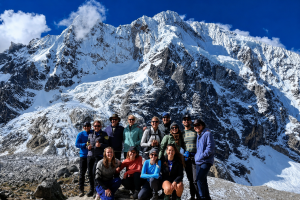
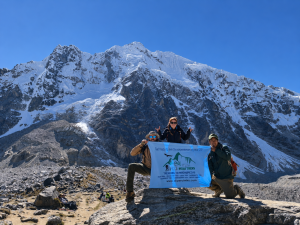
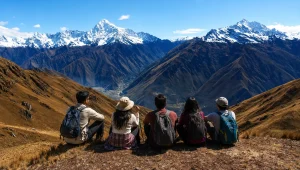
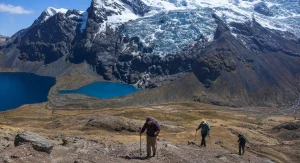
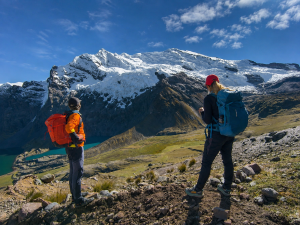
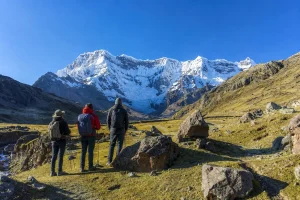
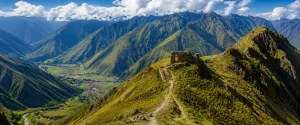
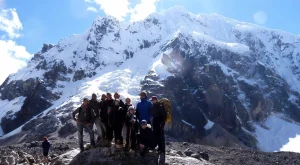
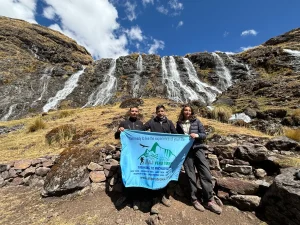
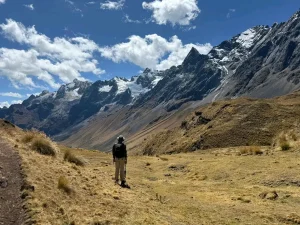
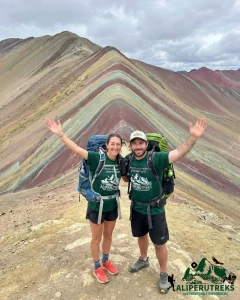
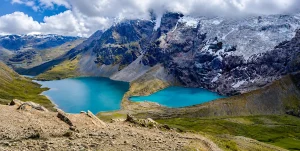
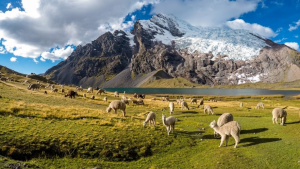
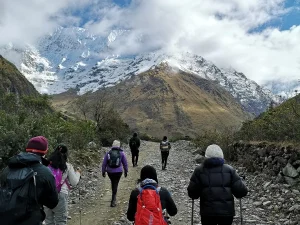
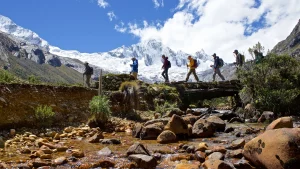
The Ausangate 7 Lakes hike is a full-day expedition into the heart of the Vilcanota Mountain Range, bringing you face-to-face with the sacred Apu Ausangate — the highest peak in the Cusco region. As your direct local operator, Ali Perú Treks guides you safely through seven turquoise and emerald glacial lagoons at altitudes above 4,600 m, with oxygen support and constant altitude monitoring for your safety.
Beyond the Ausangate 7 Lakes trek itself, the day includes a soak in Pacchanta’s medicinal hot springs, encounters with wild alpacas and vicuñas, and genuine connection with a traditional Quechua community. Less crowded than Rainbow Mountain and just as spectacular, this is Cusco’s most rewarding one-day hike for travelers seeking raw Andean wilderness.
Overview
Ausangate 7 Lakes Hike Overview
The Ausangate 7 Lakes hike is a full-day trek in the Cordillera Vilcanota, part of the Peruvian Andes southeast of Cusco. The route starts in the Quechua village of Pacchanta, at the base of Apu Ausangate (6,372 m / 20,905 ft), the highest and most sacred mountain in the Cusco region.
Over roughly 10 km (6.2 mi) and 5 hours of hiking, the trail passes seven glacial lagoons formed by meltwater from the Ausangate glacier system, each fed by a different moraine basin and showing a distinct color caused by mineral sediment and glacial flour suspended in the water.
Because the hike takes place above 4,300 m (14,100 ft) and reaches a maximum altitude of roughly 4,600–4,850 m (15,100–15,900 ft), it is classified as a high-altitude trek rather than a casual sightseeing tour. Acclimatization in Cusco (elevation 3,400 m) for at least 2 days before the hike is the standard recommendation among local operators.
Tour Highlights
Apu Ausangate: direct views of the glacier and peak considered the most important Apu (sacred mountain spirit) in the Cusco region within Andean cosmology.
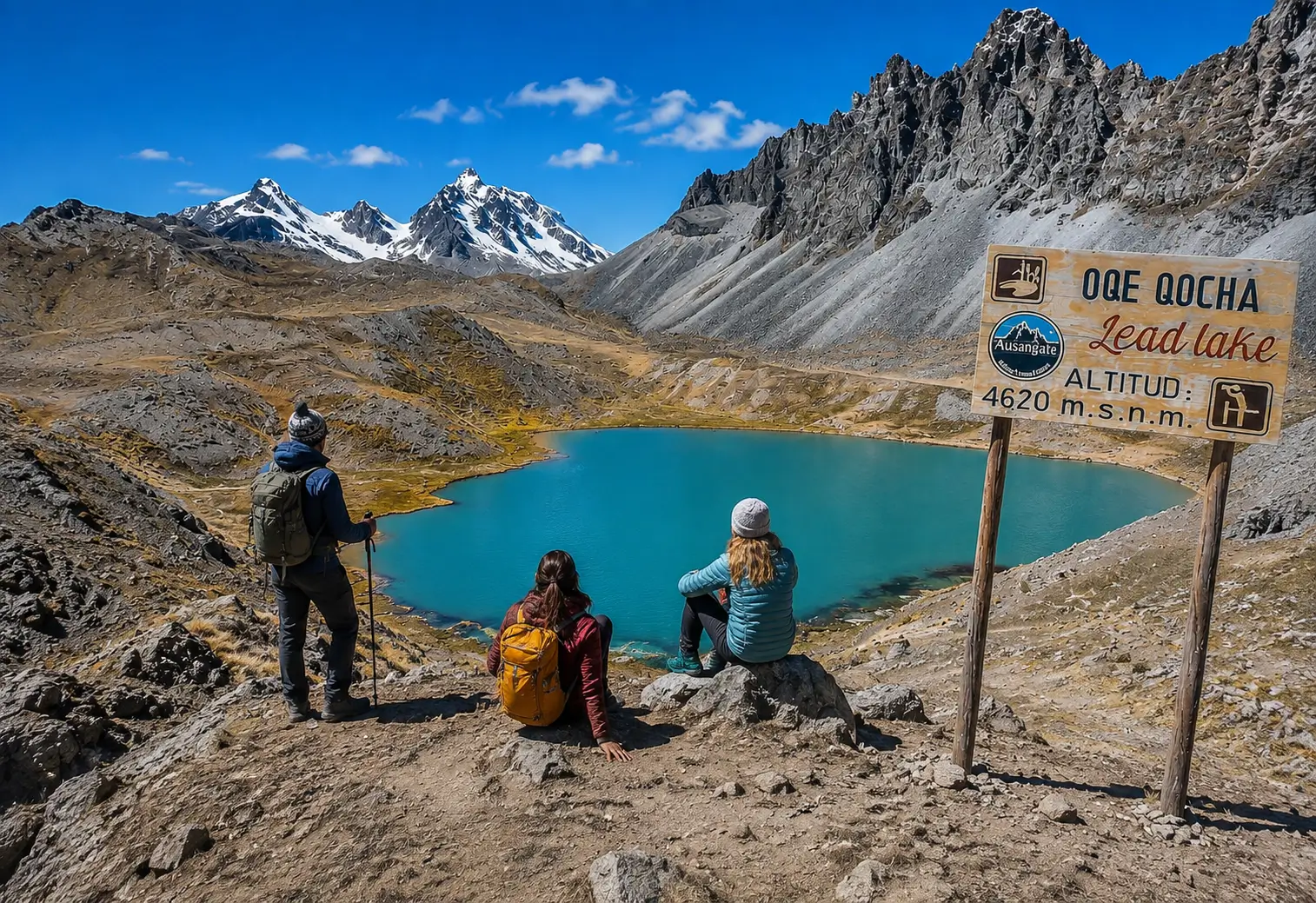
The seven lagoons: a chain of glacial lakes, commonly listed as Otorongo Macho, Otorongo Hembra, Puca Cocha, Ccaomer Cocha, Alca Cocha, Catalina Cocha, and Patacocha, each with a different shade of turquoise, green, or blue depending on mineral content and depth.
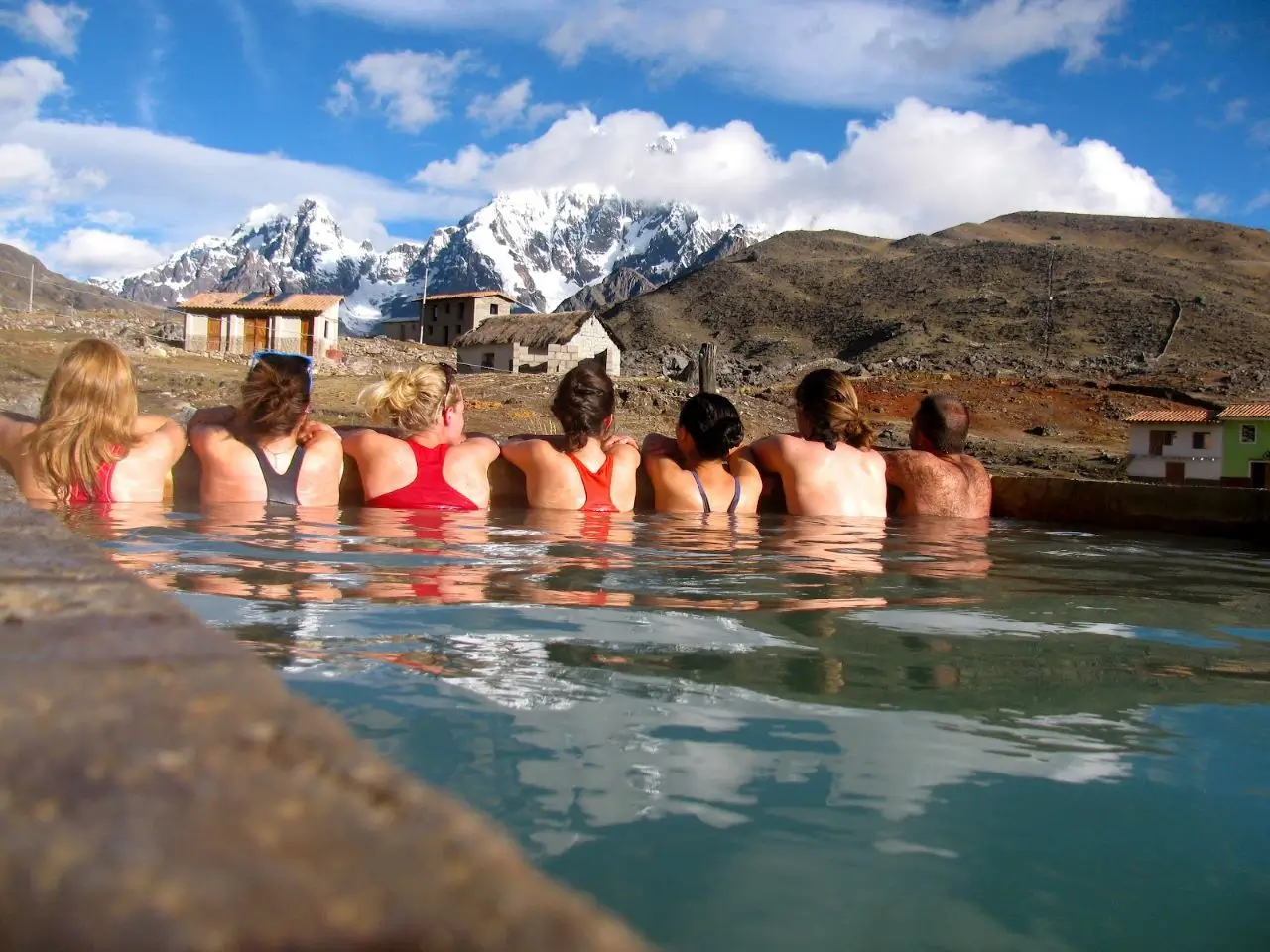
Pacchanta hot springs: natural thermal pools used by the local community, visited at the end of the hike.
Wildlife viewing: vicuña, alpaca, llama, and the Andean caracara are commonly seen along the trail.
Living Quechua culture: Pacchanta is an active pastoral community, not a tourist-built village, and alpaca/llama herding is still a primary livelihood.
Itinerary Summary
04:30–05:00: Hotel pickup in Cusco, private transport toward Ocongate and Tinki.
Approx. 3 hours: Drive to Pacchanta (4,300 m), including a stop for breakfast.
5–6 hours: Hike through the lagoon chain to the highest viewpoint (4,600–4,850 m) and back to Pacchanta.
After the hike: Lunch in Pacchanta, followed by time in the hot springs.
Approx. 18:00–18:30: Return to Cusco.
Quick Facts
Category
Detail
Location
Pacchanta, Ocongate District, Quispicanchi Province, Cusco Region
Mountain range
Cordillera Vilcanota (Vilcanota Mountain Range)
Nearest town
Tinki (last town before Pacchanta)
Duration
1 day (full day, approx. 14 hours door-to-door from Cusco)
Distance
10 km / 6.2 mi round trip
Hiking time
5–6 hours
Starting altitude
4,300 m / 14,107 ft (Pacchanta)
Maximum altitude
4,600–4,850 m / 15,092–15,912 ft
Group size
Small group or private, typically up to 12
Season
Year-round; best May–September (dry season)
Entrance fee
Included in most tour packages
Permits
Community-managed entrance ticket (not an INC/Ministry of Culture archaeological permit)
Altitude and Acclimatization
Location
Elevation
Cusco (acclimatization base)
3,400 m / 11,152 ft
Pacchanta (trailhead)
4,300 m / 14,107 ft
Highest point on the hike
4,600–4,850 m / 15,092–15,912 ft
Altitude sickness (soroche) risk increases above 3,500 m, and symptoms such as headache, nausea, and shortness of breath are possible even in fit travelers.
Operators typically carry supplemental oxygen and a first-aid kit and monitor hikers throughout the day. Drinking coca tea, staying hydrated, and avoiding alcohol the night before are common local recommendations for reducing symptoms.
Weather and Best Time to Hike
The best time to hike the Ausangate Trek is during the dry season from May to September, when you will find mostly clear blue skies, sunny days, and stunning mountain views. However, nights drop well below freezing, and daytime temperatures average 15°C (59°F). Avoid January and February due to heavy rain, snowstorms, and dangerous trail conditions
Season
Months
Conditions
Dry season
May – September
Sunny days, colder nights and mornings, minimal rainfall, best visibility of the lakes and glacier
Shoulder months
April, October
Transitional weather, generally stable
Wet season
November – March
Higher chance of rain or snow, trail can be muddier, mountain views less reliable
Regardless of season, early morning temperatures at Pacchanta typically drop to around 0°C (32°F), while daytime temperatures with sun exposure can feel mild despite cold wind at altitude.
Layering (base layer, fleece, insulated jacket, waterproof shell) is the standard approach for managing this range.
7 lakes of Asusangate vs Humantay Lake
Both Humantay Lake and the 7 Lakes of Ausangate are stunning full-day alpine hikes from Cusco, Peru, but they head in opposite directions. Humantay offers a short, steep climb to a famous single turquoise glacial lagoon, while Ausangate features a longer, gradual trail past multiple vibrant lagoons and natural hot springs
Feature
Humantay Lake
7 Lakes of Ausangate
Location
Northwest of Cusco (Salkantay route)
Southeast of Cusco (Vilcanota range)
Altitude
3,800 m to 4,200 m (12,465 to 13,779 ft)
4,200 m to 4,600 m (13,779 to 15,091 ft)
Hike Style
Short (1.5–2 hours) and very steep
Longer (3–4 hours) but flatter and gradual
Main Sights
One intense turquoise lake under a glacier
Seven diverse colored lagoons + Pacchanta hot springs
Crowds
High traffic and very popular
Quiet, remote, and less crowded
Itinerary
Ausangate 7 Lakes itinerary
We will pick you up from your hotel at 4:30 a.m. directly in Cusco in our private van to begin an extraordinary journey toward the heart of the Vilcanota mountain range. Our comfortable tourist transport ensures a smooth 3-hour trip to the traditional village of Pacchanta, located at 14,107 ft (4,300 m).
Upon arrival, we will enjoy a hearty, local breakfast, providing the essential nutrients for our high-altitude challenge. After fueling up, the real adventure begins.
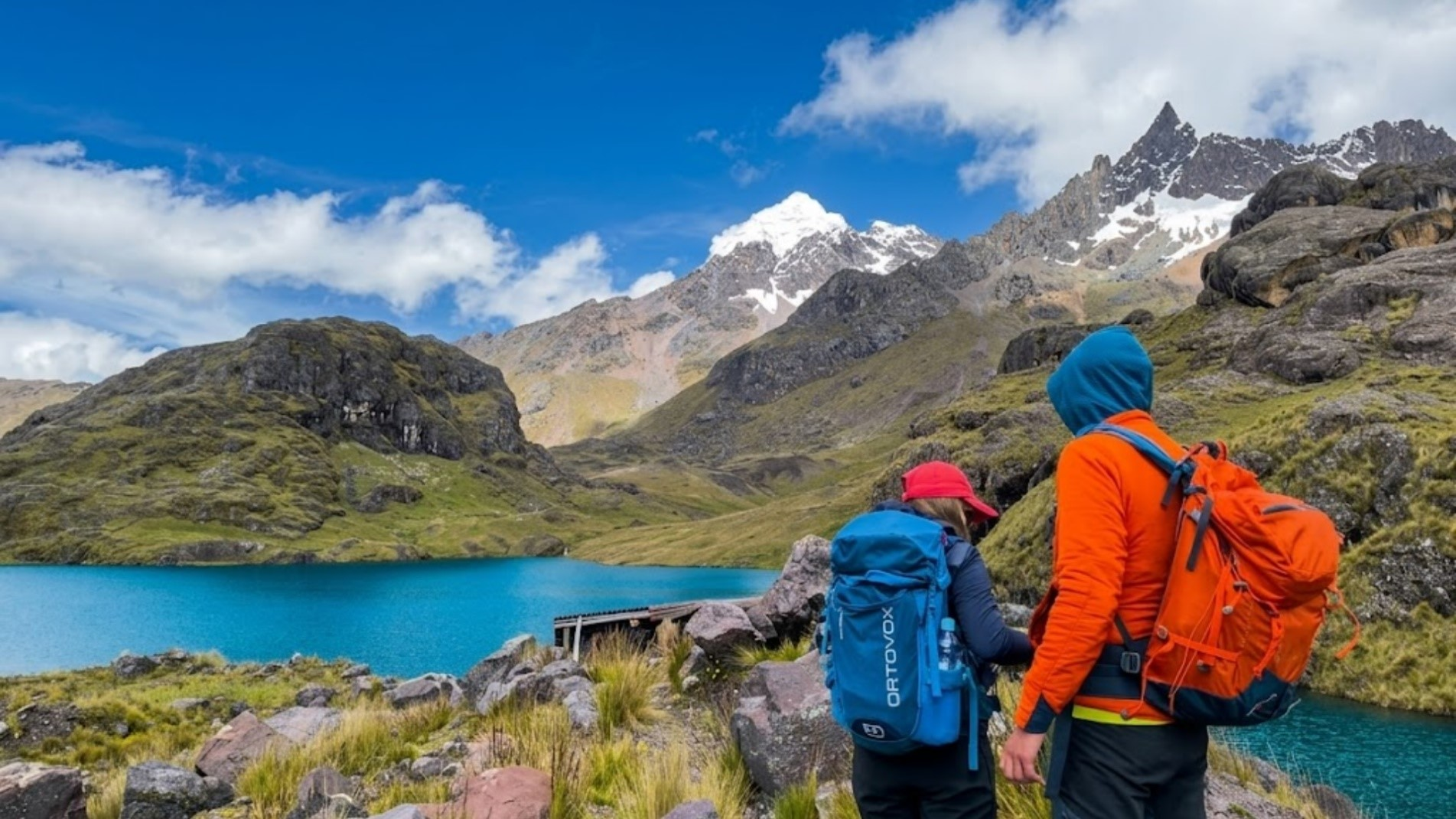
This 5-hour round-trip hike takes us through a succession of seven stunning glacial lagoons. As we ascend to our maximum point of over 15,091 ft (4,600 m), you will witness the unique reflections of the majestic Apu Ausangate. Each lagoon features vibrant colors ranging from deep turquoise to emerald green. Our expert guides focus on a responsible, monitored pace, ensuring everyone manages the altitude effectively and safely.
After reaching the final lake and taking in the views, we descend back to Pacchanta (14,107 ft / 4,300 m) for a restorative local lunch. The ultimate reward follows: a soak in the medicinal hot springs of the village. There is no better way to end the day than relaxing in warm waters with an unparalleled view of the snow-capped peaks. We return to Cusco, arriving at your hotel around 6:30 p.m.
Pickup Location: Direct hotel pickup in Cusco (4:30 a.m. – 5:00 a.m.)
Meals: Hearty local breakfast and restorative lunch included.
Start & End Altitude: 14,107 ft (4,300 m) in Pacchanta village.
Maximum Peak Altitude: Over 15,091 ft (4,600 m).
Total Distance: 6.2 miles (10 km) Round Trip.
Hiking Time: Approximately 5 hours of active trekking.
Transport: Private, comfortable tourist van.
Includes
Included
Transport: Pick-up and drop-off at your hotel in Cusco and all transport during the tour.
Expert Guide: Professional bilingual guide (English/Spanish) specialized in high-altitude trekking.
Meals: Hot breakfast and a local lunch prepared with fresh regional ingredients.
Entrance Fees: All tickets and permits for the Ausangate 7 Lagoons area.
Trekking Poles: Professional walking sticks provided for your comfort and balance.
Hot Springs: Entrance and time for relaxation in the medicinal pools of Pacchanta.
Safety Equipment: First aid kit and emergency oxygen tank available at all times.
Monitoring: Constant altitude sickness monitoring to ensure a safe experience.
Not Included
Gratuities: Tips for the guide and driver.
Personal Clothing: Warm layers, gloves, and rain jackets.
Emergency Horse: Optional horseback riding service available for rent in the area.
Extra Expenses: Snacks, energy drinks, and bottled water.
Travel Insurance: Personal insurance is recommended for high-altitude activities.
Unspecified Services: Any service not explicitly mentioned in the inclusions.
Packing List
Ausangate 7 Lakes packing list
To ensure a comfortable and safe journey through the high-altitude terrain of the Andes, we recommend preparing the following items. Since we reach altitudes over 15,000 ft, being prepared for rapid weather changes is essential.
The Essentials (In your Daypack)
Original Passport: You must carry your physical document with you.
Small Daypack: A 20L to 25L backpack is ideal for your personal belongings.
Water Storage: At least 2 liters. Reusable bottles or Camelbaks are required (we are a Zero Plastic agency).
Hiking Boots: Waterproof boots with good ankle support are highly recommended for the rocky and uneven trails.
Sun Protection: High SPF sunscreen, lip balm, a sun hat, and polarized sunglasses (the sun’s UV rays are much stronger at high altitudes).
Personal Cash: Small denominations in Soles for tips, snacks, or the hot springs.
Clothing for High Altitudes
Layering System: Wear moisture-wicking base layers, a thick fleece, and a warm down jacket.
Rain Gear: A high-quality rain poncho or waterproof jacket (weather in the Andes is unpredictable year-round).
Head & Handwear: A wool hat (chullo) and warm gloves are mandatory for the freezing morning and the windy passes.
Swimwear & Towel: Don’t forget these for the medicinal hot springs in Pacchanta!
Health & Personal Care
Hygiene Kit: Hand sanitizer, wet wipes, and tissues.
Medication: Personal prescriptions and altitude sickness pills (such as Acetazolamide), if recommended by your doctor.
Toilet Paper: Keep a small roll and a plastic bag for waste (we strictly follow Leave No Trace principles).
Quick Access Items
Energy Snacks: We include breakfast and lunch, but carrying chocolate, nuts, or energy bars is vital for the ascent.
Morning Water: Please bring your own water for the first part of the hike.
Power Bank: Essential for charging your phone or camera to capture the lagoons.
Travel Info
Ausangate 7 Lakes travel information
Ausangate 7 Lakes Altitude and Fitness Level Required
This is a high-intensity one-day hike. We will be trekking at altitudes between 14,100 ft (4,300 m) and over 15,000 ft (4,600 m).
Acclimatization: We strongly recommend spending at least 2 days in Cusco before taking this tour.
Physical Condition: You should be in good health and comfortable hiking on uneven, rocky terrain for about 5 hours.
Hydration: Drink plenty of water and coca tea the day before your trek to help your body adjust to the thin air.
Weather at the Ausangate 7 Lakes by Season
The weather at the foot of Mount Ausangate is highly unpredictable.
Early Morning: Expect freezing temperatures (32°F / 0°C) when we pick you up and arrive at Pacchanta.
During the Hike: If the sun is out, it can feel warm, but the wind remains cold. If it clouds over or rains, the temperature drops instantly.
Dry vs. Rainy Season: From May to October, it is sunny but colder. From November to April, rain and snow are possible.
Pacchanta Village and Andean Culture
Local Culture: You will be visiting a traditional Quechua-speaking community. Please be respectful when taking photos of locals or their llamas/alpacas; it is polite to ask for permission first.
Hot Springs: The medicinal pools are rustic and outdoors. They are the perfect way to recover your muscles after the hike while enjoying a direct view of the glaciers.
Altitude Sickness Safety and Oxygen Support
Your safety is our absolute priority. Ali Perú Treks provides:
Professional Guidance: Our guides are trained in wilderness first aid and high-altitude safety.
Oxygen & First Aid: We carry emergency oxygen tanks and a full medical kit on every departure.
Health Checks: Your guide will monitor your breathing and energy levels throughout the day. If you feel dizzy or nauseous, please inform your guide immediately.
Cash, Tips, and Emergency Horse Rental Cost
Small Cash: There are no ATMs in Pacchanta. Carry small bills (Soles) for snacks, extra drinks, or for renting an Emergency Horse (approx. S/ 80 – 100) if you feel you cannot complete the hike on foot.
Pickup: Being ready at 4:30 a.m. is crucial to avoid crowds and enjoy the lagoons with the best morning light.
Leave No Trace and Sustainable Trekking
We are committed to preserving the Andes.
Zero Plastic: Please do not bring single-use plastic bottles. Use a reusable canteen.
Waste: All trash must be carried back to Cusco. Do not leave anything on the trails.
Expert Tip for your Trip
The “secret” to enjoying Ausangate is the layering system. Don’t wear one thick jacket; instead, wear a t-shirt, a fleece, and then a down jacket. This allows you to adjust your temperature easily as you move and as the sun changes.
Names of the Seven Lakes of Ausangate
Each of the seven lagoons has its own name and character, and travelers frequently search for this list before booking — it’s one of the most specific, high-intent queries around this hike, and most competitor pages either skip it or bury it in a single sentence.
The seven lakes, in the order most groups typically reach them, are:
Lake Name
Meaning / Color
Approx. Altitude
Otorongo Macho
“Male Jaguar” — deep blue
4,550 m / 14,930 ft
Otorongo Hembra
“Female Jaguar” — turquoise
4,570 m / 14,993 ft
Puca Cocha
“Red Lake” — reddish-brown shoreline
4,580 m / 15,026 ft
Ccaomer Cocha
Green-tinted glacial melt
4,600 m / 15,092 ft
Alca Cocha
Pale turquoise
4,610 m / 15,125 ft
Catalina Cocha
Deep emerald green
4,620 m / 15,157 ft
Patacocha
“Upper Lake” — the highest and final lagoon
4,850 m / 15,912 ft
How to Get to Ausangate 7 Lakes from Cusco
This is one of the top pre-booking questions: how far is it, how long does it take, and can it be done independently.
Distance from Cusco: approximately 100 km / 62 mi to Pacchanta.
Driving time: 3 to 3.5 hours by private van, mostly paved road until the final stretch.
Self-drive / public transport: possible in theory via combis to Ocongate/Tinqui, but there is no direct public transport to Pacchanta itself, and the final approach requires local knowledge of the trailhead — most independent travelers end up needing a taxi or arranged transport for the last leg.
Why a guided tour matters here: the road conditions and altitude gain happen fast, and organizing a same-day return without a private vehicle is logistically difficult.
Segment
Distance
Time
Cusco to Ocongate
110 km / 68 mi
2 hrs
Ocongate to Tinqui
15 km / 9 mi
20 min
Tinqui to Pacchanta
11 km / 7 mi
30–40 min (unpaved)
Ausangate 7 Lakes vs. Rainbow Mountain
This comparison already lives in your FAQ, but it’s a high-intent, decision-stage query on its own — travelers comparing the two often decide which one to book based on this exact search. Giving it a dedicated heading with a scannable table increases the odds of matching that query directly (and is a strong AI Overview candidate).
Ausangate 7 Lakes
Rainbow Mountain
Max altitude
4,850 m / 15,912 ft
5,036 m / 16,522 ft
Crowds
Low — rarely more than a few small groups
Very high — one of the most visited sites in Cusco
Travelers who want solitude and a full-day immersive trek
Travelers with limited time who want the iconic photo
Both can be done as a single-day trip from Cusco, and both require prior acclimatization — but where Rainbow Mountain is a single dramatic viewpoint shared with large tour groups, the 7 Lakes route is a longer, quieter hike through a chain of glacial lagoons with far fewer people on the trail.
How Much Does the Ausangate 7 Lakes Tour Cost
Cost comparison is a major decision-point query, and right now the only price on the page is the headline “$120/person,” with no breakdown of what drives the final cost up or down.
Base tour price: $120 per person (group departure), covering transport, guide, meals, entrance fees, trekking poles, and oxygen/first-aid support.
Optional extras travelers commonly budget for:
Extra
Approx. Cost
Emergency horse rental
S/ 80–100 ($21–27 USD)
Guide/driver tip
$10–20 per person (customary, not required)
Snacks and bottled drinks
$5–10
Travel insurance
Varies by provider
Private tour option: a private departure (your own guide and vehicle instead of a shared group) typically costs more per person but allows a custom start time and pace — worth adding as a bookable variant if you offer it, since “private” is a common qualifier in this search category.
Map
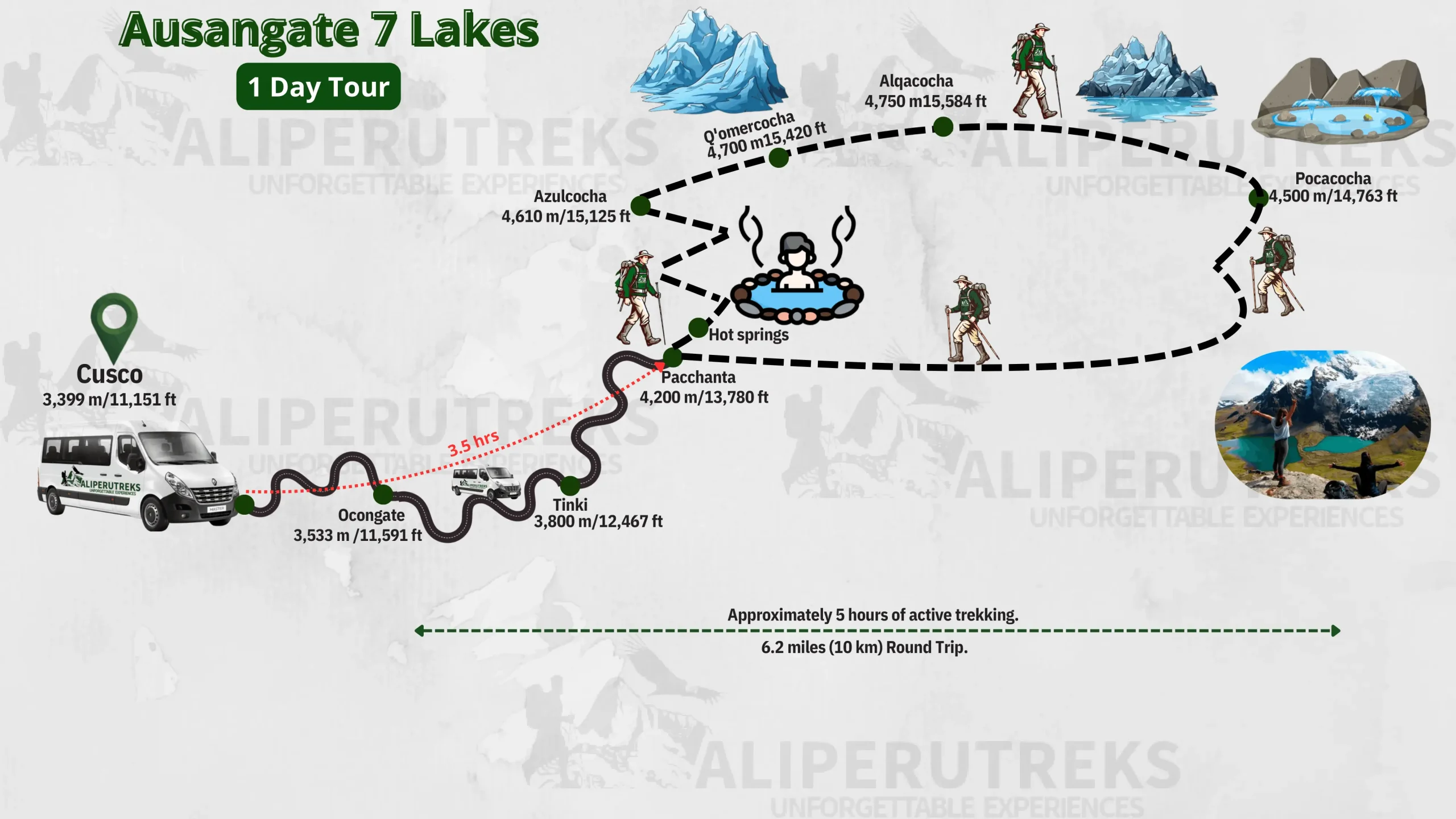
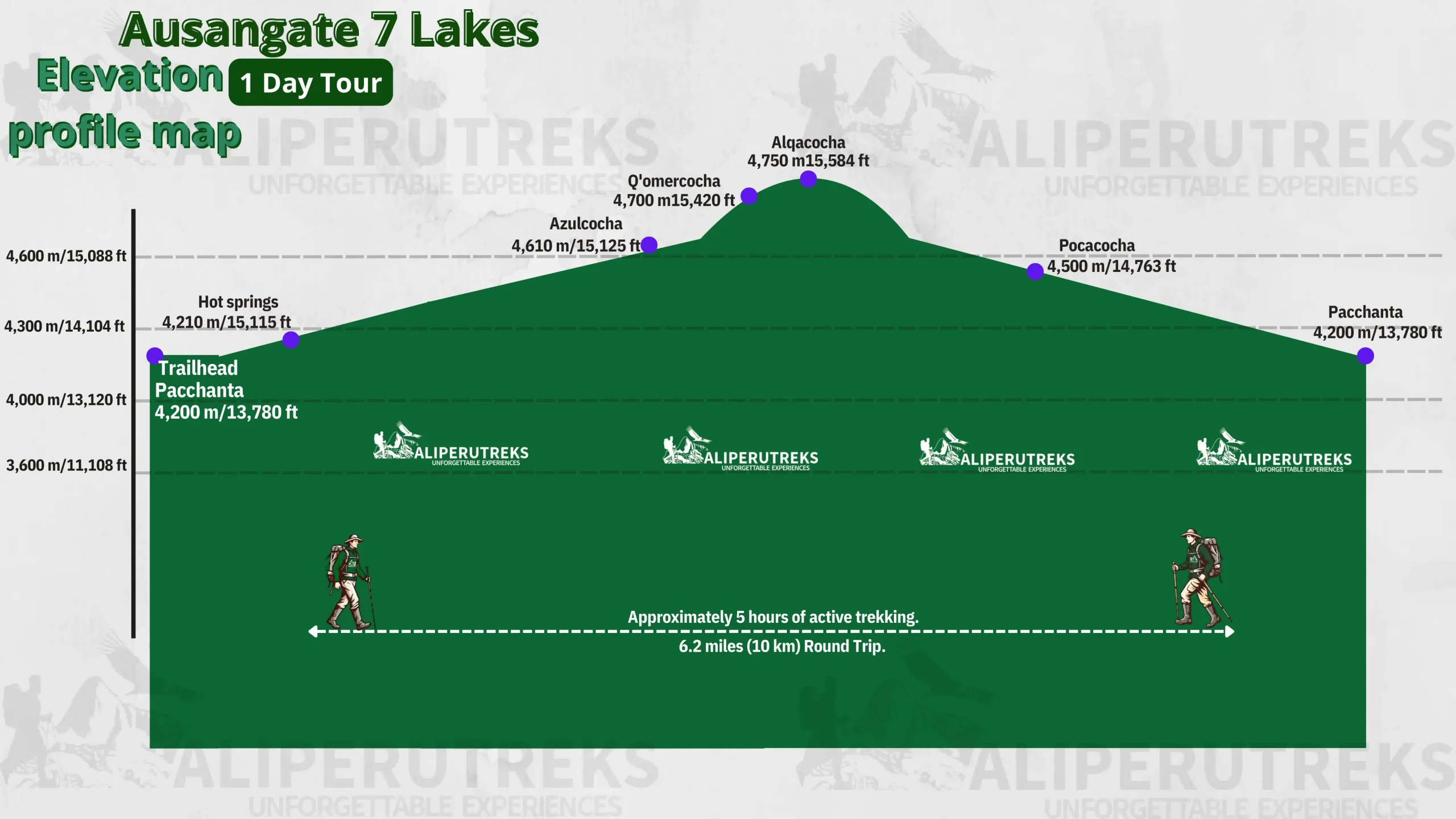
Ausangate 7 Lakes map & Altitude Profile
Below, we’ll present two maps containing key information about our day hike to the Seven Lakes of Ausangate. On the right is a general map showing the route from Cusco, providing an overview of the journey. On the left is an elevation profile map that details exactly what the hike entails: the distance in kilometers, the total ascent and descent, and the general slope of the terrain.
Both maps provide precise elevation readings for each of the key points along the trail, ensuring a comprehensive understanding of the route.
Price
Ausangate 7 Lakes price
The Ausangate 7 Lakes tour costs $120 per person, including hotel pickup and drop-off in Cusco, a professional bilingual guide, breakfast and lunch, entrance fees, trekking poles, hot springs access, and full safety equipment with emergency oxygen.
Instant Entrance Ticket & Tour Confirmation: Guarantee your slot immediately upon booking for this spectacular full-day high-altitude trek through the stunning turquoise lakes of the Ausangate region.
Pricing and Group Options
Whether you choose to join a shared group or prefer an exclusive private journey, we offer competitive and transparent pricing tailored to your travel style:
Group Service:$120 USD per person
Private Tour:$190 USD per person
Faqs
Ausangate 7 Lakes FAQ
The hike is considered moderate to challenging. While the terrain is a gradual ascent, the extreme altitude (above 15,000 ft) makes any physical effort feel twice as hard. We recommend this trek for travelers with a baseline level of fitness and, most importantly, proper acclimatization.
Yes, absolutely. This is one of the highest one-day tours in the Cusco region. We strictly recommend spending at least 2 to 3 days in Cusco (or at a similar altitude) before attempting this trek. We do not recommend booking this for your first day in Peru, as the risk of altitude sickness is significantly higher.
Safety is our top priority. Our guides are experts in high-altitude safety and carry emergency oxygen tanks and a complete first-aid kit at all times. We monitor your pace and oxygen levels constantly. If you feel you cannot continue, our team will assist you in returning safely or arranging an emergency horse.
The hike itself covers 10 km / 6.2 mi round trip and takes about 5 hours of active trekking, at altitudes between 4,300 m (14,107 ft) and 4,850 m (15,912 ft). Including the drive from Cusco, breakfast, lunch, and the hot springs, the full day runs from around 4:30 a.m. pickup to 6:30 p.m. return.
The Ausangate 7 Lakes tour starts at $120 per person for a group departure, including private transport, a bilingual guide, breakfast and lunch, entrance fees, trekking poles, and oxygen/first-aid support. The main optional extra is the emergency horse rental (S/ 80–100, about $21–27 USD, cash only) if you’re not able to complete the hike on foot.
A private departure with your own guide and vehicle costs more per person but allows a custom pickup time.
The tour runs year-round, but the dry season (May–October) gives the clearest views of the seven lagoons and Ausangate’s glaciers, while the rainy season has fewer crowds but a higher chance of clouds rolling in by midday.
Season
Months
Conditions
Dry season
May – October
Sunny, colder mornings, best visibility for the lagoons and Apu Ausangate
Rainy season
November – April
Warmer but with a higher chance of rain or snow, especially in the afternoon
Layers: base layer, fleece, and a warm down jacket (temperatures swing from freezing at pickup to warm in direct sun) Rain protection: a poncho or waterproof jacket, since Andean weather can shift fast even in the dry season Sun protection: high-SPF sunscreen, sunglasses, and a hat — UV exposure is much stronger above 14,000 ft Swimwear and a towel for the hot springs in Pacchanta Cash in soles for tips, snacks, or the emergency horse
Yes. Local community members offer emergency horses for rent at the trailhead or during the first part of the trek. The cost is approximately 80 to 100 Soles (cash only). This is an excellent option if you want to enjoy the scenery without the physical strain of the high-altitude climb.
Because the hike reaches 4,850 m (15,912 ft) and requires about 5 hours of walking on uneven terrain, it’s best suited to travelers in good general health who have already spent 2–3 days acclimatizing in Cusco.
It’s not recommended for young children, and older travelers or anyone with a heart or respiratory condition should check with a doctor first — the option to rent an emergency horse makes it more accessible for travelers who want to see the lagoons without hiking the full distance.
Worth adding once you confirm the actual policy — this is a frequent pre-booking question for high-altitude day tours, since travelers want to know the refund/reschedule terms before they pay. I’ve left this one as a placeholder rather than guessing at your cancellation terms.
Can you swim in the Ausangate 7 Lakes glacial lagoons?
The lagoons are glacial, meaning the water is near freezing. Swimming is not permitted as it can cause immediate hypothermia. However, the medicinal hot springs in Pacchanta at the end of the tour are specifically for swimming and are the perfect way to relax your muscles.
What is the weather like at Ausangate 7 Lakes in the early morning?
The weather is cold and highly unpredictable. In the early morning, temperatures can drop to 30°F (-1°C). During the day, the sun is very intense, but the mountain wind remains freezing. You should be prepared for sun, wind, and potential rain or snow, even during the dry season.
Are there bathrooms or toilets on the Ausangate 7 Lakes trail?
There are basic, rustic toilets at the starting point in Pacchanta. Once we begin the trek, there are no formal facilities. We follow Leave No Trace principles; your guide will provide instructions on how to handle waste responsibly if necessary.
Is the Ausangate 7 Lakes hike better than Rainbow Mountain?
Both are high-altitude treks, but the 7 Lagoons tour is much less crowded and offers a more “alpine” landscape featuring massive glaciers and crystal-clear lakes. It is ideal for travelers seeking a peaceful, off-the-beaten-path experience away from the massive crowds of Rainbow Mountain.
Why book the Ausangate 7 Lakes tour with Ali Perú Treks instead of a bigger agency?
By using a private van, we avoid the “bus-stop” delays of large groups and reach the lagoons earlier to enjoy the best morning light. Our focus is on safety, small group sizes, and providing high-quality gear—like trekking poles—to ensure your experience is comfortable from start to finish.
Related Tours
Featured Tours & Treks
Discover hand-picked tours and treks to Machu Picchu and Peru’s most unforgettable destinations.
Trek the Inca Quarry and Short Inca Trail 5 Days to Machu Picchu adventure through the Sacred Valley — one of the best alternatives to the Classic Inca Trail for travelers who want fewer crowds and more history. Explore the ancient Cachicata Quarries, where Inca engineers carved the stone blocks used to build Ollantaytambo, then…
Trek the Ausangate Circuit over 5 unforgettable days, hiking alongside a traditional llama caravan through glacial passes above 4,800m, turquoise high-Andean lagoons, and the base of Apu Ausangate — the highest sacred mountain in the Cusco region. This Ausangate Rainbow Mountain trek reaches Vinicunca early, before the day-trip crowds arrive from Cusco, then continues through…
The Lares Trek & Short Inca Trail is the most complete 5-day trekking experience in the Peruvian Andes — and the only route that combines genuine cultural immersion with a legendary finish at Machu Picchu.
The Choquequirao Trek 8 Days is the most complete way to experience Choquequirao and Machu Picchu in a single expedition. This Choquequirao to Machu Picchu trek takes you deep into the Apurímac Canyon, over remote Andean passes above 4,600 meters, and through cloud forest trails few travelers ever see — all before arriving at the…
The Huchuy Qosqo Trek 2 Days is the fastest cultural route to Machu Picchu, combining a moderate high-altitude hike through the Sacred Valley with an exclusive visit to the “Little Cusco” ruins. Unlike most alternative treks in Cusco, this route includes hotel accommodation in Aguas Calientes instead of camping, private transportation, and a gourmet picnic…
Combine two legendary Andean routes into one unforgettable expedition. This 7-day trek fuses the remote wilderness of the Ancascocha Trek — ranked by National Geographic among the world's best hikes — with the historic Classic Inca Trail to Machu Picchu. You'll cross two high mountain passes, Huayanay (4,650m) and the famous Dead Woman's Pass (4,215m),…
The Ancascocha Trek 4 Days is Peru’s off-the-beaten-path alternative to the Classic Inca Trail, crossing remote Andean valleys where llamas and alpacas graze freely below snow-capped peaks. Named by National Geographic as one of the world’s best hikes, this 4-day trek to Machu Picchu takes you past the turquoise Ancascocha Lake, the Perolniyoc Waterfall, and…
The Salkantay Trek 4 Days is an adventurous trekking route from Cusco to Machu Picchu, designed for travelers seeking a shorter yet rewarding alternative to the Classic Inca Trail.
Trek the Ancascocha Trek & Short Inca Trail, a 5-day, 4-night route to Machu Picchu that National Geographic named one of the world's best hikes — yet few travelers know it exists. Unlike the Classic Inca Trail or Salkantay Trek, which book out months in advance, this alternative trek to Machu Picchu lets you cross…
The Ausangate Trek 4 days is one of the most demanding and rewarding routes in the Peruvian Andes, combining the vivid colors of Rainbow Mountain and the Red Valley with high-altitude passes above 4,900m, turquoise glacial lakes, and close-up views of Apu Ausangate.
The Choquequirao to Machu Picchu Trek 6 Days is one of the most rewarding hiking adventures in Peru. This epic journey combines the remote Inca citadel of Choquequirao with the world-famous Machu Picchu
The Huchuy Qosqo trek, 3 days, is one of the best alternative treks to Machu Picchu for travelers who want an authentic Inca experience without the crowds of the Classic Inca Trail. Over three days, you’ll hike original Qhapaq Ñan trails through the Sacred Valley, camp beside high-Andean lagoons, and reach Huchuy Qosqo—the private Royal…
The Inca Quarry Trek to Machu Picchu is one of the best alternative treks to Machu Picchu for travelers seeking fewer crowds and authentic Andean scenery. This 4-day adventure from Cusco follows ancient Inca pathways through the Cachicata quarries, remote villages, and breathtaking mountain landscapes before arriving at the legendary citadel of Machu Picchu. Along…
The Salkantay and Inca Trail to Machu Picchu is one of Peru’s most spectacular trekking adventures, combining the breathtaking landscapes of the Salkantay Trek with the legendary Classic Inca Trail.
The Lares Trek to Machu Picchu 4 days is the most authentic cultural alternative to the Inca Trail in Peru. Over four days and three nights, you will hike through remote Andean villages.
Explore the Ancascocha Trek to Machu Picchu 5 Days, a remote off-the-beaten-path adventure through high mountain passes, Andean valleys, and breathtaking landscapes in Peru.
Read what our travelers say about their Ausangate 7 Lakes experience. From the stunning turquoise lagoons and high-altitude landscapes to the support of our trekking team, discover firsthand experiences from travelers who explored this unforgettable destination with Ali Perú Treks.
Posted on Tripadvisor
Relax38155504360
Verified
Exelente servicio
My family and I booked the tour to Humantay Lagoon; the organization was excellent, and the guide assigned to us—Abel—was spectacular. He was very patient, attentive to everything, and showed great passion for his work. I would book with them again without hesitation. Thank you very much, Aliperutreks.
Posted on Tripadvisor
Jabeht M
Verified
Exelente organizacion
Tour bien organizado todo los detalles el almuerzo el desayuno todo bien perfecto.Muchas gracias Aliperutreks
Posted on Tripadvisor
Dreamer53144922871
Verified
Prachtige tocht via zonnepoort Machu Picchu
Het was echt een geweldige ervaring. We hadden een geweldige gids, Messias. Hij was heel vriendelijk, wist ontzettend veel over geschiedenis Inca en Machu Picchu. De trail van Ollaytambo naar Machu Picchu via de zonnepoort, was fantastisch. 2 keer naar Machu Picchu, deze tour echte aanrader en met een beetje geluk heb je Messias als gids.
Posted on Tripadvisor
Whitney R
Verified
Must do your for you Machu Picchu trip
What an amazing experience. We would definitely recommend doing the Inca trail hike that leads you to Machu Picchu. The other Inca ruins we saw were worth ever step we took to get there. Our guide Sebastian was amazing. He was so knowledgeable and friendly and definitely made the adventure even more special. Pick up was easy. Spending the night in Aguas Caliente was also worth the experience. Very cute town. Can’t recommend this tour enough.
Posted on Tripadvisor
I547ZPsimonem
Verified
Memories that will last forever
There were just the two of us on the trip, and we had an unforgettable time. Everything was exceptionally well organized, and we felt completely at ease. Our cook, Valerio, treated us to fabulous, authentic meals; our mule driver, Guillermo, took care of our luggage and the logistics; and Ciprian, known as Puma, guided us through the four days with excellent organization. The highlight was a fabulous view of the glacier-capped mountains and a lunch with Guellermo’s family, where we got a little closer to traditional Andean life. I would book this tour again in a heartbeat. These are moments I’ll never forget.
Posted on Tripadvisor
Alexa R
Verified
Unforgettable experience
We had an unforgettable time with Ali Treks. The tour was perfectly planned and organized down to the smallest detail. Ali Treks has the best Route for Lares. We had barely seen any, other people and that felt amazing. Three times a day, the head chef Valerio Huaman served us a magnificent feast. It was the best food I had during my entire trip to Peru. We didn’t have to worry about a thing during those four days—we could just enjoy ourselves. The guide Ciprian Torres Puma was very professional and had an amazing knowledge of the mountains, the traditional rituals, and the history of the Incas. I felt safe and well taken care of at all times. He knows the treks inside and out. I learned so much from him. The mule driver Guellermo Aransabel also took incredible care of us and our luggages. We got to meet his family, and one of the highlights was getting to dance with them in traditional clothing—it was a lively and joyful experience. The muleteer, the head chef, and the guide all have years of experience and either grew up in mountain communities or still live there. I’ll cherish the memories and experiences from this trek forever, and I thank Ali Treks and the team from the bottom of my heart for everything. I would definitely book the Lares Trek with Ali again.
Posted on Tripadvisor
GiuliaC
Verified
An amaing trekking!
The tour was great. We had a sunny day and the view of Machu Picchu from the Sun gate was amazing! Also the hotel and the dinner after the trekking were great. And our guide, Ali Messias, was super helpful and prepared! Just a little suggestion: after your morning visit to Machu Picchu on day 2, book the earliest train possible to Ollantaytambo, since there is nothing to do in Aguas Calientes.
Posted on Tripadvisor
Rajitha C
Verified
Unforgettable 2-Day Inca Trail – Ask for Mesias!
The 2 day Inca Trail tour was incredible! Our guide Mesias was extremely attentive to our needs and went along the trail at our pace. Mesias was the best! He is passionate and informative about Incan history and culture throughout the hike, Mesias was patient and encouraging during the trail He knows all the best photo spots and is basically a professional photographer! Overall, the experience was wonderful and if you choose to book this tour we highly recommend requesting Mesias.
Posted on Tripadvisor
Escape14862535459
Verified
Incredible journey through the Andes
We had an unforgettable experience. Mesias was an exceptional guide, very attentive and encouraging on the difficult climbs. Valerio was an outstanding cook, and Segundino was a very effective horseman. Thanks to them we will never forget this incredible journey!
Posted on Tripadvisor
Christian V
Verified
10 out of 10 experience/adventure
An amazing trek. The guide -Carlos Navarro- was a 10/10 -knowledgeable and patient. This trip was a fair price with excellent service. The chef and porters were awesome. Every day of this trek was outstanding -the added short Inca trail day was worth it just to walk through to the sun gate. Amazing company and amazing experience - don’t wait just do it.
Posted on Google
Jabeht Morales mamani
Trustindex verifies that the original source of the review is Google.
Primeramente agradecida con esta empresa aliperutreks nos ayudo bastante con nuestra reserva para el famoso tour de camino inca de 4 dias a machupicchu.toda el equipo estaba bien organizada.El guia Teo que era designado para nuestro grupo era bien preparado y bien conocedor de la historia inca gracias a su ayuda de el y porteadores llegamos a machupicchu y muchas gracias a todo el equipo de Aliperutreks.Sin dudarlo reservaria con ellos una ves mas.👍👍👍
Posted on Google
Mathio
Trustindex verifies that the original source of the review is Google.
We had a unique experience with Aliperutreks; we booked the 4-day Inca Trail to Machu Picchu, and the organization was spectacular. Our guide, Mesías, was magnificent and knowledgeable about all Inca history; the chef, Valerio, and our porters were also excellent. I am very grateful to the entire team and the organization—thanks again to Aliperutreks. I would use their services again without hesitation. Highly recommended.
Posted on Google
Luz
Trustindex verifies that the original source of the review is Google.
We had a unique experience with the company Aliperutreks; we booked the 4-day Inca Trail to Machu Picchu, and the organization was spectacular. Our guide, Mesias, was magnificent and knew all the Inca history; the chef, Valerio, and our porters were also excellent. I am very grateful to the entire team and the organization thanks again to Aliperutreks. I would book with them again without hesitation. Highly recommended.
Posted on Google
Laura Smith
Trustindex verifies that the original source of the review is Google.
The organization was top-notch from start to finish. We were incredibly impressed by how well-coordinated everything was:
The Permits: You can tell they handle the booking details with great care. It was reassuring to know that daily permits are strictly capped at 250 people, which keeps the trail from feeling overcrowded!
Luggage Handling: A massive highlight was that the agency provided us with a 5 kg (11 lbs) duffel bag for our gear. We didn’t have to carry any heavy weight during the hike because the company took care of sending it directly on the train to our hotel in Aguas Calientes. Hiking light made the experience twice as enjoyable!
The Guide: Extremely professional, deeply knowledgeable about Inca history, incredibly patient, and packed with great energy that kept us motivated every step of the way.
Posted on Google
Scoth Mathias Coonor
Trustindex verifies that the original source of the review is Google.
Sin duda una empresa que si sabe organizar d los tours pasamos de la mejor manera el camino inca 4 días sin dudarlo recomendaré a mis amigos muchas gracias Aliperutreks
Posted on Google
Eliaquim Huaman Gutierrez
Trustindex verifies that the original source of the review is Google.
Experiencia maravillosa por los andes de Perú.
Posted on Google
R. Aranzabal
Trustindex verifies that the original source of the review is Google.
Reservamos un tour con aliperutreks. El servicio que brinda es muy espectacular me gustó demacrado muchas gracias
Posted on Google
Mary Aranzabal
Trustindex verifies that the original source of the review is Google.
Experiencia inolvidable me gusto mucho el tour que hicimos
Our Blogs
Our Blogs
Blogs that provide information and tips for planning the perfect trip to Peru and Machu Picchu.
If you’ve been scrolling through travel photos and stumbled upon a mountain that looks like it was painted with every color of the sunset, you’re not imagining things. Rainbow Mountain Peru — officially known as Vinicunca Mountain — is one of the most breathtaking natural wonders on Earth, and it’s quickly become one of the…
If you’re planning the Ausangate Trek, weather is the single factor that will shape your entire trip — more than fitness, more than gear, and almost as much as altitude itself. This is a route that climbs above 4,900 m (16,000 ft) on consecutive days, and at that elevation, conditions swing hard between a blazing…
Hiking through the Vilcanota Mountain Range is not just any ordinary excursion; it is a complete disconnection from the modern world and a profound reunion with nature in its purest state. If you are looking for a unique, mystical, physically rewarding, and deeply eco-friendly journey, the Ausangate to Rainbow Mountain is the ultimate answer. In…
In the heart of the Peruvian Andes rises Ausangate, one of the most majestic peaks in Cusco and a destination that connects nature, spirituality, and adventure. This Ausangate trekking guide reveals the secrets of the mountain, its colorful lagoons, and why it’s one of the most rewarding hikes for those seeking a true connection with…
Are you ready to explore the breathtaking beauty of the Cusco Andes? Whether you dream of conquering the Inca Trail to Machu Picchu, the wild Salkantay Trek, or the colorful heights of Ausangate, being well-prepared is key. In this guide, we’ll show you the essential equipment for trekking in the Cusco Andes , the tools…