Home » Tours » Ancascocha Trek & Short Inca Trail 5 Days to Machu Picchu
DURATION
5 days 4 nights
MAX ALTITUDE
4,650 m 15,255 ft
DIFFICULTY
Challenging
GROUP SIZE
Max. 12 Pax
DISTANCE
65 km
SEASON
Year Round
Ancascocha Trek & Short Inca Trail 5 Days
Ancascocha Trek & Short Inca Trail 5 Days 4 Nights
Ancascocha Trek & Short Inca Trail 5 Days to Machu Picchu
Trek the Ancascocha Trek & Short Inca Trail, a 5-day, 4-night route to Machu Picchu that National Geographic named one of the world’s best hikes — yet few travelers know it exists. Unlike the Classic Inca Trail or Salkantay Trek, which book out months in advance, this alternative trek to Machu Picchu lets you cross remote Andean passes, turquoise glacial lakes, and Inca ruins with almost no other hikers in sight, before joining the Short Inca Trail for a classic Sun Gate entrance into the citadel.
Led by 100% local guides, this 5-day trek to Machu Picchu combines the untouched wilderness of Ancascocha Lake and the 4,650 m Huayanay Pass with the historic stone paths of the Inca Trail. Small groups, gourmet mountain dining, and door-to-door service from Cusco make this one of the most complete alternative treks to Machu Picchu available today.
Overview
Ancascocha Trek & Short Inca Trail Overview
The Ancascocha Trek & Short Inca Trail is a 5-day, 4-night trekking route in the Cusco Region of Peru that combines the remote Ancascocha Trail through the Vilcabamba mountain range with the final stretch of the Short Inca Trail, ending at Machu Picchu. The route was named one of the “World’s Best Hikes” by National Geographic’s Dream Hikes list and is operated as a licensed alternative to the Classic Inca Trail, which requires booking 5-6 months in advance due to limited daily permits.
Tour Highlights
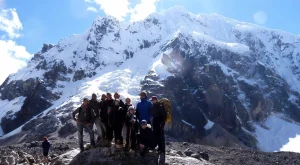
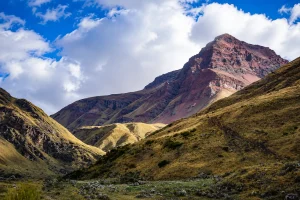
Crossing the Huayanay Pass (4,650 m / 15,255 ft), the highest point on the route
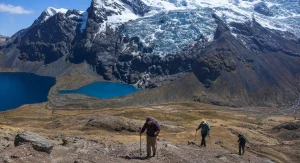
Ancascocha Lake, a glacier-fed alpine lake at 4,090 m / 13,418 ft
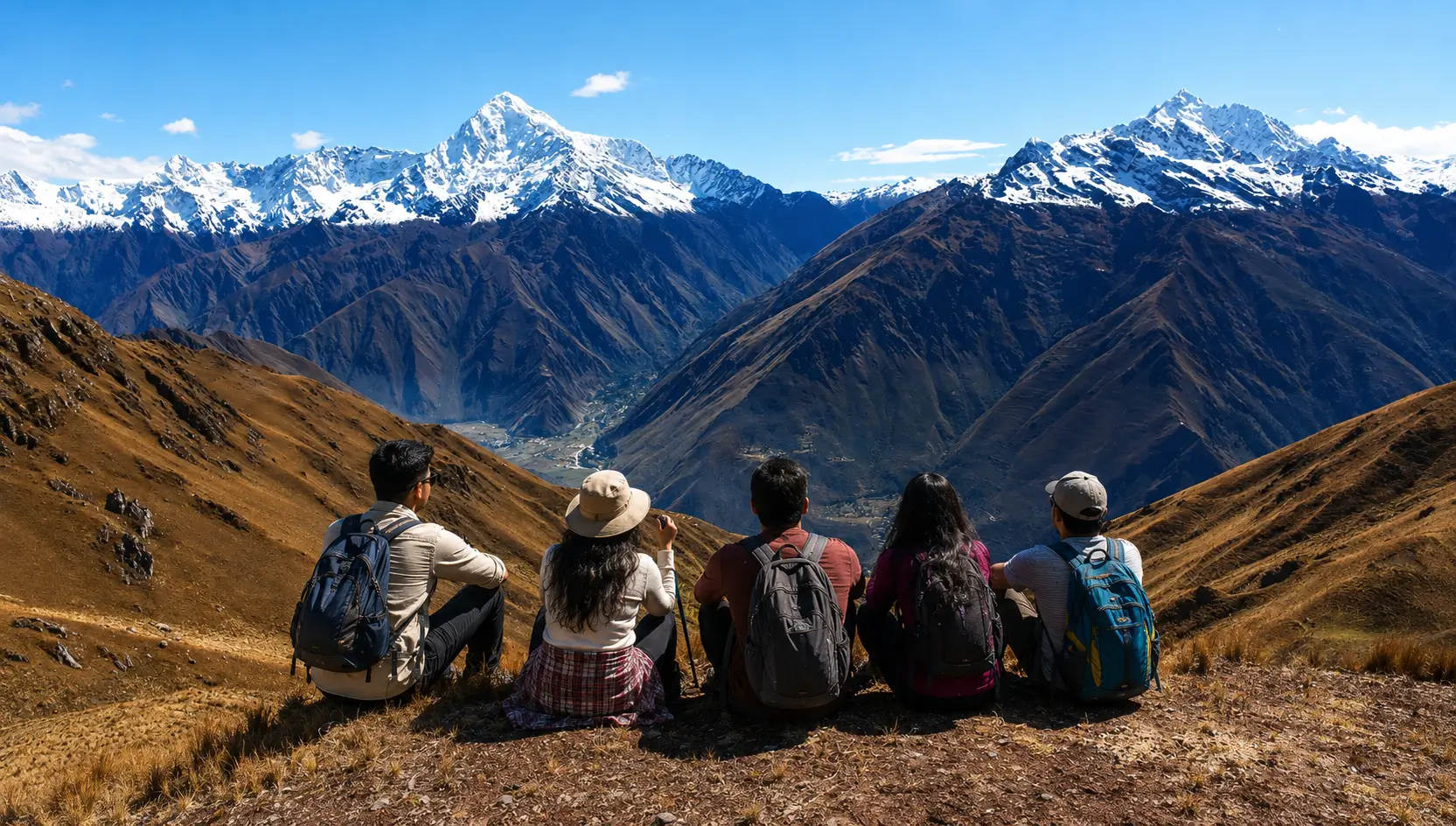
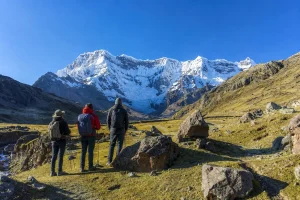
Views of Mount Salkantay (6,271 m) and Mount Veronica from multiple passes
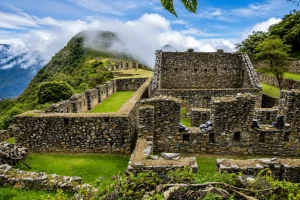
Four Inca archaeological sites: Rayan Pata, Perolniyoc, Paucarcancha, and Llactapata
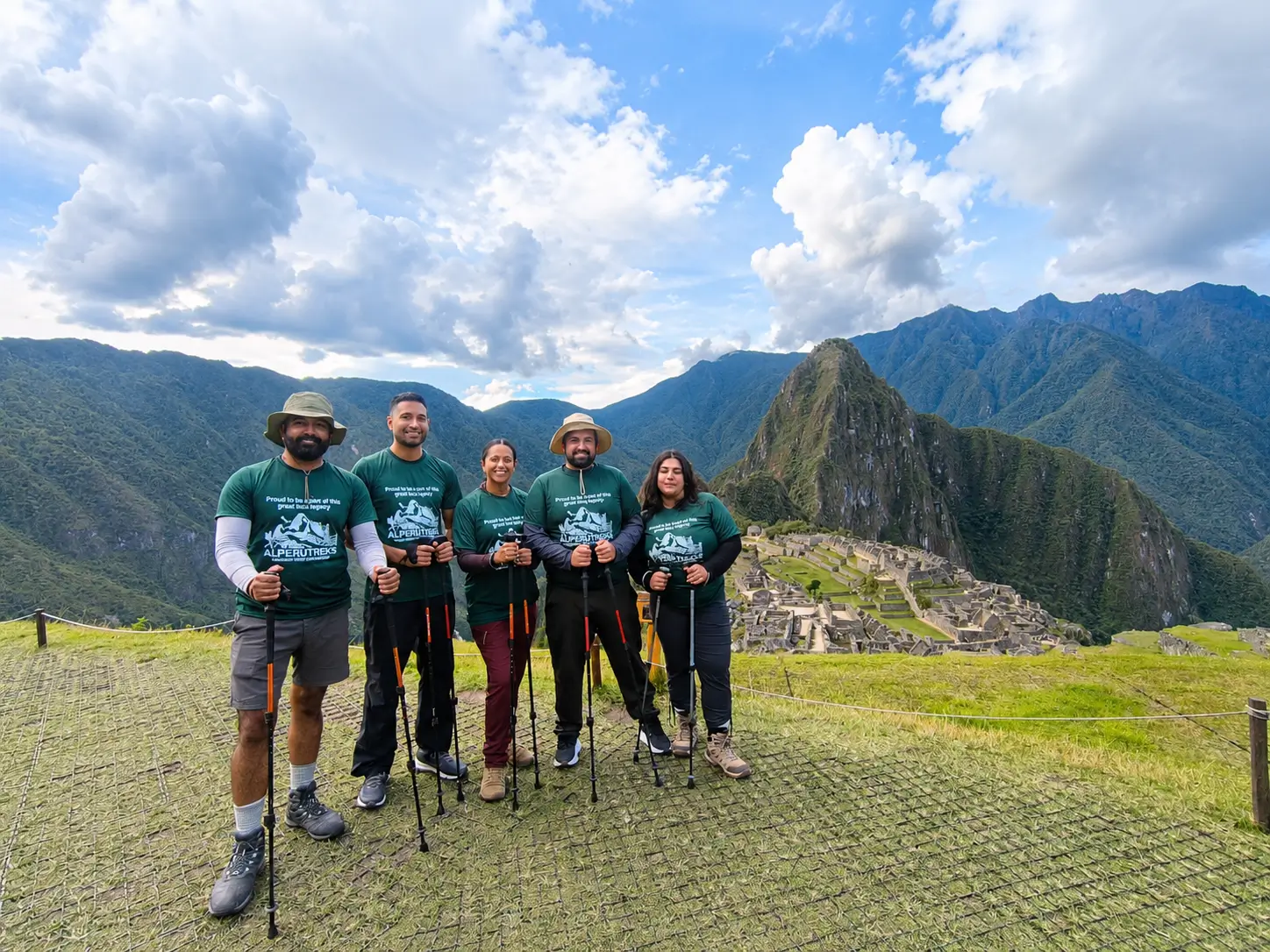
Entry to Machu Picchu on foot through the Sun Gate, the traditional Inca Trail arrival point
Sections shared with free-roaming llama and alpaca herds and local Quechua herding communities
Lower visitor numbers than the Classic Inca Trail or Salkantay Trek for the first three days
Inca Sites: Rayan Pata (Suspended ruins) and Perolniyoc.
Highlights: The Sacred Veil (Waterfall) and panoramic views of Mount Veronica.
Campsite Altitude: 13,451 ft / 4,100 m.
Difficulty: Challenging (Initial ascent and high pass).
Weather: Sunny morning / Cold and windy at the pass.
Day 2: Chancachuco – Ancascocha Lake – Huayanay Pass – Paucarcancha
Hiking Distance: 9.3 miles / 15 km.
Highest Point (Pass): 15,255 ft / 4,650 m.
Inca Sites: Paucarcancha (The Sun-Drenched Fortress).
Highlights: Turquoise Ancascocha Lake and the massive glaciers of Mount Salkantay.
Campsite Altitude: 10,236 ft / 3,120 m.
Difficulty: Challenging (The most technical and rewarding day).
Weather: Glacial at the summit / Temperate descent.
Day 3: Paucarcancha – Llactapata – Ollantaytambo
Hiking Distance: 7.5 miles / 12 km.
Lunch Spot: Q’allca Valley (9,186 ft).
Inca Sites: Llactapata & Willka Raqay.
Highlights: Exploring the massive administrative center of Llactapata.
Accommodation: Quality Hotel in Ollantaytambo (9,160 ft).
Difficulty: Easy (Gradual descent along the valley floor).
Weather: Warm and Sunny.
Day 4: Ollantaytambo – Km 104 – Wiñay Wayna – Machu Picchu
Hiking Distance: 7.5 miles / 12 km.
Highest Point: Sun Gate (8,924 ft).
Inca Sites: Chachabamba and Wiñay Wayna (The most beautiful site).
Highlights: Entering Machu Picchu through the Sun Gate (Inti Punku) at sunset.
Accommodation: Quality Hotel in Aguas Calientes (6,692 ft).
Difficulty: Moderate (Steep ascent to Wiñay Wayna).
Weather: Humid / Cloud forest.
Day 5: Aguas Calientes – Machu Picchu – Cusco
Activity: 2-hour Professional Guided Tour.
Machu Picchu Altitude: 7,873 ft / 2,400 m.
Highlights: Classic Postcard Photo and full Citadel exploration.
Difficulty: Easy / Cultural.
Weather: Warm and Tropical.
Return: Expedition Train & Private Van back to Cusco.
Quick Facts
Detail
Information
Duration
5 days, 4 nights
Total distance
Approx. 65 km / 40 miles
Maximum altitude
4,650 m / 15,255 ft (Huayanay Pass)
Difficulty level
Challenging
Group size
Maximum 12 people (average 4-8)
Season
Year-round (Inca Trail closed every February)
Accommodation
Camping (nights 1-2), hotel (nights 3-4)
Starting point
Soqma, Sacred Valley
Ending point
Machu Picchu via the Sun Gate (Inti Punku)
Permit required
Yes – official Short Inca Trail and Machu Picchu permit
Difficulty and Physical Requirements
The Ancascocha Trek is rated Challenging, and is considered more demanding than the Classic Inca Trail due to higher average altitude and less-maintained terrain. Days 1 and 2 involve sustained ascents above 4,000 m, including a technical climb to the 4,650 m Huayanay Pass. Days 3 and 5 are rated Easy, and Day 4 is Moderate.
Day
Terrain
Difficulty
Distance
1
High pass ascent, Andean tundra
Challenging
14 km / 8.7 mi
2
Glacial lake, highest pass, descent
Challenging
15 km / 9.3 mi
3
Valley floor descent
Easy
12 km / 7.5 mi
4
Cloud forest ascent to Sun Gate
Moderate
12 km / 7.5 mi
5
Machu Picchu citadel tour
Easy
4 km / 2.5 mi
Good physical fitness, prior high-altitude hiking experience, and a minimum of 2-3 days of acclimatization in Cusco before departure are recommended. Trekking poles are advised for the descents on both the Ancascocha section and the original Inca stone stairs on Day 4.
Altitude and Acclimatization
The trek reaches a maximum altitude of 4,650 m (15,255 ft) at Huayanay Pass, higher than the maximum point on the Classic Inca Trail (Dead Woman’s Pass, 4,215 m). Campsites are set between 3,120 m and 4,312 m for the first two nights. Because altitude sickness (soroche) risk increases above 3,500 m, operators typically require travel insurance covering high-altitude rescue above 4,500 m and carry medical oxygen and emergency horses as a precaution.
Weather and Best Time to Trek
Season
Months
Conditions
Dry season
April – October
Clear skies, cold nights (below freezing at high camps), most stable trail conditions
Inca Trail network closed annually for maintenance
Temperatures at the high-altitude campsites can drop to -5°C (23°F) or lower regardless of season, while Day 4 and 5 pass through warm, humid cloud forest near Machu Picchu.
Archaeological Sites Along the Route
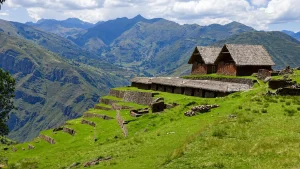
Rayan Pata – a cliffside administrative outpost near the Perolniyoc Waterfall, visited on Day 1.
Perolniyoc – an Inca site adjacent to an 80-foot waterfall, marking the start of the ascent to Kuychiccasa Pass.
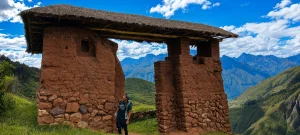
Paucarcancha – a fortified Inca site with agricultural terraces, located at the point where the Ancascocha route joins the Classic Inca Trail.
Llactapata – a large Inca administrative complex overlooking the Sacred Valley, seen on Day 3 alongside Qanabamba and Willkarakay.
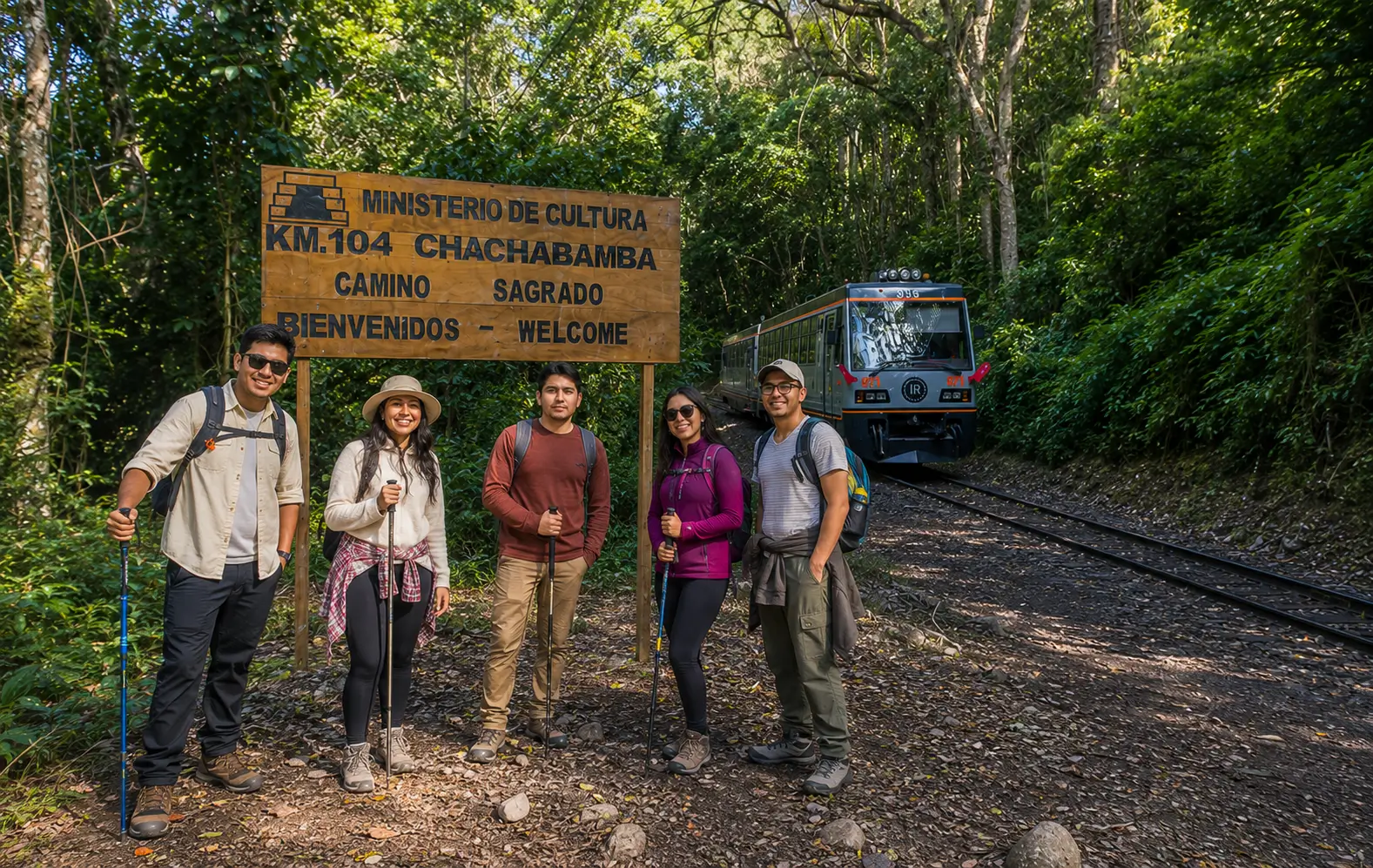
Chachabamba – a ceremonial site near Km 104, marking the start of the Short Inca Trail on Day 4.
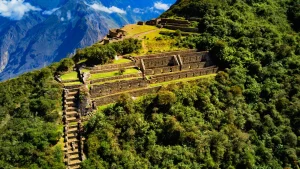
Wiñay Wayna – a terraced citadel with ritual fountains, considered one of the best-preserved sites on the Inca Trail network.
Machu Picchu – the final destination, entered on foot via the Sun Gate (Inti Punku) on Day 4 and explored in full on Day 5.
How Ancascocha Compares to Other Treks to Machu Picchu
Ancascocha combines the low foot traffic of an alternative route with a Sun Gate entrance to Machu Picchu, a feature the Salkantay Trek does not include unless combined separately with the Inca Trail. Compared to the Classic Inca Trail, Ancascocha reaches a higher maximum altitude and involves more remote, less-maintained terrain over the first two days.
Who This Trek Is Best For
Travelers who want a Sun Gate entrance to Machu Picchu without the year-in-advance booking window of the Classic Inca Trail
Experienced hikers comfortable with sustained hiking above 4,000 m
Travelers prioritizing low trekker density over trail infrastructure or shorter daily distances
Those who have already completed 2-3 days of altitude acclimatization in Cusco before starting
This trek is not recommended as a first high-altitude hike, or for travelers seeking a shorter, lower-altitude route; the Short Inca Trail (2 days) or Lares Trek are typically better suited to those cases.
Permits and Booking Requirements
A Short Inca Trail permit and Machu Picchu entrance ticket are required and must be purchased by a licensed operator; permits are personal, non-transferable, and non-refundable by Peruvian law.
Permits are limited and often sell out months in advance, particularly during the June-August dry season.
Booking requires a $200 USD per person deposit, full passport details (used for permit issuance), and the original physical passport on the trek – photocopies are not accepted at checkpoints.
Travel insurance covering trekking and high-altitude rescue above 4,500 m is mandatory.
Practical Travel Tips
Arrive in Cusco at least 2-3 days before the trek start date to acclimatize.
There is no electricity during the first three days; a fully charged power bank is required for cameras and phones.
Sleeping bags rated to -15°C/5°F and trekking poles are available for rent through most operators.
The final day’s lunch in Aguas Calientes is typically not included, allowing flexibility before the return train.
Extra permits for Huayna Picchu or Machu Picchu Mountain (approximately $80 USD) must be booked separately and well in advance if desired.
Itinerary
5-Day Ancascocha Trek & Short Inca Trail Itinerary
For the Ancascocha and Short Inca Trail Tour, we will pick you up from your hotel (in Cusco, Urubamba, or Ollantaytambo) at 5:00 a.m. to begin one of the most spectacular expeditions in the Andes.
Expedition Launch: Following your private pickup, we will drive toward the traditional village of Soqma (3,205 m / 10,515 ft). Upon arrival, our Ali Peru Treks professional chef will serve a high-energy technical breakfast at the trailhead. This is the key moment to meet the team of horsemen, organize your gear, and begin active acclimatization.
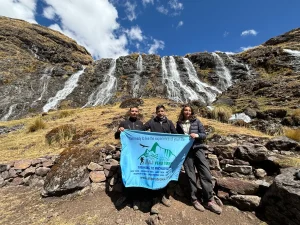
Sacred Waters and Inca Architecture: The trek begins with a gradual 2-hour ascent toward the Perolniyoc Waterfall (3,550 m / 11,647 ft), an 80-foot silver veil of water of immense historical significance. We will then continue the ascent for another hour to the Rayan Pata archaeological site (3,800 m / 12,467 ft). This fortress, strategically perched on the cliffside, served as an administrative outpost. Your expert guide will detail the engineering of its walls while you observe the valley’s depth from this commanding vantage point.
High-Altitude Nutrition: We will make a strategic stop in the Rayan area for lunch. Our mobile kitchen provides specialized meals prepared with local organic ingredients, balanced to provide the fuel required for the most demanding stretch of the day.
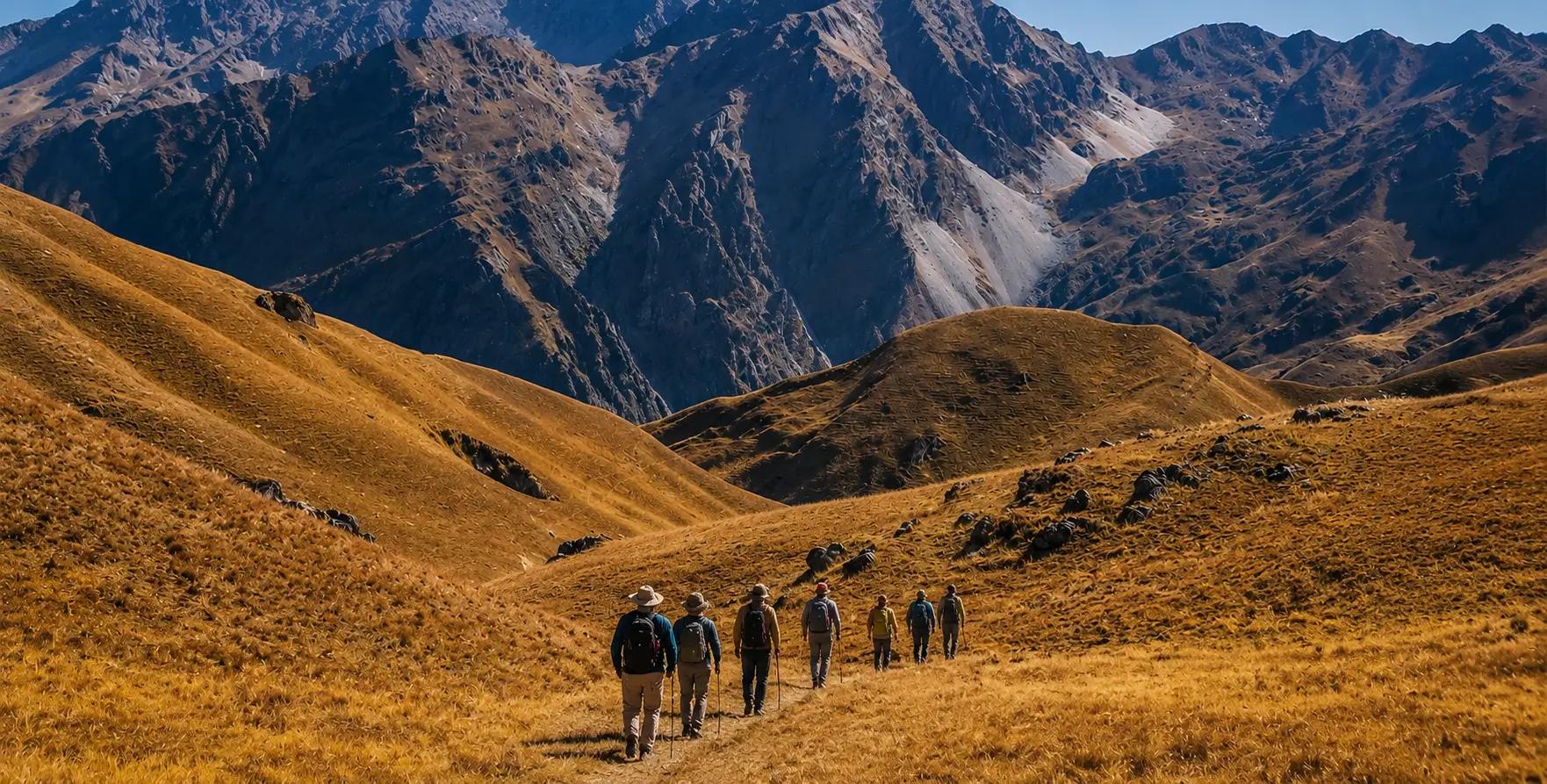
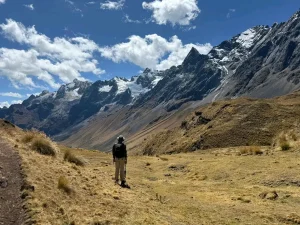
Conquering the Kuychiccasa Pass: The afternoon intensifies with a 3-hour technical ascent toward the Kuychiccasa Pass (4,450 m / 14,599 ft). At this altitude, the ecosystem shifts into a high-Andean tundra where herds of llamas and alpacas roam the terrain. From the summit, the reward is total: a sweeping view of Mt. Veronica and the entrance to the untamed Chancachuco Valley, surrounded by perpetual glaciers.
Chancachuco Valley Camp: We will descend for 45 minutes to our exclusive campsite (4,312 m / 14,147 ft). Upon arrival, your tents will be fully set up, and we will welcome you with a hot drink service. Following a gourmet dinner designed for muscle recovery—and if the sky is clear—your guide will lead an interpretation of Inca astronomy, closing a technically high-level first day.
Highlights: Perolniyoc Waterfall, Rayan Pata, and hiking surrounded by llamas.
Meals Included: Breakfast, Lunch, Dinner.
Day 2: Chancachuco Valley – Ancascocha Lake – Huayanay Pass – Paucarcancha
A Sunrise Among Giants: Your second day begins in the crisp mountain air. Our team will wake you up with a hot cup of coca tea delivered directly to your tent. After a high-energy breakfast, we will embark on the most ambitious and rewarding leg of our expedition, venturing into the high-altitude wilderness where nature remains untouched.
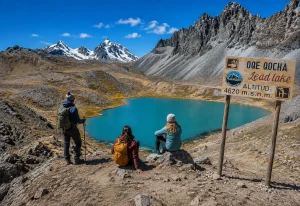
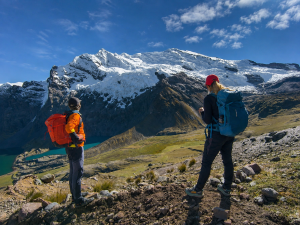
The Mirror of the Andes: Ancascocha Lake: The first part of our trek leads us through undulating valleys inhabited by hundreds of alpacas and llamas. After approximately 2.5 hours of hiking, we will reach the spectacular Ancascocha Lake (13,418 ft / 4,090 m). Its turquoise waters, fed directly by glaciers, offer a perfect reflection of the massive peaks. We will take a brief break here to hydrate and capture the beauty of this natural amphitheater.
Conquering the High Pass: Huayanay: We will then begin the challenging ascent toward the highest point of our journey: the Huayanay Pass (15,255 ft / 4,650 m). This section is technical and demanding, but the reward is incomparable. Upon reaching the summit, you will stand face-to-face with the majesty of the glaciers. The view is breathtaking, with Mount Salkantay and Mount Huayanay standing as silent guardians. It is here that the sense of accomplishment reaches its pinnacle.
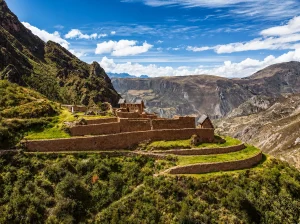
Descent to the Sun-Drenched Fortress: After celebrating our summit arrival, we will begin a steady descent through the Quesqa Valley. Along the way, we will enjoy a gourmet lunch at a strategic vantage point. The trail then leads us down into a different ecosystem, eventually arriving at the impressive Paucarcancha Archaeological Site (10,236 ft / 3,120 m). This unique Inca fortress, featuring original farming terraces and ancient stone structures, will be our home for the night.
Rest at the Inca Crossroads: Our campsite at Paucarcancha is truly special, located right next to the ruins where the Ancascocha trail meets the Classic Inca Trail. After a long and rewarding day, you will enjoy “Tea Time” and a gourmet dinner. Sleeping next to an ancient Inca site under the brilliant Andean stars is an experience reserved for very few travelers.
Total Distance: Approx. 11.2 miles / 18 km.
Hiking Time: 9 – 10 hours (The most demanding day of the expedition).
Difficulty Level: High Challenge / Technical.
Starting Altitude (Chancachuco): 14,147 ft / 4,312 m.
Highest Point (Huayanay Pass): 15,255 ft / 4,650 m.
Campsite Altitude (Paucarcancha): 10,236 ft / 3,120 m.
Highlights: Turquoise Ancascocha Lake, conquering the Huayanay Pass, and camping at the Paucarcancha Inca Fortress.
Meals Included: Breakfast, Lunch, Tea Time, and Gourmet Dinner.
Day 3: Paucarcancha – Llactapata – Kilometer 82 – Ollantaytambo
Tracing the Path of the Incas: After a revitalizing breakfast at our campsite next to the Paucarcancha Inca ruins (10,236 ft / 3,120 m), we will begin our descent toward the Sacred Valley. Today is a journey through time as our trail merges with the legendary Classic Inca Trail. We will follow the same stone path used by Inca royalty five centuries ago, hiking alongside the crystal-clear Cusichaca River.
Strategic Citadels and Administrative Centers: As we move through the valley, we will encounter several significant archaeological sites that were vital to the Empire. We will enjoy commanding views of the massive Llactapata complex, as well as Qanabamba and Willkarakay. Your Ali Perú Treks expert guide will explain how these sites functioned as a strategic network of supply and communication for those heading toward the sacred citadel.
The Celebration Lunch: After approximately 5 hours of hiking through a lush landscape that marks the transition into the valley floor, we will arrive at Piscacucho, famously known as Kilometer 82 (8,858 ft / 2,700 m). This is the official starting point of the Classic Inca Trail and marks the successful conclusion of our Ancascocha Highlands trek. Here, our professional chef will serve a celebratory farewell lunch to honor your incredible achievement.
Rest in the Living Inca City: After bidding farewell to our dedicated team of horsemen and chefs, our private van will transport us to the historic town of Ollantaytambo. Since this expedition includes the Short Inca Trail, we will check into a quality local hotel in Ollantaytambo. This allows you to explore the “Living Inca City,” enjoy a hot shower, and have a professional dinner at a local restaurant. This strategic rest point ensures you are fully recharged and perfectly positioned to board the train to Km 104 the following morning.
Hiking Distance: Approx. 7.5 miles / 12 km.
Hiking Time: 5 – 6 hours.
Difficulty Level: Easy (Steady descent along the valley).
Inca Trail Connection: Merging with the Classic Inca Trail at Paucarcancha.
Inca Sites: Paucarcancha, Llactapata, Qanabamba, and Willkarakay.
Transport: Private Van from Km 82 to Ollantaytambo.
Accommodation: Quality Hotel in Ollantaytambo.
Meals Included: Breakfast, Lunch, and Dinner at a local restaurant.
Day 4: Ollantaytambo – Km 104 – Wiñay Wayna – Sun Gate – Machu Picchu
The Royal Journey Begins: Your definitive day starts early to capture the morning’s freshness. At 5:30 a.m., we will pick you up from your hotel in Ollantaytambo for a quick transfer to the station. We will board the train for a spectacular 1-hour and 30-minute journey through the Urubamba canyon—a route where the Andean peaks dramatically shift into lush cloud forest. We will disembark at Kilometer 104 (2,100 m / 6,890 ft), the official starting point of our trek.
Exploration and Historical Connection: Our foot expedition begins by crossing the Urubamba River toward the archaeological site of Chachabamba. From here, we will begin a steady 3-hour ascent surrounded by tropical flora and stunning valley vistas until we reach the magnificent citadel of Wiñay Wayna (2,650 m / 8,694 ft). Widely considered the “crown jewel” of Inca architecture on the trail, we will explore its ritual fountains and steep circular terraces. In this unparalleled setting, you will enjoy a Gourmet Box Lunch to recharge your energy.
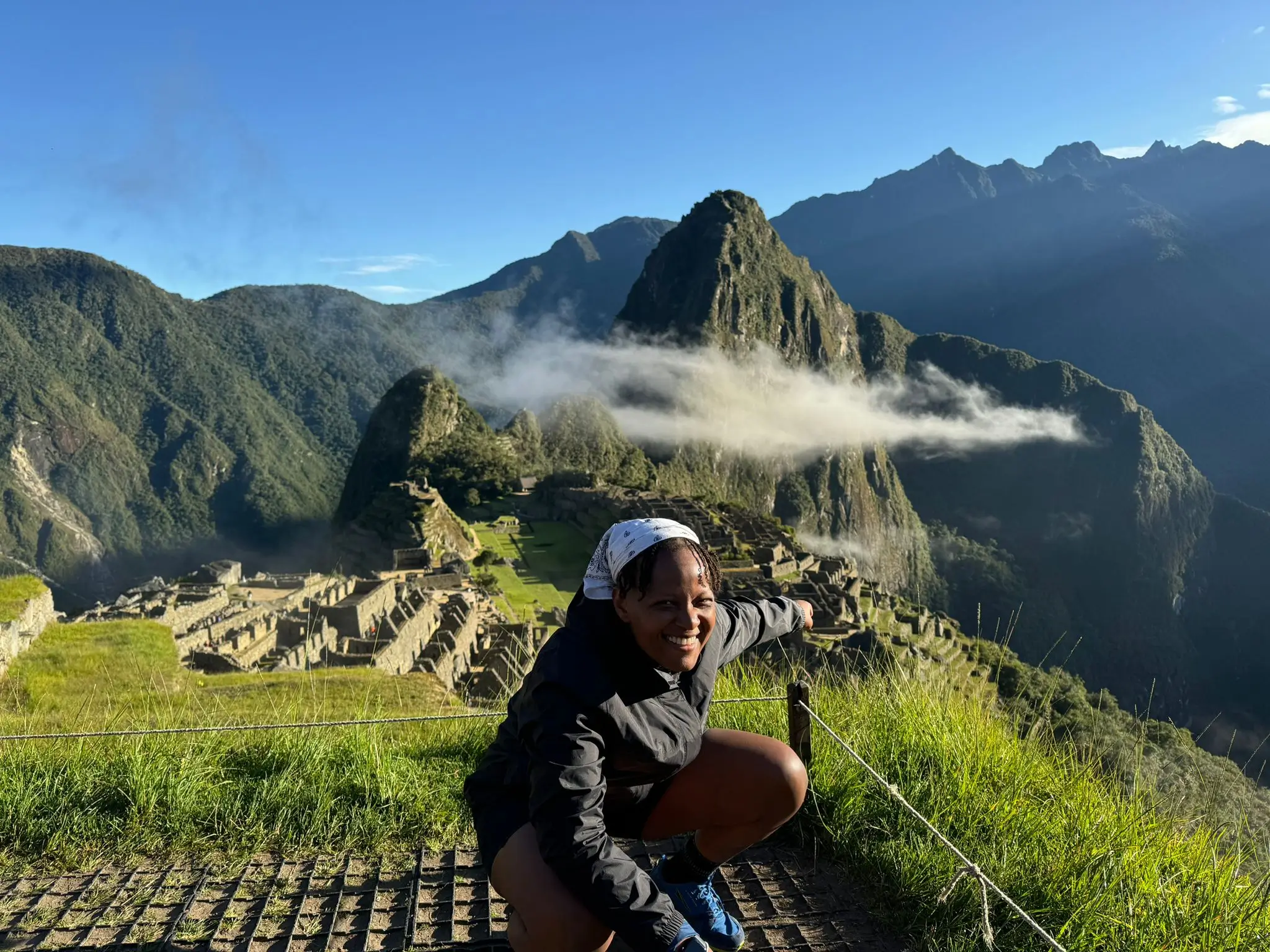
Triumphant Entrance through the Sun Gate: We will continue along an original stone path to reach Inti Punku (The Sun Gate). This is the ultimate climax: you will cross this sacred threshold to witness your first panoramic view of Machu Picchu in all its glory, just as the afternoon light highlights the citadel’s magic. Entering on foot through the main gate is a historic privilege that defines the authentic Ali Peru Treks experience.
Rest in Aguas Calientes: After capturing the iconic photos from the upper platform, we will take the bus down to the town of Aguas Calientes to check into your hotel. We will close this epic day with a celebration dinner at a local restaurant, where we will toast to the adventure and coordinate the details for tomorrow’s grand tour.
Hiking Distance: 12 km / 7.5 miles.
Hiking Time: 6 – 7 hours.
Difficulty Level: Moderate (Technical ascent and original stone stairs).
Highlights: Scenic train journey (1.5 hours), Wiñay Wayna, and the Sun Gate entrance.
After an early breakfast at your hotel, you will only need to bring your daypack with your essentials. The hotel will store your main luggage while you explore. To maximize our experience and beat the crowds, our plan is to take one of the first buses up to Machu Picchu (a 25-minute ride).
Yesterday, you had that unforgettable first view from the Sun Gate. Today, we re-enter Machu Picchu, but this time for a complete, in-depth exploration in the magical morning light.
Your expert Ali Peru Treks guide will lead you on a two-hour guided tour of the most important sites in the citadel. You will learn about the history and culture of the Inca Empire while visiting temples, plazas, and the most impressive viewpoints.
After the tour, you will also have free time to explore on your own and immerse yourself in the energy of the site.
We recommend returning to Aguas Calientes at least 2 hours before your train’s departure. You can have lunch (not included) at one of the many restaurants in town.
After lunch, your Ali Peru Treks guide will personally escort you to the train station. You will board the return train from Aguas Calientes to Ollantaytambo, a scenic journey of approximately 2 hours.
At the Ollantaytambo station, our Ali Peru Treks staff will be waiting for you promptly to transfer you back to Cusco in our private transportation, dropping you off comfortably at your hotel door, bringing your unforgettable adventure to a close.
Starting Altitude (Aguas Calientes): 6,692 ft / 2,040 m
Maximum Altitude (Machu Picchu): 7,972 ft / 2,430 m
Total Distance: Approx. 2.5 miles / 4 km (Exploración de la Ciudadela)
Tour Duration: 2 – 3 hours of guided historical tour
Difficulty Level: Easy (Cultural Inmersion day)
Highlights: Sunrise at Machu Picchu, Complete guided tour of the Citadel, and a scenic train journey back through the Sacred Valley.
Meals Included: Breakfast (at Hotel).
Includes
What’s Included
Official Entrance Fees & Circuits (1 & 3)
Dual Access Permits: Your expedition includes the official permit for the Short Inca Trail and the Machu Picchu Citadel.
Circuit 1 (Panoramic): This is the mandatory route for hikers arriving through the Sun Gate (Intipunku). It grants you access to the upper terraces for the classic postcard photo of Machu Picchu.
Circuit 3 (Royalty/Urban): After your panoramic photos, you will explore the urban heart of the city, including the Temple of the Sun, the House of the Inka, and the sacred agricultural sectors.
Logistics and Transportation (Full Coverage)
Private Door-to-Door Transport: Pickup and drop-off directly at your hotel in Cusco or the Sacred Valley.
Round-trip Expedition Train: Included for both essential legs: Ollantaytambo to Km 104 (Day 4) and Aguas Calientes back to Ollantaytambo (Day 5).
Full Bus Tickets (Up & Down): All shuttle transfers covered. Day 4: Descent from the citadel. Day 5: Round-trip (Up & Down) for your main guided tour.
Accommodations
High-Mountain Camping: Nights 1 & 2 in premium 4-season tents.
Ollantaytambo Hotel: 01 Night in a quality hotel (Day 3).
Aguas Calientes Hotel: 01 Night at the Hatun Inti Classic Hotel (Day 4).
Expert Expedition Staff
Professional Guide: University-accredited and fluent in English.
Master Mountain Chef: Specialist in gourmet Andean and international cuisine.
Support Team: Horsemen (Ancascocha) and experienced porters (Inca Trail).
High-End Equipment
Personal Duffle Bag: We carry up to 7 kg (15 lbs) of your personal gear.
Elite Comfort:Premium Inflatable Mattresses, pillows, and spacious dining tents with tables and chairs.
Private Bathroom Tent: Includes a pump toilet at every campsite.
Safety & Nutrition
Safety Protocol: Medical oxygen tanks, satellite phones, and specialized first aid kits.
Full Board: All meals from Day 1 breakfast to Day 5 breakfast.
Purified Water: Provided daily (boiled, purified, and cooled).
What’s Not Included
Optional Gear Rentals (Personal Equipment) For your convenience, we offer high-end equipment for rent so you don’t have to carry it from home:
Sleeping Bags ($25 USD): We provide professional down or synthetic sleeping bags designed to withstand temperatures as low as -10°C (14°F). They are delivered clean, sanitized, and include a complimentary inner liner.
Trekking Poles ($15 USD per pair): We highly recommend using poles with rubber tips to protect your knees during technical descents and to maintain balance on the high passes of Ancascocha.
Final Day Lunch in Aguas Calientes The lunch on Day 5 (after visiting Machu Picchu) is not included for the following reasons:
Extra Mountain Permits ($80 USD per person) If you are looking for an additional challenge, you can add one of these hikes within the Historic Sanctuary. Note: These permits are limited and must be booked months in advance:
Huayna Picchu Mountain: The iconic peak behind the citadel. It is a steep and technical 2-hour climb (round-trip). Perfect for adrenaline seekers.
Machu Picchu Mountain: The highest peak overlooking the citadel. A 3-hour hike (round-trip) on wider stairs that offers the most complete and spectacular panoramic view of the entire area.
Travel Insurance
Packing List
Ancascocha Trek & Short Inca Trail Packing List
Proper preparation is the key to conquering the Andes. At Ali Perú Treks, we ensure your comfort by managing the heavy lifting, but your personal gear choices are vital for a successful trek.
The “Always With You” List (Daypack Essentials)
These items must be in your 25L–30L daypack and stay with you at all times.
Original Physical Passport: The most important item. Photos or copies are not accepted at checkpoints.
Water Storage: 2–3 liters. We highly encourage reusable bottles or Camelbaks to reduce plastic waste.
Hiking Boots: Must be waterproof, high-traction, and broken-in (never wear brand-new boots on Day 1).
Rain Gear: A high-quality rain jacket or professional poncho. The weather in the Andes changes in minutes.
Sun Protection: High SPF sunscreen, lip balm with SPF, polarized sunglasses, and a sun hat.
Personal Cash: Small denominations in Peruvian Soles for tips, snacks, or souvenirs.
The Duffle Bag (Carried By Our Team)
As a 100% Direct Local Operator, Ali Perú Treks provides you with a duffle bag. We INCLUDE a porter/horseman who will carry up to 7 kg (15 lbs) of your belongings.
Note on Porter Welfare: By Peruvian Law, duffle bags cannot exceed 7 kg. After including a sleeping bag (2 kg) and your inflatable mattress (1 kg), you have 4 kg remaining for clothing and personal items.
Inside your Duffle Bag:
The “Onion System” (Layers): * Base layers (thermals) for cold nights.
2-3 moisture-wicking t-shirts.
1 fleece or mid-layer.
Heavy Down Jacket: Essential for the Ancascocha campsites where temperatures can drop to -5°C / 23°F.
Hand & Head Wear: Waterproof gloves and a warm wool hat (chullo).
Socks & Underwear: 4-5 pairs of high-quality wool hiking socks (merino wool is best).
Camp Shoes: Sneakers or sandals to let your feet breathe at the end of the day.
Sleeping Bag: Rated for at least -15°C / 5°F (Available for rent if needed).
Power Bank:Essential. There is no electricity for the first 3 days of the trek.
Hygiene Kit: Wet wipes, hand sanitizer, toothbrush, toothpaste, and a small quick-dry towel.
The Ancascocha Specials (First 3 Days)
Because this route reaches higher altitudes than the classic trail, don’t forget:
Headlamp: Mandatory for navigating the remote Ancascocha campsites at night.
Moisturizer: The high-altitude Andean air is extremely dry and can crack your skin.
Blister Kit: Moleskin or specialized bandages (though our guides carry a medical kit, having your own is recommended).
The Cloud Forest Transition (Days 4 & 5)
As we descend toward the Short Inca Trail and Machu Picchu:
Insect Repellent: The “no-see-ums” (small biting flies) are common at Wiñay Wayna and Machu Picchu.
Light Layers: You will shift from freezing mountain passes to humid, warm forest trails.
Ali’s Pro-tip: “Leave No Trace”
At Ali Perú Treks, we are guardians of the mountains.
Bring a small plastic bag for your own trash.
Never wash directly in the sacred lagoons of Ancascocha.
Respect the path: Stay on the designated trails to protect the fragile high-altitude ecosystem.
Travel Info
Ancascocha Trek & Short Inca Trail Travel Information
Inca Trail Pre-Trek Briefing in Cusco
Time: The night before your departure at 6:00 PM.
Location: At our main office in Cusco.
Importance: This technical meeting is mandatory. You will meet your lead guide, receive your personal duffle bag, and review all safety protocols.
Passport & Documentation Requirements for the Inca Trail
Original Passport: You must carry the original physical passport used for your booking. Park rangers and government checkpoints do not accept photos or photocopies. Without your original physical passport, the government will strictly deny your entry to the Inca Trail and Machu Picchu.
Electricity & Charging on the Ancascocha Trek
Electricity: We will be in remote, high-altitude wilderness areas for the first three days. There is no electrical power available.
Charging: It is mandatory to bring a high-capacity Power Bank (portable charger). Ensure all your devices (cameras and phones) are 100% charged before leaving Cusco.
Booking Process & Deposit for the Ancascocha Trek
Security Deposit: To secure your official Inca Trail permits and entrance tickets, an advance payment of $200 USD per person is mandatory.
Entrance Guarantee: Permits are strictly limited and sell out months in advance. Once the deposit is received, we proceed with the immediate purchase of your tickets. By government law, these permits are personal, non-refundable, and non-transferable.
Remaining Balance: The pending balance must be paid in cash (US Dollars or Peruvian Soles) during the briefing at our office in Cusco.
Luggage Allowance & Duffle Bag Policy
Duffle Bag (7 kg / 15 lbs): We provide this bag for our support team (horsemen/porters) to carry your clothes, sleeping bag, and toiletries.
Daypack: You will carry your own personal backpack with water, snacks, camera, and rain gear.
Storage: You may leave your large suitcases in the free, secure storage at our office or at your hotel in Cusco while you are on the trail.
Altitude Sickness & Acclimatization Tips
Time in Cusco: A minimum of 2 to 3 days of acclimatization in Cusco is required before starting the trek to ensure your body adjusts to the altitude.
Travel Insurance: It is mandatory to have insurance that covers trekking and high-altitude rescue activities above 4,500 meters (14,760 ft).
What’s Not Included: Exclusions & Extra Costs
Final Day Lunch: Lunch on Day 5 in Aguas Calientes is not included. This allows you time and culinary flexibility before your return train.
Extra Mountains ($80 USD): If you wish to climb Huayna Picchu or Machu Picchu Mountain, please inform us upon booking (subject to strictly limited availability).
Gratuities (Tips): Tips are not included. They are voluntary and represent a gesture of thanks for the extraordinary hard work of our chefs, horsemen, and guides.
How to Book This Trek: Reservation Requirements
To process your official permits, we require your complete information exactly as it appears on your passport:
Full Name (First and Last).
Passport Number.
Date of Birth.
Nationality.
Dietary Restrictions.
Travel Insurance Requirements for the Inca Trail
Travel insurance is legally required for all Inca Trail and Ancascocha Trek permit holders, and must specifically cover high-altitude trekking and emergency rescue above 4,500 m (14,760 ft). Standard travel insurance policies often exclude this activity level by default, so travelers need to check the policy wording before purchasing.
Requirement
Detail
Minimum coverage altitude
4,500 m / 14,760 ft
Must include
Emergency evacuation / high-altitude rescue
When to purchase
Before final balance payment, ideally at time of booking
Proof required
Insurance details submitted with passport information
Vaccinations & Health Requirements for Peru
No vaccinations are mandatory for entry into Peru or for trekking the Ancascocha Trek and Short Inca Trail. However, health authorities commonly recommend the following for travelers heading into the Cusco region and Andean highlands:
Routine vaccines up to date (MMR, tetanus, hepatitis A/B)
Typhoid vaccine, recommended for rural trekking routes
Consultation with a travel medicine doctor 4-6 weeks before departure regarding altitude sickness prevention (e.g. acetazolamide/Diamox)
No yellow fever vaccine is required for Cusco or Machu Picchu specifically, though it may be required if combining the trip with jungle regions such as Manu or Puerto Maldonado
This is general travel guidance, not medical advice — travelers should confirm current recommendations with a physician or travel clinic before departure.
Tipping Guide & Currency for the Ancascocha Trek
Tips are voluntary but customary, and cash is the only accepted form of payment on the trail itself. Peruvian Soles are preferred for small purchases, though US Dollars are widely accepted for larger payments such as the trek balance.
Staff member
Suggested tip (per group, per trek)
Guide
$40-60 USD
Chef
$30-50 USD
Horsemen / porters
$20-30 USD each
Tips are typically pooled and given at the farewell dinner or on the final trekking day. ATMs are available in Cusco and Ollantaytambo but not on the trail, so travelers should withdraw cash before departure.
Cancellation & Refund Policy
Because Inca Trail and Short Inca Trail permits are purchased individually and non-transferably by the government once the deposit is paid, cancellation policies on this route differ from standard tour refunds.
The $200 USD deposit used to purchase permits is non-refundable, per Peruvian law, once tickets are issued
Cancellations made before permit purchase may be eligible for a partial refund, subject to the operator’s terms
Date changes are sometimes possible if requested before permits are issued, subject to availability
Travel insurance with trip-cancellation coverage is the recommended way to protect against unavoidable cancellations
Physical Fitness & Training Recommendations
The Ancascocha Trek is rated Challenging and involves two consecutive days above 4,000 m, so a baseline level of cardiovascular fitness is recommended before arrival.
Begin training 6-8 weeks before the trek with regular cardio (hiking, running, cycling, or stair climbing)
Include hikes with a loaded daypack (8-10 kg) to simulate trail conditions
Prioritize leg strength and endurance training for the sustained climbs on Days 1 and 2
No technical climbing skills are required — the difficulty is altitude and distance, not terrain complexity
When to Book: Permit Availability & Best Time to Reserve
Short Inca Trail permits are limited daily by the Peruvian government and typically sell out 2-4 months in advance during the June-August high season, and 1-2 months in advance during shoulder months.
Travel month
Recommended booking window
June – August (peak dry season)
4-6 months ahead
April, May, September, October
2-3 months ahead
November – March (rainy season, excluding Feb)
3-4 weeks ahead
February
Trail closed — not bookable
Booking earlier does not guarantee a lower price, but it does guarantee permit availability, which is the primary constraint on this route.
Map
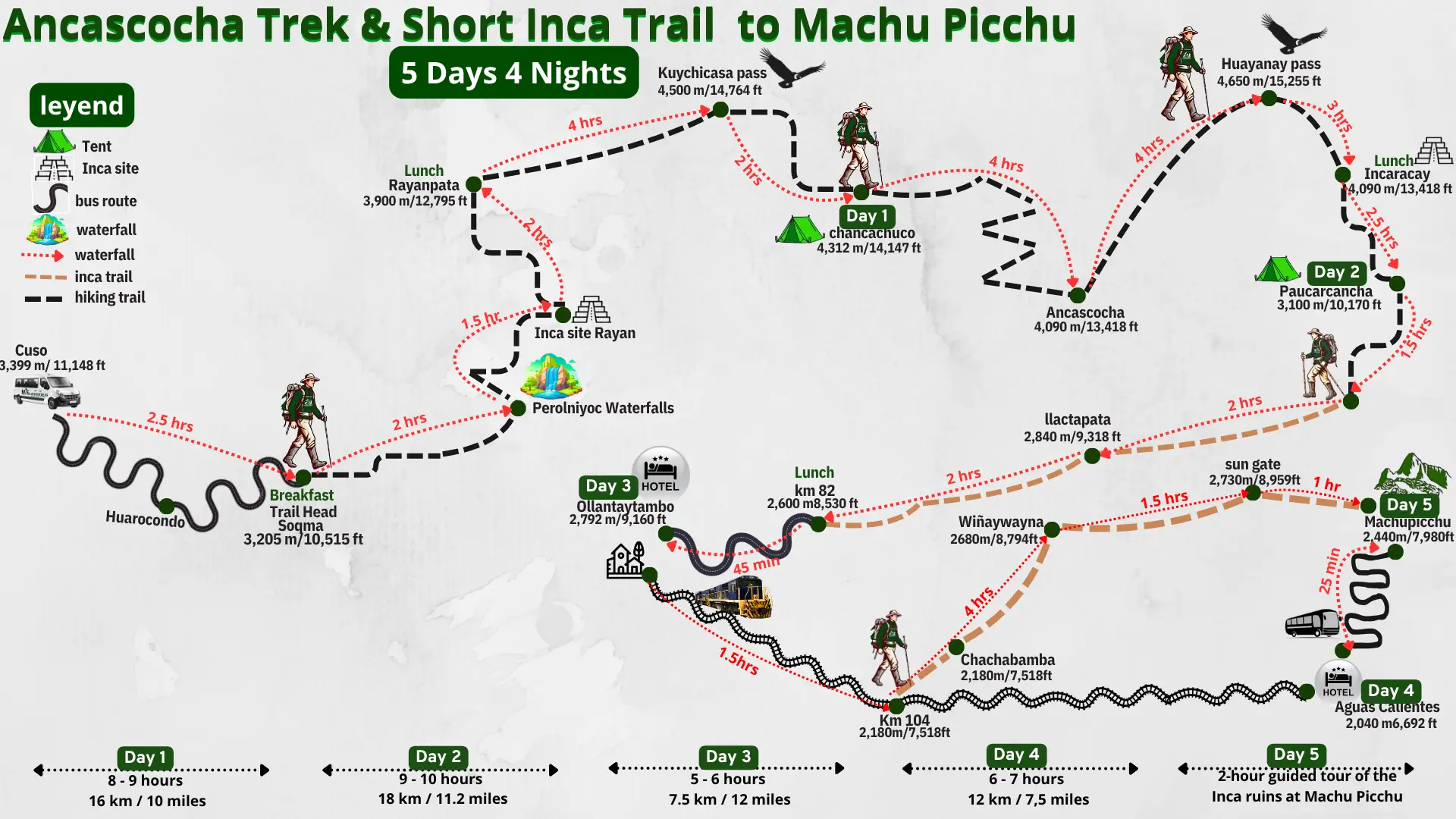
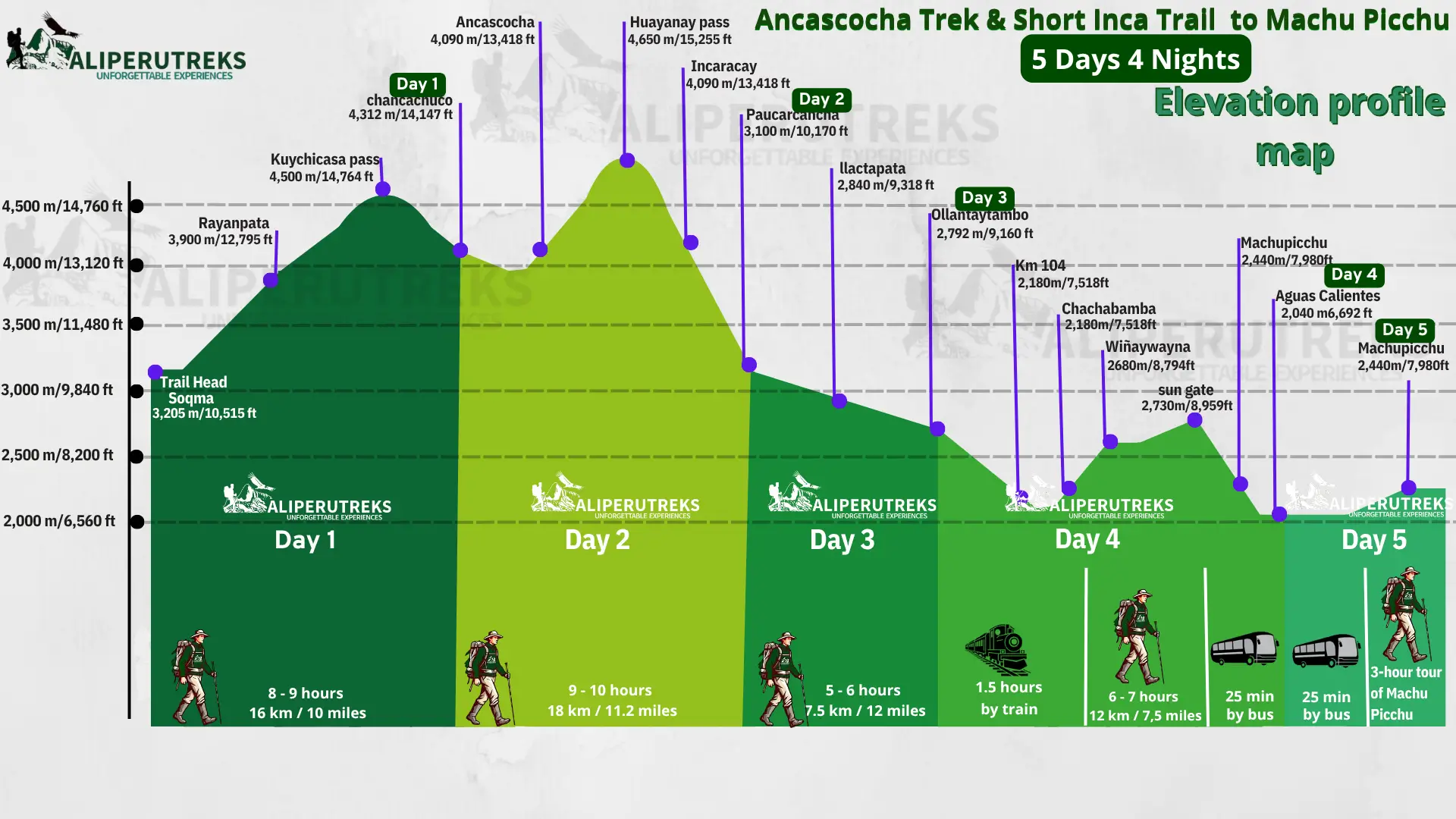
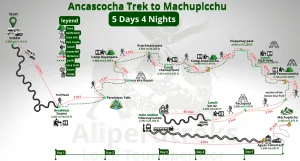
Ancascocha Trek & Short Inca Trail Map & Elevation Profile
Follow the complete Ancascocha Trek & Short Inca Trail route on the map below — from the trailhead at Soqma through Chancachuco Valley, Ancascocha Lake, the 4,650 m Huayanay Pass, and Paucarcancha, before joining the Short Inca Trail at Km 104 to the Sun Gate and Machu Picchu.
The elevation map shows the altitude profile for each of the 5 days, so you can see exactly where the climbs, passes, and descents happen and plan your acclimatization accordingly.
Price
Ancascocha Trek & Short Inca Trail Price
The Ancascocha Trek & Short Inca Trail costs $860 USD per person, including entrance permits for the Short Inca Trail and Machu Picchu, expert guides, camping and hotel accommodation, all trekking meals, and private transportation.
This 5-day trek price reflects a small-group, direct-operator experience — no middlemen, no outsourced services — making it one of the most complete alternative treks to Machu Picchu at this price point.
Pricing and Discounts
Immediate Permit and Ticket Confirmation
We guarantee the procurement of your official Machu Picchu entrance tickets and legal trail permits through the relevant authorities immediately after booking. Given the strict government regulations and limited daily slots for this historic route, your adventure is fully secured with us from the very first moment.
Investment Per Person
Group Service Price: $860 USD per person
Private Tour Options
For a more exclusive and personalized experience, we offer private departures with the following tiered rates based on your specific group size:
Group Size
Price Per Person
2 – 3 Trekkers
$990 USD
4 – 5 Trekkers
$940 USD
6 – 7 Trekkers
$900 USD
8 or more Trekkers
$860 USD
Note: All our tours are strictly priced in US Dollars (USD).
Discounts and Requirements
Student and Minor Discount: $30 off per person.
Requirements: This discount is valid for students holding a current university student ID card (physical format) or for young travelers aged 17 and under.
Validation: It is mandatory to send a highly legible copy of your student ID or passport at the time of booking to: info@aliperutreks.com.
Equipment Rental and Add-ons
Trekking Poles (Pair): $20 USD (includes rubber tips to protect the ancient Inca stone paths).
Sleeping Bag Rental: $25 USD per person.
Huayna Picchu Mountain: $80 USD additional per person (subject to availability).
Machu Picchu Mountain: $80 USD additional per person (subject to availability).
The Ali Perú Treks Commitment
We are an agency deeply dedicated to excellence. By choosing us, you guarantee high-quality service, elite safety protocols, and exceptional mountain comfort, while directly supporting the well-being of our local team and Andean communities through fair wages and responsible operations.
Faqs
Ancascocha Trek & Short Inca Trail FAQs
The combined Ancascocha Trek and Short Inca Trail is a challenging high-altitude adventure. It spans roughly 37 to 48 miles (60 to 77 km) over 5 days, peaking at the formidable Huayanay Pass at 4,650 meters (15,255 feet), making physical fitness and prior acclimatization essential
The Ancascocha Trek is generally considered more physically demanding and higher in altitude than the Classic Inca Trail, even though it features fewer steep stone staircases. While the Inca Trail tests your knees on relentless historic steps and reaches Dead Woman’s Pass at 12,779 feet (4,200 meters), Ancascocha climbs into thinner air past 15,256 feet (4,650 meters)
Most legitimate, licensed Inca Trail tours include the official government permit in their bundled price. Because permits are strictly regulated, non-transferable, and must be purchased by authorized operators, you cannot buy them independently. You should verify your specific booking confirmation to ensure it explicitly states that the Inca Trail permitand Machu Picchu entrance fee are included
The Ancascocha Trek & Short Inca Trail costs $860 USD per person, including official trekking permits, guide, meals, camping and hotel accommodation, and private transportation. Optional add-ons such as sleeping bag rental ($25 USD), trekking poles ($15 USD), and extra mountain permits ($80 USD) are priced separately.
Item
Cost
Tour price per person
$860 USD
Sleeping bag rental
$25 USD
Trekking poles (per pair)
$15 USD
Huayna Picchu / Machu Picchu Mountain permit
$80 USD
Suggested tips (guide, chef, porters)
$90-140 USD total
We strictly recommend arriving in Cusco at least 2 to 3 days before the trek. This allows your body to adjust to the altitude, significantly reducing the risk of altitude sickness during the high passes.
Our guides are certified in wilderness first aid. We carry medical oxygen tanks and specialized first aid kits at all times. On the Ancascocha section, we also provide an emergency horse if you need a break from the ascent.
The dry season (April to October) is the best time to hike, offering the most stable weather and clearest mountain views, though nights at high camps drop below freezing. The rainy season (November to March, excluding February) brings greener landscapes and fewer trekkers, with the trade-off of afternoon showers.
The Inca Trail network, including the Short Inca Trail portion of this route, closes every February for maintenance.
No — this trek is rated Challenging and is better suited to hikers with prior high-altitude trekking experience. The two consecutive days above 4,000 m, combined with a demanding pass at 4,650 m, make it more physically intensive than beginner-friendly alternatives like the Short Inca Trail (2 days) or Lares Trek.
First-time high-altitude trekkers are generally better matched with a shorter, lower-altitude route.
Yes. Peruvian regulations require all trekkers on Inca Trail-permitted routes to carry travel insurance covering high-altitude trekking and emergency rescue above 4,500 m (14,760 ft). Proof of insurance is typically requested during the booking process, alongside passport details used for permit issuance.
To maintain elite service, our maximum group size is 12 travelers. However, our average group size is typically between 4 to 8 people.
Yes, but these require an extra permit ($80 USD) and must be booked months in advance. Huayna Picchu is a steep 2-hour climb, while Machu Picchu Mountain is a 3-hour hike to the highest peak.
The $200 USD deposit used to purchase official trekking permits is non-refundable once permits are issued, as Peruvian law makes Inca Trail and Short Inca Trail permits personal and non-transferable. Cancellations requested before permit purchase may be eligible for a partial refund under the operator’s terms.
Trip-cancellation travel insurance is the recommended way to protect against unavoidable last-minute changes.
What is the pre-trek briefing for the Inca Trail?
The briefing is a mandatory technical meeting held at 6:00 p.m. the night before your trek starts. You will meet your lead guide, review the itinerary in detail, receive your duffle bag, and confirm all final logistics.
Where does the pre-trek briefing take place in Cusco?
It is held at our main office in Cusco (or your hotel, by prior arrangement). It is essential to attend to ensure you have all the correct information and gear before heading into the mountains.
Is there electricity to charge my phone during the Ancascocha Trek?
No. During the first three days in the Ancascocha wilderness, there is no access to electricity. You must bring all electronics 100% charged and carry a high-capacity Portable Power Bank. You will only find outlets on Day 3 (Ollantaytambo) and Day 4 (Aguas Calientes).
How much weight can porters carry on the Ancascocha Trek?
We provide a duffle bag during the briefing. Our team (horsemen/porters) will carry up to 7 kg (15 lbs) of your personal belongings, including your sleeping bag and mat. Anything you need during the day (water, camera, layers) stays in your daypack.
What food is provided on the Ancascocha Trek?
We provide a professional chef who prepares fresh, high-energy meals (breakfast, lunch, and dinner). We cater to all dietary needs (Vegan, Gluten-Free, etc.); please just inform us during your booking.
Is drinking water provided during the Inca Trail trek?
Yes. From the first lunch until the last breakfast, we provide water that has been boiled, purified, and cooled. You only need to bring reusable bottles or a hydration bladder (2L capacity recommended).
What are the bathroom facilities like on the Inca Trail?
Ali Peru Treks provides a private chemical toilet tent with a water pump for our group only. This ensures superior hygiene and privacy compared to the public campsites.
What camping equipment is included on the Ancascocha Trek?
We provide high-quality 4-season tents, premium inflatable mattresses, and pillows. We use 4-person tents for only 2 people, giving you extra space for your gear and comfort.
Are trekking poles necessary for the Inca Trail?
Highly recommended. The descents in Ancascocha and the stone stairs on the Inca Trail can be tough on the knees. You can rent professional poles from us for $15 USD per pair.
What is the difference between Machu Picchu Circuit 1 and Circuit 3?
Circuit 1 (Panoramic): Allows you to enter via the Sun Gate for the classic postcard view.
Circuit 3 (Urban): Takes you into the archaeological heart of the city (Temple of the Sun, Royal Houses). Both are included in your permit.
What weather should I expect on the Ancascocha Trek?
Andean weather is unpredictable. Dry season (April–Oct) is sunny but very cold at night (below freezing). Rainy season (Nov–March) is milder but wet. Dressing in layers (the “onion system”) is vital.
Where can I store my extra luggage in Cusco during the trek?
You can leave your main suitcases at your hotel storage in Cusco (most offer this for free) or in our secure office storage.
Are tips included in the Ancascocha Trek price?
No. Gratuities for the guides, chefs, and porters/horsemen are voluntary and are a traditional way to show appreciation for their hard work at the end of their respective service.
Why isn’t lunch included on the last day in Aguas Calientes?
This gives you the freedom to choose your own celebratory meal in Aguas Calientes and allows you to explore the town at your own pace before your train departs.
Why book the Ancascocha Trek with Ali Peru Treks?
We are a direct local operator. We do not outsource your booking. We know every inch of the trail, ensuring the highest safety standards, fair wages for our staff, and an authentic Andean experience.
What is the difference between the Ancascocha Trek and the Classic Inca Trail?
The Ancascocha Trek reaches a higher maximum altitude (4,650 m vs. 4,215 m) and sees far fewer trekkers over its first three days, since it isn’t part of the standard Inca Trail permit quota. The Classic Inca Trail follows an entirely Inca-built stone path for all 4 days, while Ancascocha combines remote Andean terrain with the Short Inca Trail only on the final two days.
Ancascocha permits are also generally easier to secure on shorter notice than Classic Inca Trail permits, which sell out 5-6 months ahead.
Do I need a visa to hike the Inca Trail in Peru?
Visa requirements depend on nationality, not on the trek itself. Most travelers from the US, Canada, EU, UK, and Australia can enter Peru visa-free for stays up to 90-183 days, depending on nationality and current immigration rules. All trekkers must carry their original physical passport on the trail regardless of visa status, as photocopies are not accepted at checkpoints.
Can dietary restrictions be accommodated on the trek?
Yes. Vegetarian, vegan, gluten-free, and other dietary restrictions can be accommodated by the trekking chef, provided they’re communicated at the time of booking so meals can be planned and sourced in advance.
Related Tours
Featured Tours & Treks
Discover hand-picked tours and treks to Machu Picchu and Peru’s most unforgettable destinations.
Combine two legendary Andean routes into one unforgettable expedition. This 7-day trek fuses the remote wilderness of the Ancascocha Trek — ranked by National Geographic among the world's best hikes — with the historic Classic Inca Trail to Machu Picchu. You'll cross two high mountain passes, Huayanay (4,650m) and the famous Dead Woman's Pass (4,215m),…
The Lares Trek & Short Inca Trail is the most complete 5-day trekking experience in the Peruvian Andes — and the only route that combines genuine cultural immersion with a legendary finish at Machu Picchu.
The Salkantay Trek 4 Days is an adventurous trekking route from Cusco to Machu Picchu, designed for travelers seeking a shorter yet rewarding alternative to the Classic Inca Trail.
Explore the Ancascocha Trek to Machu Picchu 5 Days, a remote off-the-beaten-path adventure through high mountain passes, Andean valleys, and breathtaking landscapes in Peru.
The Ausangate 7 Lakes hike is a full-day expedition into the heart of the Vilcanota Mountain Range, bringing you face-to-face with the sacred Apu Ausangate — the highest peak in the Cusco region.
The Salkantay and Inca Trail to Machu Picchu is one of Peru’s most spectacular trekking adventures, combining the breathtaking landscapes of the Salkantay Trek with the legendary Classic Inca Trail.
The Huchuy Qosqo trek, 3 days, is one of the best alternative treks to Machu Picchu for travelers who want an authentic Inca experience without the crowds of the Classic Inca Trail. Over three days, you’ll hike original Qhapaq Ñan trails through the Sacred Valley, camp beside high-Andean lagoons, and reach Huchuy Qosqo—the private Royal…
The Choquequirao to Machu Picchu Trek 6 Days is one of the most rewarding hiking adventures in Peru. This epic journey combines the remote Inca citadel of Choquequirao with the world-famous Machu Picchu
Trek the Inca Quarry and Short Inca Trail 5 Days to Machu Picchu adventure through the Sacred Valley — one of the best alternatives to the Classic Inca Trail for travelers who want fewer crowds and more history. Explore the ancient Cachicata Quarries, where Inca engineers carved the stone blocks used to build Ollantaytambo, then…
The Ancascocha Trek 4 Days is Peru’s off-the-beaten-path alternative to the Classic Inca Trail, crossing remote Andean valleys where llamas and alpacas graze freely below snow-capped peaks. Named by National Geographic as one of the world’s best hikes, this 4-day trek to Machu Picchu takes you past the turquoise Ancascocha Lake, the Perolniyoc Waterfall, and…
The Inca Quarry Trek to Machu Picchu is one of the best alternative treks to Machu Picchu for travelers seeking fewer crowds and authentic Andean scenery. This 4-day adventure from Cusco follows ancient Inca pathways through the Cachicata quarries, remote villages, and breathtaking mountain landscapes before arriving at the legendary citadel of Machu Picchu. Along…
Trek the Ausangate Circuit over 5 unforgettable days, hiking alongside a traditional llama caravan through glacial passes above 4,800m, turquoise high-Andean lagoons, and the base of Apu Ausangate — the highest sacred mountain in the Cusco region. This Ausangate Rainbow Mountain trek reaches Vinicunca early, before the day-trip crowds arrive from Cusco, then continues through…
The Choquequirao Trek 8 Days is the most complete way to experience Choquequirao and Machu Picchu in a single expedition. This Choquequirao to Machu Picchu trek takes you deep into the Apurímac Canyon, over remote Andean passes above 4,600 meters, and through cloud forest trails few travelers ever see — all before arriving at the…
The Huchuy Qosqo Trek 2 Days is the fastest cultural route to Machu Picchu, combining a moderate high-altitude hike through the Sacred Valley with an exclusive visit to the “Little Cusco” ruins. Unlike most alternative treks in Cusco, this route includes hotel accommodation in Aguas Calientes instead of camping, private transportation, and a gourmet picnic…
The Ausangate Trek 4 days is one of the most demanding and rewarding routes in the Peruvian Andes, combining the vivid colors of Rainbow Mountain and the Red Valley with high-altitude passes above 4,900m, turquoise glacial lakes, and close-up views of Apu Ausangate.
The Lares Trek to Machu Picchu 4 days is the most authentic cultural alternative to the Inca Trail in Peru. Over four days and three nights, you will hike through remote Andean villages.
If you dream of exploring the Peruvian Andes by combining legendary Inca sites, pristine glacier landscapes, and authentic sections of the Qhapaq Ñan away from tourist crowds, the Ancascocha Trek is your perfect route. Highlighted by National Geographic as one of the best hikes in the world, this journey links the majesty of the mountain…
The core difference between the 4-day and 5-day Ancascocha Trek is pacing, not scenery: both versions cover the same route, cross the same two mountain passes, and end at Machu Picchu — the 4-day version just compresses that same terrain into one fewer day, which makes its two toughest days significantly harder. The 5-day version…
The Ancascocha Trek is generally rated moderate to challenging, and most operators — including Ali Peru Treks’ own published itineraries — consider it harder than the Classic Inca Trail. The reason isn’t technical climbing or exposure; it’s the combination of two mountain passes above 4,500 m (14,750 ft), longer daily walking distances, and less trail…
The Ancascocha Trek route runs from the community of Soqma in the Sacred Valley, climbs through two mountain passes above 4,500 m, passes the lake and village the trek is named after, and descends to join the final stretch toward Machu Picchu. The exact map and elevation profile differ depending on which itinerary you book…
Packing for the Ancascocha Trek is different from packing for the Classic Inca Trail: you’ll climb higher (up to 4,650 m / 15,255 ft at Huayanay Pass), your gear is carried by horses or mules instead of human porters, and nights at camp can drop below freezing. This list covers exactly what to bring, what…
The Ancascocha Trek typically costs between $640 and $895 per person, depending on the operator, trek duration, and whether you book a group or private departure. Ali Peru Treks’ own published pricing runs from $640 for the 4-day/3-night version to $730 for the 5-day/4-night version. Other operators in the region price the same route anywhere…
The Ancascocha Trek follows the same two-season pattern as the rest of the Cusco region — dry from roughly May to October, rainy from November to April — but because the route climbs higher and has less infrastructure than better-known trails, weather affects the experience more directly here than it does on, say, the Classic…
The short answer: the Salkantay Trek is the more established, more social alternative to the Inca Trail — it’s the more popular of the two, includes a hotel night in Aguas Calientes, and passes the well-known Humantay Lake. The Ancascocha Trek is the quieter, more remote option — no other groups on the trail for…
The short answer: the Classic Inca Trail is the route to choose if you specifically want to walk through the Sun Gate at sunrise and don’t mind booking 6+ months ahead for a permit; the Ancascocha Trek is the better fit if you want a quieter, higher, more physically demanding route with no permit cap…
The Luxury Ancascocha Trek and the standard Ancascocha Trek cover the same route, cross the same two mountain passes, and reach the same maximum altitude of 4,650 m (15,255 ft) at Huayanay Pass. The difference isn’t the hike — it’s what happens at camp each night. Upgraded tents, better food service, and more staff support…
The short answer: the Ancascocha Trek is a multi-day route through the Vilcabamba mountains near Cusco that reaches a maximum altitude of 4,650 m (15,255 ft) at Huayanay Pass, passes the turquoise Ancascocha Lake and the Perolniyoc Waterfall, and is widely cited by Cusco tour operators as one of National Geographic’s 20 dream hikes on…