Home » Tours » Ancascocha Trek 4 Days to Machu Picchu
DURATION
4 days 3 nights
MAX ALTITUDE
4,650 m 15,255 ft
DIFFICULTY
Challenging
GROUP SIZE
Max. 12 Pax
DISTANCE
46 km
SEASON
Year Round
Ancascocha Trek 4 Days 3 Nights
Ancascocha Trek 4 Days to Machu Picchu
Hike a remote high-Andean route to Machu Picchu, far from the crowds of the Classic Inca Trail. In four days, you’ll cross the Kuychiccasa Pass and the Huayanay Pass, at about 4,650 m (15,255 ft), and camp beside the turquoise Ancascocha Lake and the Inca site of Paucarcancha. Your last trekking day follows an Inca road down the Cusichaca valley to KM 82. From there, you take the train to Aguas Calientes and spend a night in a hotel before your guided tour of Machu Picchu.
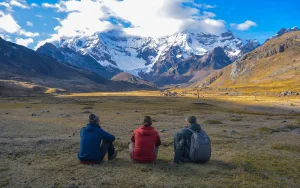
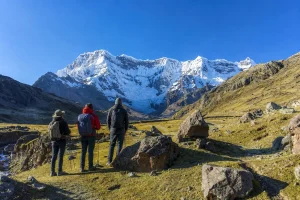
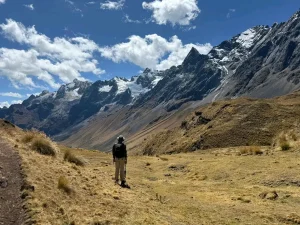
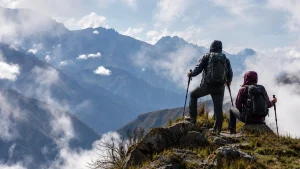
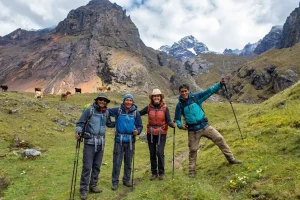
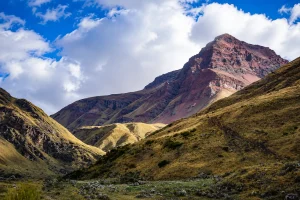
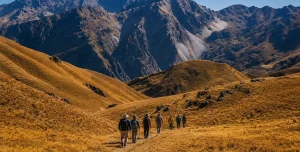
This is a challenging high-altitude trek. The first two days are long, with big climbs and cold nights above 4,000 m (13,100 ft). In return, you’ll walk through herding country where you’ll see more llamas and alpacas than hikers, with views of the Verónica and Salkantay glaciers.
Overview
Ancascocha Trek 4 Days Overview
The Ancascocha Trek starts at Soqma, near Ollantaytambo, and climbs into the high puna between the Sacred Valley and the Salkantay massif. It’s named after Ancascocha, a glacial lake at about 4,090 m (13,420 ft). The route passes the Perolniyoc waterfall and the Inca site of Rayan Pata, crosses two high passes, and descends to Paucarcancha. There it reaches the Cusichaca valley, the same valley the Classic Inca Trail follows on its first day.
Few groups hike this route, so the campsites are quiet, and you’ll mostly meet herding families along the way. Horses carry the camping gear and your duffel bag, and an emergency horse goes with every group.
Tour Highlights
Perolniyoc waterfall and Rayan Pata. Start with a waterfall and a small Inca site perched above the Soqma valley.
Two high passes. Cross the Kuychiccasa Pass, about 4,450 m (14,600 ft), and the Huayanay Pass, about 4,650 m (15,255 ft), the highest point of the trek.
Ancascocha Lake. Stop at the turquoise glacial lake that gives the trek its name.
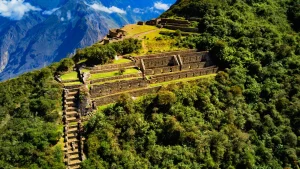
Camp at Paucarcancha. Spend your second night next to an Inca site where the trail meets the Cusichaca valley.
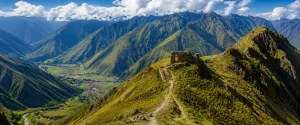
Inca sites of the Cusichaca valley. See Llactapata (Patallacta) and the hilltop site of Willkarakay on the way down to KM 82.
Machu Picchu. Spend a night in Aguas Calientes and take an early bus up for a guided tour on Circuit 2.
Trip Facts at a Glance
Detail
Ancascocha Trek 4 Days to Machu Picchu
Duration
4 days, 3 nights (2 nights camping, 1 night in a hotel)
Trekking distance
About 46 km (29 mi) over three hiking days
Highest point
Huayanay Pass, about 4,650 m (15,255 ft)
Other pass
Kuychiccasa Pass, about 4,450 m (14,600 ft)
Highest camp
Chancachuco, about 4,300 m (14,110 ft)
Camps
Chancachuco and Paucarcancha
Hotel
3-star hotel in Aguas Calientes (Hatun Inti Classic or similar)
Difficulty
Challenging
Start and finish
Hotel pickup in Cusco, Urubamba or Ollantaytambo; drop-off at your Cusco hotel
Pack animals
Horses, plus an emergency horse
Group size
Up to 12 travelers; departures from 2 travelers
Meals
4 breakfasts, 3 lunches and 3 dinners, plus afternoon tea
Machu Picchu
Guided tour, Circuit 2 (Machu Picchu Classic)
Best season
May to September
Price
From US$640 per person
Who This Trek Is For
This trek suits fit hikers who want a quiet, high-altitude route to Machu Picchu and who have done multi-day hikes before. You don’t need technical skills, but you’ll hike eight to ten hours on each of the first two days, cross two passes above 4,400 m (14,400 ft) and sleep at about 4,300 m (14,110 ft) on the first night. It isn’t a good choice for a first trek at altitude. You need at least two full days in Cusco or the Sacred Valley beforehand to acclimatize.
How This Trek Compares
Ancascocha Trek 4 Days
Ancascocha Trek 5 Days
Ancascocha & Short Inca Trail 5 Days
Pace
Two long trekking days
Same route over three trekking days
Same first three days
Camps
Chancachuco, Paucarcancha
Rayan, Ancascocha Lake, Paucarcancha
Chancachuco, Paucarcancha, plus a hotel in Ollantaytambo
Locally owned and operated. We are a Cusco-based company and run our own departures with our own guides, cooks and horsemen.
Departures from two travelers. Once your booking is confirmed, we run the trek even with two people.
An emergency horse with every group. If you feel tired or unwell on the passes, you can ride.
Prepared for altitude. Each group carries emergency oxygen, a first aid kit, radios and satellite communication.
Good food on long days. Our cook prepares fresh, hot meals, plus afternoon tea. Vegetarian, vegan and gluten-free diets are covered at no extra cost.
Fair treatment for our team. We respect weight limits for our horses, which is why duffel bags are limited to 7 kg (15 lb).
Itinerary
Ancascocha Trek 4 Days Itinerary
Day 1: Cusco to Soqma, Perolniyoc, Kuychiccasa Pass and Chancachuco
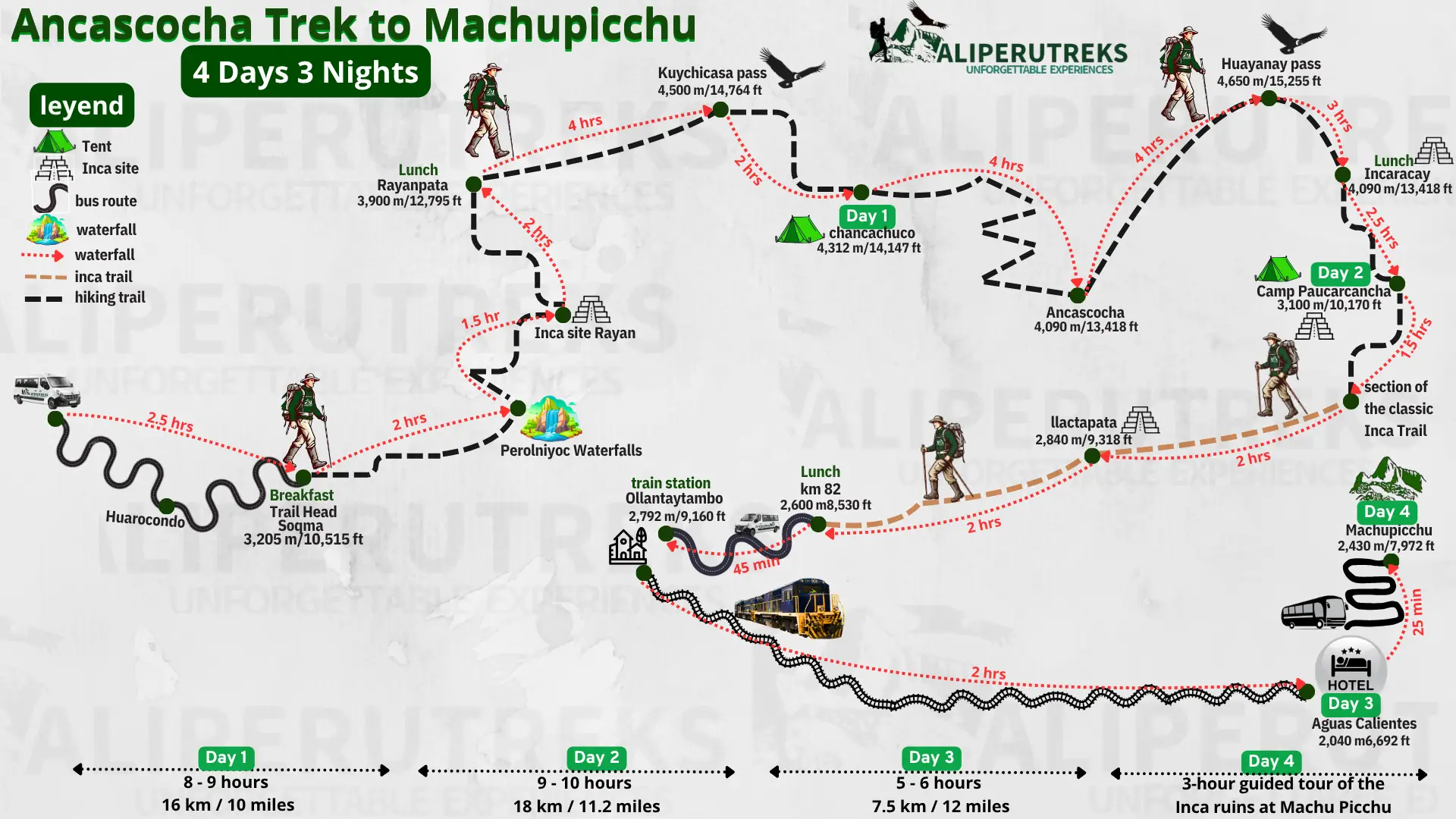
To kick off this spectacular 4-day Ancascocha Trek, we will pick you up directly from your hotel (whether in Cusco, Urubamba, or Ollantaytambo) at 4:00 a.m. After pickup, we will take an approximately 2.5-hour drive to the traditional village of Soqma (10,515 ft / 3,205 m). Upon arrival, our professional chef will welcome you with a hot, comforting breakfast right at the trailhead—the perfect moment to meet our team of wranglers and prepare your lungs for the pure Andean air.
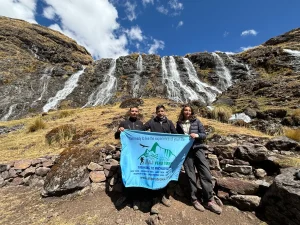
Our trek begins with a gradual 2-hour ascent toward the majestic Perolniyoc Waterfall (11,647 ft / 3,550 m), a stunning 80-foot veil of water considered sacred by local communities. After taking in this natural spectacle, we will climb for another hour to the Rayan Pata archaeological site (12,467 ft / 3,800 m). This Inca gem, literally suspended over the cliffside, served as an important administrative and ceremonial center; your Ali Perú Treks expert guide will unveil the mysteries of its architecture while you enjoy a privileged view of the valley.
We will continue a short distance to our lunch spot in the Rayan sector. Here, you will enjoy a nutritious meal prepared with local organic ingredients, specifically designed to provide the energy needed for the afternoon’s toughest challenge.
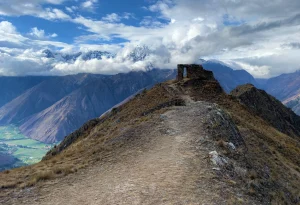
Our expedition continues with a progressive 3-hour ascent toward the Kuychiccasa Pass (14,599 ft / 4,450 m). During this stretch, the landscape transforms into a high-Andean tundra where llamas and alpacas dominate the horizon. Upon reaching the summit, the reward is unmatched: a dual panoramic view encompassing the Sacred Valley on one side and the untamed Chancachuco Valley on the other, guarded by perpetual glaciers.
Finally, we will descend for about 45 minutes to our campsite in the Chancachuco Valley (14,147 ft / 4,312 m). Upon arrival, your tents will be ready, and the team will welcome you with teatime (hot drinks and snacks). After a delicious mountain dinner, weather permitting, your guide will share the ancient wisdom of Inca astronomy and constellations, closing your first day of the expedition with a unique touch of mysticism.
Day 1
Details
Drive
About 2.5 hours from Cusco to Soqma
Hiking distance
About 16 km (10 mi)
Hiking time
8 to 9 hours
Elevation change
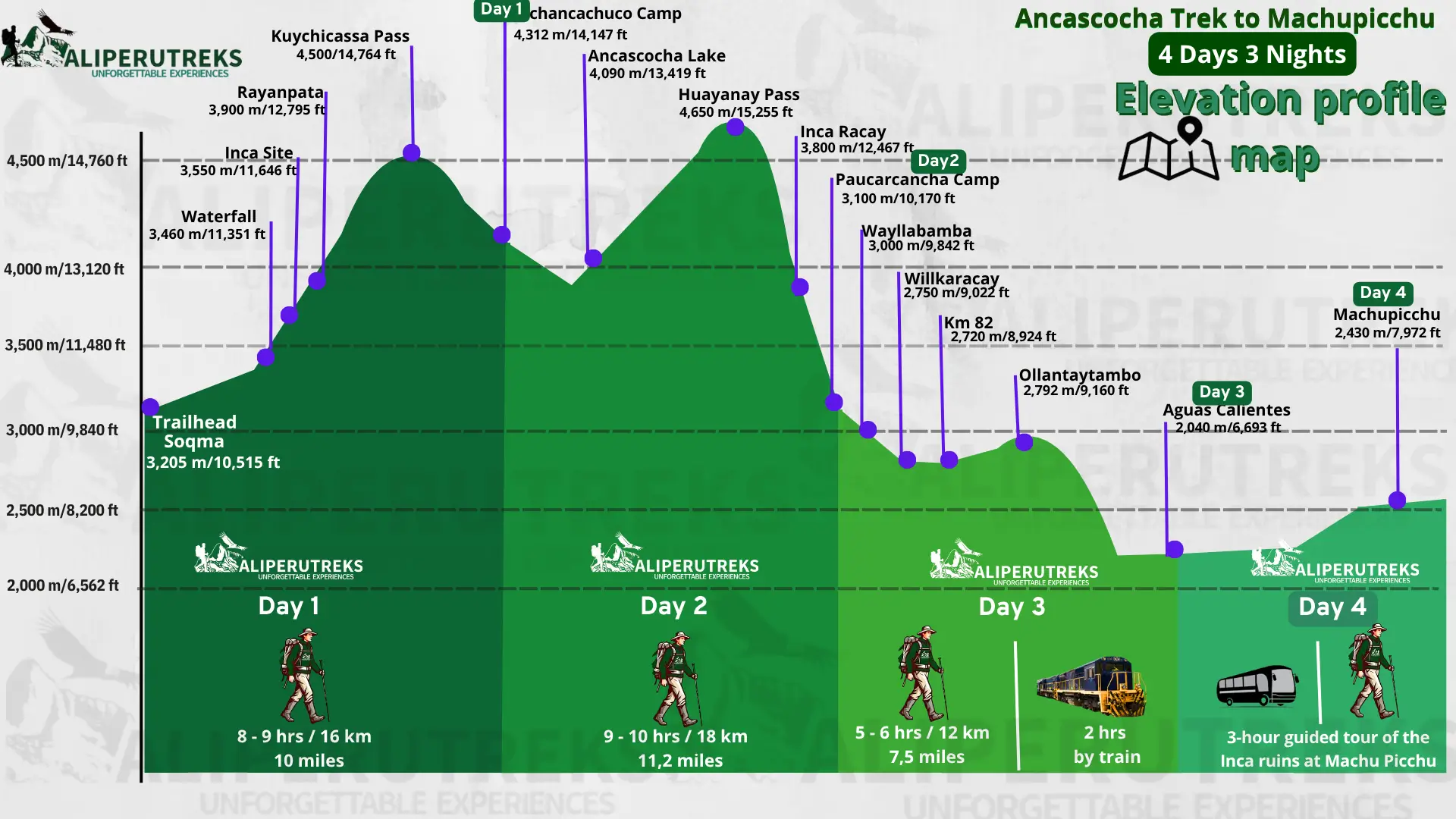
About 1,250 m (4,100 ft) of climbing
Highest point
Kuychiccasa Pass, about 4,450 m (14,600 ft)
Camp
Chancachuco, about 4,300 m (14,110 ft)
Meals
Breakfast, lunch, dinner
Difficulty
Challenging
Day 2: Ancascocha Lake, Huayanay Pass and Paucarcancha
Your second day begins in the crisp mountain air. Our team will wake you up with a hot cup of coca tea delivered directly to your tent. After a high-energy breakfast, we will embark on the most ambitious and rewarding leg of our expedition, venturing into the high-altitude wilderness where nature remains untouched.
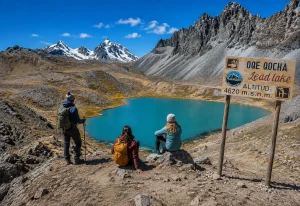
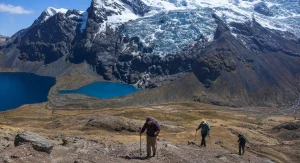
The first part of our trek leads us through undulating valleys inhabited by hundreds of alpacas and llamas. After approximately 2.5 hours of hiking, we will reach the spectacular Ancascocha Lake (13,418 ft / 4,090 m). Its turquoise waters, fed directly by glaciers, offer a perfect reflection of the massive peaks. We will take a brief break here to hydrate and capture the beauty of this natural amphitheater.
We will then begin the challenging ascent toward the highest point of our journey: the Huayanay Pass (15,255 ft / 4,650 m). This section is technical and demanding, but the reward is incomparable. Upon reaching the summit, you will stand face-to-face with the majesty of the glaciers. The panoramic view is breathtaking, with Mount Salkantay and Mount Huayanay standing as silent guardians. It is here that the sense of accomplishment reaches its pinnacle.
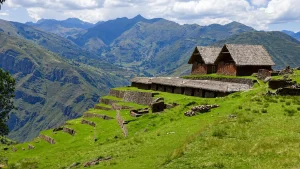
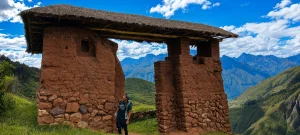
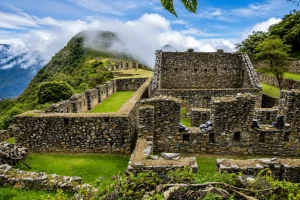
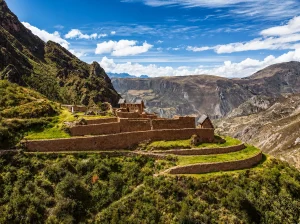
After celebrating our summit arrival, we will begin a steady descent through the Quesqa Valley. Along the way, we will enjoy a gourmet lunch at a strategic vantage point. The trail then leads us down into a different ecosystem, eventually arriving at the impressive Paucarcancha Archaeological Site (10,236 ft / 3,120 m). This unique Inca fortress, featuring original farming terraces and ancient stone structures, will be our home for the night.
Our campsite at Paucarcancha is truly special, located right next to the ruins where the Ancascocha trail meets the Classic Inca Trail. After a long and rewarding day, you will enjoy “Tea Time” and a gourmet dinner. Sleeping next to an ancient Inca site under the brilliant Andean stars is an experience reserved for very few travelers.
Day 2
Details
Hiking distance
About 18 km (11.2 mi)
Hiking time
9 to 10 hours
Elevation change
About 560 m (1,840 ft) of climbing to the pass, then about 1,550 m (5,090 ft) of descent
Highest point
Huayanay Pass, about 4,650 m (15,255 ft)
Camp
Paucarcancha, about 3,100 m (10,170 ft)
Meals
Breakfast, lunch, afternoon tea, dinner
Difficulty
Very challenging (the hardest day)
Day 3: Paucarcancha to KM 82, Ollantaytambo and Aguas Calientes
After a revitalizing breakfast at our campsite next to the Paucarcancha Inca ruins (10,236 ft / 3,120 m), we will begin our descent toward the Sacred Valley. Today is a journey through time as our trail merges with the legendary Classic Inca Trail. We will follow the path used by Inca royalty five centuries ago, hiking alongside the crystal-clear Cusichaca River.
As we move through the valley, we will encounter several significant administrative and agricultural centers that were vital to the Inca Empire. We will enjoy panoramic views of the massive Llactapata complex, as well as Qanabamba and Willkarakay. Your Ali Perú Treks expert guide will explain how these sites functioned as a strategic network of supply and communication for those heading to Machu Picchu.
After approximately 4 to 5 hours of hiking through a lush landscape that marks the transition into the cloud forest, we will arrive at Piscacucho, famously known as Kilometer 82 (8,858 ft / 2,700 m). This is the official starting point of the Classic Inca Trail and the final point of our trekking expedition. Here, our professional chef will serve a celebratory farewell lunch to honor your accomplishment in conquering the Ancascocha Highlands.
After bidding farewell to our dedicated team of horsemen, our private van will transport us to the historic town of Ollantaytambo, known as the “Living Inca Town.” You will have time to explore its charming cobblestone streets and intact ancient canals before enjoying dinner at a local restaurant.
Following dinner, we will board the tourist train for a spectacular 2-hour journey through the Urubamba canyon to Aguas Calientes. Upon arrival, you will be escorted to your 3-star hotel, where you can enjoy a hot shower and a comfortable night’s rest, preparing for the grand climax of our journey.
Day 3
Details
Hiking distance
About 12 km (7.5 mi)
Hiking time
4 to 5 hours
Elevation change
About 500 m (1,640 ft) of descent
End of trek
Piscacucho (KM 82), about 2,600 m (8,530 ft)
Transport
Private van to Ollantaytambo, Expedition train to Aguas Calientes
Overnight
3-star hotel in Aguas Calientes, about 2,040 m (6,690 ft)
Meals
Breakfast, lunch, dinner at a restaurant
Difficulty
Moderate (steady descent)
Day 4: Machu Picchu and Return to Cusco
Today is the day you have conquered the mountains to reach. After an early breakfast at your hotel, we will embark on the final stage of our journey to the New Wonder of the World. To ensure your maximum comfort, you will only need your daypack; your hotel will safely store your main luggage until we return from the sanctuary.
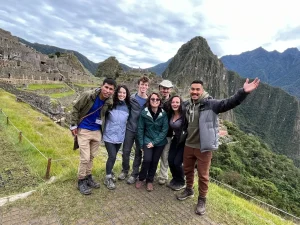
We will board the shuttle bus for a scenic 25-minute ascent through the cloud forest, arriving directly at the entrance of the Machu Picchu Historical Sanctuary (7,972 ft / 2,430 m).
Once inside, the magic of the Inca Empire unfolds. Your Ali Perú Treks expert guide will lead you on a private, 2-hour immersive tour. We have specifically secured Circuit 2 for your expedition—widely recognized as the most complete and coveted route.
The Postcard View: Your guide will first lead you to the upper platforms for the unobstructed, classic postcard photo of Machu Picchu you’ve always dreamed of.
The Sacred Tour: You will then explore the heart of the citadel, visiting the main temples, royal quarters, and the sacred Sun Dial (Intihuatana), gaining deep professional insight into Inca cosmology and engineering.
After experiencing the energy of the citadel, we will take the bus back down to Aguas Calientes. You will have free time to enjoy lunch in town (not included) and explore the local markets. In the afternoon, you will board the train for a relaxing journey along the Urubamba River back to Ollantaytambo.
Upon arrival at the station, the Ali Perú Treks private transport team will be waiting for you. We will drive you directly back to the city, concluding this epic 4-day adventure by dropping you off right at your hotel door in Cusco.
Day 4
Details
Activity
Guided tour of Machu Picchu, Circuit 2
Tour length
About 3 hours, plus free time
Machu Picchu altitude
About 2,430 m (7,970 ft)
Return
Bus to Aguas Calientes, train to Ollantaytambo, private van to your hotel in Cusco
Meals
Breakfast (lunch is not included)
Included
What’s Included in the Ancascocha Trek 4 Days
Included
Pre-trek briefing at 6:00 AM at your hotel on the morning of departure, where you will meet your guide and receive your duffel bag.
Professional English-speaking guide for the trek and the Machu Picchu tour
Cook preparing all meals on the trek, with vegetarian, vegan and gluten-free options at no extra cost
Horsemen and pack horses to carry the group equipment and your duffel bag
Duffel bag for up to 7 kg (15 lb) of personal gear, including your sleeping bag and pad
Camping:
Four-season tents
Foam sleeping pads
Dining tent with tables and chairs, and a kitchen tent
Private toilet tent at the campsites and lunch stops
Meals: 4 breakfasts, 3 lunches and 3 dinners, plus afternoon tea (Day 3 dinner at a restaurant in Aguas Calientes)
Drinking water, boiled and filtered, from lunch on Day 1 to lunch on Day 3
Travel pillow, rain poncho and backpack rain cover
Entrance tickets:
Ancascocha route entrance
Machu Picchu (Circuit 2)
Hotel: one night in a 3-star hotel in Aguas Calientes (Hatun Inti Classic or similar)
Transport:
Private van from your hotel to Soqma
Private van from KM 82 to Ollantaytambo
Expedition train from Ollantaytambo to Aguas Calientes and back
Round-trip bus between Aguas Calientes and Machu Picchu
Private van from Ollantaytambo to your hotel in Cusco
Safety equipment: emergency oxygen, first aid kit, radios.
Free luggage storage at our Cusco office
Not Included
Sleeping bag (available to rent)
Trekking poles (available to rent)
Inflatable sleeping pad (available to rent)
Lunch and dinner on Day 4
Huayna Picchu or Machu Picchu Mountain tickets
Travel insurance (required)
Tips for your guide, cook and horsemen
Snacks, drinks and personal expenses
Optional Extras
Sleeping bag rental US$25
Inflatable sleeping pad: US$20
Trekking poles with rubber tips: US$20 per pair
Huayna Picchu or Machu Picchu Mountain ticket: US$80 per person, subject to availability. These are separate ticket types with their own routes through the citadel. Book at least four months ahead.
Packing List
Ancascocha Trek Packing List
Pack for cold nights, strong sun and wind on the passes, and a warm, humid final day. Your daypack stays with you on the trail. Your duffel bag (7 kg / 15 lb, provided at the briefing) travels with the horses. Your sleeping bag (about 2 kg) and pad (about 1 kg) go inside it, which leaves about 4 kg for clothes and personal items. For more detail, see our trekking gear list.
Your Daypack
Use a 25 to 30 L pack.
Original passport. It must be the same document you used to book. If you booked a student discount, also bring your valid student ID.
Water: 2 to 3 liters in reusable bottles or a hydration bladder. Bring 2 liters for the first morning; we refill from lunch on Day 1.
Rain jacket (we provide a poncho)
Warm layer for the passes
Sun protection: SPF 50+ sunscreen, lip balm with SPF, a sun hat and UV sunglasses
Snacks such as trail mix, energy bars or chocolate for the long climbs
Headlamp for camp and early starts
Cash in Peruvian soles in small bills for snacks and tips
Small trash bag. We follow Leave No Trace principles.
Your Duffel Bag (Carried by Horses)
Clothing: 3 quick-dry T-shirts, 2 pairs of hiking pants, underwear and 4 pairs of warm hiking socks
Warm layers: thermal base layers, a fleece and a down jacket. Nights at Chancachuco can drop below –5°C (23°F).
Wool hat and waterproof gloves
Camp shoes: sneakers or sandals
Sleeping bag rated to about –15°C (5°F), if you aren’t renting ours
Toiletries: hand sanitizer, biodegradable wipes, toothbrush, toothpaste and a quick-dry towel
Power bank. There is no electricity on the trek.
Health and Personal Care
Personal medication, plus anything your doctor recommends for altitude
Blister kit, pain relief and rehydration salts
Lip balm and moisturizer for the very dry air on the passes
Insect repellent for Day 3 in the lower Cusichaca valley and Day 4 at Machu Picchu
For Your Machu Picchu Day
Inside Machu Picchu, bags may be no larger than 40 × 35 × 20 cm (about 16 × 14 × 8 in), and trekking poles and food are not allowed. Leave your larger bag and poles at the hotel in Aguas Calientes.
Travel Info
Travel Information for the Ancascocha Trek 4 Days
Pre-Trek Briefing
Attendance is mandatory. The briefing will take place at your hotel at 6:00 PM the day before your trek. You will meet your guide, go through the safety plan, receive your duffel bag, and pay your remaining balance. If your flight is delayed, please contact us right away so we can arrange another time.
Acclimatization and Altitude
On this route, you sleep at about 4,300 m (14,110 ft) on the first night and cross a pass at about 4,650 m (15,255 ft) on Day 2. Spend at least two full days in Cusco, at about 3,400 m (11,150 ft), or in the Sacred Valley before you start. Three is better. Drink plenty of water, avoid alcohol and talk to your doctor about altitude medication such as acetazolamide.
If symptoms don’t improve, the first response is to descend, and the emergency horse can carry you. See our guides to acclimatizing in Cusco and altitude sickness.
How Difficult Is the Ancascocha Trek
We rate this trek as challenging. Days 1 and 2 are long, at 8 to 10 hours of hiking each, with big climbs at altitude, and Day 2 also has a descent of about 1,550 m (5,090 ft). Day 3 is an easier descent. Train with long hikes, hill or stair climbing and cardio for at least four weeks before your trip, and bring trekking poles for the descents.
Weather and Best Time to Go
The best season is May to September, during the dry season. Days are sunny, and nights at the high camp are well below freezing. From November to April, expect rain, cloud and possible snow on the passes. Read our Ancascocha Trek by month guide for month-by-month conditions.
Booking and Payment
Deposit: US$200 per person, non-refundable, paid online through WeTravel. We use it to buy your Machu Picchu ticket and train seats right away. These tickets are personal and non-refundable.
Balance: pay at the briefing in Cusco, in cash (US dollars or Peruvian soles) or by card.
When to book: at least four to five months ahead for Circuit 2 and good train times, and earlier if you want Huayna Picchu or Machu Picchu Mountain.
Terms: see our booking information page for full payment and cancellation terms.
Travel Insurance
Travel insurance is required for this trek. It must cover high-altitude trekking above 4,650 m (15,255 ft) and emergency evacuation.
Luggage
Leave your large suitcase at our Cusco office, where storage is free. You only take your duffel bag (carried by the horses) and your daypack on the trek.
Camps, Water and Electricity
The campsites are remote. We set up a private toilet tent at the campsites and lunch stops. Our cook boils and filters all drinking water, so you don’t need to buy plastic bottles. There is no electricity and almost no mobile signal until Aguas Calientes.
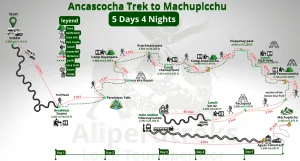
The trek starts at Soqma, near Ollantaytambo, and climbs past the Perolniyoc waterfall and Rayan Pata to the Kuychiccasa Pass. It descends to the Chancachuco valley, continues to Ancascocha Lake and crosses the Huayanay Pass, the highest point. The route then descends through the Quesqa valley to Paucarcancha and follows the Cusichaca valley past Huayllabamba and Llactapata to KM 82 on the Urubamba River.
From there, the trip continues by road to Ollantaytambo and by train to Aguas Calientes and Machu Picchu.
Price
Ancascocha Trek 4 Days Price
All prices are per person in US dollars and include the services listed under What’s Included.
Service
Price per person
Shared group departure
US$640
Private departure, 2–3 travelers
US$790
Private departure, 4–5 travelers
US$750
Private departure, 6–7 travelers
US$700
Private departure, 8 or more travelers
US$640
Discounts and Extras
Student and youth discount: US$30 off per person for university students with a valid physical student ID and for travelers aged 17 and under. Email a clear copy of the ID or passport to info@aliperutreks.com when you book.
Sleeping bag rental: US$25
Inflatable sleeping pad: US$20
Trekking poles: US$20 per pair
Huayna Picchu or Machu Picchu Mountain: US$80 per person, subject to availability
Ready to book? Pay your deposit online, or contact us to check availability for your dates.
Faqs
Ancascocha Trek 4 Days FAQs
It’s challenging. The first two days involve eight to ten hours of hiking with two passes, the higher one at about 4,650 m (15,255 ft). Good fitness, prior multi-day trekking experience and at least two days of acclimatization are recommended.
Generally, yes. Its highest pass is about 435 m higher than Dead Woman’s Pass on the Classic Inca Trail, which is about 4,215 m (13,830 ft), and the first night’s camp is much higher. The Inca Trail has more stone steps, while Ancascocha has longer days on open trails at altitude. Read our Ancascocha vs Classic Inca Trail comparison.
Both reach similar altitudes. The Salkantay Pass is about 4,630 m (15,190 ft), and Ancascocha’s Huayanay Pass is about 4,650 m (15,255 ft). Ancascocha is much quieter and passes more Inca sites, while Salkantay is busier and ends with cloud forest and Llactapata.
You don’t hike the Classic Inca Trail to Machu Picchu on this trek, so you don’t need to compete for the limited Classic Inca Trail permits, and you reach Aguas Calientes by train. The entrance tickets for this route and for Machu Picchu are included, and we arrange them when you book.
The Huayanay Pass, at about 4,650 m (15,255 ft), on Day 2. The highest camp is Chancachuco, at about 4,300 m (14,110 ft), on Night 1.
About 46 km (29 mi) over three hiking days: about 16 km on Day 1, 18 km on Day 2 and 12 km on Day 3.
Circuit 2 (Machu Picchu Classic), with the classic view from the terraces and a walk through the main urban sector, subject to official availability. Read our guide to the Machu Picchu circuits.
Yes, for US$80 per person, subject to availability. Book at least four months ahead.
An emergency horse travels with every group, so you can ride if you feel unwell. Our guides carry emergency oxygen and a first aid kit. If symptoms don’t improve, the first response is to descend.
May to September, during the dry season. The rest of the year brings rain and cloud, and possible snow on the passes.
The deposit is US$200 per person, non-refundable, paid online through WeTravel. You pay the balance at the briefing in Cusco, in cash or by card.
At least four to five months ahead, and earlier if you want Huayna Picchu or Machu Picchu Mountain.
Up to 12 travelers. We run departures from two travelers.
Yes. Your policy must cover high-altitude trekking and emergency evacuation.
Only for the first morning. From lunch on Day 1, we provide boiled and filtered water. Bring reusable bottles or a hydration bladder.
No. There is no electricity at the campsites and almost no mobile signal until Aguas Calientes. Bring a power bank.
One night at the Hatun Inti Classic or a similar 3-star hotel, with private bathrooms and hot water.
Yes. We store your extra luggage at our Cusco office free of charge while you’re on the trek.
It isn’t a good first trek. If you’re new to trekking or prefer a gentler pace, consider the Ancascocha Trek 5 Days or the Short Inca Trail. Travelers of any age with good fitness and recent trekking experience can do it.
Related Tours
Featured Tours & Treks
Discover hand-picked tours and treks to Machu Picchu and Peru’s most unforgettable destinations.
Combine two legendary Andean routes into one unforgettable expedition. This 7-day trek fuses the remote wilderness of the Ancascocha Trek — ranked by National Geographic among the world's best hikes — with the historic Classic Inca Trail to Machu Picchu. You'll cross two high mountain passes, Huayanay (4,650m) and the famous Dead Woman's Pass (4,215m),…
The Salkantay and Inca Trail to Machu Picchu is one of Peru’s most spectacular trekking adventures, combining the breathtaking landscapes of the Salkantay Trek with the legendary Classic Inca Trail.
The Salkantay Trek 4 Days is an adventurous trekking route from Cusco to Machu Picchu, designed for travelers seeking a shorter yet rewarding alternative to the Classic Inca Trail.
Combine one of the quietest high-altitude treks near Cusco with the classic arrival at Machu Picchu on foot. On the Ancascocha Trek, you cross two high passes, including the Huayanay Pass at about 4,650 m (15,255 ft), walk past the turquoise Ancascocha Lake and camp beside the Inca site of Paucarcancha. After a night in…
The Huchuy Qosqo trek, 3 days, is one of the best alternative treks to Machu Picchu for travelers who want an authentic Inca experience without the crowds of the Classic Inca Trail. Over three days, you’ll hike original Qhapaq Ñan trails through the Sacred Valley, camp beside high-Andean lagoons, and reach Huchuy Qosqo—the private Royal…
The Ausangate Trek 5 Days to Machu Picchu combines two very different sides of Peru. You spend four days walking around the glaciers of Ausangate, at 6,384 m (20,945 ft) the highest mountain in the Cusco region, then finish with a guided tour of Machu Picchu. On the way, you cross high passes close to…
The Ausangate 7 Lakes hike is a full-day expedition into the heart of the Vilcanota Mountain Range, bringing you face-to-face with the sacred Apu Ausangate — the highest peak in the Cusco region.
Hike the Inca Quarry Trail, a quiet high-Andean route to Machu Picchu that ends at the quarries where the Incas cut the stone for Ollantaytambo. In four days, you’ll pass the Perolniyoc waterfall, cross the Kuychicasa Pass at about 4,450 m (14,600 ft) and walk through the Cachicata quarries, still scattered with half-worked blocks. You’ll…
Hike to the Inca royal estate of Huchuy Qosqo, "Little Cusco", and finish the next morning at Machu Picchu. On Day 1, you cross a high pass at about 4,100 m (13,450 ft), explore the ruins above the Sacred Valley with your guide and descend to the village of Lamay. You then take the evening…
This four-day camping trek circles the glaciers of Ausangate with a traditional llama caravan carrying the gear. It ends at Rainbow Mountain (Vinicunca) early on the last morning, before most day-trip groups arrive. You'll hike past turquoise glacial lakes, cross three high passes up to about 4,980 m (16,340 ft) and camp below the ice.…
Trek the Inca Quarry and Short Inca Trail 5 Days to Machu Picchu adventure through the Sacred Valley — one of the best alternatives to the Classic Inca Trail for travelers who want fewer crowds and more history. Explore the ancient Cachicata Quarries, where Inca engineers carved the stone blocks used to build Ollantaytambo, then…
Walk all the way from Choquequirao to Machu Picchu on a long, varied trek through the Vilcabamba range. Over eight days, you'll descend into the Apurímac Canyon and explore the remote Inca site of Choquequirao. Then you'll cross the Vilcabamba range over two high passes, up to about 4,660 m (15,290 ft) at the Yanama…
Hike one of the quietest routes to Machu Picchu at a steady pace. Over five days, you'll walk from the Perolniyoc waterfall into high Andean grasslands, camp beside the turquoise Ancascocha Lake and cross the Huayanay Pass, at about 4,650 m (15,255 ft), with views of the Verónica and Salkantay glaciers. You'll descend to the…
The Ausangate Trek 4 days is one of the most demanding and rewarding routes in the Peruvian Andes, combining the vivid colors of Rainbow Mountain and the Red Valley with high-altitude passes above 4,900m, turquoise glacial lakes, and close-up views of Apu Ausangate.
The Lares Trek & Short Inca Trail is the most complete 5-day trekking experience in the Peruvian Andes — and the only route that combines genuine cultural immersion with a legendary finish at Machu Picchu.
Hike down into the Apurímac Canyon and climb the other side to Choquequirao, the remote Inca site known as Machu Picchu's "sister city". You'll have a full day to explore its plazas, temples and the famous llama terraces with very few other visitors around. After five days on the trail, we drive and take the…
The Lares Trek to Machu Picchu 4 days is the most authentic cultural alternative to the Inca Trail in Peru. Over four days and three nights, you will hike through remote Andean villages.
Discover the experiences of travelers who have explored Peru with Ali Perú Treks. From the legendary Inca Trail to the breathtaking landscapes of the Andes and the wonders of Machu Picchu, our guests share their stories, honest feedback, and unforgettable moments. Their reviews reflect our commitment to personalized service, knowledgeable local guides, and meaningful adventures crafted with care from start to finish.
Posted on Tripadvisor
Relax38155504360
Verified
Exelente servicio
My family and I booked the tour to Humantay Lagoon; the organization was excellent, and the guide assigned to us—Abel—was spectacular. He was very patient, attentive to everything, and showed great passion for his work. I would book with them again without hesitation. Thank you very much, Aliperutreks.
Posted on Tripadvisor
Jabeht M
Verified
Exelente organizacion
Tour bien organizado todo los detalles el almuerzo el desayuno todo bien perfecto.Muchas gracias Aliperutreks
Posted on Tripadvisor
Dreamer53144922871
Verified
Prachtige tocht via zonnepoort Machu Picchu
Het was echt een geweldige ervaring. We hadden een geweldige gids, Messias. Hij was heel vriendelijk, wist ontzettend veel over geschiedenis Inca en Machu Picchu. De trail van Ollaytambo naar Machu Picchu via de zonnepoort, was fantastisch. 2 keer naar Machu Picchu, deze tour echte aanrader en met een beetje geluk heb je Messias als gids.
Posted on Tripadvisor
Whitney R
Verified
Must do your for you Machu Picchu trip
What an amazing experience. We would definitely recommend doing the Inca trail hike that leads you to Machu Picchu. The other Inca ruins we saw were worth ever step we took to get there. Our guide Sebastian was amazing. He was so knowledgeable and friendly and definitely made the adventure even more special. Pick up was easy. Spending the night in Aguas Caliente was also worth the experience. Very cute town. Can’t recommend this tour enough.
Posted on Tripadvisor
I547ZPsimonem
Verified
Memories that will last forever
There were just the two of us on the trip, and we had an unforgettable time. Everything was exceptionally well organized, and we felt completely at ease. Our cook, Valerio, treated us to fabulous, authentic meals; our mule driver, Guillermo, took care of our luggage and the logistics; and Ciprian, known as Puma, guided us through the four days with excellent organization. The highlight was a fabulous view of the glacier-capped mountains and a lunch with Guellermo’s family, where we got a little closer to traditional Andean life. I would book this tour again in a heartbeat. These are moments I’ll never forget.
Posted on Tripadvisor
Alexa R
Verified
Unforgettable experience
We had an unforgettable time with Ali Treks. The tour was perfectly planned and organized down to the smallest detail. Ali Treks has the best Route for Lares. We had barely seen any, other people and that felt amazing. Three times a day, the head chef Valerio Huaman served us a magnificent feast. It was the best food I had during my entire trip to Peru. We didn’t have to worry about a thing during those four days—we could just enjoy ourselves. The guide Ciprian Torres Puma was very professional and had an amazing knowledge of the mountains, the traditional rituals, and the history of the Incas. I felt safe and well taken care of at all times. He knows the treks inside and out. I learned so much from him. The mule driver Guellermo Aransabel also took incredible care of us and our luggages. We got to meet his family, and one of the highlights was getting to dance with them in traditional clothing—it was a lively and joyful experience. The muleteer, the head chef, and the guide all have years of experience and either grew up in mountain communities or still live there. I’ll cherish the memories and experiences from this trek forever, and I thank Ali Treks and the team from the bottom of my heart for everything. I would definitely book the Lares Trek with Ali again.
Posted on Tripadvisor
GiuliaC
Verified
An amaing trekking!
The tour was great. We had a sunny day and the view of Machu Picchu from the Sun gate was amazing! Also the hotel and the dinner after the trekking were great. And our guide, Ali Messias, was super helpful and prepared! Just a little suggestion: after your morning visit to Machu Picchu on day 2, book the earliest train possible to Ollantaytambo, since there is nothing to do in Aguas Calientes.
Posted on Tripadvisor
Rajitha C
Verified
Unforgettable 2-Day Inca Trail – Ask for Mesias!
The 2 day Inca Trail tour was incredible! Our guide Mesias was extremely attentive to our needs and went along the trail at our pace. Mesias was the best! He is passionate and informative about Incan history and culture throughout the hike, Mesias was patient and encouraging during the trail He knows all the best photo spots and is basically a professional photographer! Overall, the experience was wonderful and if you choose to book this tour we highly recommend requesting Mesias.
Posted on Tripadvisor
Escape14862535459
Verified
Incredible journey through the Andes
We had an unforgettable experience. Mesias was an exceptional guide, very attentive and encouraging on the difficult climbs. Valerio was an outstanding cook, and Segundino was a very effective horseman. Thanks to them we will never forget this incredible journey!
Posted on Tripadvisor
Christian V
Verified
10 out of 10 experience/adventure
An amazing trek. The guide -Carlos Navarro- was a 10/10 -knowledgeable and patient. This trip was a fair price with excellent service. The chef and porters were awesome. Every day of this trek was outstanding -the added short Inca trail day was worth it just to walk through to the sun gate. Amazing company and amazing experience - don’t wait just do it.
Posted on Google
Jabeht Morales mamani
Trustindex verifies that the original source of the review is Google.
Primeramente agradecida con esta empresa aliperutreks nos ayudo bastante con nuestra reserva para el famoso tour de camino inca de 4 dias a machupicchu.toda el equipo estaba bien organizada.El guia Teo que era designado para nuestro grupo era bien preparado y bien conocedor de la historia inca gracias a su ayuda de el y porteadores llegamos a machupicchu y muchas gracias a todo el equipo de Aliperutreks.Sin dudarlo reservaria con ellos una ves mas.👍👍👍
Posted on Google
Mathio
Trustindex verifies that the original source of the review is Google.
We had a unique experience with Aliperutreks; we booked the 4-day Inca Trail to Machu Picchu, and the organization was spectacular. Our guide, Mesías, was magnificent and knowledgeable about all Inca history; the chef, Valerio, and our porters were also excellent. I am very grateful to the entire team and the organization—thanks again to Aliperutreks. I would use their services again without hesitation. Highly recommended.
Posted on Google
Luz
Trustindex verifies that the original source of the review is Google.
We had a unique experience with the company Aliperutreks; we booked the 4-day Inca Trail to Machu Picchu, and the organization was spectacular. Our guide, Mesias, was magnificent and knew all the Inca history; the chef, Valerio, and our porters were also excellent. I am very grateful to the entire team and the organization thanks again to Aliperutreks. I would book with them again without hesitation. Highly recommended.
Posted on Google
Laura Smith
Trustindex verifies that the original source of the review is Google.
The organization was top-notch from start to finish. We were incredibly impressed by how well-coordinated everything was:
The Permits: You can tell they handle the booking details with great care. It was reassuring to know that daily permits are strictly capped at 250 people, which keeps the trail from feeling overcrowded!
Luggage Handling: A massive highlight was that the agency provided us with a 5 kg (11 lbs) duffel bag for our gear. We didn’t have to carry any heavy weight during the hike because the company took care of sending it directly on the train to our hotel in Aguas Calientes. Hiking light made the experience twice as enjoyable!
The Guide: Extremely professional, deeply knowledgeable about Inca history, incredibly patient, and packed with great energy that kept us motivated every step of the way.
Posted on Google
Scoth Mathias Coonor
Trustindex verifies that the original source of the review is Google.
Sin duda una empresa que si sabe organizar d los tours pasamos de la mejor manera el camino inca 4 días sin dudarlo recomendaré a mis amigos muchas gracias Aliperutreks
Posted on Google
Eliaquim Huaman Gutierrez
Trustindex verifies that the original source of the review is Google.
Experiencia maravillosa por los andes de Perú.
Posted on Google
R. Aranzabal
Trustindex verifies that the original source of the review is Google.
Reservamos un tour con aliperutreks. El servicio que brinda es muy espectacular me gustó demacrado muchas gracias
Posted on Google
Mary Aranzabal
Trustindex verifies that the original source of the review is Google.
Experiencia inolvidable me gusto mucho el tour que hicimos
Our Blogs
Our Blogs
Blogs that provide information and tips for planning the perfect trip to Peru and Machu Picchu.
The core difference between the 4-day and 5-day Ancascocha Trek is pacing, not scenery: both versions cover the same route, cross the same two mountain passes, and end at Machu Picchu — the 4-day version just compresses that same terrain into one fewer day, which makes its two toughest days significantly harder. The 5-day version…
The Ancascocha Trek is generally rated moderate to challenging, and most operators — including Ali Peru Treks’ own published itineraries — consider it harder than the Classic Inca Trail. The reason isn’t technical climbing or exposure; it’s the combination of two mountain passes above 4,500 m (14,750 ft), longer daily walking distances, and less trail…
The Ancascocha Trek route runs from the community of Soqma in the Sacred Valley, climbs through two mountain passes above 4,500 m, passes the lake and village the trek is named after, and descends to join the final stretch toward Machu Picchu. The exact map and elevation profile differ depending on which itinerary you book…
Packing for the Ancascocha Trek is different from packing for the Classic Inca Trail: you’ll climb higher (up to 4,650 m / 15,255 ft at Huayanay Pass), your gear is carried by horses or mules instead of human porters, and nights at camp can drop below freezing. This list covers exactly what to bring, what…
The Ancascocha Trek typically costs between $640 and $895 per person, depending on the operator, trek duration, and whether you book a group or private departure. Ali Peru Treks’ own published pricing runs from $640 for the 4-day/3-night version to $730 for the 5-day/4-night version. Other operators in the region price the same route anywhere…
The Ancascocha Trek follows the same two-season pattern as the rest of the Cusco region — dry from roughly May to October, rainy from November to April — but because the route climbs higher and has less infrastructure than better-known trails, weather affects the experience more directly here than it does on, say, the Classic…
The short answer: the Classic Inca Trail is the route to choose if you specifically want to walk through the Sun Gate at sunrise and don’t mind booking 6+ months ahead for a permit; the Ancascocha Trek is the better fit if you want a quieter, higher, more physically demanding route with no permit cap…
The Luxury Ancascocha Trek and the standard Ancascocha Trek cover the same route, cross the same two mountain passes, and reach the same maximum altitude of 4,650 m (15,255 ft) at Huayanay Pass. The difference isn’t the hike — it’s what happens at camp each night. Upgraded tents, better food service, and more staff support…
The short answer: the Salkantay Trek is the more established, more social alternative to the Inca Trail — it’s the more popular of the two, includes a hotel night in Aguas Calientes, and passes the well-known Humantay Lake. The Ancascocha Trek is the quieter, more remote option — no other groups on the trail for…
If you dream of exploring the Peruvian Andes by combining legendary Inca sites, pristine glacier landscapes, and authentic sections of the Qhapaq Ñan away from tourist crowds, the Ancascocha Trek is your perfect route. Highlighted by National Geographic as one of the best hikes in the world, this journey links the majesty of the mountain…
The short answer: the Ancascocha Trek is a multi-day route through the Vilcabamba mountains near Cusco that reaches a maximum altitude of 4,650 m (15,255 ft) at Huayanay Pass, passes the turquoise Ancascocha Lake and the Perolniyoc Waterfall, and is widely cited by Cusco tour operators as one of National Geographic’s 20 dream hikes on…