
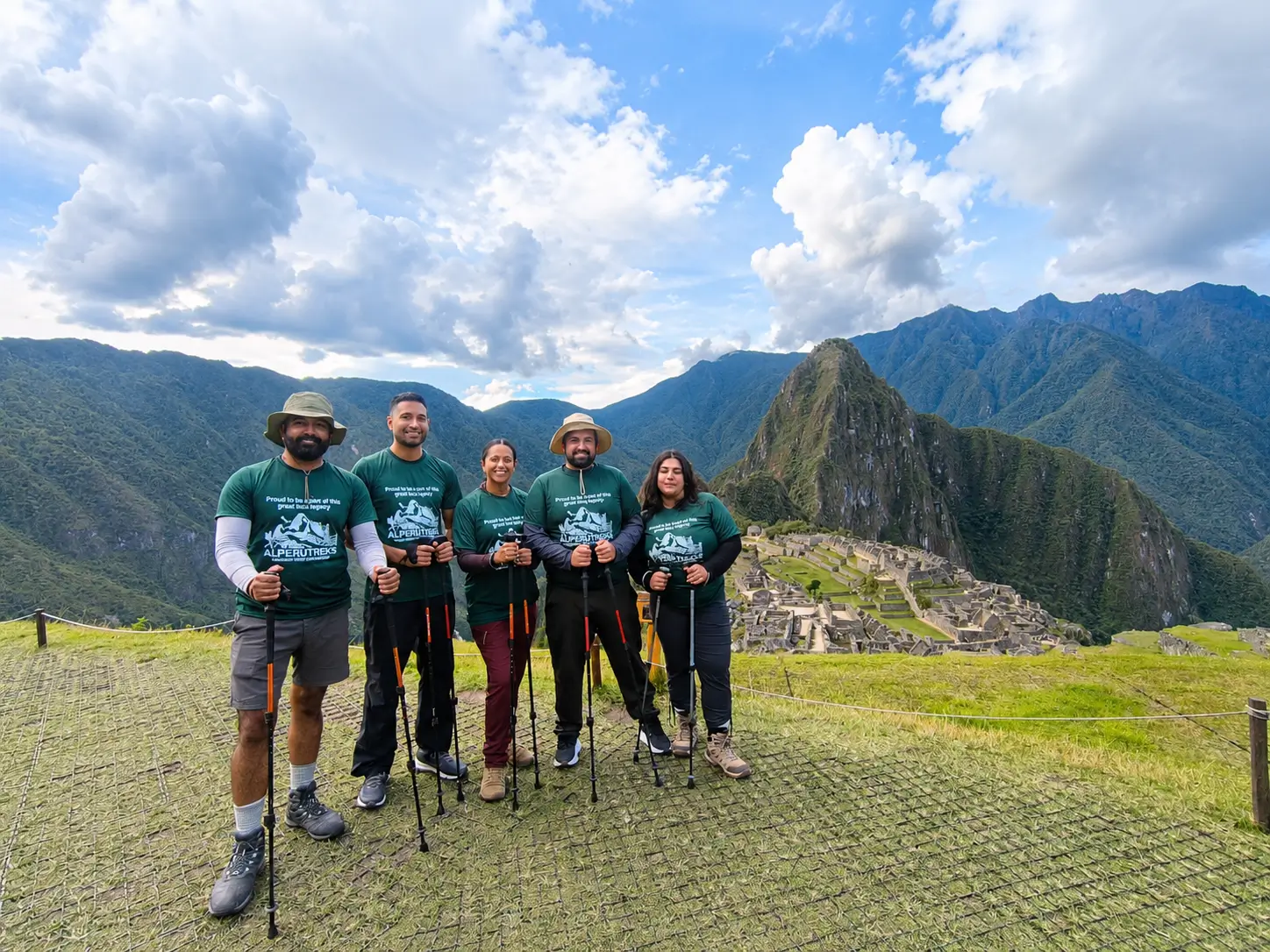
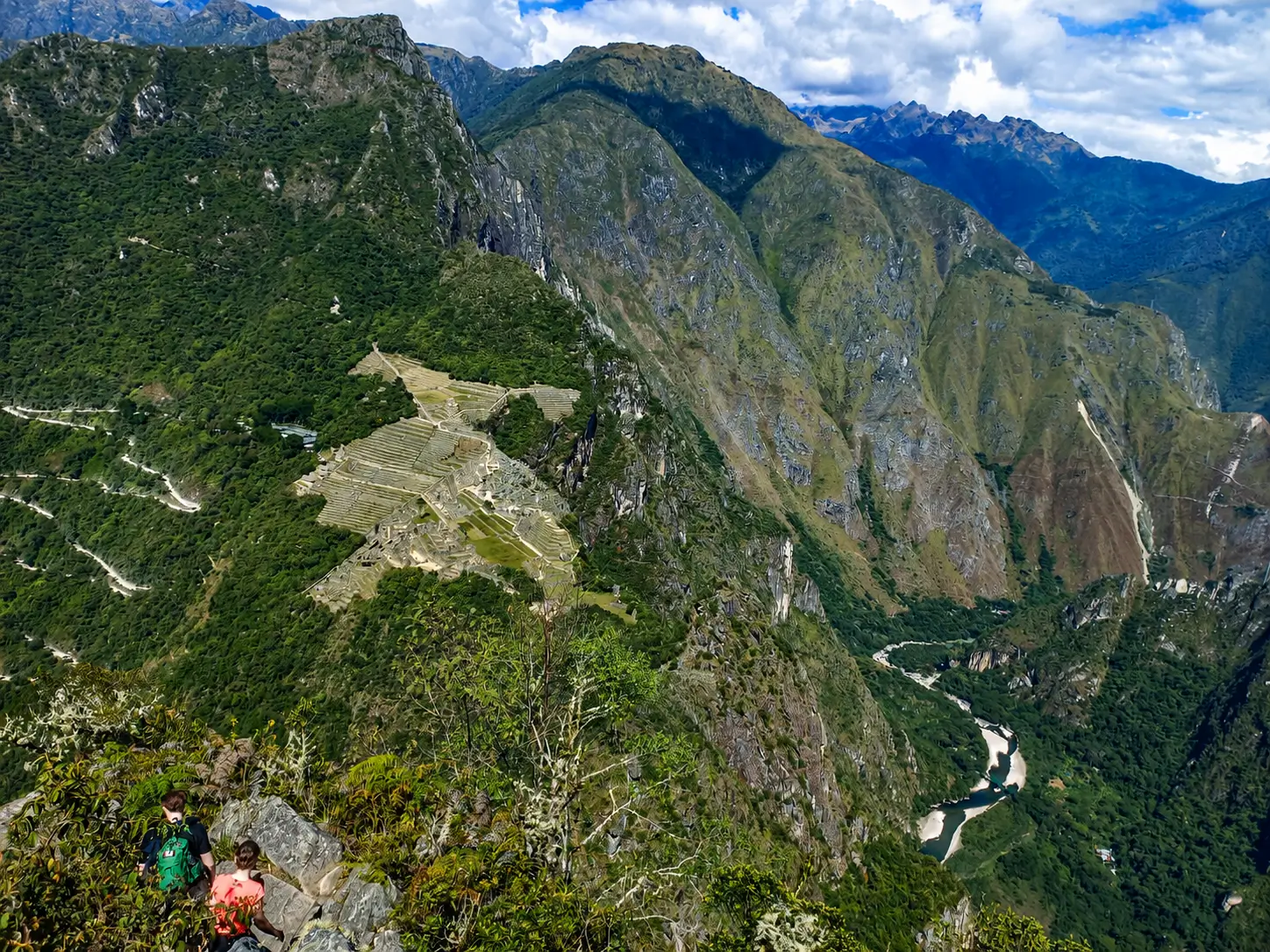
Planning a trip to the Wonder of the World has changed drastically. In order to preserve its invaluable historical legacy and regulate the flow of over 1.5 million annual visitors, the Ministry of Culture of Peru implemented a completely new access system. Currently, admission is divided into 3 main circuits and 10 specific routes.
At Ali Perú Treks, we know these changes can be confusing. The routes are strictly one-way, the peak-season entry tolerance window is just 45 minutes, and re-entry is no longer permitted. To help you secure the perfect experience based on your travel style, we have prepared this detailed, analytical guide as local destination experts.
Official Distribution of the Machu Picchu Circuits
To help you understand the overall layout, here is the official breakdown of the circuits, estimated times, and the main attractions included with each ticket:
| Circuit & Identifier | Official Route Name | Main Included Attractions | Estimated Tour Time |
| Circuit 1-A | Machu Picchu Mountain Route | Classic Viewpoint (Postcard Photo) + Mountain Summit Hike | 4 to 5 hours |
| Circuit 1-B | Upper Platform Route | Classic Viewpoint Only (Ideal for quick postcard photos) | 1 hour |
| Circuit 1-C | Sun Gate Route (Intipunku) | Classic Viewpoint + Hike to the Sun Gate (High Season Only) | 2.5 hours |
| Circuit 1-D | Inca Bridge Route | Classic Viewpoint + Hike to the Inca Bridge | 2 to 3 hours |
| Circuit 2-A | Designed Route | Classic Viewpoint + Full Tour of the Citadel’s Ruins | 2.5 to 3 hours |
| Circuit 2-B | Lower Platform Route | Classic Viewpoint (Lower Angle) + Full Tour of the Ruins | 2.5 to 3 hours |
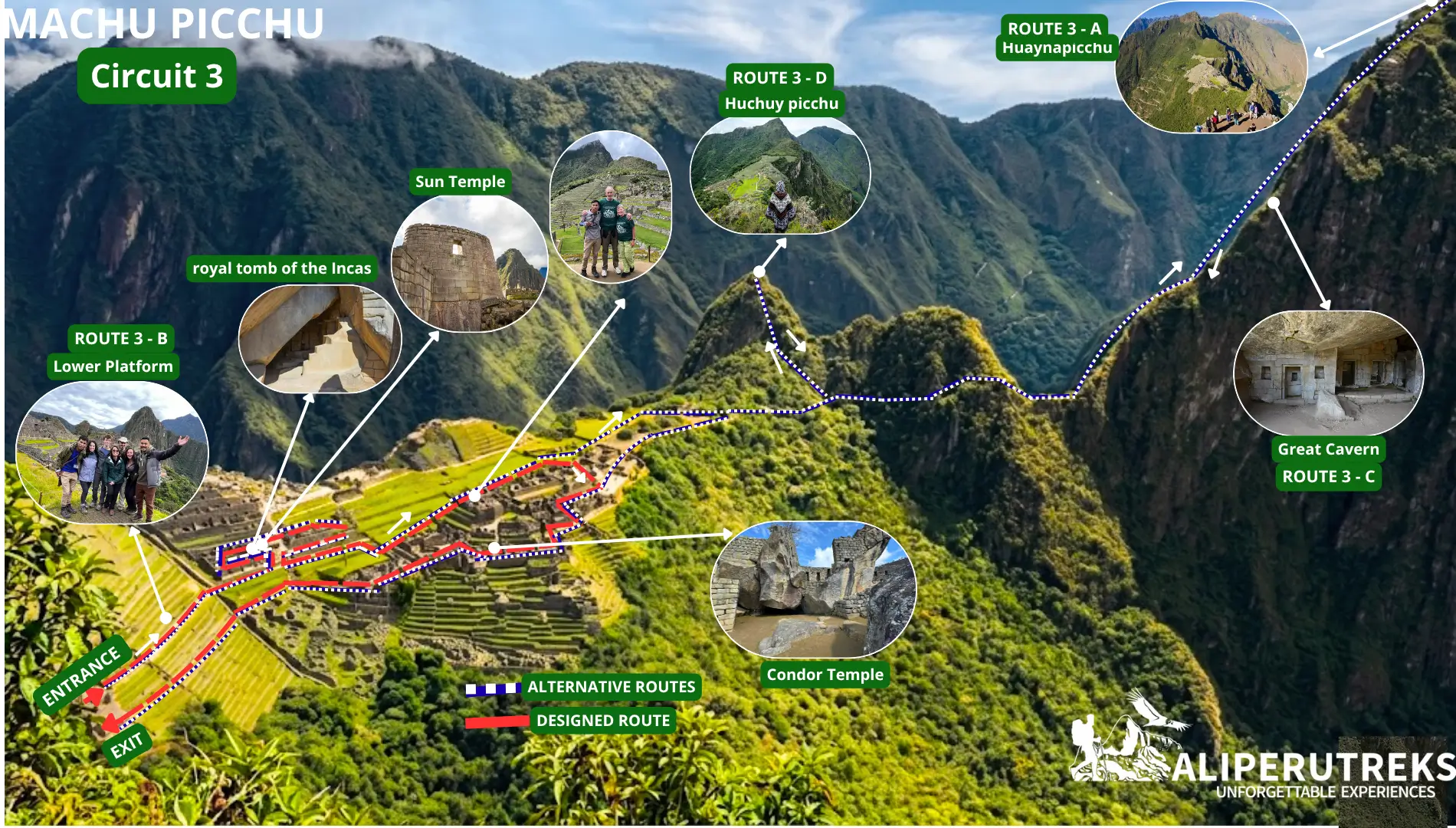
| Circuit 3-A | Wayna Picchu Mountain Route | Lower Archaeological Sector + Wayna Picchu Climb | 3 to 4 hours |
| Circuit 3-B | Standard Designed Route | Lower Sector Only (Ideal for those with limited mobility) | 1.5 to 2 hours |
| Circuit 3-C | Great Cavern Route | Lower Sector + Temple of the Moon Hike (High Season Only) | 4 to 5 hours |
| Circuit 3-D | Huchuy Picchu Mountain Route | Lower Sector + Huchuy Picchu Summit Climb | 3 to 3.5 hours |
Detailed Circuit Analysis: What Will You Actually See?
Circuit 1: The Panoramic and High-Altitude Route
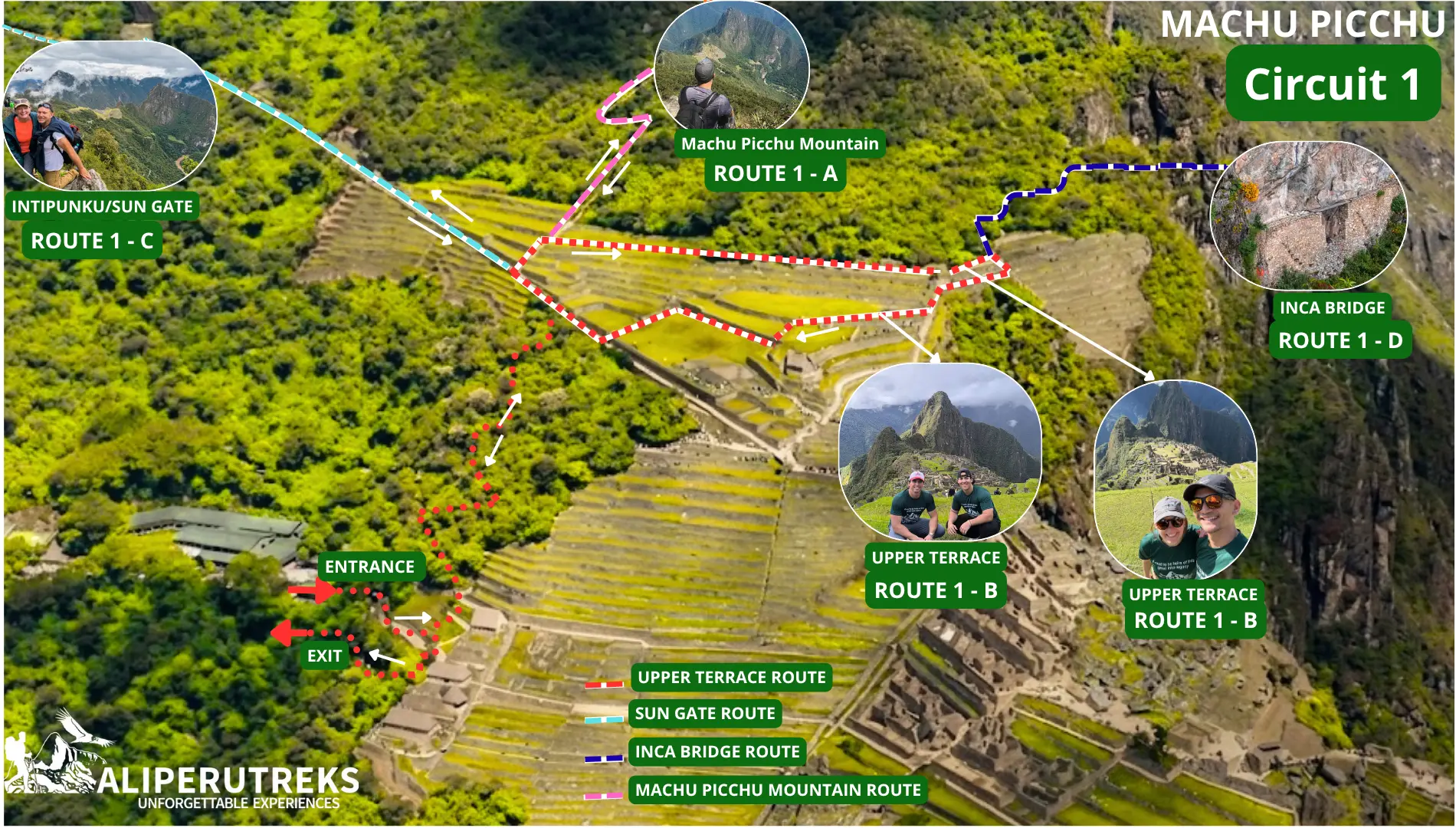
This circuit is designed for travelers whose absolute priority is capturing the classic postcard photo of Machu Picchu from the upper terraces. It focuses heavily on scenic sightseeing and photography, combined with adventure hiking options.
- Machu Picchu Mountain Route (1-A): This is the most physically demanding trekking option in this sector. After entering, you will walk uphill for 10 to 15 minutes with the main crowd before branching off to start the steep climb up Machu Picchu Mountain (located south of the citadel). It features a challenging 3 to 4-hour hike up steep Inca stone steps, rewarding you with an uncrowded, 360-degree aerial view of the entire sanctuary.
- Upper Platform Route (1-B): The most direct and least physically demanding option. You will walk straight up to the upper viewpoint, passing the Kallanka ruins (an ancient Inca hall) and terraces where llamas often graze. After taking your perfect postcard photo, you will loop down to the lower platform and exit. If you book an Inca Trail trek, this is the specific circuit that will be automatically included with your permit.
- Sun Gate Route / Intipunku (1-C): Available primarily during the high season. It follows the same start as Route 1-B but adds a moderate 45-minute side hike (one way) to the historic original entrance used by Inca Trail trekkers. It offers a deeply nostalgic, mystical perspective of the sanctuary.
- Inca Bridge Route (1-D): A short, 30-minute round-trip cliffside walk that showcases a brilliant piece of Inca military engineering: a removable wooden drawbridge. Due to narrow paths and steep drop-offs, this route is restricted to visitors aged 18 and older
Circuit 2: The Royal Circuit (The Most Complete Experience)
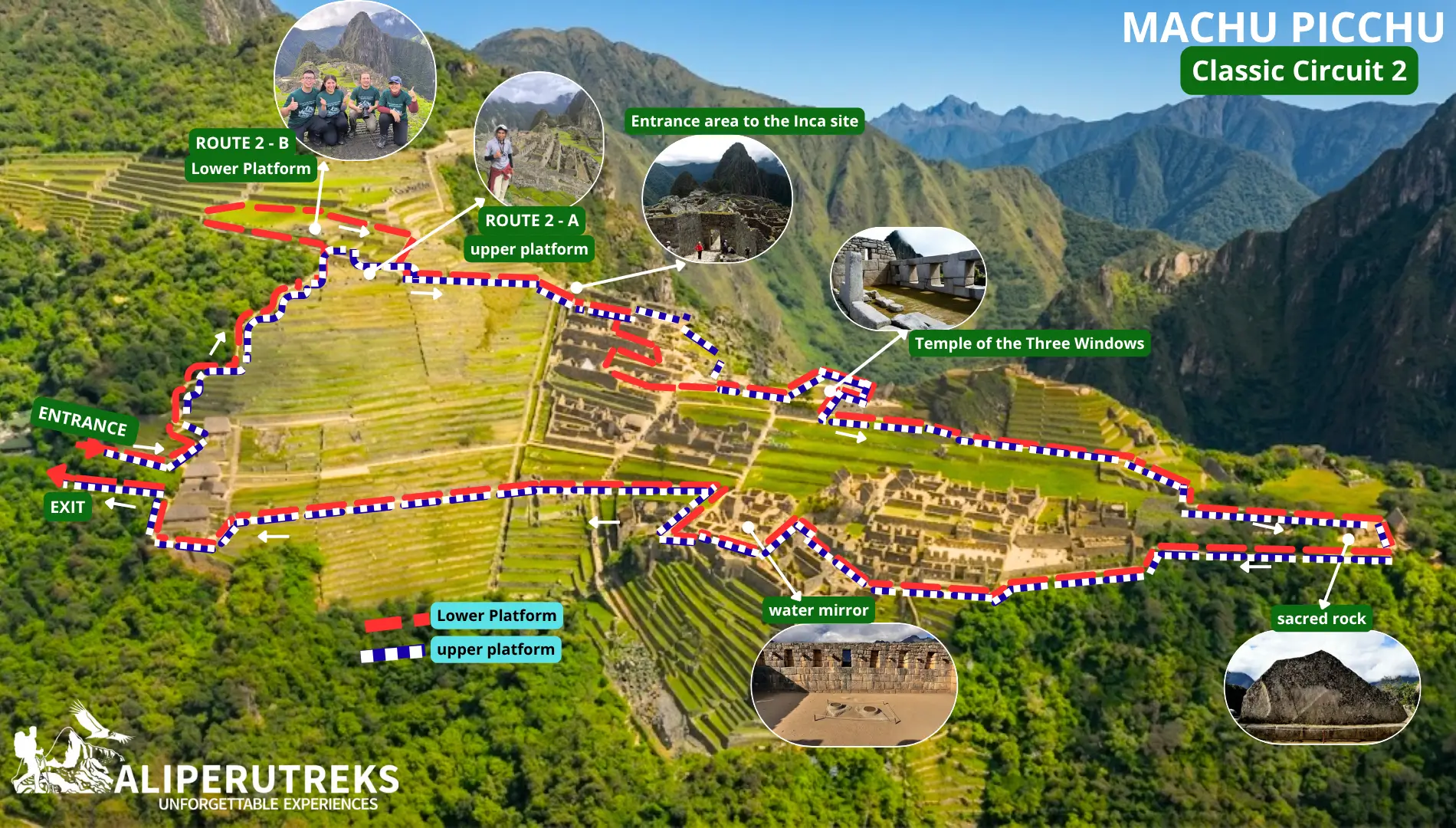
Historically considered the gold standard, Circuit 2 remains the top recommendation from Ali Perú Treks if you can only purchase one ticket. It perfectly combines the iconic postcard photo from the upper terrace with a deep, immersive walk inside the palaces, plazas, and temples of the actual citadel.
- Designed Route (2-A): This route takes you straight to the classic viewpoint just below the Guardian’s House. Afterward, you will enter the urban sector through the traditional main stone gate. The major advantage of Route 2-A is that it dips slightly into the ruins, offering an incredible overhead view of the Torreón (Temple of the Sun). This allows you to look down into its sacred, hand-carved stone altar—a view that is completely missed on Circuit 3. The path continues through the Sacred Plaza, the Temple of the Three Windows, the Sacred Rock, and the Hall of Mirrors.
- Lower Platform Route (2-B): Nearly identical to 2-A, so there is no need to stress if this is the only option available when booking. The minor difference is that your initial photo opportunity is from a slightly different terrace where llamas frequently hang out. Once inside the citadel, instead of looking down at the Temple of the Sun, the path routes you through the Inca Quarry, an area filled with massive stone blocks left unfinished by the Incas. The rest of the tour highlights remain exactly the same.
Circuit 3: The Lower Citadel and Iconic Peaks
This circuit operates exclusively in the lower portion of Machu Picchu. It does not allow access to the upper classic viewpoint, meaning you will not get the traditional postcard photo from this ticket. However, it brings you incredibly close to the royal residential quarters and serves as the exclusive gateway to the park’s most famous mountain climbs.
- Wayna Picchu Mountain Route (3-A): The holy grail for adrenaline seekers. You explore the lower archaeological sector and then head to the checkpoint for the iconic peak that frames the background of all the famous photos. The climb up Wayna Picchu is steep, vertical, and not recommended for anyone with a severe fear of heights. It includes navigating near-vertical stone staircases and narrow caves. (Aged 18 and older only).
- Standard Designed Route (3-B): A shorter, flatter route that is ideal for older adults, families with young children, or anyone looking to avoid steep staircases. While you skip the high panoramic views, you get close-up access to areas that Circuits 1 and 2 only see from a distance: the Ceremonial Fountains, the base of the Temple of the Sun, the Royal Tomb, the House of the Inca, and the mystical Temple of the Condor.
- Great Cavern / Temple of the Moon Route (3-C): A high-intensity trek open only during the high season. It detours behind Wayna Picchu Mountain, descending into a remote underground Inca temple built inside a natural cave featuring flawless imperial stonework. It requires excellent physical condition and is strictly for adults.
- Huchuy Picchu Mountain Route (3-D): An excellent alternative if you want to climb a peak but couldn’t secure a spot for Wayna Picchu. Huchuy Picchu is the smaller mountain adjacent to it. The climb is much shorter (about 30 to 45 minutes) and far less intimidating, yet it still offers a beautiful, unique vantage point over the ruins.
Critical Booking Considerations with Ali Perú Treks
As a professional tour operator, we must remind you that the regulations set by the Ministry of Culture are completely inflexible. Keep these golden rules in mind:
- Advance Booking is Mandatory: Tickets are not sold at the Machu Picchu entrance gate or last-minute in Aguas Calientes. They must be booked months in advance, especially for Circuit 2 and adventure options like Wayna Picchu.
- Strict No Re-Entry Policy: Once you exit the circuit gates or finish the designated path, your ticket becomes invalid. There are no permits allowing you to step out to use the restroom and come back in.
- Combining Circuits: If you want the classic postcard photo (Circuit 1 or 2) AND you also want to climb Wayna Picchu (Circuit 3-A), you must purchase two separate entrance tickets for complementary time slots.
Expert Verdict: Which Circuit Should You Choose?
- For the Ultimate, First-Time Experience: Choose Circuit 2 (2-A or 2-B) without hesitation. It guarantees the dream postcard photo and a complete walkthrough of the Inca civilization’s core history.
- For Trekkers and Adventure Lovers: Circuit 3-A (Wayna Picchu) or Circuit 1-A (Machu Picchu Mountain) will perfectly satisfy your craving for physical effort and jaw-dropping views.
- For Quick Visits or Dedicated Landscape Photographers: Circuit 1-B is incredibly efficient if you have limited time but want to prioritize professional-grade photography of the classic view.
- For Seniors or Travelers with Limited Mobility: Circuit 3-B offers a smooth, highly accessible trail with very few stairs, keeping you in close contact with the magic of the Inca residential sector.
Are you ready to design your hassle-free journey to the Peruvian Andes? At Ali Perú Treks, we take care of all your train logistics, official entrance tickets, and expert certified guides so your only focus is absorbing the incredible energy of the navel of the world. Contact us today to secure your official passes!