
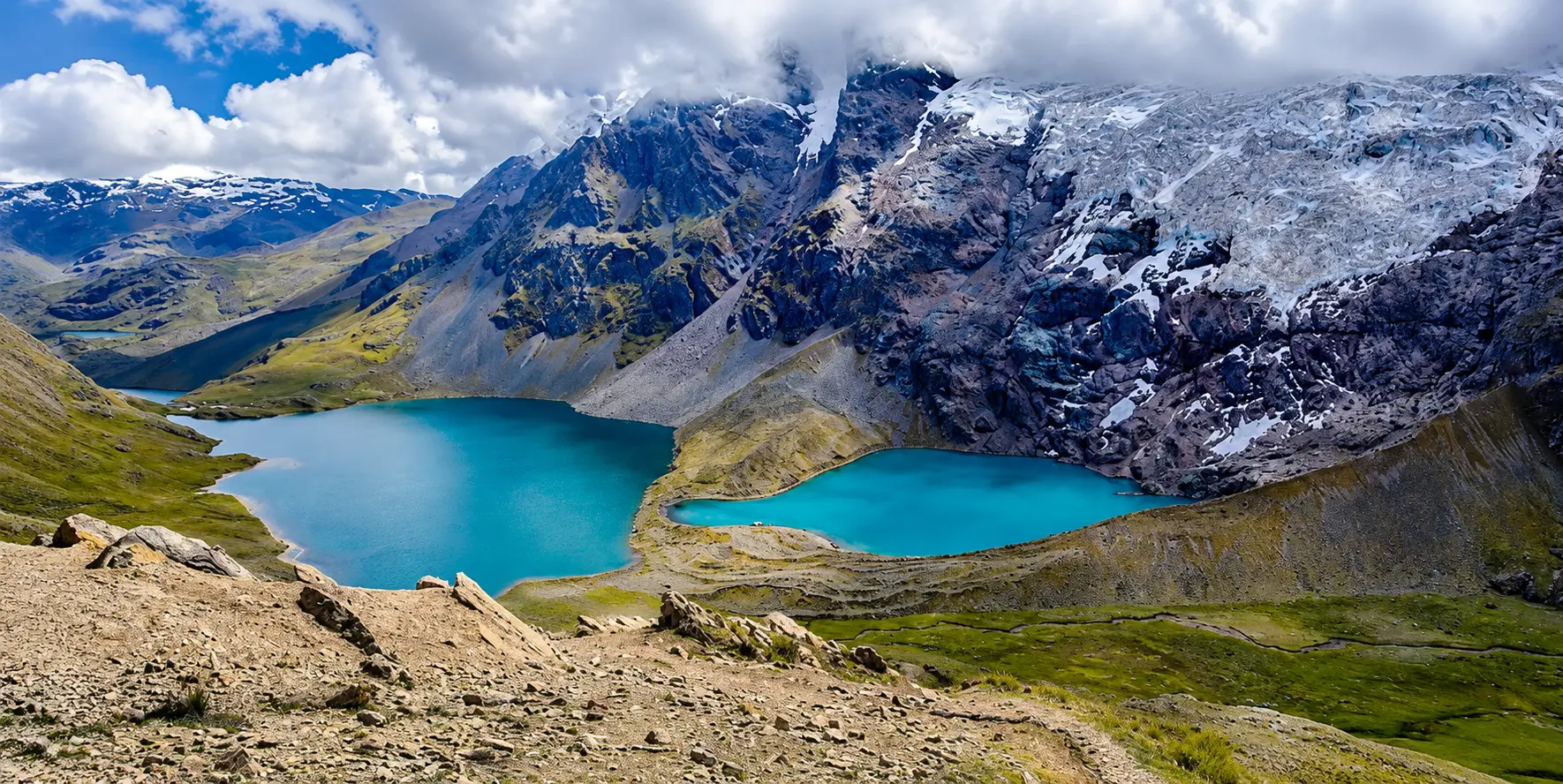
If you’re planning the Ausangate Trek, weather is the single factor that will shape your entire trip — more than fitness, more than gear, and almost as much as altitude itself. This is a route that climbs above 4,900 m (16,000 ft) on consecutive days, and at that elevation, conditions swing hard between a blazing midday sun and a night that drops well below freezing, sometimes within the same 24 hours.
This guide breaks down exactly what to expect: the dry season versus the rainy season, month-by-month conditions, real temperature ranges from actual campsites along the route, snow risk, and how Ausangate’s weather compares to nearby Rainbow Mountain. As a Cusco-based operator running Ausangate departures year-round, we’ve built this from what our guides see on the trail, not generic seasonal averages.
What the Weather Is Really Like on the Ausangate Trek
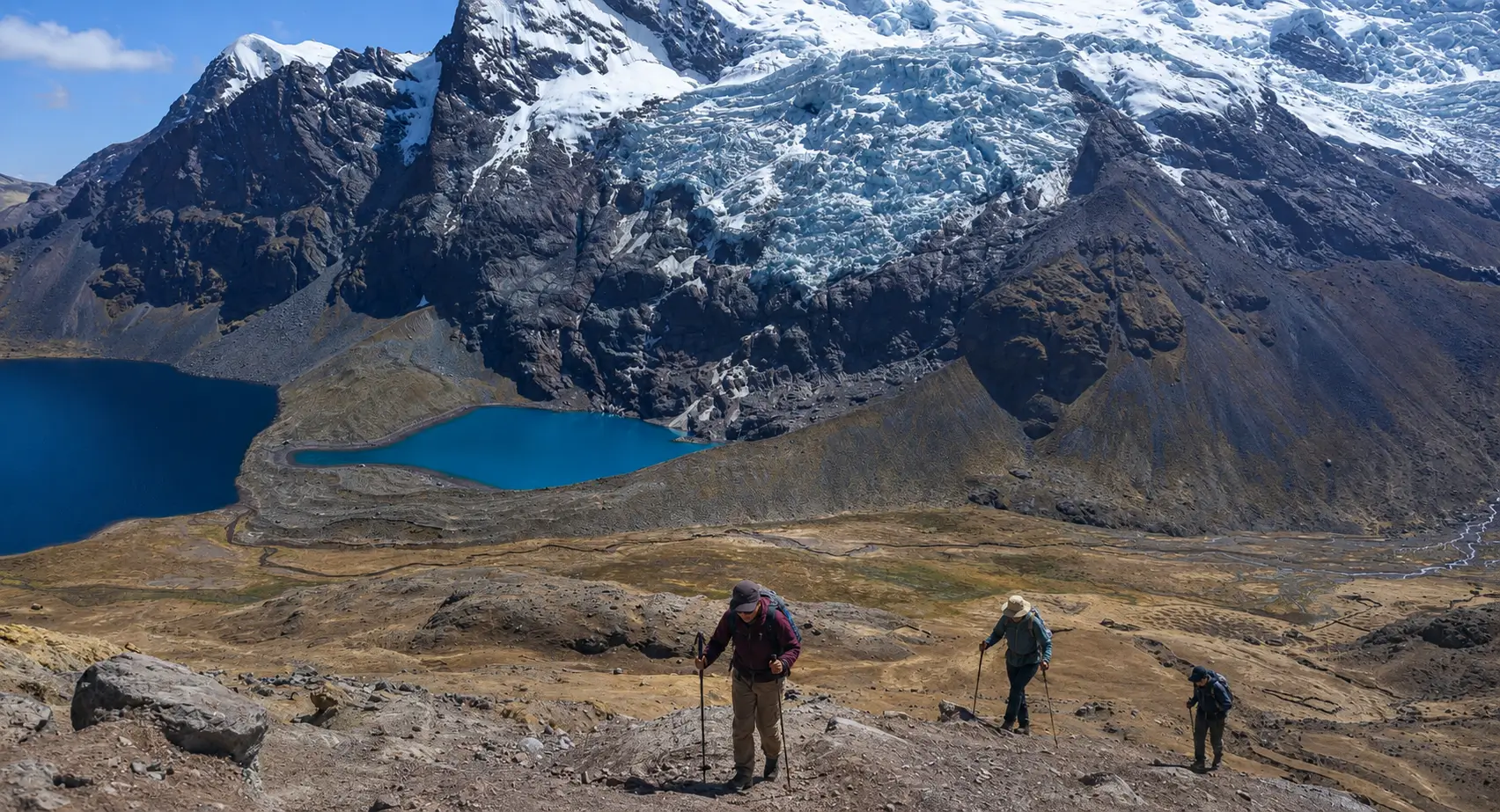
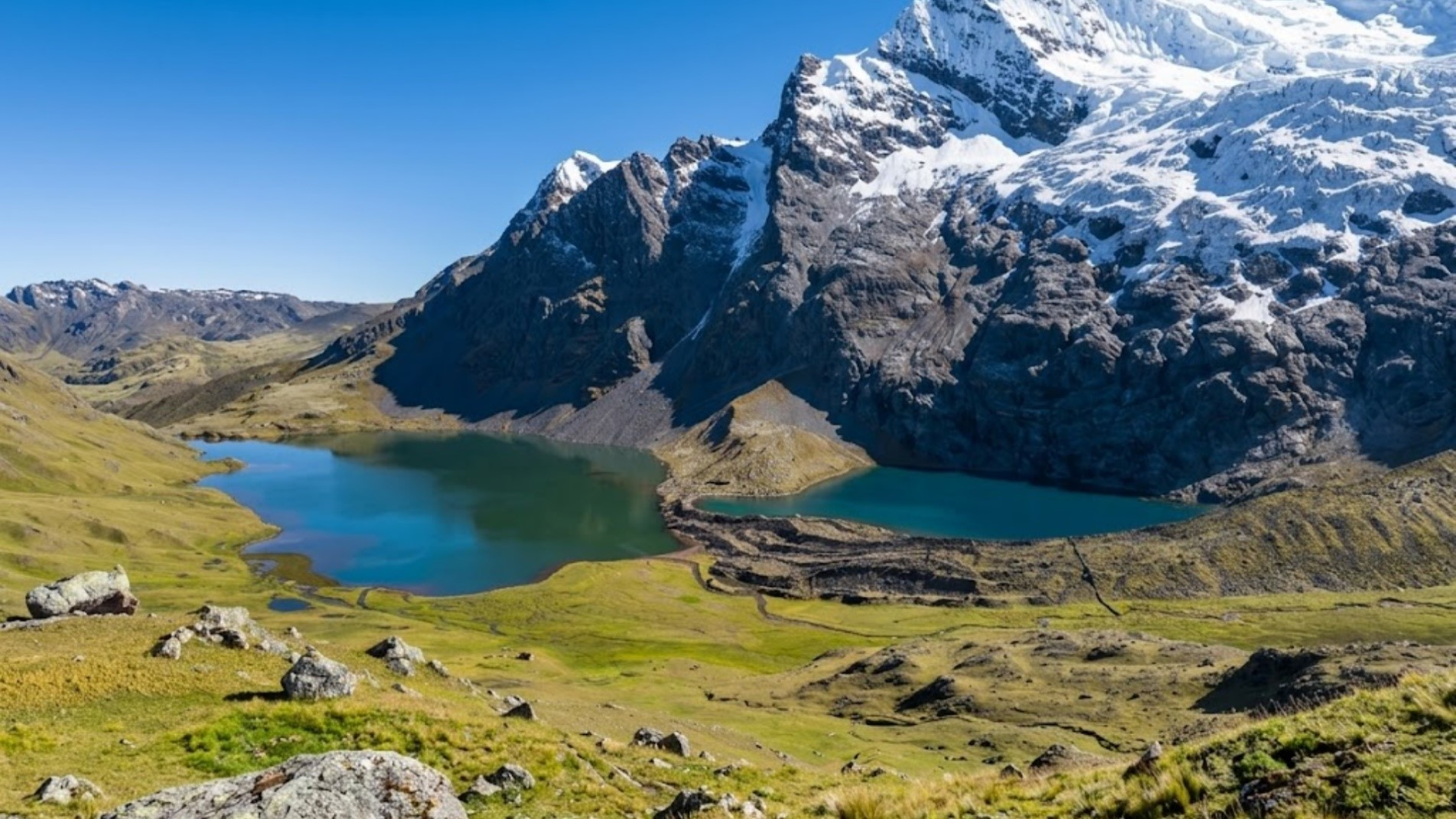
Ausangate sits in the Cordillera Vilcanota, a glaciated mountain range southeast of Cusco, and its weather is defined by one thing above all: altitude. The trek moves through terrain between roughly 4,300 m and 5,036 m (14,100–16,522 ft), which is high enough that local, hour-to-hour weather often matters more than the season on the calendar.
Trekkers and guides commonly describe it as “four seasons in one day.” A typical pattern looks like this:
- Early morning (5–8 a.m.): Cold and often below freezing, especially at camp. Frost is common.
- Mid-morning to early afternoon: If skies are clear, direct sun at this altitude feels intense — you can be hiking in a t-shirt one hour and a down jacket the next.
- Afternoon: Clouds tend to build over the peaks, wind picks up, and temperatures drop fast, even in the dry season.
- Evening and night: Temperatures fall sharply once the sun sets, especially at high camps like Anantapata.
This variability is exactly why layering — not a single heavy coat — is the standard local approach, and why we’ll walk through a cold-weather packing strategy later in this guide.
Ausangate Weather by Season
Like most of the high Peruvian Andes, Ausangate has two clearly defined seasons rather than four. Understanding which one you’re traveling in tells you more than any single-day forecast.
| Season | Months | What to Expect |
|---|---|---|
| Dry season | May – October | Sunny days, minimal rainfall, the clearest views of the glaciers and lagoons, but the coldest nights of the year |
| Rainy season | November – April | Warmer overnight temperatures, greener landscapes, fewer crowds, but a higher chance of afternoon rain or snow at altitude |
| Shoulder months | April, October | Transitional weather that’s often the best trade-off between stable conditions and fewer tourists |
Dry Season (May–October)
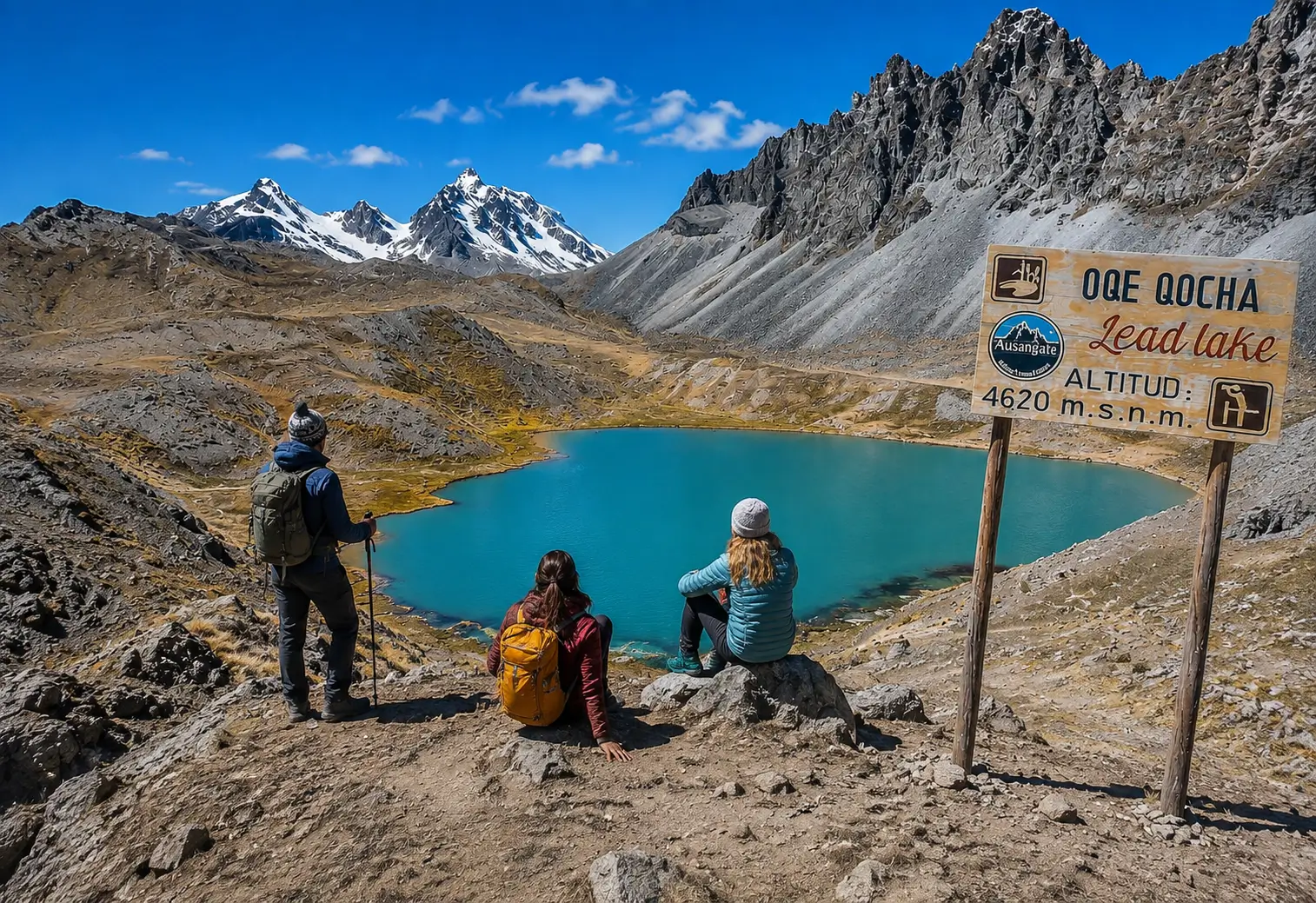
This is the most popular window for the Ausangate Trek, and for good reason: rainfall drops sharply, skies clear, and the glaciers and turquoise lagoons are at their most photogenic. The trade-off is temperature — clear night skies mean no cloud cover to trap heat, so camps at 4,400–4,750 m regularly see freezing or sub-freezing conditions after dark. June and July are the coldest months of the dry season and also coincide with Cusco’s Inti Raymi festival, which brings more visitors to the region overall (though Ausangate itself stays comparatively quiet).
Rainy Season (November–April)
Rain typically arrives as afternoon showers rather than steady all-day downpours, and nights are noticeably milder than in the dry season. The landscape turns a deep green, and you’ll likely have the trail largely to yourself. The real consideration here is trail conditions and visibility: passes above 4,900 m can see snow rather than rain, trails get muddier, and cloud cover more frequently obscures the Ausangate glacier and Rainbow Mountain’s colors. January and February are typically the wettest months.
Ausangate Trek Weather by Month
For a more specific read on when you’re traveling, here’s how conditions generally break down across the year in the Ausangate–Vilcanota region.
| Month | Season | Conditions |
|---|---|---|
| January | Rainy | Frequent afternoon rain, green landscapes, fewer trekkers |
| February | Rainy | One of the wettest months; some operators reduce departures |
| March | Rainy (tail end) | Rain becomes less intense; still lush and green |
| April | Transition to dry | Rain tapers off; skies begin clearing; a strong shoulder-season choice |
| May | Dry (start) | Clear days, cooling nights; one of the best all-around months |
| June | Dry (peak) | Very stable weather, driest conditions, coldest nights of the year, Inti Raymi season |
| July | Dry (peak) | Peru’s coldest month regionally; SENAMHI data for Cusco records July as the month with the lowest average temperatures |
| August | Dry (peak) | Still dry and stable, with winds sometimes picking up in the afternoon |
| September | Dry (late) | Excellent visibility, slightly milder nights than June–July |
| October | Transition | Warmest month on average for the Cusco region, occasional early-season showers |
| November | Rainy (start) | First consistent rains begin; landscapes turn green |
| December | Rainy | Warmer nights, increasing rainfall, holiday-season trekkers |
According to Peru’s National Meteorology and Hydrology Service (SENAMHI), the Cusco region’s coldest average temperatures occur in July, while October tends to be the warmest month on average — a pattern that holds broadly true at Ausangate’s higher elevations as well, though nighttime lows at 4,300+ m are always considerably colder than in Cusco city itself (3,399 m).
Temperature on the Ausangate Trek: Camp by Camp
Averages for “Cusco” or “the Andes” don’t tell you much when you’re sleeping at 4,700 m. Here’s what temperatures actually look like at the altitudes you’ll be trekking and camping through on a multi-day route like the Ausangate Trek 4 Days:
| Location | Altitude | Typical Conditions |
|---|---|---|
| Pacchanta (trailhead) | 4,300 m / 14,107 ft | Early morning near freezing (around 0°C / 32°F); milder once the sun is up |
| Upis Camp | 4,400 m / 14,435 ft | Cold, clear nights; frost common |
| Anantapata Camp | 4,700–4,750 m / 15,420–15,580 ft | The coldest camp on the route; nights frequently drop to around -10°C / 14°F |
| Pucacocha Pass | 4,900 m / 16,076 ft | Freezing even at midday if it’s windy or overcast |
| Rainbow Mountain summit | 5,036 m / 16,522 ft | Intense sun when clear; wind chill can make it feel far colder than the air temperature |
Because of nights like these, a sleeping bag rated for at least -10°C to -15°C (5–14°F) isn’t optional gear on this route — it’s a safety requirement, and most operators, including ours, either require you to bring one or offer a rental.
Does It Snow on the Ausangate Trek?
Yes — snow is a real possibility, particularly above 4,800 m. It’s more common during the rainy season (November–April), when precipitation at high altitude often falls as snow rather than rain, but light snowfall or graupel (soft hail) can occur even during dry-season afternoons if a storm system moves through. June and July, while the driest months overall, also see the coldest overnight temperatures and occasional frost or light snow dusting at the highest camps, even without a storm.
Snow doesn’t usually stop a well-guided trek — trails remain passable — but it does affect visibility of the glaciers and lagoons, and it’s one more reason waterproof, insulated boots and gaiters belong on your packing list rather than just a rain jacket.
Rainbow Mountain Weather vs. the Wider Ausangate Circuit
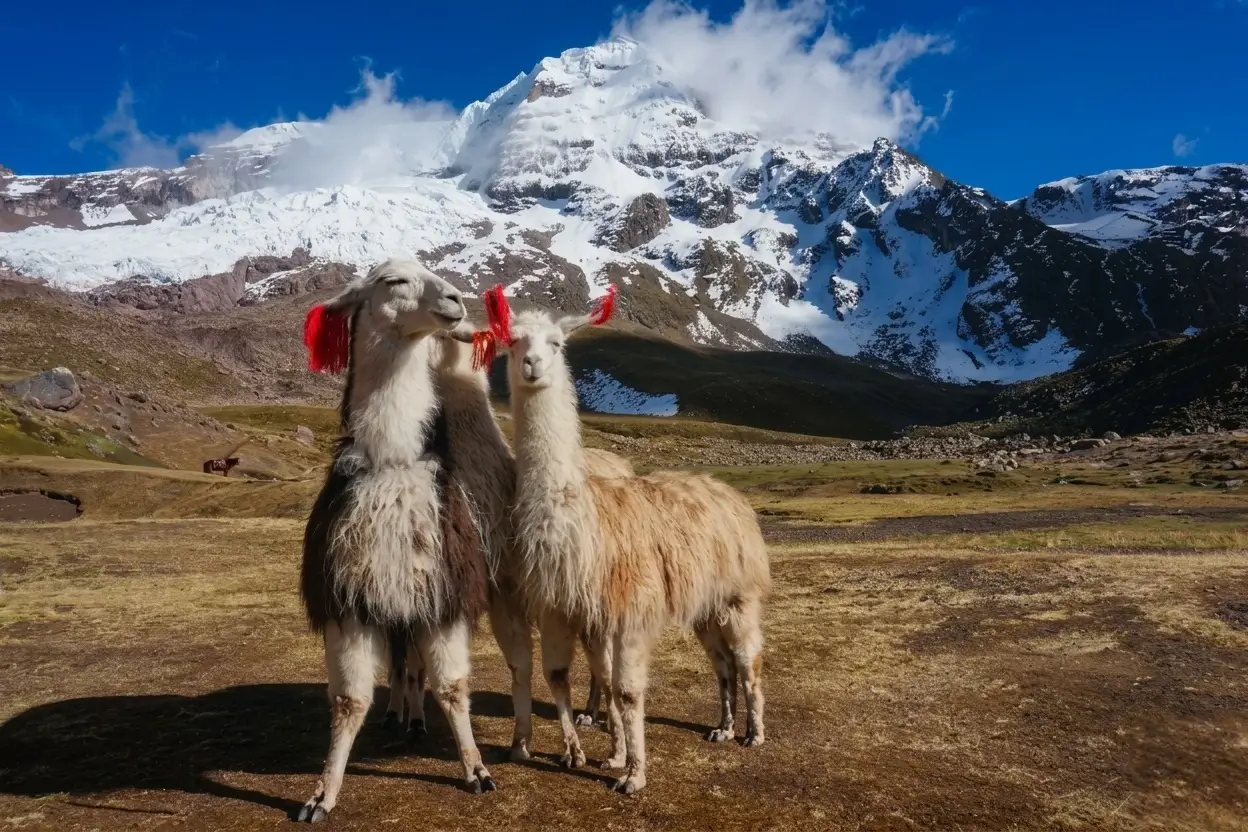
Many travelers search for Ausangate weather and Rainbow Mountain weather almost interchangeably, since Rainbow Mountain (Vinicunca) sits within the greater Ausangate/Vilcanota range and is often the first stop on longer Ausangate itineraries. The two share the same seasonal pattern, but there’s a practical difference worth knowing:
- Rainbow Mountain as a single day tour means you’re exposed to weather for a shorter window — typically a few hours around the summit — so a passing cloud or brief shower has less overall impact on your day.
- The full Ausangate circuit keeps you above 4,300 m for three or four consecutive days, which means you experience the full range of daily temperature swings repeatedly, including the coldest overnight camps.
If your main goal is photographing Vinicunca’s colors, aim for a clear morning in the dry season — cloud cover is the biggest single factor that dulls the mineral-striped colors people travel for. If you’re committing to the multi-day Ausangate trek, dress for the coldest camp on your itinerary, not the average daytime temperature.
Best Time to Hike Ausangate
There’s no single “perfect” month, but based on the trade-offs above, here’s how it generally shakes out:
- Best overall balance: May, September, and October — clear skies without June and July’s coldest nights.
- Best for total dryness and stability: June, July, August — accept the coldest overnight temperatures in exchange for the most reliable weather window.
- Best for fewer crowds and lower prices: November and April (shoulder rainy/dry transition) — some rain risk, but noticeably quieter trails.
- Avoid if possible for a first-time multi-day trek: January and February, when rain is heaviest and trail conditions are least predictable.
Whatever month you choose, the Ausangate region’s weather is genuinely unpredictable at this elevation — even in the “safest” months, guides carry rain gear and expect the occasional surprise squall.
How to Pack for Ausangate’s Cold
Preparing for a trek where nighttime temperatures can hit -10°C (14°F) while midday sun can feel warm enough for a t-shirt requires a layering system, not a single “warm enough” jacket.
Core layers:
- Moisture-wicking base layer (top and bottom)
- Insulating mid-layer (fleece)
- Warm down jacket for camp and early mornings
- Waterproof, breathable outer shell or rain poncho
Extremities:
- Wool hat or chullo, plus a warm beanie for sleeping
- Insulated, waterproof gloves
- Wool hiking socks (bring extra pairs — wet feet at altitude get cold fast)
- Waterproof, broken-in hiking boots with good ankle support
Sleep system:
- Sleeping bag rated to at least -10°C to -15°C (5–14°F), or arrange a rental in advance
- An insulated sleeping pad — this matters as much as the bag itself, since cold rises directly from frozen ground
Sun protection (yes, even in the cold):
- High-SPF sunscreen and lip balm — UV exposure above 4,000 m is significantly stronger than at sea level
- Polarized sunglasses and a sun hat
For a full category-by-category breakdown beyond weather-specific items — including what to leave at your hotel versus what to carry daily — see our essential trekking equipment guide for the Cusco Andes.

Local Expert Tips
A few things our guides consistently tell first-time Ausangate trekkers that generic packing lists tend to miss:
- Start hiking early, not just for crowds — for weather. Mornings are almost always clearer and calmer at altitude. Afternoon cloud buildup and wind are the norm, not the exception, so an early departure gives you the best shot at clear glacier and lagoon views before conditions shift.
- Don’t judge the day by sunrise. A clear, freezing morning can turn overcast by 11 a.m., and a cloudy start can burn off completely by midday. Layer for change, not for the current moment.
- The coldest hour is usually just before sunrise, not midnight. If you wake up cold in your tent, that’s normal — it typically means dawn (and warmth) is close.
- Hydration affects cold tolerance. Dehydration at altitude makes you feel the cold more acutely. Drinking coca tea and water consistently through the day is a genuine, practical way to manage both altitude symptoms and comfort.
- Wind, not temperature, causes the most complaints. A windproof outer shell matters as much as insulation — still air at -5°C feels very different from the same temperature with a 30 km/h gust across an exposed pass like Pucacocha.
- Rent rather than skimp on your sleeping bag. Bringing a 3-season bag rated for 0°C to save luggage space is one of the most common mistakes we see, and it makes for a genuinely miserable night at Anantapata camp.
Altitude and weather are closely linked on this route, so it’s also worth reading our dedicated guide to altitude sickness in Cusco before you go — proper acclimatization affects how your body handles the cold, not just the thin air.
Frequently Asked Questions
June and July are the coldest months for overnight temperatures, even though they’re also part of the driest, most stable weather window. Expect high-camp lows around -10°C (14°F) or colder during these months.
The dry season (May–October) offers more reliable weather and the clearest mountain and lagoon views, which is why most travelers — and most tour departures — concentrate in this window. The rainy season (November–April) brings milder nights and fewer crowds, but a higher chance of rain, snow at altitude, and reduced visibility.
Yes, snow is possible year-round above roughly 4,800 m, and it’s more likely during the rainy season. Even in the dry season, light snow or frost at the highest camps and passes isn’t unusual, especially in June and July.
At high camps like Anantapata (around 4,700–4,750 m), overnight temperatures commonly drop to around -10°C (14°F), which is why a properly rated sleeping bag is mandatory rather than optional gear.
A layering system works best: a moisture-wicking base layer, an insulating fleece mid-layer, a down jacket for camp and early mornings, plus a waterproof outer shell. Add a wool hat, insulated gloves, and wool socks, since extremities lose heat fastest at altitude.
Guided departures generally continue through rain, wind, or light snow, since the trail remains passable in most conditions. Severe weather is rare but possible; a professional operator will adjust pace, timing, or in extreme cases the itinerary for safety rather than cancel outright.
Ausangate reaches a higher maximum altitude (up to 5,036 m / 16,522 ft) than both the Classic Inca Trail (4,215 m) and most Salkantay itineraries (around 4,600 m), so its coldest camps and passes tend to be noticeably colder than on those routes.
May, June, and September typically offer the clearest combination of stable skies and manageable cold, giving the best odds of unobstructed glacier and lagoon views without the very coldest nights of peak winter (June–July) or the cloud cover common in the rainy season.
Conclusion
Ausangate’s weather is defined less by the calendar than by altitude — expect intense sun, sudden wind, and freezing nights regardless of which month you choose, and plan your gear around the coldest camp on your route rather than the season’s average. The dry season (May–October) gives you the most reliable conditions and clearest views, while the rainy season trades some visibility and trail comfort for quieter trails and milder nights.
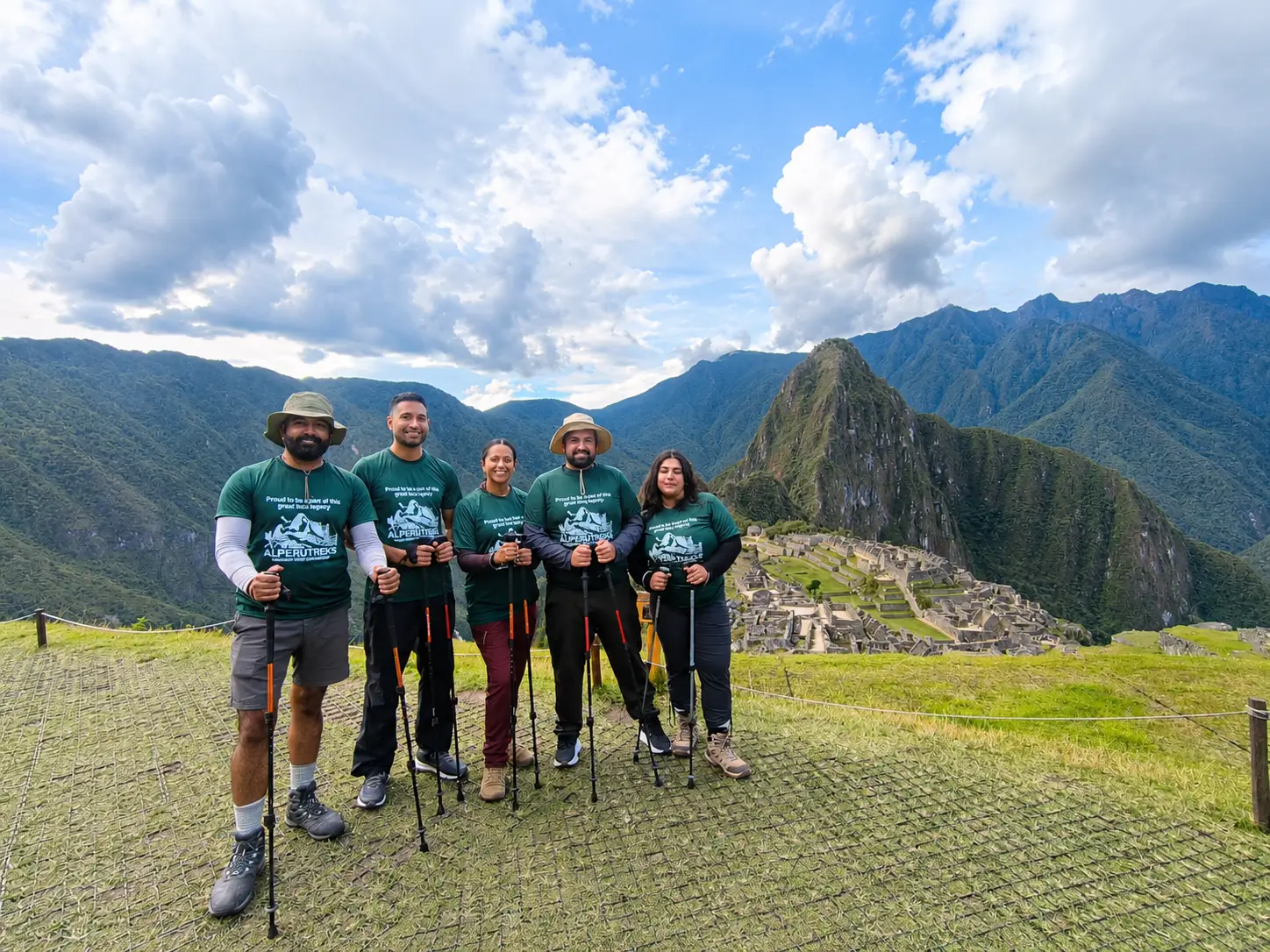
If you’re ready to experience it for yourself, our Ausangate Trek 4 Days to Machu Picchu and Ausangate Trek 5 Days run year-round with medical-grade oxygen, high-altitude sleeping gear, and guides who read this mountain’s weather daily. If you’d rather experience Ausangate’s turquoise lagoons without an overnight camp in the cold, the Ausangate 7 Lakes Day Hike covers similar altitudes in a single day, returning you to a warm hotel bed in Cusco by evening.
Have questions about which season or route fits your trip best? Reach out to our team — as a direct, Cusco-based local operator, we plan every departure around real, current mountain conditions, not generic forecasts.