
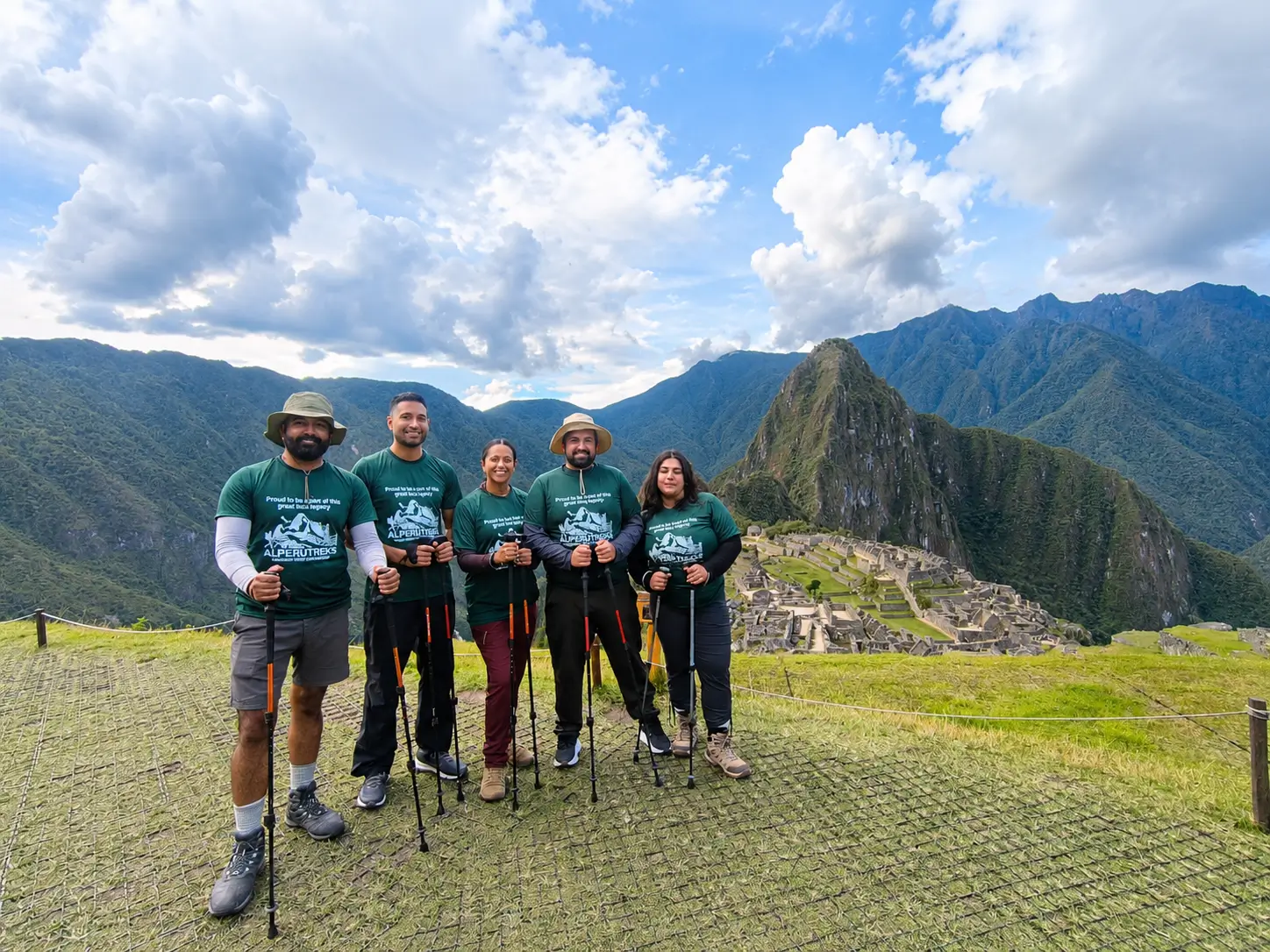
Yes, April is genuinely one of the better months to hike the Inca Trail — this is the shoulder season where the rainy season is winding down but the dry-season crowds haven’t fully arrived yet. Hiking the Inca Trail in April typically means drying trails, green mountainsides left over from the wet season, and a noticeably calmer trail than June through August. The trade-off isn’t really about weather risk the way it is in January or February; it’s about timing your booking correctly, because demand for April permits climbs fast as the month goes on.
This guide covers what that timing actually looks like: how weather and trail conditions shift between early and late April, what a realistic permit and booking window looks like, and one detail a lot of guides skip entirely — Holy Week. As with every month in this series, the details here are grounded in Peru’s official trail regulations and cross-checked seasonal data, from a Cusco-based trekking team that runs this route in every month it’s open.
Is April a Good Month to Hike the Inca Trail?
Yes. April sits in the shoulder season between the wet season (November–March) and the dry season (May–September), and it’s routinely regarded as one of the best all-around months to trek: the heaviest rains have typically passed by mid-April, the surrounding landscape is still lush and green from the months before, and crowds remain well below the June-through-August peak.
The trail runs on its normal schedule all month, with no closures — April is one of the eleven months a year the Classic and Short Inca Trail both operate normally. The only real planning wrinkle is that April is popular enough that “shoulder season” doesn’t mean “easy to book last-minute,” particularly as the month goes on.
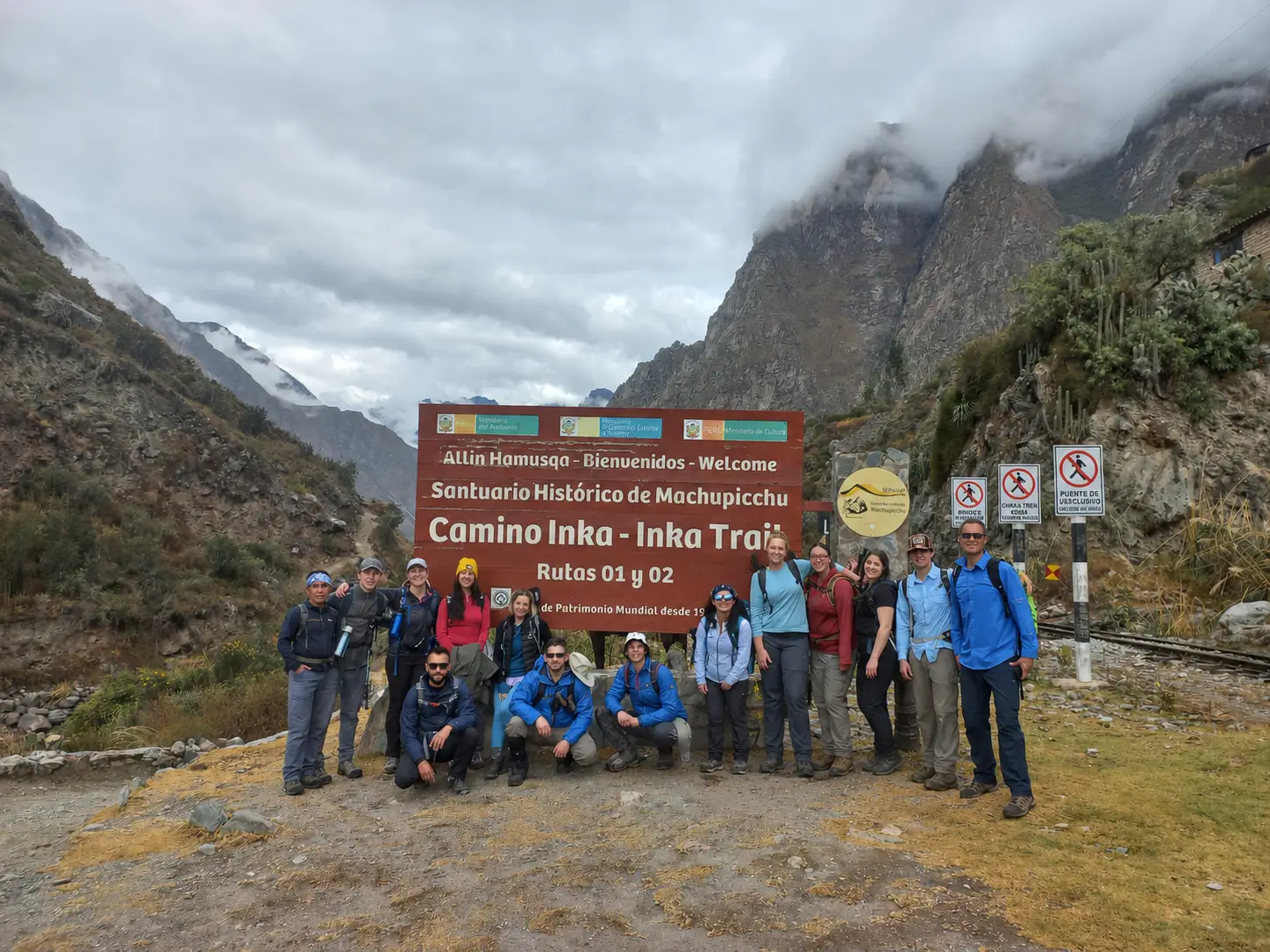
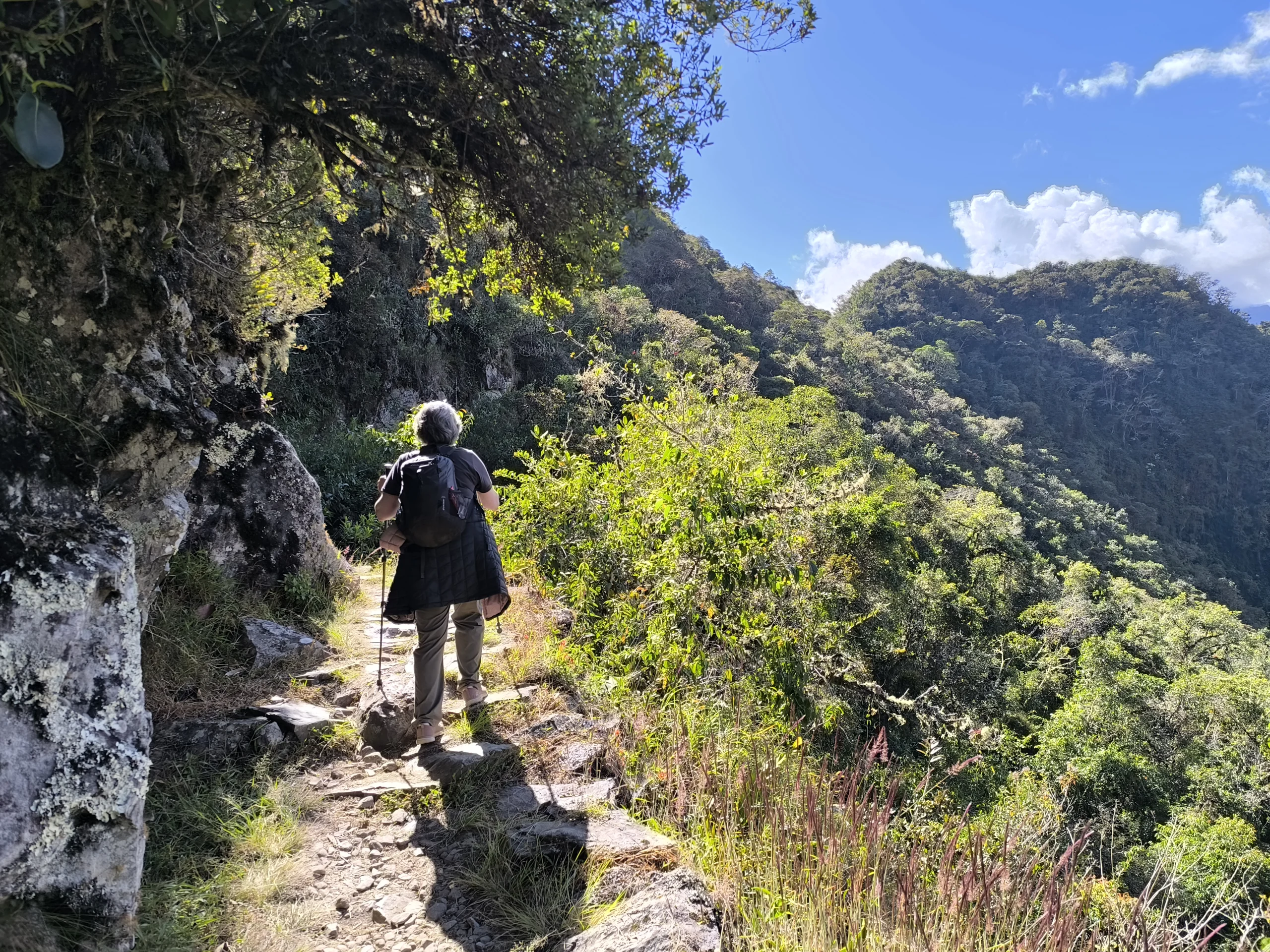
Inca Trail Weather in April
April is a genuine transition month, and the story is really about direction of travel: rain decreasing, skies clearing, and — somewhat counterintuitively — nights getting a little colder as that happens.
Daytime and Nighttime Temperatures
On the high trail, daytime temperatures generally run in the low-to-upper 60s Fahrenheit (roughly 16–20°C), with nights dropping into the upper 30s to low 40s Fahrenheit (about 3–6°C). That’s a real detail worth flagging: as the rainy season fades and skies clear up, nights can actually feel colder than they did in March, since clear skies let heat radiate away faster than cloud cover does. Warmer, sunnier days don’t necessarily mean warmer nights at camp.
Rain: Early April vs. Late April
Like March, April splits fairly cleanly into two halves. The first couple of weeks can still see real rain, an extension of the wet season’s tail end. From there, most seasonal data shows a steady decline, with the back half of the month notably drier and more stable — clear mornings, and afternoon showers becoming the exception rather than the rule.
| Early April (roughly days 1–15) | Late April (roughly days 16–30) | |
|---|---|---|
| Rain | Still possible, occasionally heavy | Increasingly rare, mostly dry |
| Trail conditions | Some mud on shaded sections | Firm, dry footing on most of the trail |
| Crowds | Moderate, comparable to March | Rising toward dry-season levels |
| Permit availability | Best availability of the month | Tightening noticeably |
| Best suited for | Value, greener scenery, fewer people | More predictable weather |
Machu Picchu’s Weather in April
Machu Picchu itself, at its lower and more subtropical elevation, tends to run somewhat milder than the exposed high trail: daytime temperatures commonly fall in the low 60s to low 70s Fahrenheit (roughly 16–22°C), with nights in the low-to-mid 40s Fahrenheit (about 6–8°C). Rain is markedly less frequent than the December-through-March stretch, though an occasional shower, especially early in the month, is still normal.
Trail Conditions in April
April trail conditions genuinely improve as the month goes on. Early on, expect some mud on shaded or forested sections and the same slick-stone-step caution that applies through the wet season. By the back half of the month, footing is generally firm and dry across most of the route, and visibility on the high, exposed sections is at its best of the year outside the peak dry season.
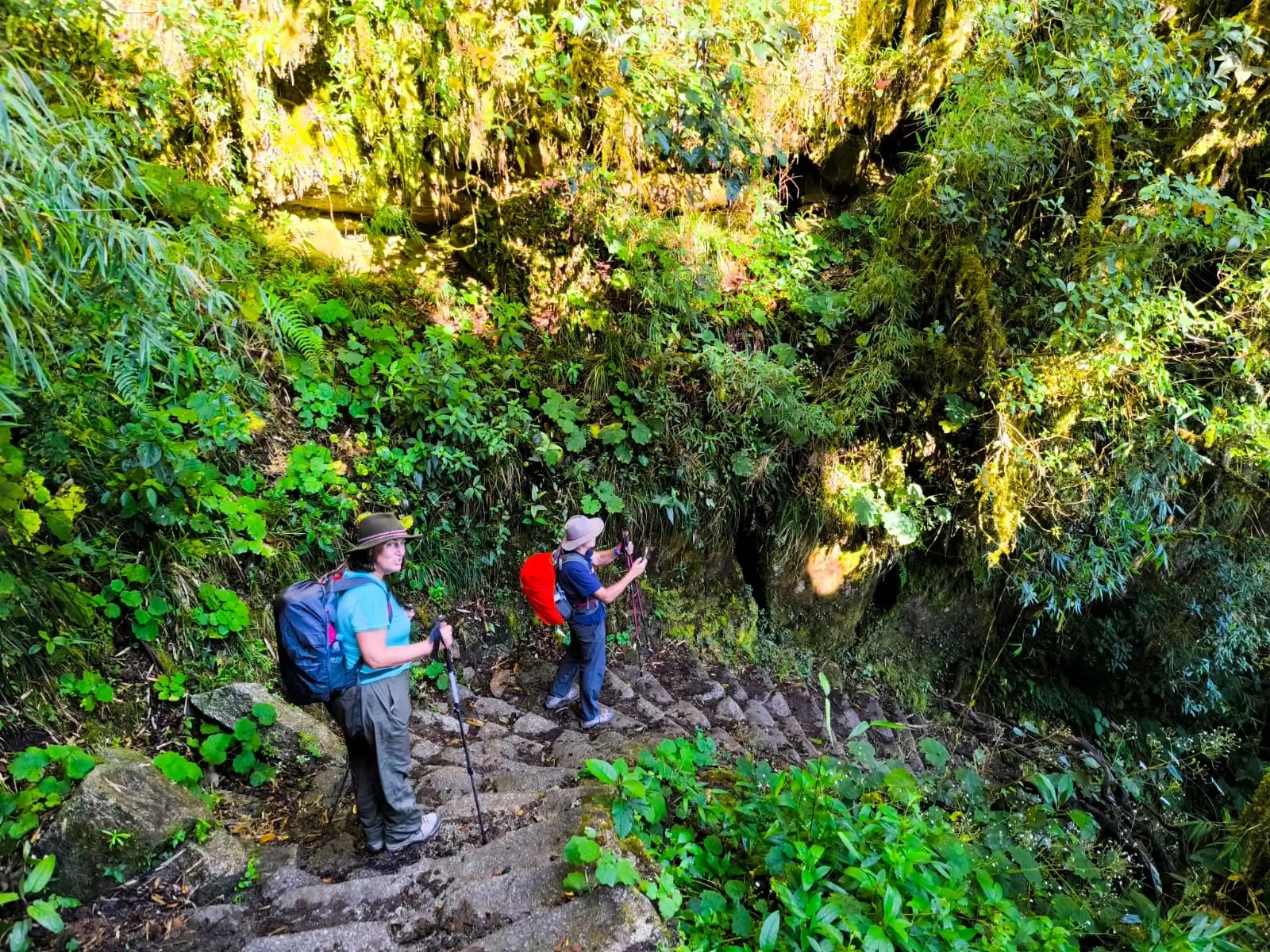
The Andean landscape is a real highlight this month: the mountains are still green from the rains, and orchids and other flora that bloom in the wet season’s aftermath are commonly visible along the trail, particularly in the cloud forest sections near Wiñay Wayna. One minor, easily overlooked detail: with humidity still lingering from the rainy season, mosquitoes and sandflies can be more noticeable in April than they will be later in the dry season — worth a mention in your packing list, covered below.
How Crowded Is the Inca Trail in April?
The trail is always capped at 500 total permits a day, split roughly between trekkers and support staff, so the ceiling on crowding never changes by month. What does change is how quickly that ceiling gets reached. April sits in the shoulder season, meaning it’s calmer than the June-through-August rush but busier than the wet-season months — and unlike a typical shoulder month, demand inside April itself isn’t flat.
Early April feels closer to a quiet March: manageable groups, easy trail passing, unhurried campsites. By the final couple of weeks, both the trail and Machu Picchu itself feel noticeably busier as travelers shift into position ahead of peak dry season, and permits for popular dates can be largely gone well before the month arrives.
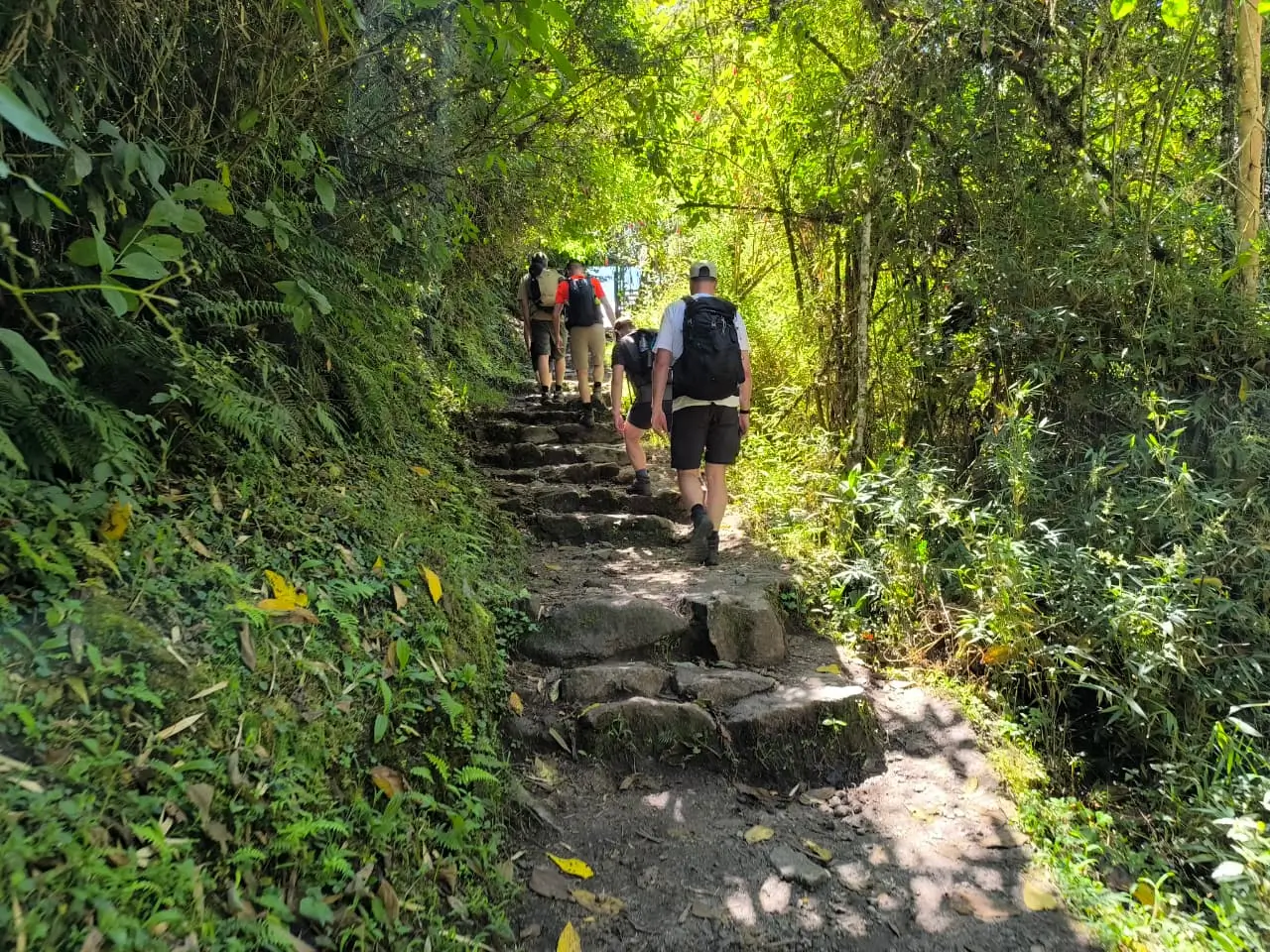
Inca Trail Permits in April (and Why Holy Week Matters)
Every hiker needs a permit, sold only through licensed operators, capped at 500 people a day including support staff, non-transferable, and tied to your passport number at booking — the same rules that apply in every month the trail is open.
As a general guide, aim to book several months ahead for April, and lean toward the earlier end of that window the later in the month your dates fall — late-April demand can approach dry-season intensity. There’s one wrinkle specific to this time of year: Holy Week (Semana Santa), the week leading up to Easter, moves every year and can land in either March or April depending on the calendar. When it falls in April, permit demand and pricing for that week can spike to something close to peak-season levels, catching travelers off guard who assumed April was an easy, low-key booking window. If your travel dates are anywhere near Easter, check the specific dates for your travel year before assuming shoulder-season booking timelines apply. You can check real-time Inca Trail permit availability directly to confirm.
It’s also worth confirming with your operator exactly what Machu Picchu access your permit includes, since current Inca Trail permits are bundled with a specific citadel circuit rather than unrestricted access. Our guide to the Machu Picchu circuits breaks this down.
Pros and Cons of Hiking the Inca Trail in April
Pros
- Rain steadily decreasing through the month, especially in the back half
- Still lush, green scenery left over from the rainy season, without rainy-season crowds
- Noticeably fewer hikers than the June–August peak, particularly early in the month
- One of the best-regarded months for photography, with clearing skies and vivid landscapes
- Trail conditions firm and dry by late April, without the extreme cold of peak dry-season nights
Cons
- Permit demand rises quickly through the month; last-minute bookings get harder as April goes on
- Early April can still bring real rain and muddy sections
- Nights can feel colder than expected as clear skies replace cloud cover
- Holy Week, when it falls in April, can spike demand and prices with little obvious warning
- More noticeable mosquitoes and sandflies than later dry-season months
April Compared to the Rest of the Year
April sits at the boundary between the wet season (November–March) and the dry season (May–September), alongside October as the year’s other shoulder month. Compared to the dry season proper, April offers a real advantage: greener scenery and lower crowds, with only a modestly higher chance of rain, especially if you favor the back half of the month. Compared to March, April is typically drier and more stable, at the cost of noticeably higher permit demand and, by month’s end, real competition for dates.
Many experienced trekkers consider April, alongside May and September, to be the best overall window on the trail — a genuine balance of manageable weather, striking scenery, and crowds that stay well short of the June-through-August peak. For a full month-by-month comparison across the entire year, see our complete Inca Trail weather guide.
Who Should Hike in April (and Who Might Prefer a Different Month)
April suits travelers who want dry-season-quality hiking without dry-season crowds and pricing, and who are organized enough to book several months ahead rather than deciding last-minute. It’s a strong pick for photographers, first-time trekkers who want a good balance of comfort and manageable crowds, and travelers who can shift their dates earlier in the month for the best combination of low crowds and reasonable weather.
Travelers who can only travel around Easter should double-check the calendar for their specific year, since a Holy Week departure behaves more like peak season than shoulder season. And as with every month, the physical demands — the climb to Dead Woman’s Pass, the altitude throughout — don’t change with the season. Our guide to altitude sickness in Cusco covers what stays constant no matter when you go.
What to Pack for the Inca Trail in April
Packing for the Inca Trail in April starts from the same base list as any month, with a slightly different emphasis than the deep rainy season:
- A waterproof jacket, still worth packing even though rain is less frequent, especially for early-April dates
- Layers for a genuine day-to-night temperature swing — warm days can give way to surprisingly cold, clear nights
- Broken-in hiking boots with good tread for any remaining muddy or slick sections, especially early in the month
- Sun protection — sunscreen, a hat, and sunglasses — since clearer skies mean more direct UV exposure than the cloudier wet-season months
- Insect repellent, given the more noticeable mosquitoes and sandflies typical of this transitional month
- A warm hat and gloves for camp, since clear nights can be colder than the cloudier nights of January through March
This covers what to prioritize specifically for April. For the complete gear breakdown, see the full Inca Trail packing list.
Acclimatization and Booking Strategy
Altitude preparation doesn’t change with the season. Arriving in Cusco at least two to three days before your trek to acclimatize matters as much in April as at any other time of year, and it directly affects how you’ll feel on the climb to Dead Woman’s Pass. Our guide to altitude sickness in Cusco walks through what to expect.
On booking, the general guidance from the permits section above applies: book several months ahead, earlier for late-April dates, and check the Easter calendar for your travel year before assuming an easy shoulder-season booking window. Travel insurance that explicitly covers high-altitude trekking is worth confirming regardless of the month.
Choosing an Inca Trail Tour Operator for April
April’s popularity means permits for good dates move fast, so working with an operator that tracks availability closely and can advise on Holy Week timing is genuinely useful this month, not just a nice-to-have. Before booking, confirm your operator is officially licensed and authorized to sell Inca Trail permits, since only accredited agencies can legally do so.
Ali Peru Treks runs both the Classic Inca Trail 4 Days and the Short Inca Trail throughout April. If your preferred dates land during a busy stretch, it’s worth discussing both options directly with your operator when you check availability.
Frequently Asked Questions About the Inca Trail in April
Yes. April is widely considered one of the best months: the rainy season is fading, the landscape is still green, and crowds stay below the June-through-August peak, especially early in the month.
Early April can still see real rain, an extension of the wet season, but rainfall generally drops off steadily through the month, with the back half typically much drier and more stable.
Daytime temperatures generally run around 61–68°F (16–20°C), with nights dropping to roughly 37–43°F (3–6°C). Nights can feel colder than in March, since clearer skies let heat escape faster than cloud cover does.
Several months ahead is a safe general rule, and earlier is better the later in the month your dates fall. Late-April demand can approach dry-season intensity by the time the month actually arrives.
It can. Holy Week’s date moves every year and sometimes falls in April instead of March. When it does, permit demand and pricing for that week can spike close to peak-season levels, so it’s worth checking the specific dates for your travel year rather than assuming standard shoulder-season timing.
Less than during June through August, but noticeably busier by the back half of the month than at the start. Early April is the quieter option if that matters to you.
Rain gear is still worth bringing, especially for early-April dates, but add insect repellent for lingering mosquitoes and warm layers for camp, since clear nights can be colder than expected.
Both are strong choices. April tends to have a bit more rain and slightly easier permits early in the month; May is typically drier with more reliably stable weather, but permit demand and pricing move closer to peak season.
Final Thoughts: Should You Hike the Inca Trail in April?
April earns its reputation as one of the better months to hike the Inca Trail — drying trails, green scenery, and crowds that stay well short of the summer peak. The real work is on the booking side: decide where in the month you want to go, check whether Holy Week falls in April that year, and book early enough that the date you want is still available. Handle that, and April is hard to beat.
If you’re ready to look at dates, you can check current availability for the Classic Inca Trail 4 Days and start planning around them.