
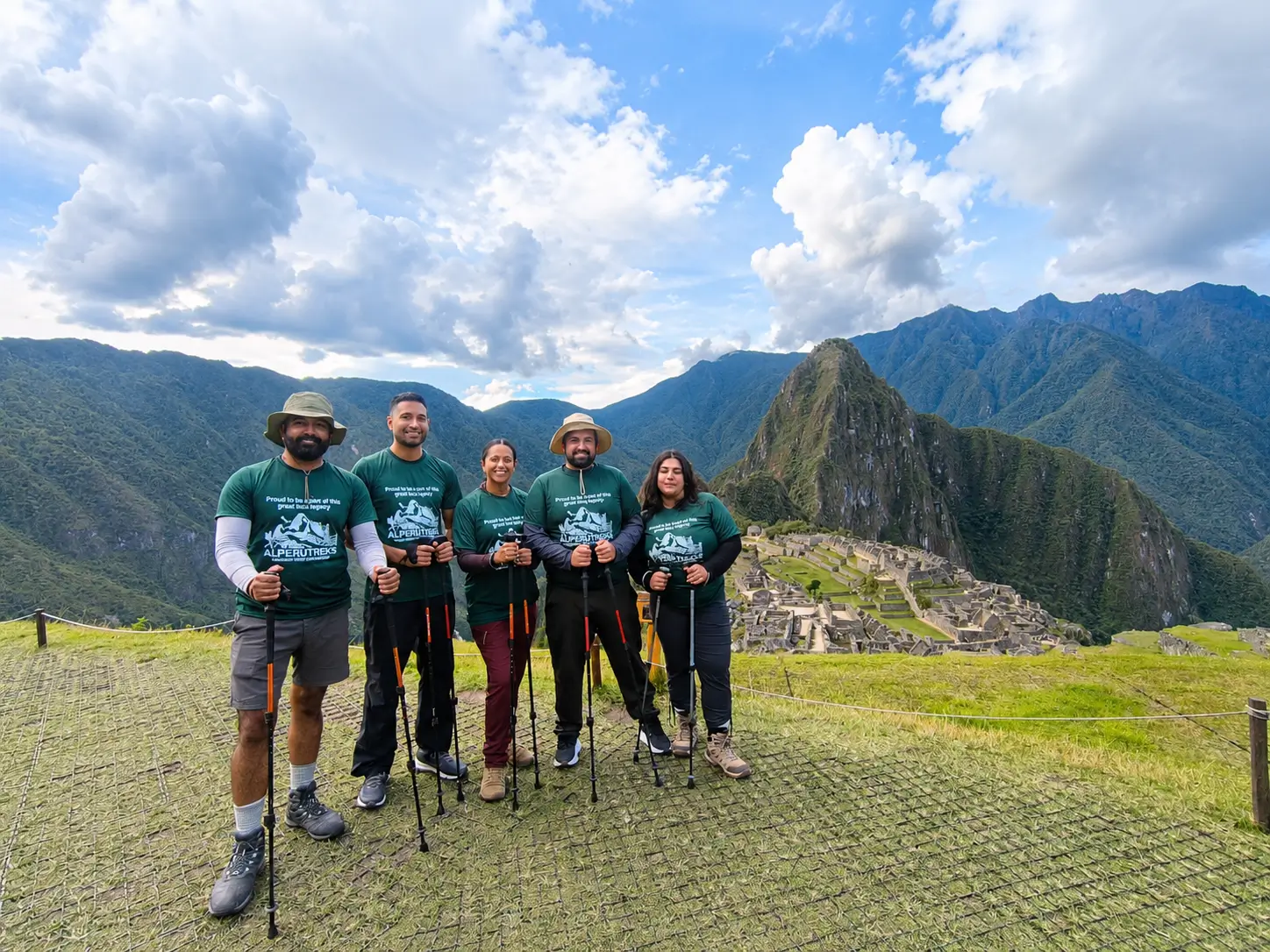
If you’re planning the Classic 4-Day Inca Trail, weather is the one variable that shapes almost everything else about your trip — what you pack, how hard the trail feels, whether you see Machu Picchu clearly from the Sun Gate, and even which month you should book. Unlike destinations with four distinct seasons, the Andes run on a simpler system: dry season and rainy season, separated by two short transition windows. But within that simple system sits a lot of nuance, from freezing high-camp nights in July to sudden afternoon showers in April.
This guide breaks down Inca Trail weather month by month, explains the microclimates you’ll pass through in a single day of hiking, and gives you the specific numbers — temperature, precipitation, altitude — that you need to prepare properly. It’s written from the perspective of a local Cusco-based operator that runs this trail year-round, not a travel blog written from a desk somewhere else.
Inca Trail Weather at a Glance
Before the month-by-month detail, here’s the short version.
| Factor | Information |
|---|---|
| Climate type | High-altitude tropical mountain climate (two seasons, not four) |
| Dry season | May – September |
| Rainy season | November – March |
| Shoulder months | April and October |
| Warmest daytime temps | 61–68°F (16–20°C), typically September–May |
| Coldest nighttime temps | Below freezing at high camps, June–August |
| Highest point | Dead Woman’s Pass, 13,828 ft (4,215 m) |
| Trail closure | Entire month of February (maintenance, not weather-related) |
Understanding Inca Trail Climate: Two Seasons, Not Four
The Peruvian Andes don’t experience spring, summer, fall, and winter the way North America or Europe does. Instead, everything revolves around rainfall. Cusco and the trail sit close to the equator, so temperature swings by season are relatively modest — what really changes is how much it rains, and how that rain affects trail conditions, visibility, and river crossings.

The Dry Season (May–September)
This is the season most travelers picture when they imagine hiking the Classic 4-Day Inca Trail: clear blue skies, firm stone steps underfoot, and unobstructed views of snow-capped peaks like Salkantay and Veronica along the way.
- Daytime temperatures typically sit between 61–68°F (16–20°C) in the sun.
- Nights, especially at high campsites, regularly drop below freezing, particularly in June and July — statistically the coldest months of the year in the Cusco highlands.
- Rain is rare but not impossible; a short shower can still appear even in August.
The tradeoff is popularity. This is also when permits are hardest to secure, since it overlaps with the biggest wave of international travel.
The Rainy Season (November–March)
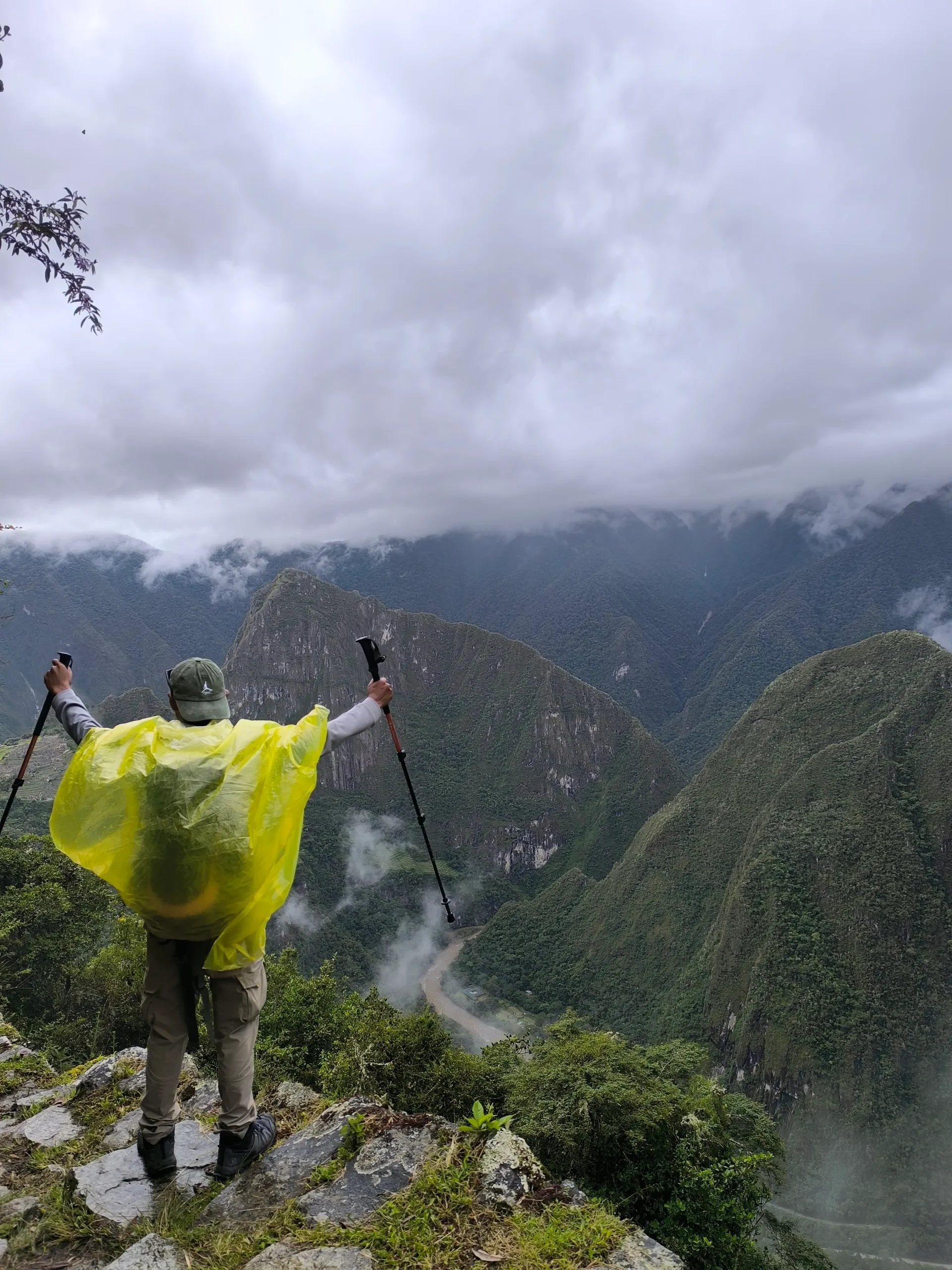
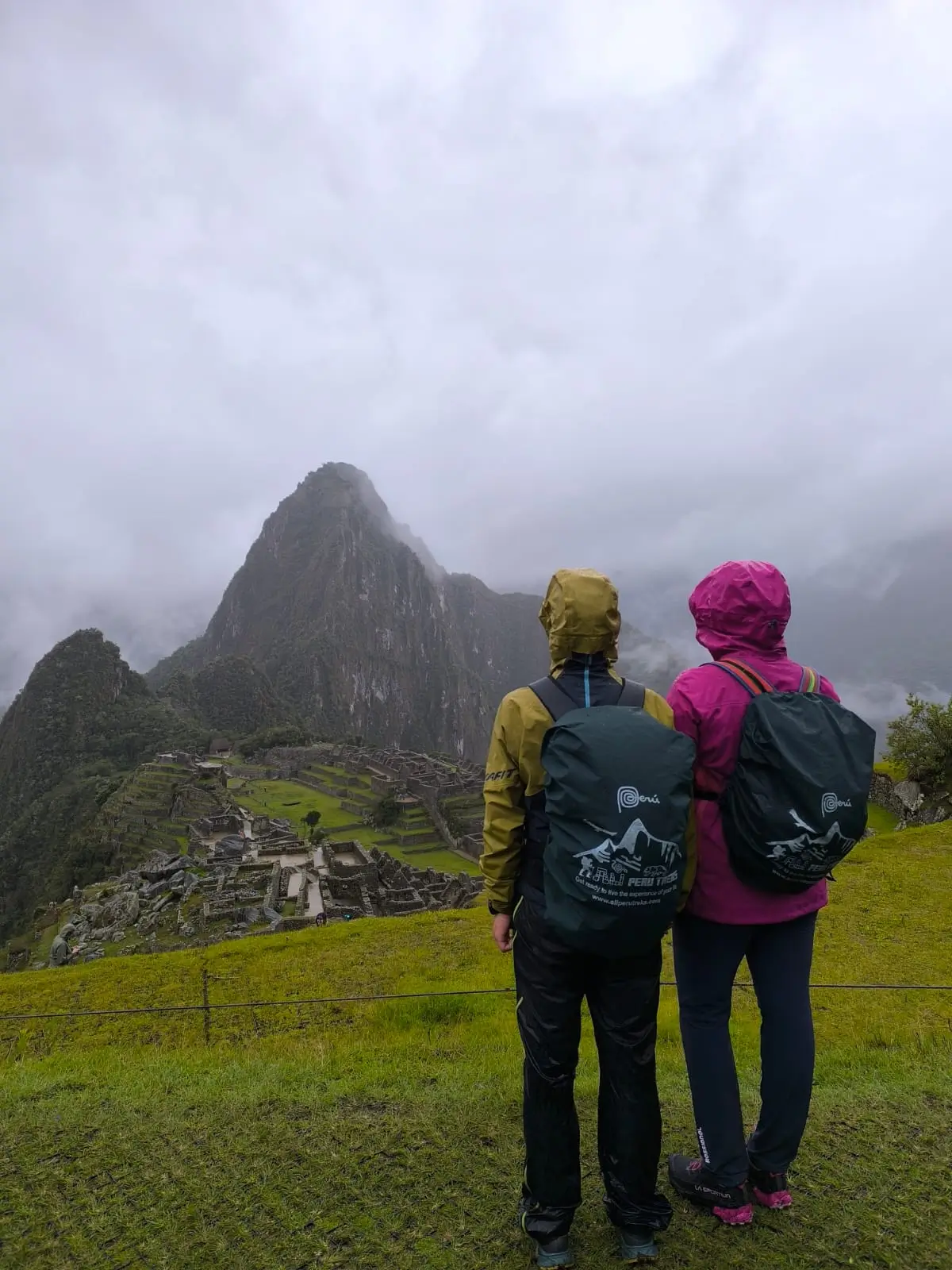
Rainy season Inca Trail conditions are a different experience altogether. Expect afternoon showers, muddy sections on the stone steps, and cloud cover that can obscure mountain views — especially from December through March, the wettest stretch of the year.
What you get in exchange: greener landscapes, thinner crowds, blooming orchids along the cloud forest sections, and milder nights than the bone-cold dry-season camps. Heavy rain can occasionally trigger short, localized trail closures due to landslides — one more reason to trek with an operator that monitors conditions daily rather than booking the cheapest available slot.
Inca Trail Weather by Month
Here’s the month-by-month breakdown, with approximate day and night temperatures based on historical climate averages for the region.
| Month | Precipitation | Day Temp | Night Temp | Trail Status |
|---|---|---|---|---|
| Inca Trail in January | High | 57–64°F (14–18°C) | 41–46°F (5–8°C) | Open, rainy |
| Inca Trail in February | — | — | — | Closed entirely |
| Inca Trail in March | High, easing late-month | 57–64°F (14–18°C) | 41–46°F (5–8°C) | Reopens March 1 |
| Inca Trail in April | Medium-high | 59–66°F (15–19°C) | 39–45°F (4–7°C) | Green, occasional rain |
| Inca Trail in May | Low | 61–68°F (16–20°C) | 37–43°F (3–6°C) | Excellent |
| Inca Trail in June | Very low | 59–66°F (15–19°C) | 34–39°F (1–4°C) | Excellent, cold nights |
| Inca Trail in July | Very low | 57–64°F (14–18°C) | 32–37°F (0–3°C) | Peak season, coldest nights |
| Inca Trail in August | Low | 59–66°F (15–19°C) | 34–39°F (1–4°C) | Peak season |
| Inca Trail in September | Low-medium | 61–68°F (16–20°C) | 37–43°F (3–6°C) | Excellent |
| Inca Trail in October | Medium | 61–68°F (16–20°C) | 39–45°F (4–7°C) | Good, drier shoulder |
| Inca Trail in November | Medium-high | 59–66°F (15–19°C) | 41–46°F (5–8°C) | Quiet, rain increasing |
| Inca Trail in December | High | 57–64°F (14–18°C) | 41–46°F (5–8°C) | Rainy, festive season |
Figures are approximate historical averages. Mountain weather is genuinely unpredictable, so treat this as a planning guide rather than a forecast.
A few patterns stand out. Inca Trail weather in May is often considered the sweet spot: the rains have just cleared, the hills are still green from the wet season, and dry-season crowds haven’t fully arrived yet. Inca Trail weather in June, by contrast, brings the most reliable skies of the year — but also the coldest nights, so a warm sleeping bag stops being optional. If you’re deciding between the two, May offers a gentler introduction to cold-weather camping, while June rewards you with near-guaranteed clear mountain views.
Inca Trail Temperature: What to Really Expect Day and Night
One detail catches first-time trekkers off guard every year: you can get sunburned and hypothermic on the same day. At altitude, the sun is intense enough to burn exposed skin within twenty minutes, even when the air temperature feels cool. The moment the sun dips behind a ridge or clouds roll in, that same air can feel ten degrees colder within minutes.
- Midday, direct sun: Can feel warm even at 70°F (21°C) equivalent, due to thin air and strong UV exposure.
- Shaded sections and cloud forest: Noticeably cooler and often humid.
- Dusk to dawn at high camps: Regularly drops to 32–40°F (0–4°C) in dry season, occasionally lower.
This is why layering — not a single heavy jacket — is the standard local advice, a topic we cover in more detail in our full 4-day packing list.
Inca Trail Microclimates: Why Weather Changes Every Few Hours
The trail isn’t a single climate zone — it’s several, stacked one after another as you gain and lose elevation. In a single day, you can pass through:
- Andean highland grassland (puna) near the passes — windy, exposed, and cold even in full sun.
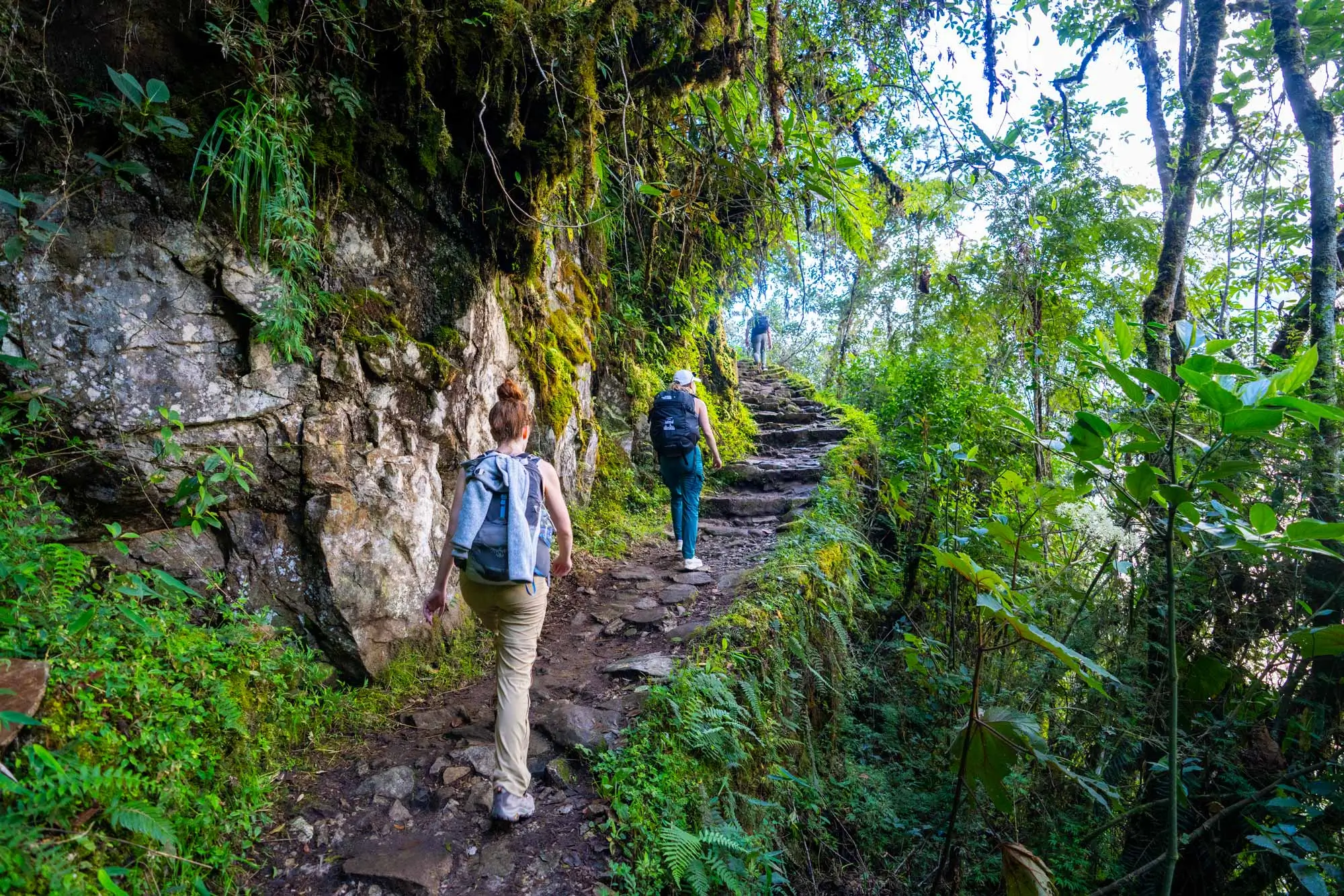
- Cloud forest on the descents — humid, mild, and prone to sudden mist.
- River valley sections near the start — warmer and drier, closer to subtropical.
This is the reason your guide will often check the sky at breakfast and adjust the day’s pacing. A blue-sky morning at Wayllabamba campsite (about 9,800 ft / 3,000 m) can turn into a windy, overcast afternoon by the time you reach a pass three hours later. Locals plan around this constantly; visitors usually only learn it the hard way, which is exactly what this guide is meant to prevent.
Weather on the Inca Trail 4 Days: Day-by-Day
Here’s how weather typically plays out across the Classic Inca Trail 4 days, assuming dry-season conditions. Rainy-season trekkers should expect the same general pattern, with added cloud cover and a higher chance of afternoon showers.
- Day 1 — Km 82 to Wayllabamba (moderate). Warm, often sunny valley walking along the Urubamba River. Lower altitude (around 8,530–9,800 ft) means milder temperatures than the rest of the trek.
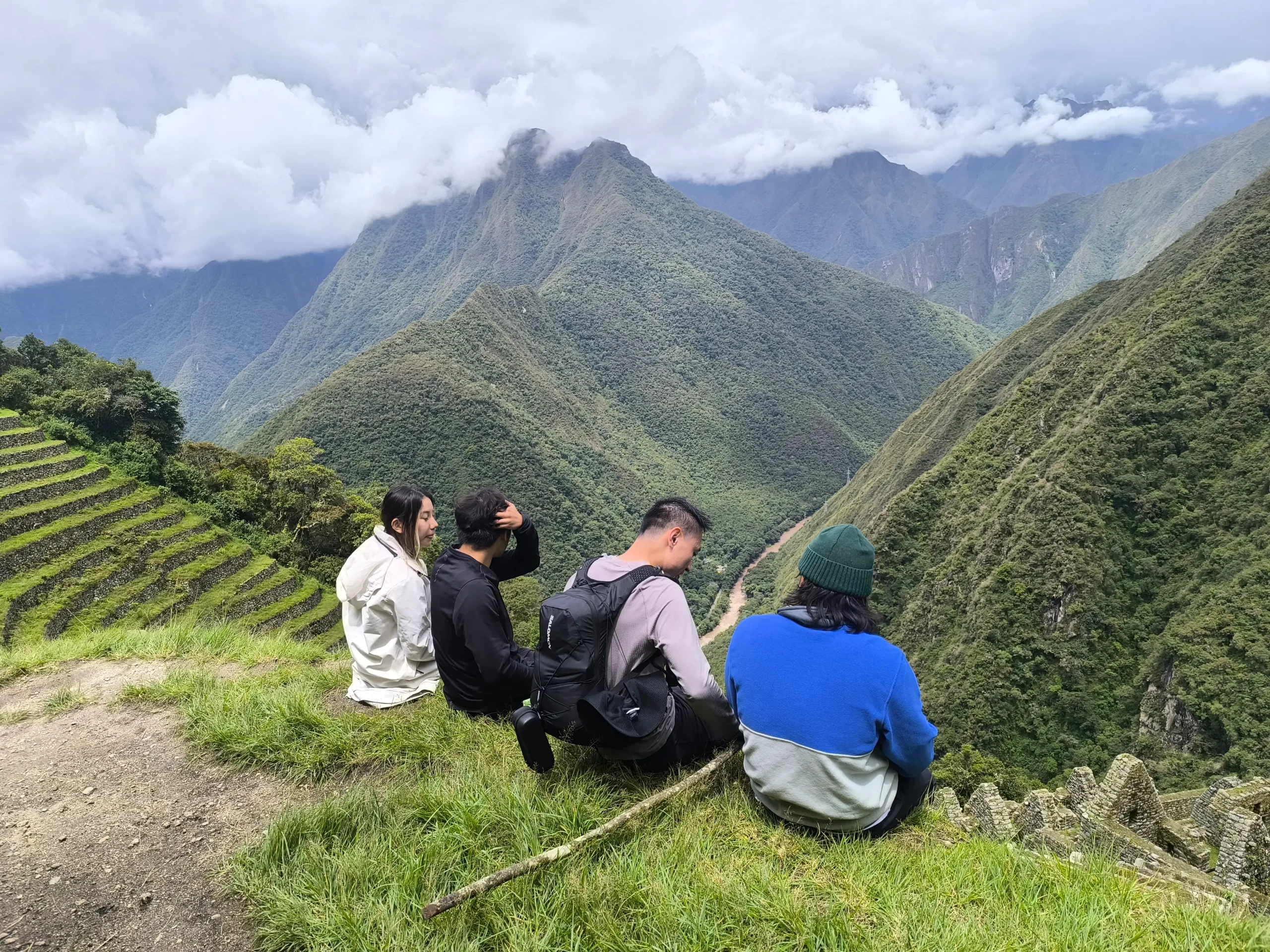
- Day 2 — Wayllabamba to Pacaymayo, via Dead Woman’s Pass (the hardest day). This is where weather turns sharp. The morning climb starts in cooler forest air, opens into exposed, windy grassland near the top of the pass, and can feel genuinely cold at the 13,828 ft (4,215 m) summit — even under clear skies. Afternoon descent into Pacaymayo Valley is noticeably milder.
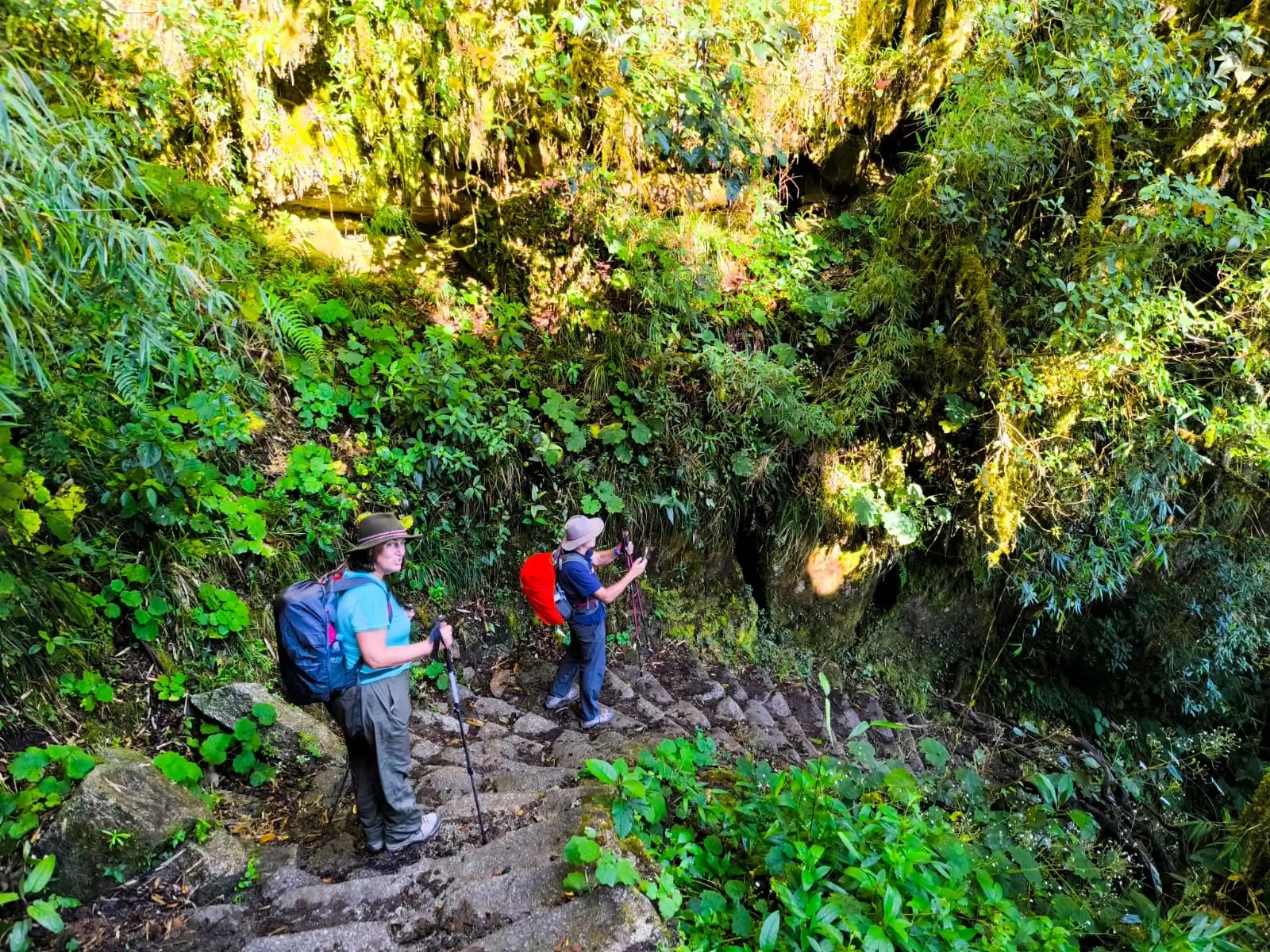
- Day 3 — Pacaymayo to Wiñay Wayna (longest day, most microclimates). You’ll pass through several ecological zones, including cloud forest sections where mist and light rain are common even in dry season.
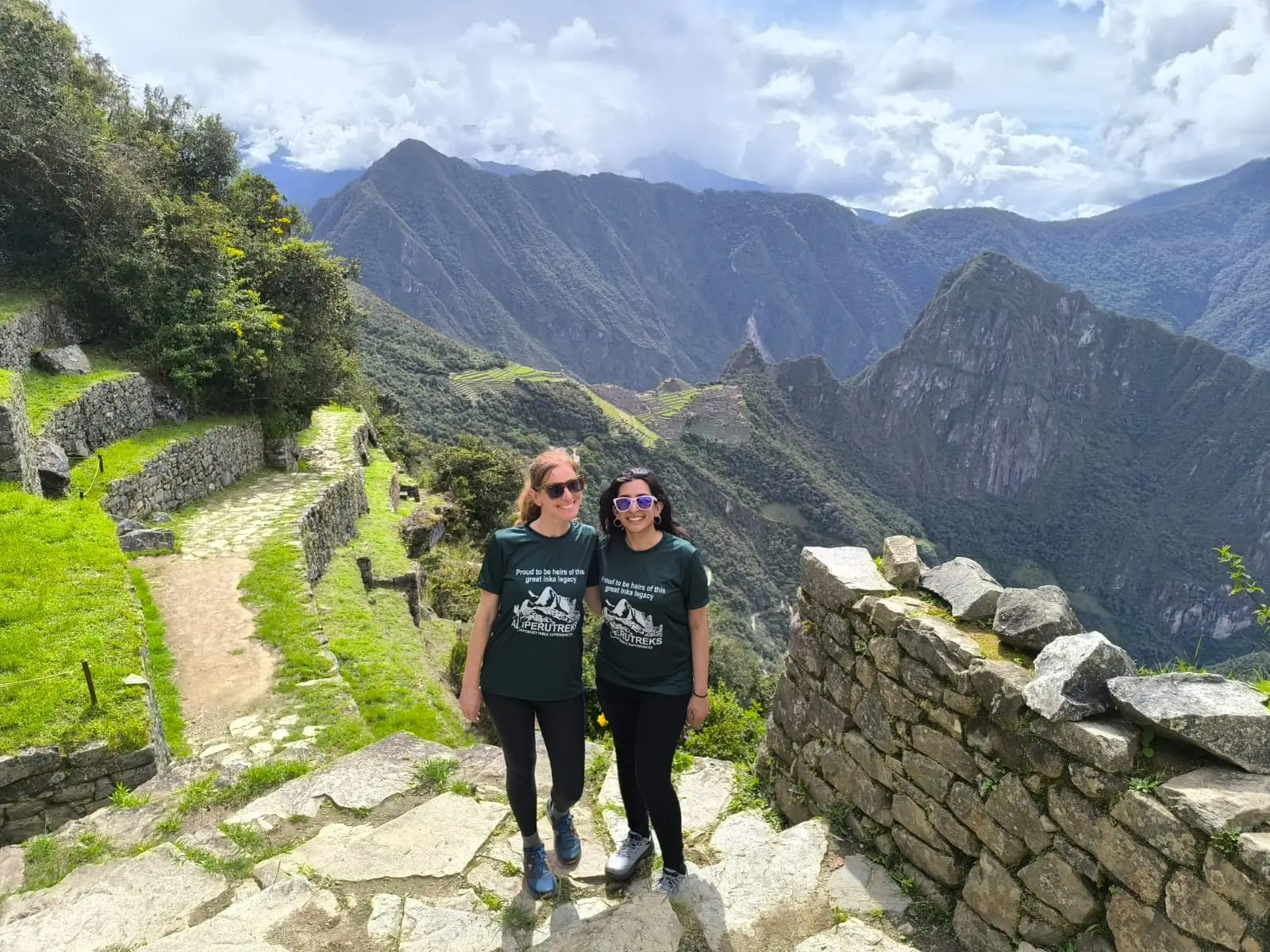
- Day 4 — Wiñay Wayna to Machu Picchu via the Sun Gate. An early, often chilly pre-dawn start, followed by warming temperatures as you descend toward Machu Picchu’s lower elevation (about 7,970 ft / 2,430 m), which is noticeably milder than the high camps.
Dead Woman’s Pass Weather: The Coldest, Windiest Point on the Trail
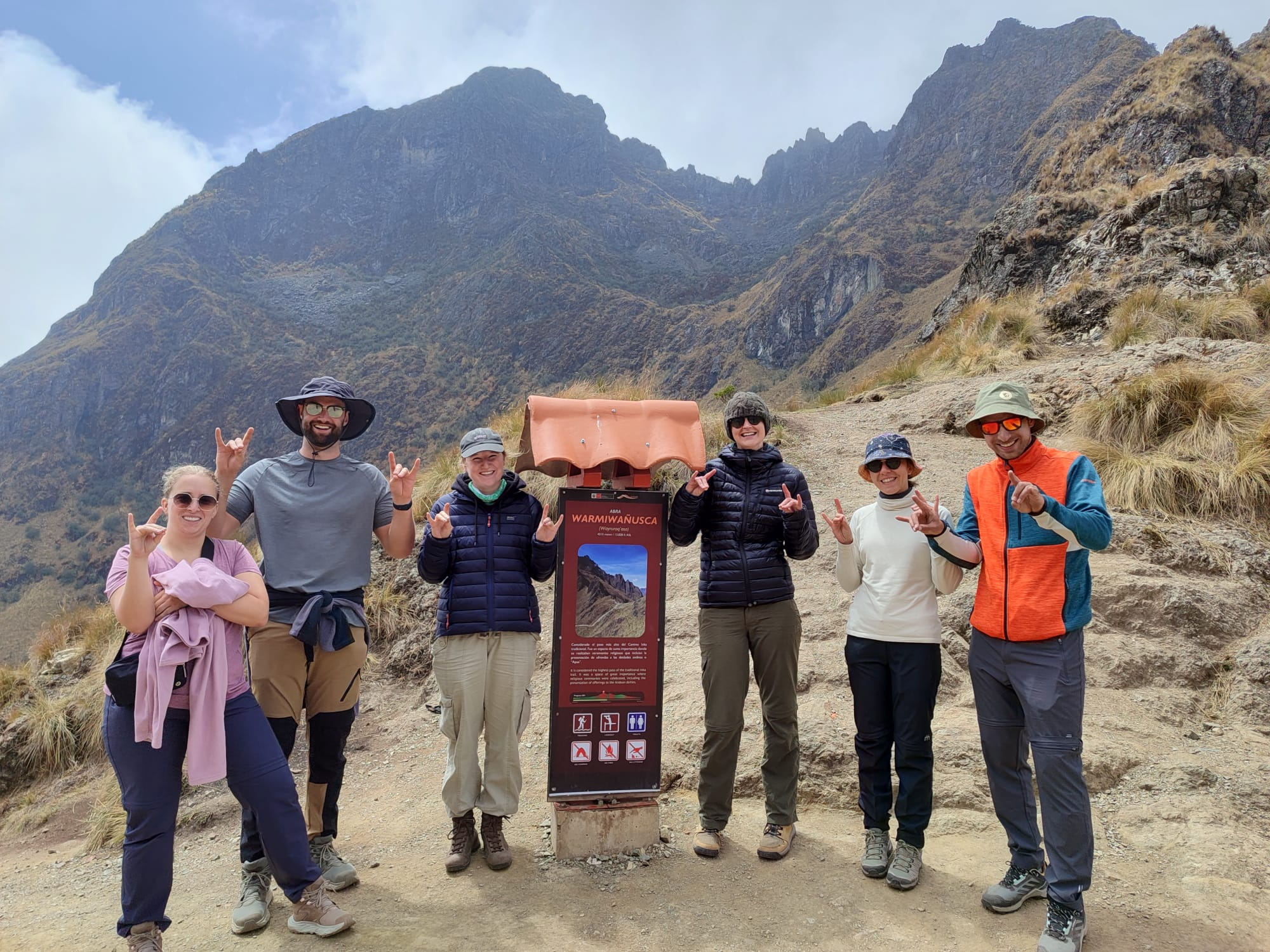
Warmiwañusca — Dead Woman’s Pass — is the highest point on the entire route, and its weather deserves its own mention. Even on a clear morning, wind at the summit can make the air feel significantly colder than the thermometer suggests. Cloud cover can roll in and burn off within the same hour. Because most groups summit before midday, you’ll usually beat the afternoon’s more unpredictable weather — one more reason experienced guides push an early start on Day 2.
For a full breakdown of what to expect physically and how to pace the climb, see our dedicated Dead Woman’s Pass guide.
Machu Picchu Weather Forecast: What Awaits You at the End of the Trail
Machu Picchu sits at a lower elevation than the high passes — about 7,970 ft (2,430 m) — which means it’s generally warmer and more humid than the trail’s highest sections. It’s technically in a subtropical cloud forest zone, so morning mist is common year-round, even in dry season. That mist usually burns off within the first hour or two after sunrise, which is part of why arriving early is such consistent advice: not just for smaller crowds, but for the best chance of a clear first view of the citadel.
In rainy season, that same morning mist can linger longer, but many visitors find it adds a striking, almost mystical atmosphere to the ruins rather than ruining the experience.
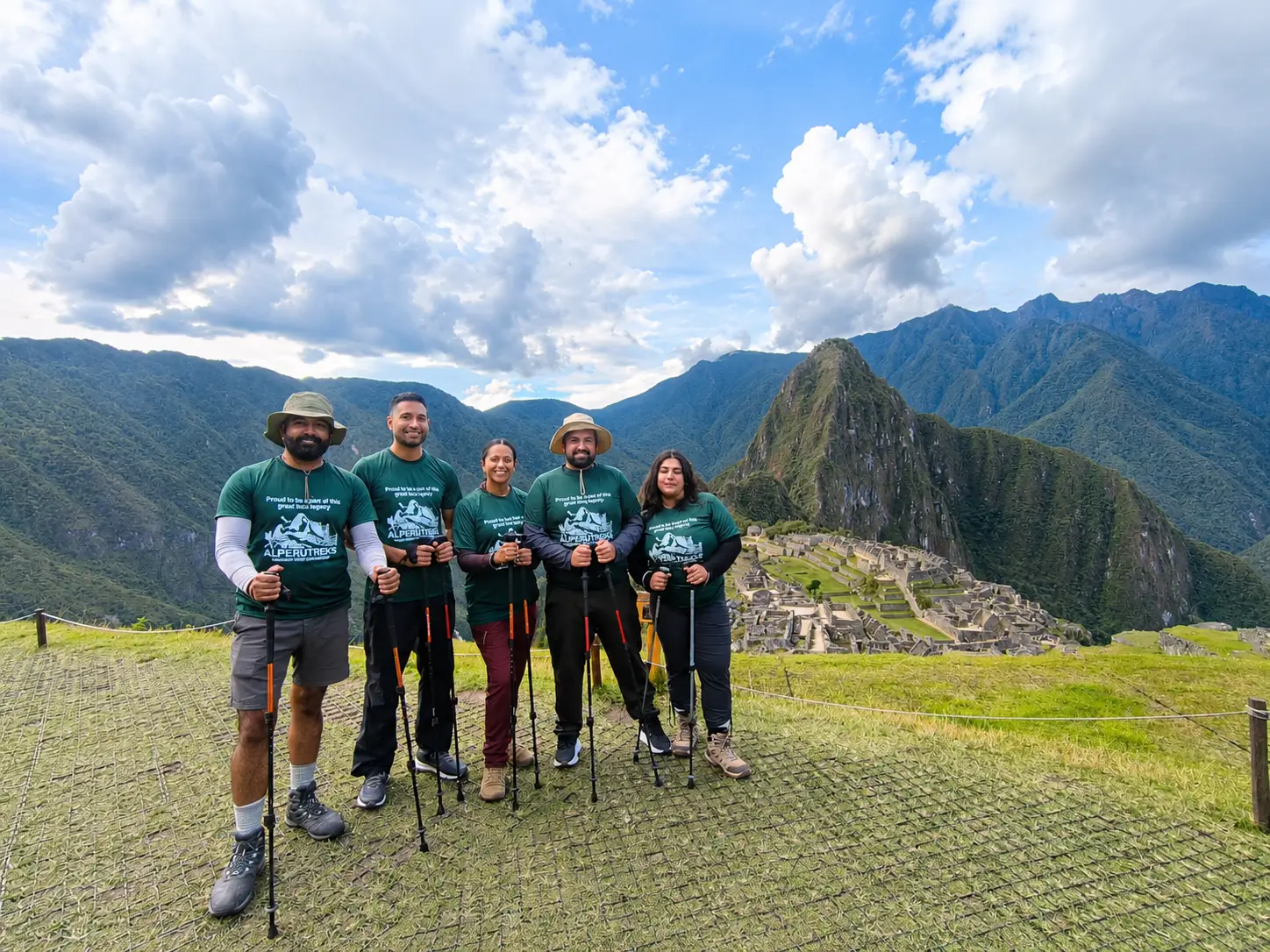
The February Closure: Why There’s No Inca Trail Weather to Plan For
Every year, the Classic Inca Trail closes entirely for the month of February, by order of Peru’s Ministry of Culture, in coordination with SERNANP (the national protected areas authority). This is not a weather closure — it’s scheduled maintenance and ecological recovery after the heaviest rains of the wet season. Crews repair stone steps, drainage systems, and campsite infrastructure. No permits are issued, and no version of the trail — including the short route — operates during this window. The trail reopens on March 1.
If your travel dates fall in February, you’re not out of options. Machu Picchu itself remains open, and routes like the Salkantay Trek and the Lares Trek run year-round, reaching Machu Picchu by different paths entirely unaffected by the Inca Trail’s closure.
Inca Trail Packing List for Weather
Pack for temperature swings, not a single “average” condition. At minimum:
- Layers: moisture-wicking base layer, insulating mid-layer, waterproof/windproof outer shell
- A warm sleeping bag rated for near-freezing temperatures, even in dry season
- Rain protection: poncho or waterproof jacket, especially November–April
- Sun protection: hat, sunglasses, high-SPF sunscreen — UV exposure is intense at altitude regardless of season
- Trekking poles, useful in both muddy rainy-season conditions and on steep dry-season stone descents
- Headlamp, for the pre-dawn Day 4 start
For the complete gear breakdown, including what’s provided versus what to bring yourself, see the full 4-day packing list.
Local Expert Tips
A few things we tell every group before they start, based on years of guiding this specific route:
- Don’t judge the day by the morning sky. A clear breakfast can turn into an overcast, windy pass three hours later. Layer accordingly from the first step, not after you’re already cold.
- The coldest night isn’t always where you’d expect. Many trekkers assume the night before Dead Woman’s Pass is the coldest, but the Pacaymayo campsite after the pass can feel just as sharp due to wind funneling through the valley.
- Dry season doesn’t mean rain-proof. We still pack ponchos for June and July groups. A short shower can appear even in the “safest” months.
- Acclimatize before you worry about weather. Two to three days in Cusco or the Sacred Valley beforehand does more for your comfort on the trail than any piece of gear. Altitude affects how cold you feel and how your body handles temperature swings — see our guide to altitude sickness in Cusco for specifics.
- Rainy-season trekkers get better light for photos more often than you’d think. Storm-clearing skies right after a shower produce some of the most dramatic mountain photography on the trail — a small upside worth knowing about.
Frequently Asked Questions
May through September, the dry season, offers the most reliable conditions — clear skies, firm trails, and minimal rain. May and September are often considered the best overall balance of good weather and smaller crowds compared to peak July–August.
Yes, occasionally. “Dry season” means rain is rare and usually brief, not that it never happens. Pack a poncho regardless of which month you travel.
At high campsites during dry season (June–August especially), temperatures regularly drop below freezing, into the 30s°F (around 0°C) or lower. Rainy-season nights are milder but still cool, generally in the low-to-mid 40s°F.
No — the only scheduled closure is the entire month of February, and it’s for maintenance, not weather. Occasional short-term closures can happen during heavy rainy-season storms if landslide risk affects a specific section, but these are rare and localized.
Layers you can add or remove quickly: a warm mid-layer, a windproof/waterproof outer shell, gloves, and a hat. Wind chill at the summit makes it feel colder than the actual temperature.
Not necessarily — it depends on your priorities. Rainy season means muddier trails and more cloud cover, but also lush green scenery, fewer crowds, and generally easier permit availability.
Machu Picchu sits at a lower, warmer elevation than the high mountain passes and experiences more consistent morning mist due to its cloud forest setting, regardless of season.
Conclusion: Plan Your Trek Around the Weather That Fits You
There’s no single “perfect” Inca Trail weather window — there’s the window that matches what you’re looking for. Dry season delivers the clearest skies and most predictable trail conditions but comes with cold nights and the biggest crowds. Rainy season trades some of that reliability for green landscapes, quieter trails, and a genuinely different atmosphere at Machu Picchu. What matters most is packing correctly for whichever season you choose and booking with a team that tracks trail conditions daily rather than guessing.
At Ali Peru Treks, we’re a locally operated Cusco team that guides this route year-round, in every season the Andes throw at us. If you’re ready to lock in your dates, check real-time Inca Trail permit availability or reach out and we’ll help you match the right season, route, and preparation to your trip.