
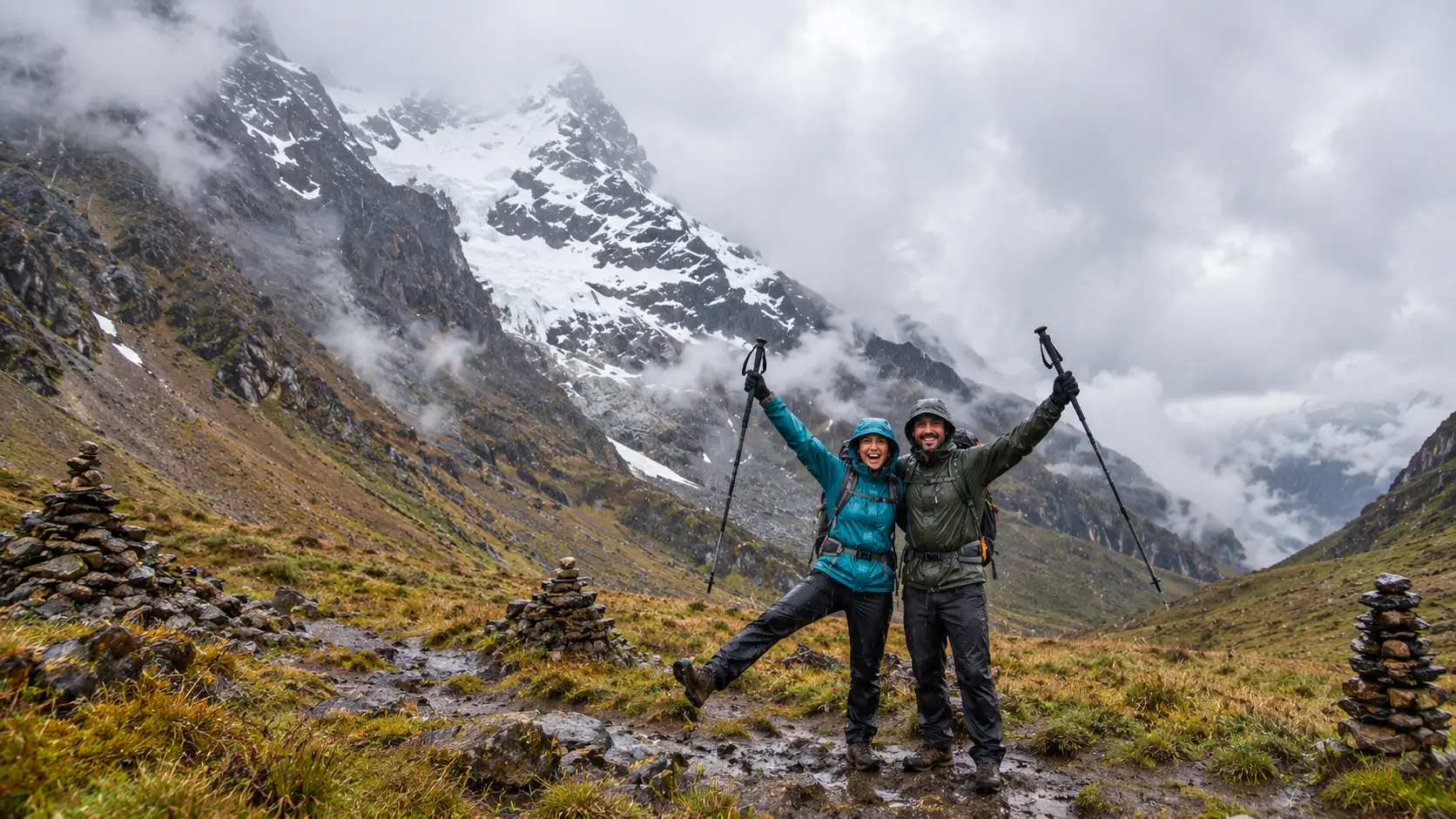
December falls squarely within the Ancascocha Trek’s rainy season, which runs roughly November through April. Expect frequent afternoon showers, softer and muddier trail conditions on the route’s unpaved sections, and a real chance of reduced visibility at the higher passes — alongside the quietest trail of the year and lush, green scenery. It’s a legitimate option for the right traveler, not a month to avoid outright, but it comes with trade-offs worth understanding before you book.
December Weather on the Ancascocha Trek
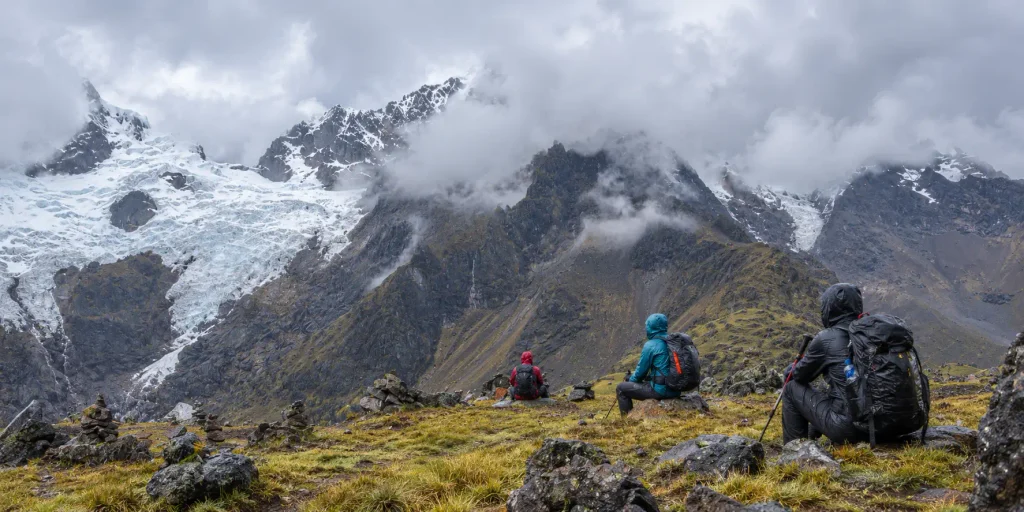
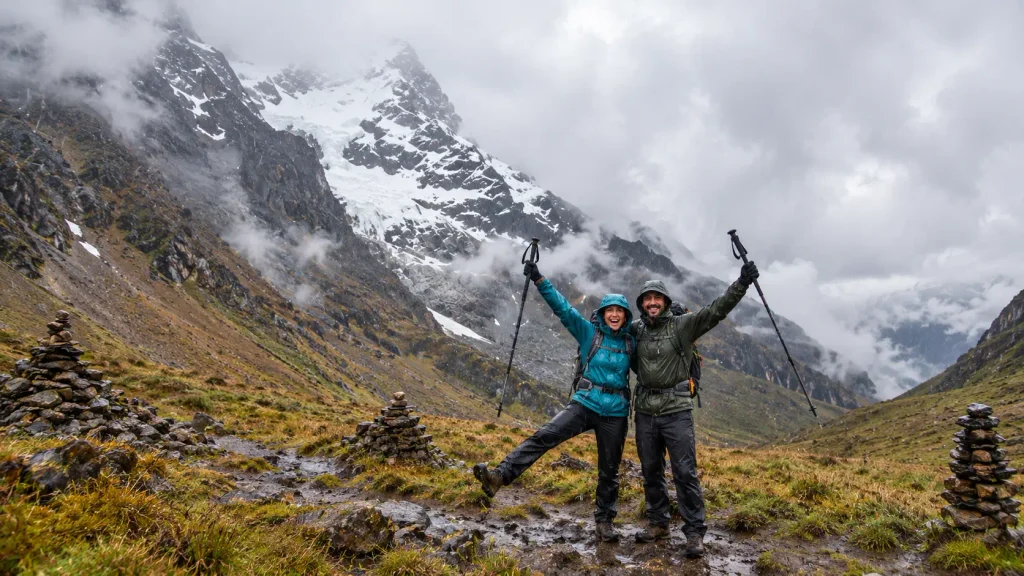
By December, the dry-season stability of June through September is well behind you. Rain is common, typically arriving as afternoon or evening showers rather than constant all-day rain, though multi-day wet stretches do happen. At Huayanay Pass (4,650 m / 15,255 ft), the trek’s highest point, cloud cover and fog become considerably more likely than in dry-season months, which can meaningfully affect the views that are part of the route’s appeal.
Nighttime cold at the high camps doesn’t ease up during the rainy season — altitude, not rainfall, is what drives that cold, so pack accordingly regardless of the wetter conditions.
Interestingly, some regional operators structure their Ancascocha departures to run from March through December specifically, effectively treating January and February — the heart of peak rainy season — as the period to avoid rather than December itself. That’s a useful signal: December, while wet, is generally considered more manageable than the January–February stretch that follows it.
December vs. Other Rainy-Season Months
| Factor | November (early rainy) | December | January–February (peak rainy season) |
|---|---|---|---|
| Rain frequency | Moderate, increasing | Frequent, afternoon showers common | Heaviest of the year |
| Trail conditions | Starting to soften | Muddy on unpaved sections | Most demanding footing of the year |
| Visibility at Huayanay Pass | Increasingly variable | Real fog risk | Least reliable visibility |
| Crowd levels | Low | Low, with a brief bump around Christmas/New Year in Cusco generally | Lowest of the year |
| Landscape | Beginning to green | Noticeably green, fuller waterfalls | Greenest and lushest |
December sits in the middle of the rainy season rather than its harshest point — worth knowing if you’re choosing between rainy-season months rather than deciding whether to avoid the rainy season altogether.
The Honest Case For and Against December
What December genuinely offers: the quietest trail conditions of the year on a route that’s already one of the less-crowded alternatives to the Classic Inca Trail, noticeably greener valleys, and fuller waterfalls along sections like Perolniyoc. Because the Ancascocha Trek has no government permit cap the way the Classic Inca Trail does, availability isn’t a concern even during the holiday travel bump that hits Cusco’s hotels and Machu Picchu train schedules in late December.
What it genuinely costs you: predictable weather. Mud on the trek’s less-maintained dirt sections makes for a more physically demanding hike than the same distance would be in dry conditions, and there’s a real possibility that fog obscures the views from Huayanay Pass on any given day of your trek — not a certainty, but a meaningfully higher chance than in July or August. If seeing clear mountain views is the main reason you’re drawn to this route, December carries real risk on that front.
What to Pack for December
- A genuine waterproof shell, not just water-resistant — rain is a realistic daily possibility, not an edge case
- Warm insulated layers for camp, since cold at altitude persists regardless of rainfall
- Dry bags or a reliable pack cover to protect gear and electronics through wetter days
- Quick-dry base layers rather than cotton, which stays cold and wet for hours once soaked
- Trekking poles for added stability on muddy or slippery trail sections
Planning Around the December Holiday Period
If your December dates overlap with the Christmas and New Year period, it’s worth separating two different things: the trek itself stays quiet regardless of the calendar, since Ancascocha doesn’t see the crowd spikes that hit the Classic Inca Trail or Machu Picchu itself during holiday weeks.
But logistics around it — hotel availability in Cusco and Aguas Calientes, and train schedules to Machu Picchu — can get tighter and pricier during the last two weeks of December, independent of the trek’s own weather or crowd patterns. Booking your accommodations and transport further ahead than you might for a quieter month is a reasonable precaution if your trip falls in this window.


How December Compares Across Routes
The seasonal rainy-season pattern isn’t specific to Ancascocha — it affects the entire Cusco trekking region, including the Classic Inca Trail, which stays open through December but shares the same increased rain risk. The Inca Trail by month overview gives a fuller year-round picture if you have flexibility in your travel dates and weather predictability matters more to you than crowd levels. Since Huayanay Pass on this route sits higher than Dead Woman’s Pass on the Classic Trail, it’s also worth reviewing altitude sickness prevention regardless of season, since that risk doesn’t track the rain calendar at all.
If you’re weighing this route against alternatives more broadly rather than settling on timing first, the existing comparison against Salkantay covers crowd levels, permits, and included amenities beyond seasonal weather.
FAQ: Ancascocha Trek in December
Yes. Unlike the Classic Inca Trail, which closes entirely each February for maintenance, Ancascocha has no official closure period, and December remains a regularly operated month for most trek operators in the region.
Rain is common, typically as afternoon or evening showers, though multi-day wet stretches happen. It’s wetter than November but generally considered more manageable than the January–February peak of the rainy season.
Possibly, but with meaningfully less certainty than in dry-season months. Fog and cloud cover at the pass become a real risk during the rainy season, and there’s no way to guarantee clear conditions on any specific date.
The trek is already one of the quieter alternatives to the Classic Inca Trail year-round, so the crowd-avoidance benefit of December is smaller here than it would be on a busier route — though it does still apply to the wider Cusco tourism calendar and Machu Picchu train logistics.
If your dates fall around Christmas or New Year specifically, yes — that period sees tighter hotel and train availability across Cusco independent of the trek itself, so earlier booking is a reasonable precaution.