
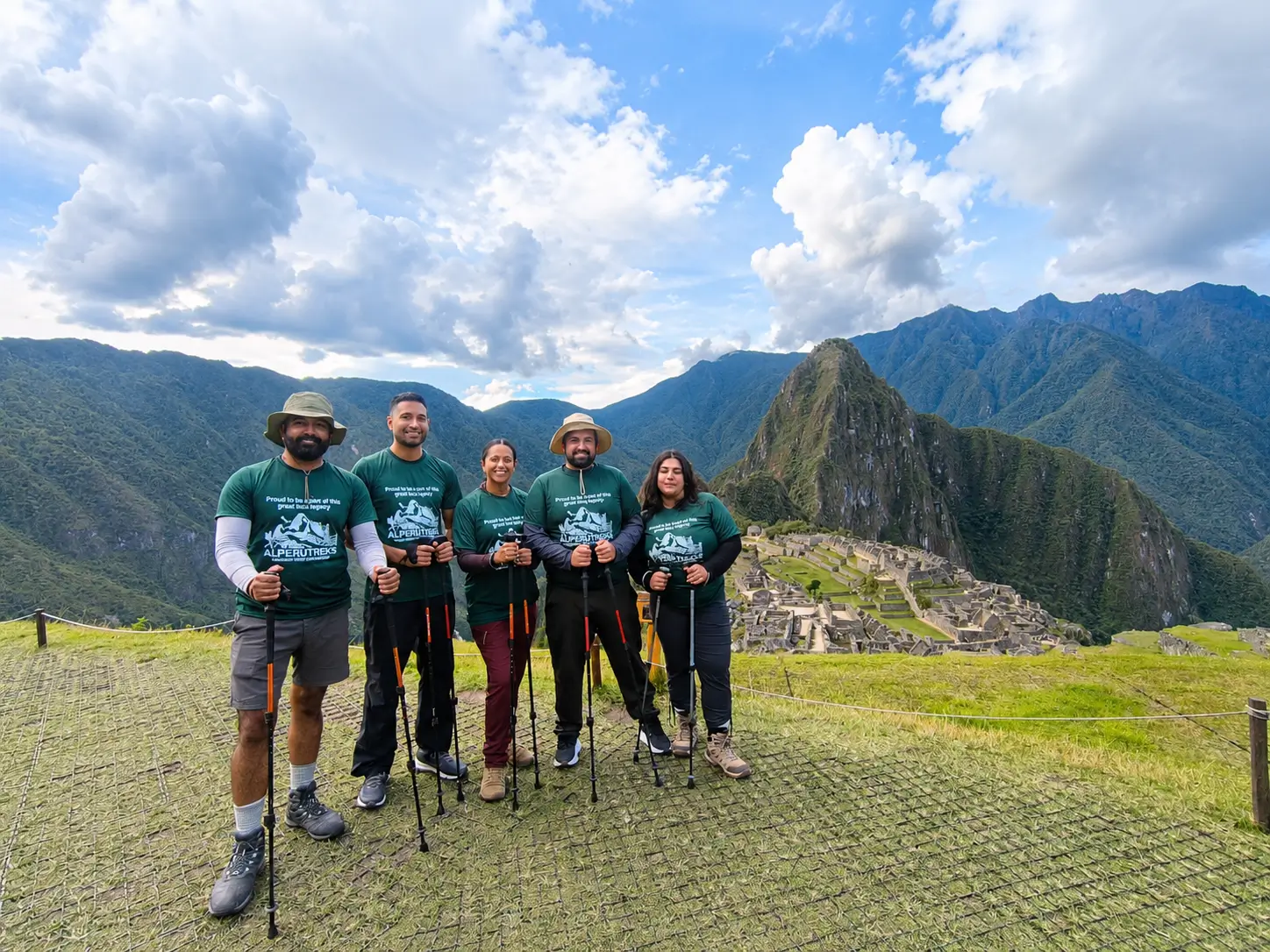
Yes, the Inca Trail is open in January — it’s one of eleven months a year you can hike it, since the trail closes completely every February for maintenance. What January adds to the equation is rain. This is the middle of Peru’s wet season, and hiking the Inca Trail in January means trading the bone-dry conditions of June and July for a greener, quieter, noticeably wetter trek.
That trade-off is what this guide breaks down in detail. Below you’ll find what the weather actually does day to day, how trail conditions and crowd levels compare to the rest of the year, what a realistic permit and booking timeline looks like, and what to pack so the rain doesn’t ruin your trip. This isn’t guesswork — it’s built from Peru’s official trail regulations, historical climate data, and the experience of a Cusco-based trekking team that runs this route in every month it’s open, rain included.
Is the Inca Trail Open in January?
Yes. Both the Classic 4-day Inca Trail and the Short 2-day Inca Trail run normally throughout January, permits included. The only scheduled closure of the entire year is February, when Peru’s Ministry of Culture, working with SERNANP (the national protected-areas authority), shuts the whole trail network down for maintenance and ecological recovery after the heaviest rains. No version of the trail operates that month.
That makes January safe to book with one caveat: don’t let your itinerary drift into early February. If your trip is close to the calendar boundary, build in a buffer, since the trail reopens on March 1 and there’s no flexibility around that date.
Beyond the February closure, there’s no blanket weather-based shutdown scheduled for January. In unusually severe storms, short and localized sections of trail can occasionally be affected by landslide risk, but that’s the exception rather than the rule, and it’s a reason to trek with an operator that actively monitors conditions rather than one that just checks a calendar.
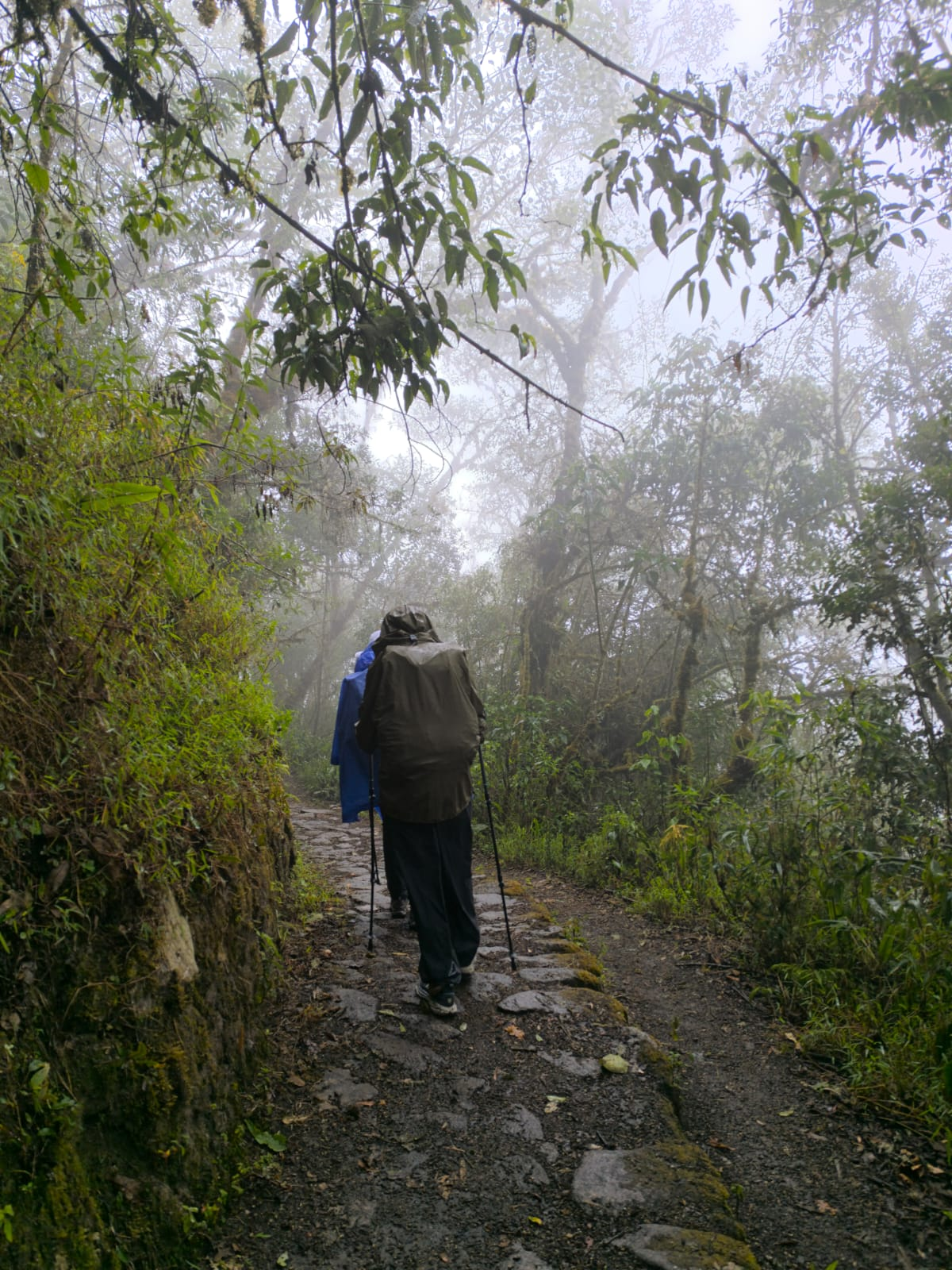
Inca Trail Weather in January
January sits inside Peru’s wet season, which generally runs from November through March and peaks from December through March. Understanding what that actually feels like on the ground matters more than the “rainy season” label alone.
Daytime and Nighttime Temperatures
On the trail itself, daytime temperatures in January typically run in the high 50s to mid-60s Fahrenheit (roughly 14–18°C), while nights — especially at the higher campsites — generally drop to somewhere in the low-to-mid 40s Fahrenheit (about 5–8°C). Cusco, at around 3,400 m (11,150 ft), sees a similar range, sitting among the coolest months of the year alongside February.
One detail catches first-timers off guard: you can get sunburned and cold within the same afternoon. At this altitude, UV exposure is intense even under cloud cover, so direct sun can feel surprisingly warm right up until a cloud rolls over a ridge — at which point the temperature can feel like it’s dropped ten degrees in minutes.
Rain, Cloud Cover, and Humidity
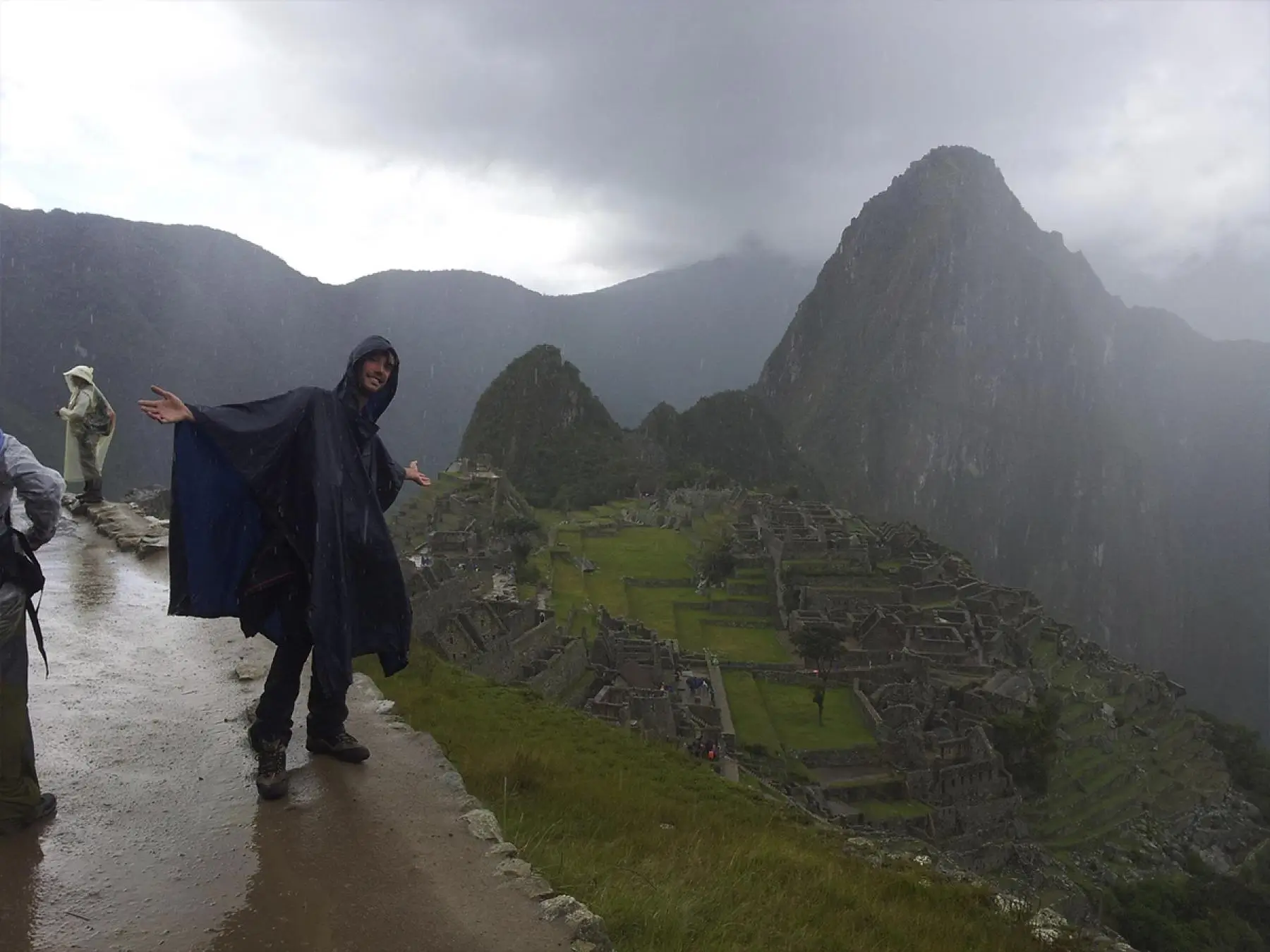
Historical climate records consistently place January among the wettest months of the year for the Cusco and Machu Picchu region, with most datasets showing well over 100 mm (about 4 inches) of rain across the month, spread over roughly 15 to 20 rainy days. The general pattern — not a guarantee — is clearer mornings and wetter afternoons and evenings, though any given day can break that pattern in either direction.
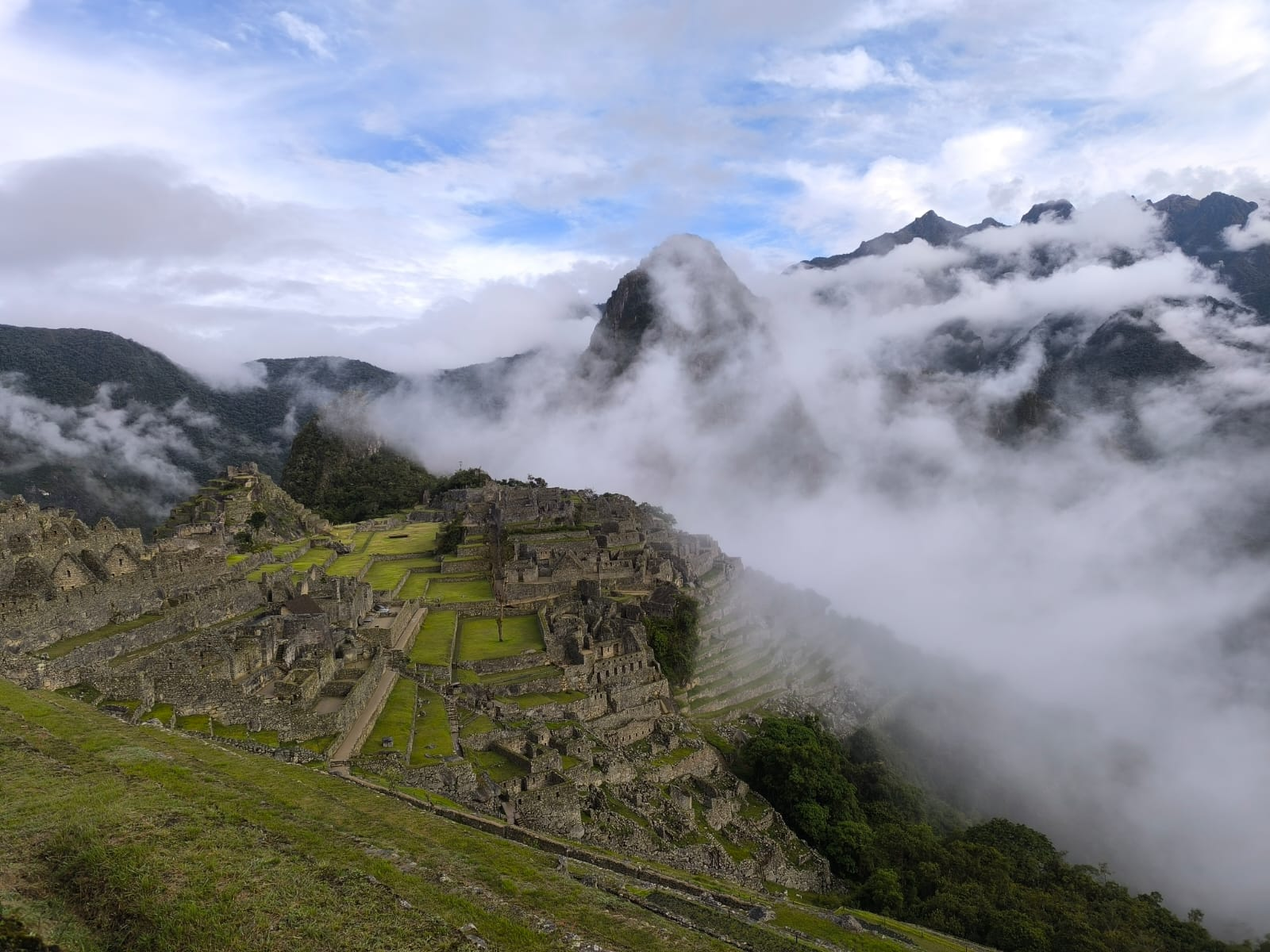
Humidity runs high, cloud cover is frequent, and mist is common in the cloud forest sections. The payoff is visual: January is when the trail looks its most alive, with intense green vegetation, swollen waterfalls, and wildflowers and orchids along the lower and mid-altitude sections that simply aren’t there in the dry season.
Machu Picchu’s Climate vs. the High Trail
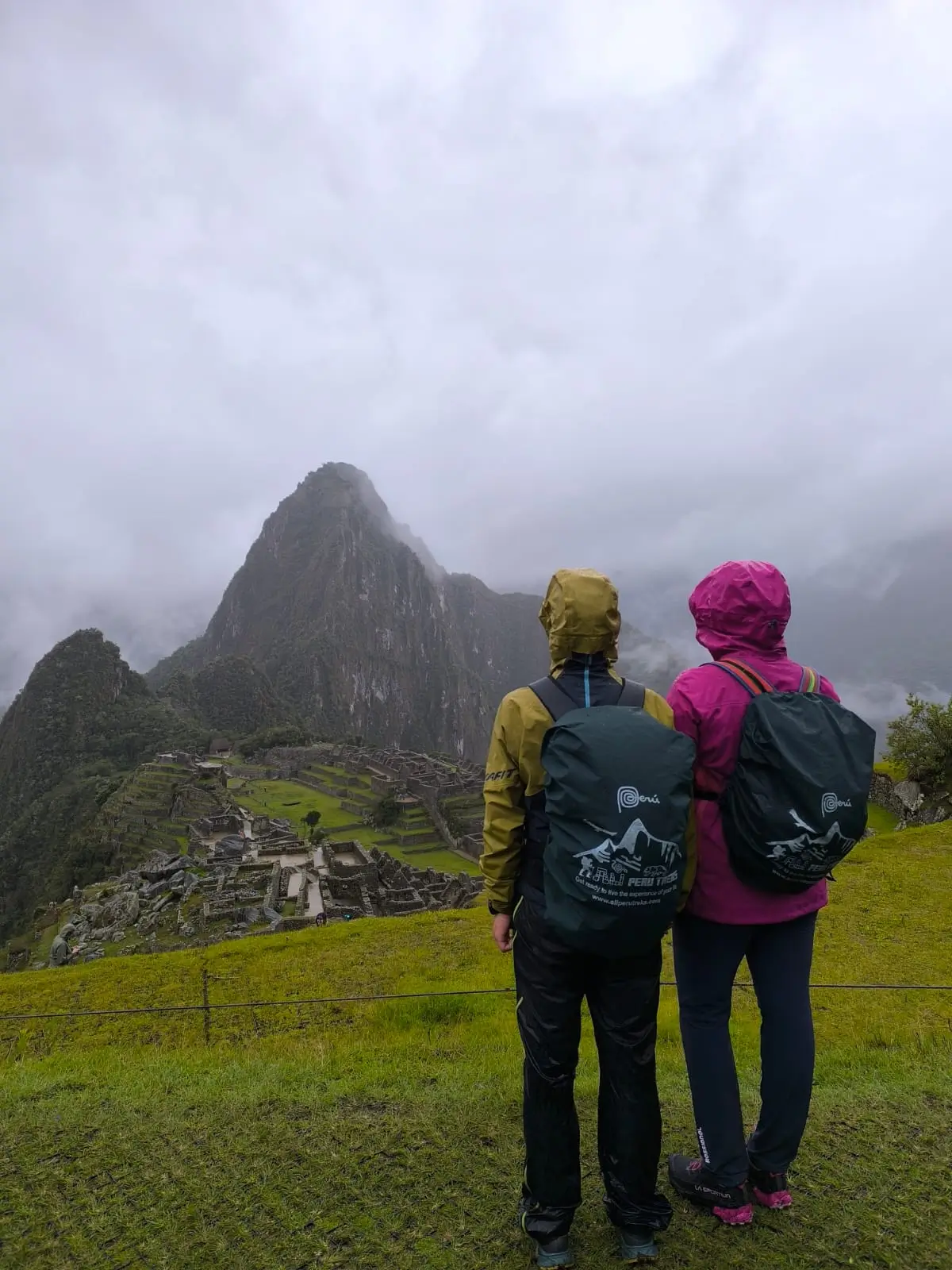
It’s worth separating two different microclimates that get lumped together under “Machu Picchu January weather.” The citadel itself sits at about 2,430 m (7,970 ft), in a subtropical cloud-forest zone that’s generally milder and more humid than the trail’s exposed high sections. Morning mist over the ruins is common even in dry season and more persistent in January, though it typically burns off within an hour or two after sunrise — many visitors find it adds to the atmosphere rather than ruining it.
The trail’s highest point, Dead Woman’s Pass (Warmiwañusca) at 4,215 m (13,828 ft), is a different environment entirely: colder, windier, and prone to cloud rolling in and clearing again within the same hour, even in January’s milder overall temperature range.
Trail Conditions in January
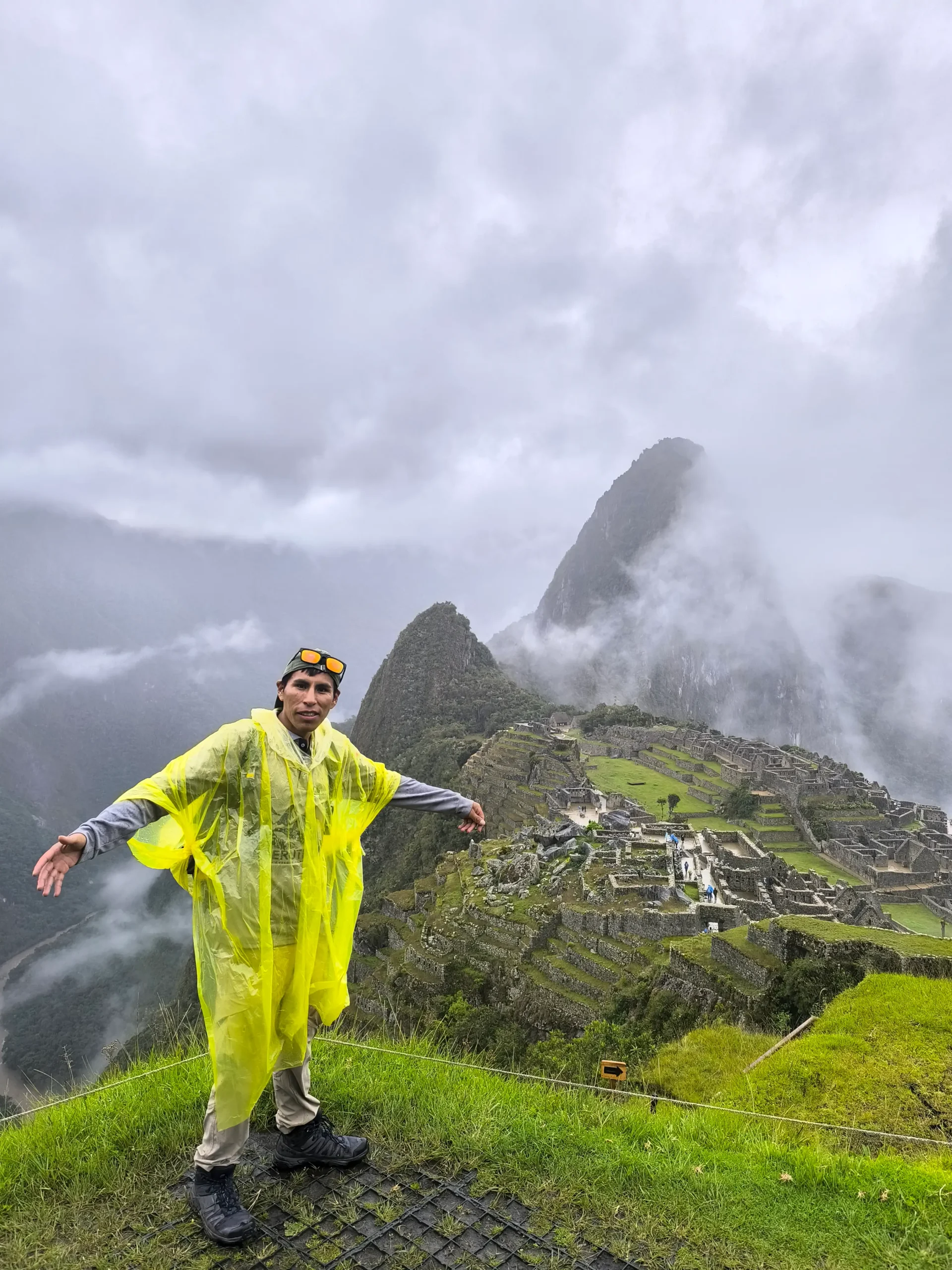
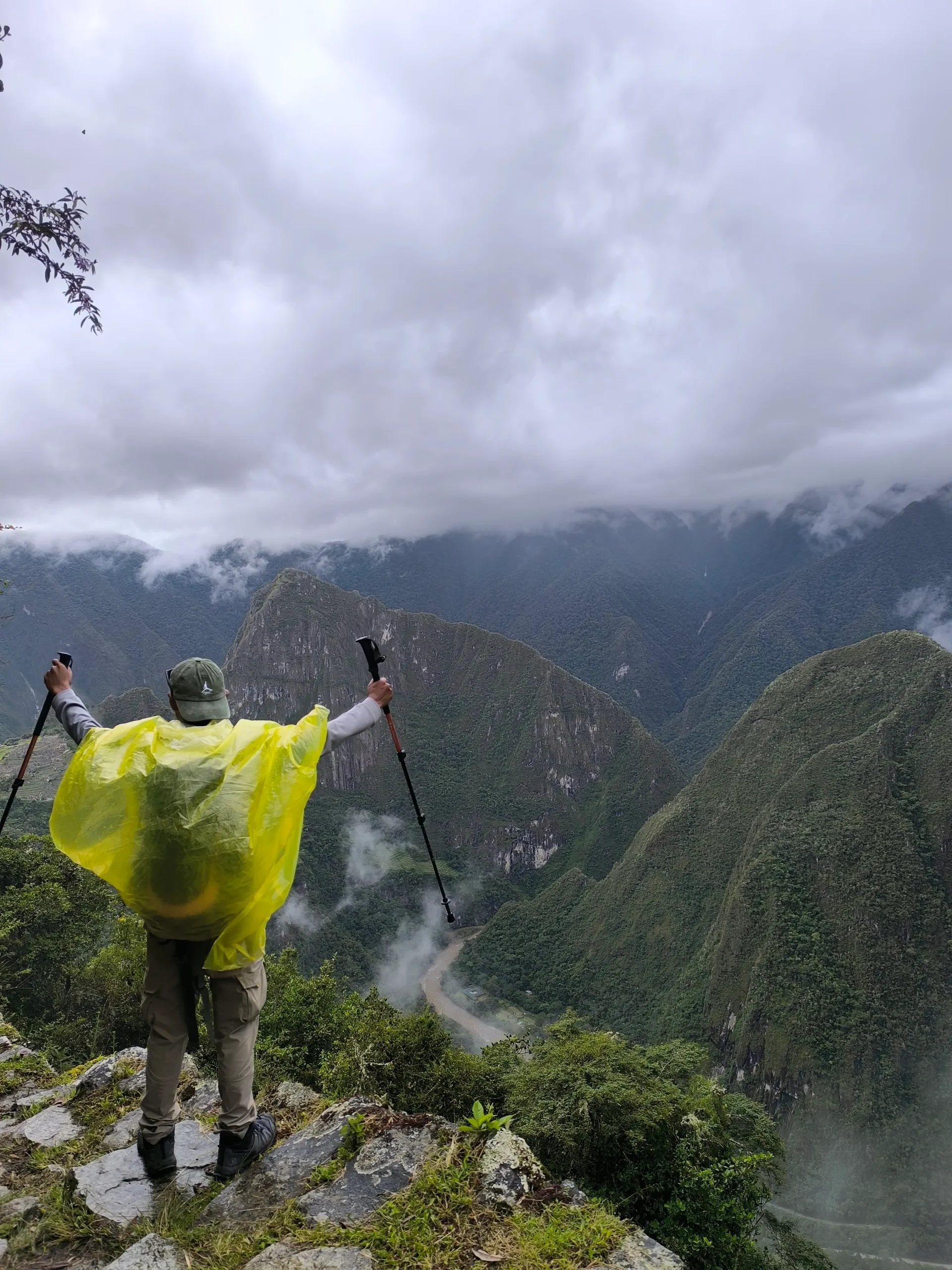
Rain changes how the trail feels underfoot more than it changes the route itself. Expect mud on dirt sections and slicker footing on the trail’s original stone steps, particularly on descents — this is the single biggest reason trekking poles stop being optional in the wet season. Visibility on exposed, high-altitude stretches can shift quickly as cloud moves through, so mountain views are less guaranteed than in the dry season, even if a given morning starts clear.
On the positive side, guides who run this route through the wet season year after year plan around it: earlier starts, closer weather-watching, and a willingness to adjust pacing rather than push a group through the worst of an afternoon storm. In the rare event of serious storm damage, short and localized sections can see brief closures, and heavy rain can occasionally disrupt the train schedule between Cusco or Ollantaytambo and Aguas Calientes. Neither is common, but it’s part of why a locally based, weather-aware operator matters more in January than it does in July.
How Crowded Is the Inca Trail in January?
The trail itself is never truly crowded in the way a popular national park trail can be, because access is capped by permit regardless of month — a maximum of 500 people a day, split roughly between trekkers and support staff. What changes by season is how far in advance those permits sell out and how full the campsites feel.
January falls within the broader low-demand window that runs November through April, so trail groups and campsites generally feel less packed than during the June-to-August rush. There’s one wrinkle worth knowing: the first week or so of January tends to see a bump in travelers around Cusco and Machu Picchu, driven by New Year’s holiday travel, before numbers thin out again for the rest of the month. That bump is more noticeable at Machu Picchu itself — which has its own, separate visitor caps — than on the trail, where the permit ceiling holds steady all month.
Inca Trail Permits in January
Every hiker needs a permit, and permits can only be purchased through a licensed tour operator — there’s no way to buy one independently or at the trailhead. The system allows 500 people onto the trail per day in total, with roughly 200 of those spots going to trekkers and the rest reserved for the guides, cooks, and porters who support them. Permits are non-transferable and tied to the passport number used at booking.
Permits for the full upcoming year are typically released around October. As a general guide, booking 3 to 5 months ahead is usually enough for low-season dates like January, compared with 6 to 8 months for the May-through-August high season — though it’s worth booking earlier than that if your dates fall in the first week or two of January, when New Year’s travel adds extra demand. You can check real-time Inca Trail permit availability directly before settling on dates.
One more detail worth confirming with your operator: current Inca Trail permits are bundled with a specific Machu Picchu entry circuit (the upper viewpoint route), not full, unrestricted access to every circuit. Regulations around exactly what’s included have shifted more than once in recent years, so it’s worth a quick confirmation at booking rather than assuming — our guide to the Machu Picchu circuits breaks down what each one actually covers.
Pros and Cons of Hiking the Inca Trail in January
Pros
- Noticeably fewer trekkers and shorter waits at checkpoints than the June–August peak
- The trail’s greenest, most dramatic scenery — waterfalls, wildflowers, and cloud forest at their most vivid
- Permits are generally easier to secure than during the dry season
- Milder overnight temperatures than the often-brutal cold of the June–July high camps
- More flexibility on hotel and tour dates in Cusco and Aguas Calientes
Cons
- Rain on most days, at least part of the day, with mud on stone steps and dirt sections
- Lower odds of the classic clear, blue-sky mountain panorama, especially from Dead Woman’s Pass
- Extra gear to carry and manage (rain shell, pack cover, dry bags)
- Occasional risk of train delays or short, localized trail disruption during severe storms
- Cusco and Machu Picchu can still feel busy in the first week or two of the month
January Compared to the Rest of the Year
January sits inside the wet season (November through March), which itself sits opposite the dry season (roughly May through September), with April and October acting as shoulder months. Set against the dry season, January trades reliably clear skies, firmer footing, and the biggest crowds of the year for a quieter trail, greener scenery, and considerably more available permits.
Within the wet season itself, January plays out fairly similarly to December, aside from December’s own holiday travel bump around Christmas rather than New Year’s. March tends to ease up gradually as the month goes on, in the run-up to the trail’s March 1 reopening after the February closure. If your dates are flexible and you’d rather split the difference between crowds and weather, April and October are usually the better-balanced picks.
For a full month-by-month breakdown across the entire year, including temperature and rainfall patterns for every month the trail is open, see our complete Inca Trail weather guide.
Who Should Hike in January (and Who Might Prefer a Different Month)
January tends to suit travelers who are comfortable with some unpredictability in exchange for a quieter trail: photographers drawn to green, misty, moodier shots rather than blue-sky panoramas; budget-conscious travelers taking advantage of lower-demand pricing and easier permits; and anyone whose travel dates are genuinely fixed to January, whether that’s a work schedule or a New Year’s trip.
Travelers who most want to maximize their odds of clear mountain views, or who are especially averse to mud and rain gear, tend to be happier in the dry season instead. The same goes for hikers who want the most predictable footing possible on their first big trek. It’s worth noting that the physical demands — the altitude, the climb to Dead Woman’s Pass, the overall fitness bar — don’t change with the season; only the weather does. Our guide to altitude sickness in Cusco covers what stays constant year-round.
What to Pack for the Inca Trail in January
Packing for the Inca Trail in January starts from the same base list you’d bring in any season, with more emphasis on staying dry:
- A genuinely waterproof jacket and rain pants, or a heavy-duty poncho that covers your daypack
- Broken-in, waterproof hiking boots with good tread for slick stone steps
- Trekking poles, more useful than ever on muddy descents
- Moisture-wicking base layers and a warm mid-layer for cool camp nights — skip cotton, which stays wet once soaked
- Dry bags or waterproof stuff sacks for electronics, documents, and a spare set of clothes
- An extra pair or two of socks, since wet feet are the fastest way to a miserable day
- Sun protection — sunscreen, a hat, and sunglasses — since UV exposure stays high even under cloud cover
- Gaiters, if you have them, to keep mud and water out of your boots
This covers what changes specifically for a January trek. For the complete gear breakdown, including what your operator typically provides versus what you should bring yourself, see the full Inca Trail packing list.
Acclimatization and Booking Strategy
Altitude doesn’t take a season off. Arriving in Cusco at least two to three days before your trek to acclimatize matters just as much in January as it does in July, and it’s one of the biggest factors in how strong you’ll feel climbing to Dead Woman’s Pass. Our guide to altitude sickness in Cusco walks through what to expect and how to prepare.
On booking, the short version from the permits section above: aim for 3 to 5 months ahead for a typical January date, and earlier than that for the first week or two of the month if the New Year’s holiday period matters to your schedule. Travel insurance that explicitly covers high-altitude trekking is worth confirming before you go, regardless of the month.
Choosing an Inca Trail Tour Operator for January
Rainy-season trekking rewards experience. An operator that runs this route through the wet season every year — rather than mainly during the dry-season rush — tends to be better at reading weather, adjusting daily pacing, and keeping a group comfortable when conditions turn. Before booking, it’s worth confirming your operator is officially licensed and authorized to sell Inca Trail permits, since only accredited agencies can legally do so.
Ali Peru Treks runs both the Classic Inca Trail 4 Days and the Short Inca Trail year-round, including through the wet season. If your preferred January dates end up sold out, the Salkantay Trek is worth considering too — it isn’t limited by the same permit system and reaches Machu Picchu by a different, equally spectacular route.
Frequently Asked Questions About the Inca Trail in January
Yes. Both the Classic and Short Inca Trail operate normally throughout January. The only scheduled closure of the year is the full month of February, when the Ministry of Culture closes the trail for maintenance.
January sits inside Peru’s wet season and is typically one of the wettest months on record for the region. Expect rain on most days, often concentrated in the afternoon or evening, with clearer stretches — especially mornings — in between.
Daytime temperatures generally run around 57–64°F (14–18°C), dropping to roughly 41–46°F (5–8°C) at night, with the coldest, windiest conditions at Dead Woman’s Pass. Machu Picchu itself, at a lower elevation, tends to feel a few degrees milder and more humid.
It can be, if you’re comfortable with mud, rain gear, and some unpredictability in exchange for smaller crowds. First-timers who most want guaranteed clear mountain views and dry footing are often happier hiking in the June–August dry season instead.
As a general guide, 3 to 5 months ahead is usually enough for low-season dates like January, compared with 6 to 8 months for the May–August high season. Book earlier if your dates fall in the first week or two of January, around the New Year’s holiday.
It’s quieter than the June–August peak, though the first week or two of the month can still feel busy with New Year’s holiday travelers. The trail itself stays capped at 500 permits a day regardless of month, so trail crowding stays controlled even then.
Prioritize genuine waterproof outerwear, dry bags for electronics, gaiters if you have them, and an extra pair of socks. Everything else on a standard packing list — layers, sun protection, trekking poles — matters just as much year-round.
Yes. It covers the same final stretch of the ancient trail, including Wiñay Wayna and the Sun Gate, in a single, more flexible day — appealing if you’d rather limit how much rainy-season camping you take on.
Outright cancellations are rare. In the heaviest storms, short and localized sections can occasionally be affected by landslide risk, and train schedules between Cusco or Ollantaytambo and Aguas Calientes can see delays. An experienced, weather-aware operator adjusts pacing and logistics around this rather than canceling outright.
Final Thoughts: Should You Hike the Inca Trail in January?
January won’t give you guaranteed blue skies at Dead Woman’s Pass, and for plenty of travelers, that’s a fair trade for a greener trail, thinner crowds, and permits that are easier to secure than almost any other month the trail is open. If you can pack properly for rain and keep your expectations realistic about mountain views, hiking the Inca Trail in January is a genuinely good choice — not just a fallback one.
If you’re ready to look at dates, you can check current availability for the Classic Inca Trail 4 Days and start planning around them.