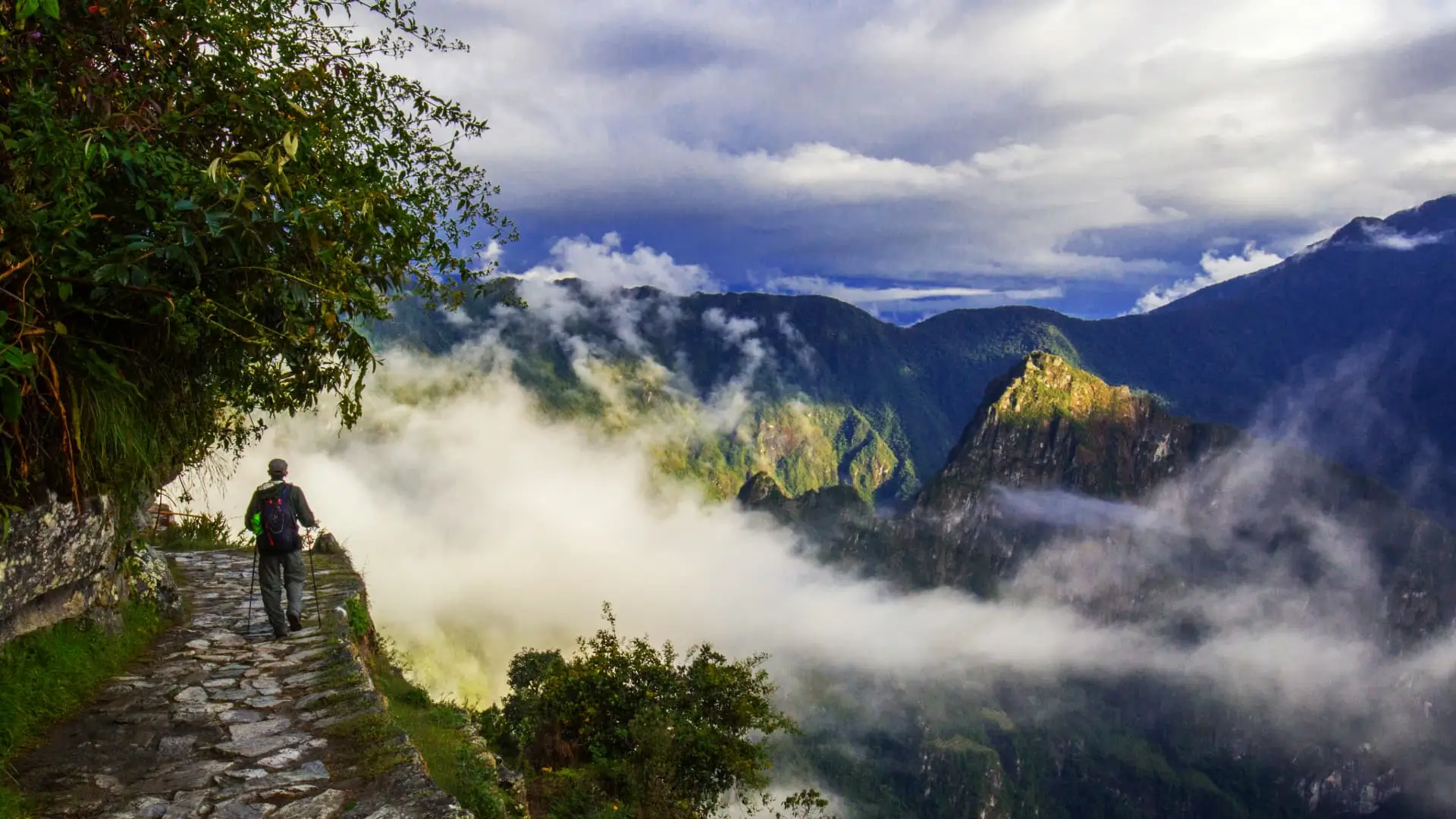
Planning a trip to Machu Picchu can feel overwhelming once you realize there isn’t just one way to get there. If you’ve been researching your options, you’ve probably landed on the same big question hundreds of travelers ask us every month: Inca Trail 4 days vs 2 days — which one should you actually book?
Both routes end at the same breathtaking destination, but the journey, the physical demand, and the overall experience are worlds apart. In this guide, we’ll break down every detail — altitude, difficulty, permits, cost, and what to pack — so you can choose the trek that truly matches your fitness level, schedule, and travel goals.
At Ali Peru Treks, we’ve guided thousands of travelers from the United States and beyond along both trails, and we know firsthand which route fits which type of adventurer. Let’s dive in.
Contents
- 1 What Is the Inca Trail, Exactly?
- 2 Inca Trail Comparison: The Key Differences at a Glance
- 3 The Classic Inca Trail (4 Days / 3 Nights)
- 4 The Short Inca Trail (2 Days / 1 Night)
- 5 Difficulty and Altitude: What US Travelers Should Know
- 6 Expert Tips (From a Local Peru Trekking Agency)
- 7 What to Pack for Either Trek
- 8 Cost and Logistics: 4 Days vs 2 Days
- 9 Final Verdict: Which Inca Trail Should You Choose?
- 10 Ready to Book Your Inca Trail Adventure?
What Is the Inca Trail, Exactly?
The Inca Trail is the only trekking route that lets you walk the original stone pathways built by the Incas over 500 years ago, arriving at Machu Picchu through the iconic Sun Gate (Inti Punku). It’s the most famous trek in South America, and it’s the only way to enter the citadel on foot through its historic main entrance.
There are two official versions of this trek:
- The Classic Inca Trail (4 Days / 3 Nights) — the full, traditional experience.
- The Short Inca Trail (2 Days / 1 Night) — often called the “2 day Inca Trail Machu Picchu” package, designed for travelers with limited time.
Understanding the difference between these two is the first step in planning a trip you won’t regret.
Inca Trail Comparison: The Key Differences at a Glance
| Feature | Classic Inca Trail (4 Days) | Short Inca Trail (2 Days) |
|---|---|---|
| Distance | 26 miles (42 km) | 7 miles (11 km) |
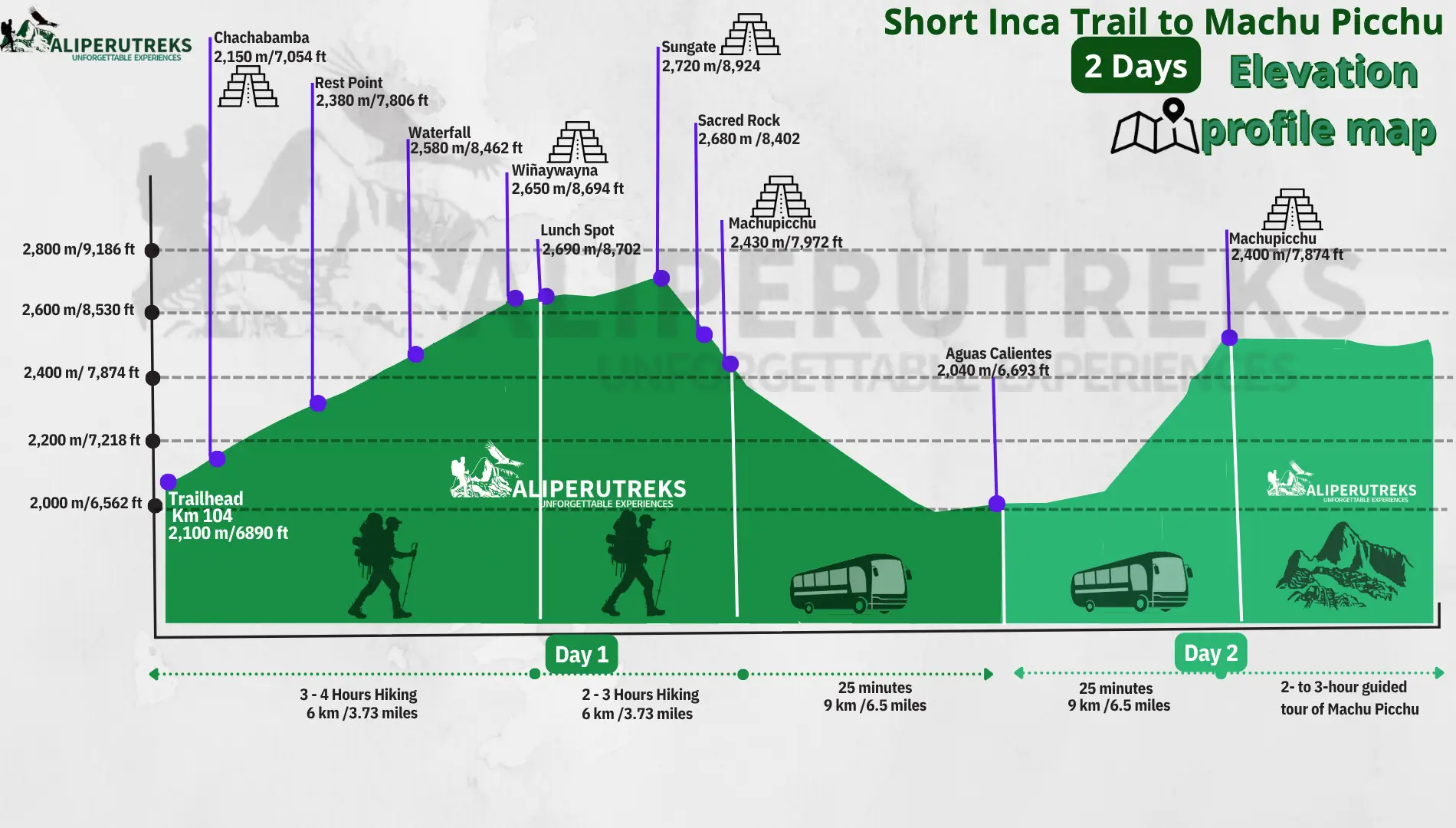
| Max Altitude | 13,828 ft (4,215 m) – Dead Woman’s Pass | 8,924 ft (2,720 m) – Wiñay Wayna |
| Difficulty | Moderate to Challenging | Moderate |
| Nights Camping | 3 | 1 |
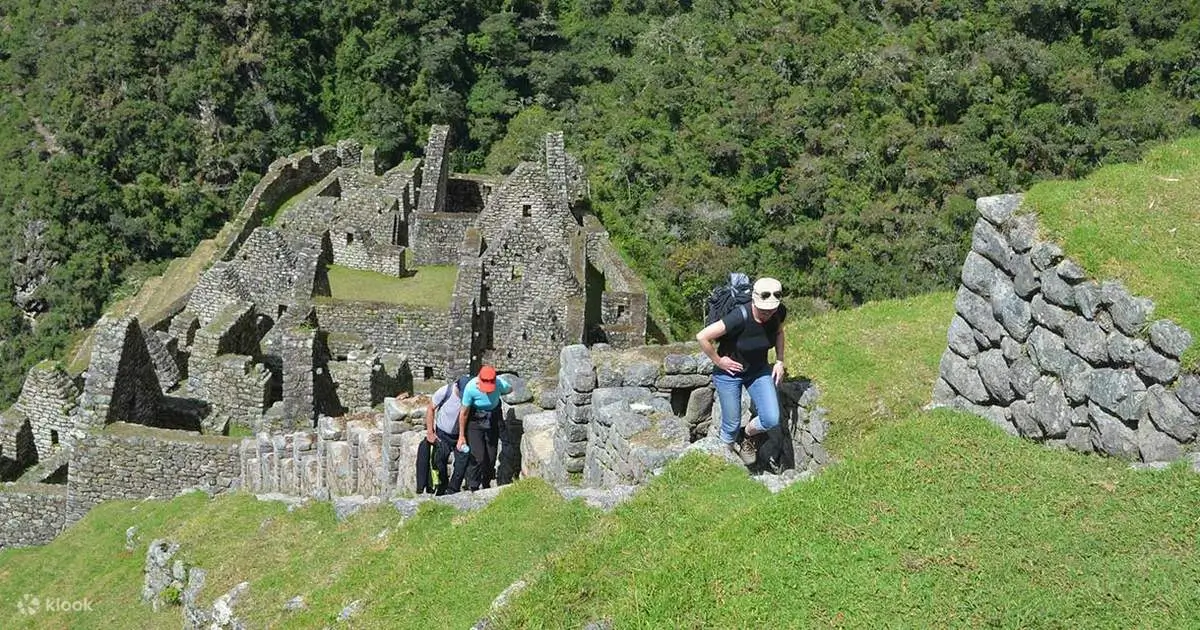
| Archaeological Sites | 4+ (Llactapata, Runkurakay, Sayacmarca, Wiñay Wayna) | 1 (Wiñay Wayna) |
| Permits Needed | Yes, limited (book 5-6 months ahead) | Yes, limited (book 3-4 months ahead) |
| Arrival at Machu Picchu | Via the Sun Gate, sunrise views | By train, then bus up to the citadel |
This short Inca Trail vs classic comparison shows why your choice really comes down to time, fitness, and how deep you want your adventure to go.
The Classic Inca Trail (4 Days / 3 Nights)
This is the trek most people picture when they imagine hiking to Machu Picchu. It’s a full immersion into Andean landscapes, cloud forests, and Inca engineering.
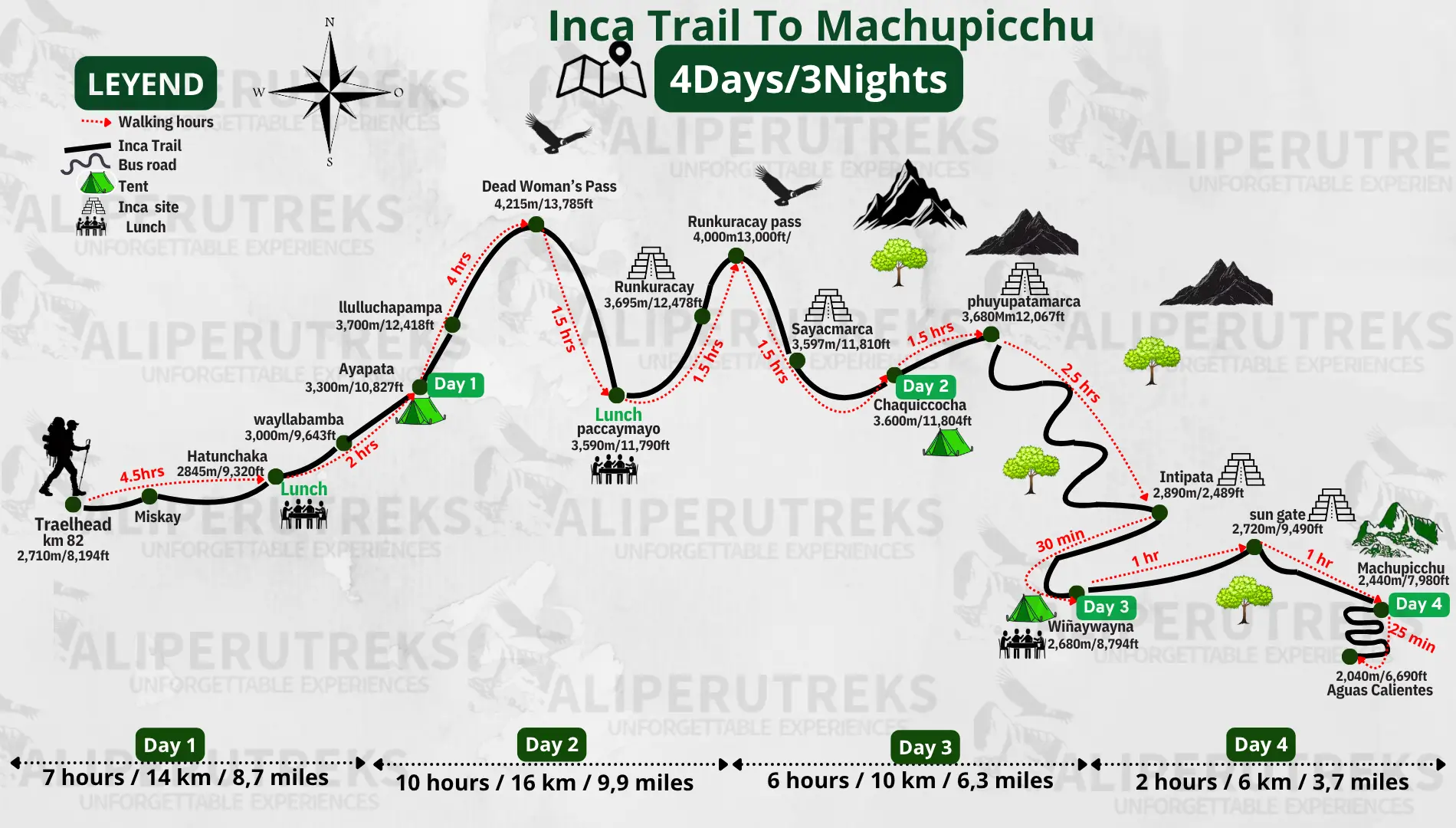
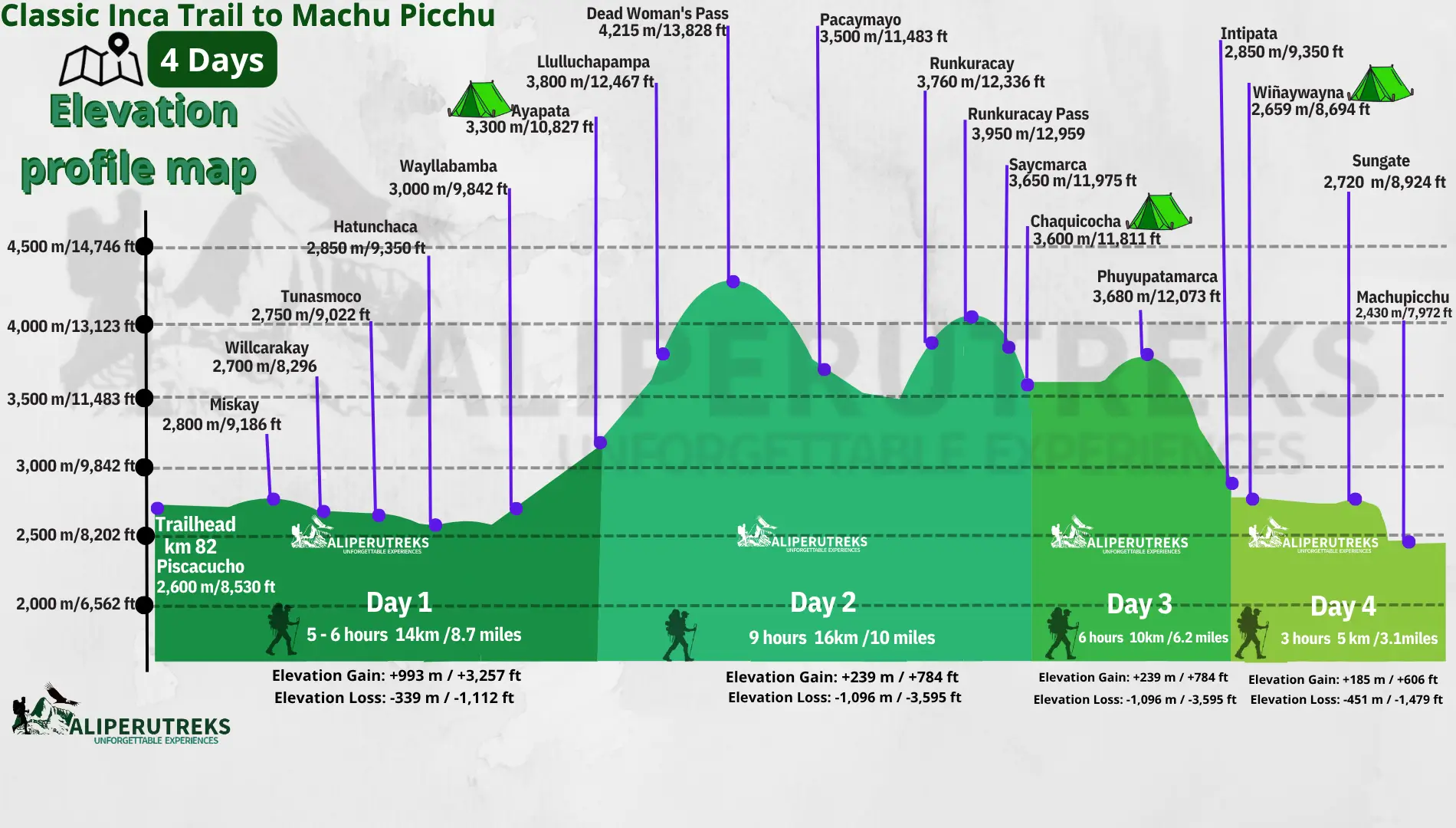
Route Overview
- Day 1: Easy-to-moderate hike through the Sacred Valley, passing small Andean communities.
- Day 2: The toughest day — you’ll climb to Dead Woman’s Pass (Warmiwañusca) at 13,828 ft, the highest point of the trek.
- Day 3: A long but rewarding day visiting multiple Inca ruins, including Sayacmarca and Phuyupatamarca.
- Day 4: An early 3-4 AM start to reach the Sun Gate for sunrise over Machu Picchu.
Who Should Choose This Route
- Travelers who want a true wilderness and cultural experience.
- Hikers in good physical condition who enjoy a challenge.
- Anyone who wants to see multiple ruins along the way, not just the final destination.
- Those with 5+ days available in their Peru itinerary.
Best Season
The dry season, May through September, offers the clearest skies and most stable weather. December through March is the rainy season, and the trail is closed entirely every February for maintenance.


The Short Inca Trail (2 Days / 1 Night)
Also called the 2 day Inca Trail to Machu Picchu, this route covers only the final stretch of the classic trail, so you skip the highest pass and most strenuous days while still walking through the Sun Gate.
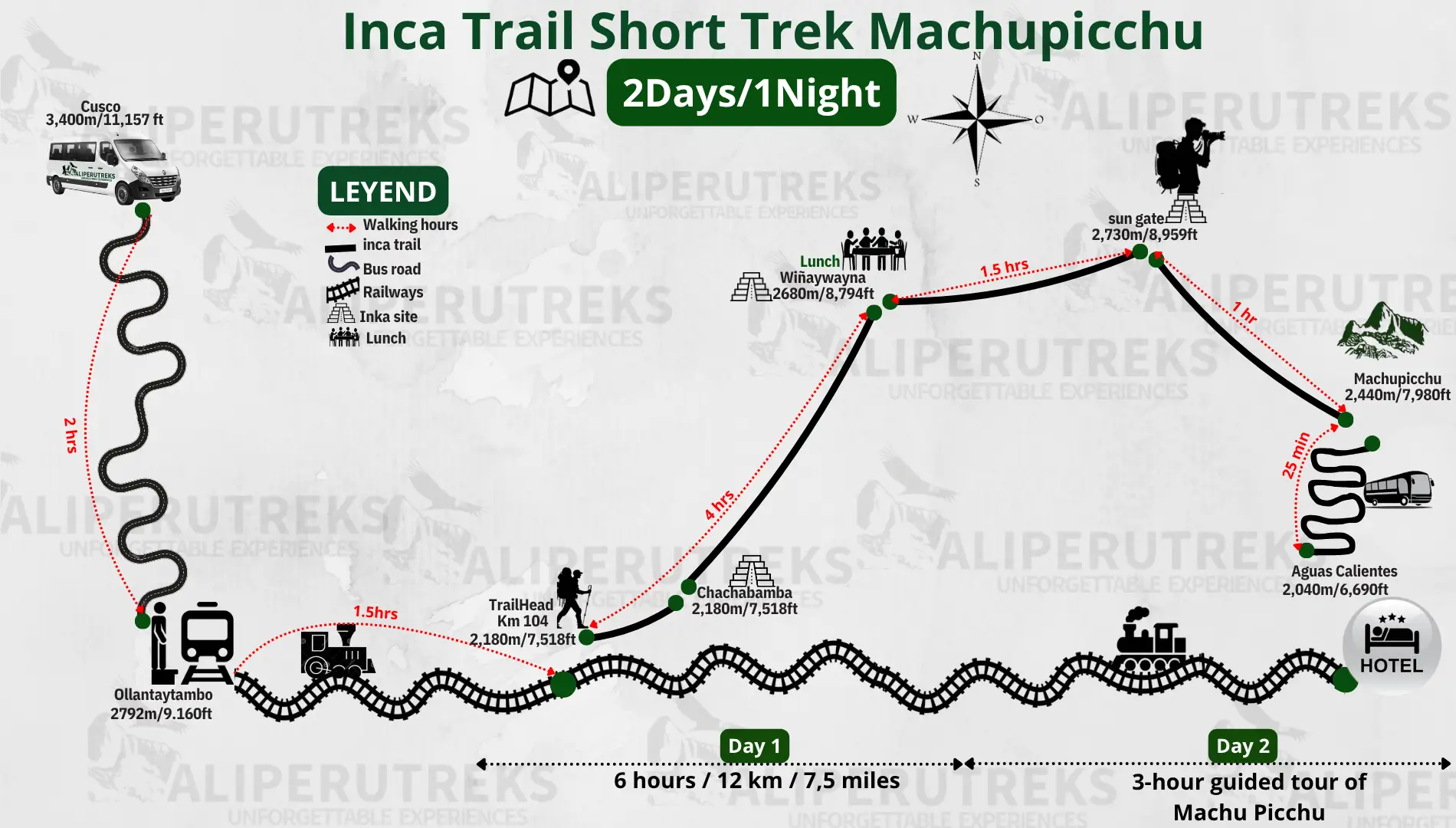
Route Overview
- Day 1: Train from Ollantaytambo to Km 104, then a hike of roughly 4-5 hours through cloud forest and Inca terraces, visiting Wiñay Wayna. Overnight near Aguas Calientes (the town below Machu Picchu).
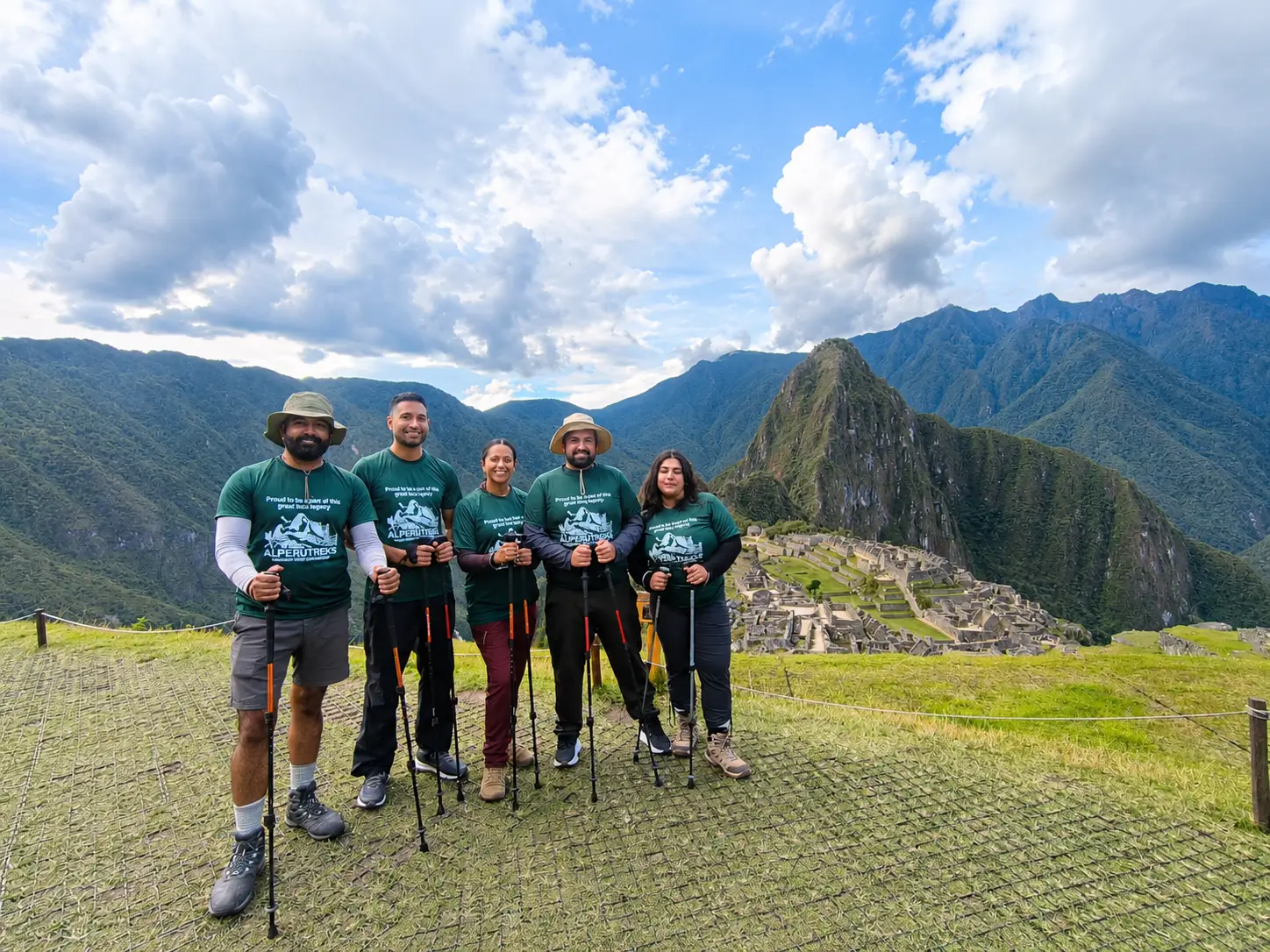
- Day 2: Early morning hike to the Sun Gate, then descend into Machu Picchu for a guided tour.
Who Should Choose This Route
- Travelers with limited vacation time (perfect for a 7-10 day Peru trip).
- Families traveling with kids or older relatives.
- Hikers who want the Sun Gate experience without extreme altitude exposure.
- Anyone who couldn’t secure a permit for the Classic Trail (it sells out fast).
Best Season
Because it reaches a lower elevation, the short trail is walkable nearly year-round, though May to September still offers the best weather and visibility.
Difficulty and Altitude: What US Travelers Should Know
Many American travelers underestimate altitude, since it’s rarely a factor back home. Here’s what matters:
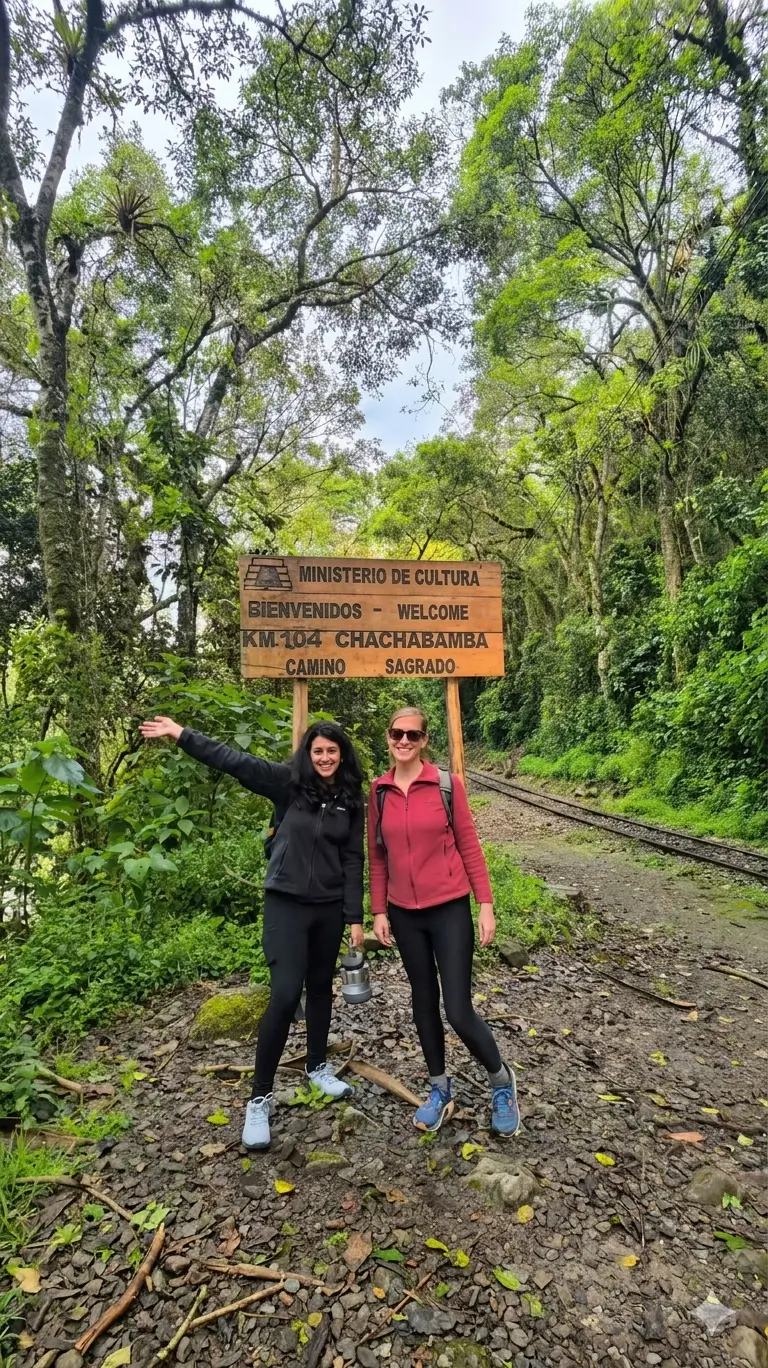
- Cusco itself sits at 11,152 ft (3,400 m) — higher than most ski resorts in Colorado.
- The Classic Trail’s highest point (13,828 ft) is where most people feel the effects of altitude, including shortness of breath and fatigue.
- The Short Trail’s max altitude (8,924 ft) is significantly gentler, comparable to being at a high mountain resort.
Neither trail requires technical climbing skills, but both demand a reasonable level of cardiovascular fitness, especially the 4-day version.
Expert Tips (From a Local Peru Trekking Agency)
These are the details most guidebooks skip, but they make a real difference on the trail.
- Spend at least 2 full days in Cusco before trekking. Proper acclimatization dramatically reduces altitude sickness symptoms.
- Drink coca tea, not alcohol, during your first days at altitude. It’s a traditional remedy that genuinely helps.
- Book your permit early. Both trails have a daily hiker limit set by the Peruvian government, and the Classic Trail regularly sells out 3-4 months in advance during high season (June-August).
- Pack in layers. Mornings can be near freezing, while midday sun at altitude is intense — even in the dry season.
- Bring cash in Peruvian soles for small purchases along the way, as there are no ATMs on the trail.
- Hire a licensed operator only. Independent trekking on the Inca Trail is not permitted; the government requires a certified guide for both routes.
- Use trekking poles, especially for the descents on Day 4 (Classic) or the final approach on Day 2 (Short) — Inca stone steps are steep and uneven.
What to Pack for Either Trek
- Broken-in hiking boots (never brand new)
- Moisture-wicking layers and a warm fleece or down jacket
- Rain jacket, even in dry season (mountain weather changes fast)
- Sun protection: hat, high-SPF sunscreen, sunglasses
- Reusable water bottle or hydration bladder
- Personal medications, including altitude sickness pills if prescribed
- A basic daypack (porters carry the rest on the Classic Trail)
Cost and Logistics: 4 Days vs 2 Days
The Short Inca Trail is generally less expensive since it involves fewer camping nights, less porter support, and one less trekking day. The Classic 4-Day Trail costs more but includes full camping equipment, meals, porter service, and a more complete cultural and archaeological experience.
Both packages typically include:
- Entrance permits and fees
- Professional bilingual guide
- Train tickets (round trip)
- Meals during the trek
- Camping equipment (Classic Trail) or hotel night in Aguas Calientes (Short Trail)
Final Verdict: Which Inca Trail Should You Choose?
If you have the time, the fitness, and want the complete Andean adventure — ruins, cloud forest, mountain passes, and three nights under the stars — the Classic 4-Day Inca Trail is unforgettable.
If you’re short on time, traveling with family, or simply prefer a lighter physical challenge while still earning that iconic Sun Gate photo, the Short 2-Day Inca Trail delivers the same magical arrival at Machu Picchu without the multi-day commitment.
When it comes down to Inca Trail 4 days vs 2 days, there’s no wrong choice — only the right one for your trip.
Ready to Book Your Inca Trail Adventure?
At Ali Peru Treks, our local guides have walked both routes hundreds of times and know exactly how to make your journey safe, smooth, and unforgettable. Whether you’re drawn to the full Classic Trail or the efficient Short Trail, we’ll help you plan every detail — from permits to packing lists.
Contact us today to check permit availability and get a free, no-obligation quote for your Inca Trail trek to Machu Picchu.