
Moray and the Maras Salt Mines: What to Know Before You Go
Moray and the Maras Salt Mines are two neighboring sites on the high plateau above the Sacred Valley, about 50 km from Cusco, and most travelers visit them together in half a day. Moray is a set of circular Inca terraces, and Maras is a hillside of thousands of salt pans still worked by local families.
You need two separate tickets: Moray is covered by the Cusco Tourist Ticket (Boleto Turístico), while Maras has its own entrance fee, paid in cash on site. Since 2019, visitors can no longer walk among the salt pans, and you view them from a marked path and viewpoint.
Moray and Maras at a Glance
| Moray | Maras Salt Mines (Salineras) | |
|---|---|---|
| What it is | Circular Inca agricultural terraces | Terraced salt evaporation pans |
| Approximate altitude | About 3,400 to 3,500 m | About 3,000 to 3,200 m |
| Entrance | Cusco Tourist Ticket (partial or general) | Separate fee, about S/20 for foreign visitors, cash only |
| Time on site | About 45 to 60 minutes | About 45 to 90 minutes |
| Walking | Paths around the rim and down to viewpoints | Short paths to the viewpoint; no access to the pans |
| Who runs it | Peru’s Ministry of Culture | Local salt-producing communities |
Ticket prices change, so confirm current rates before your trip. Bring Peruvian soles in cash for Maras.
What Is Moray?
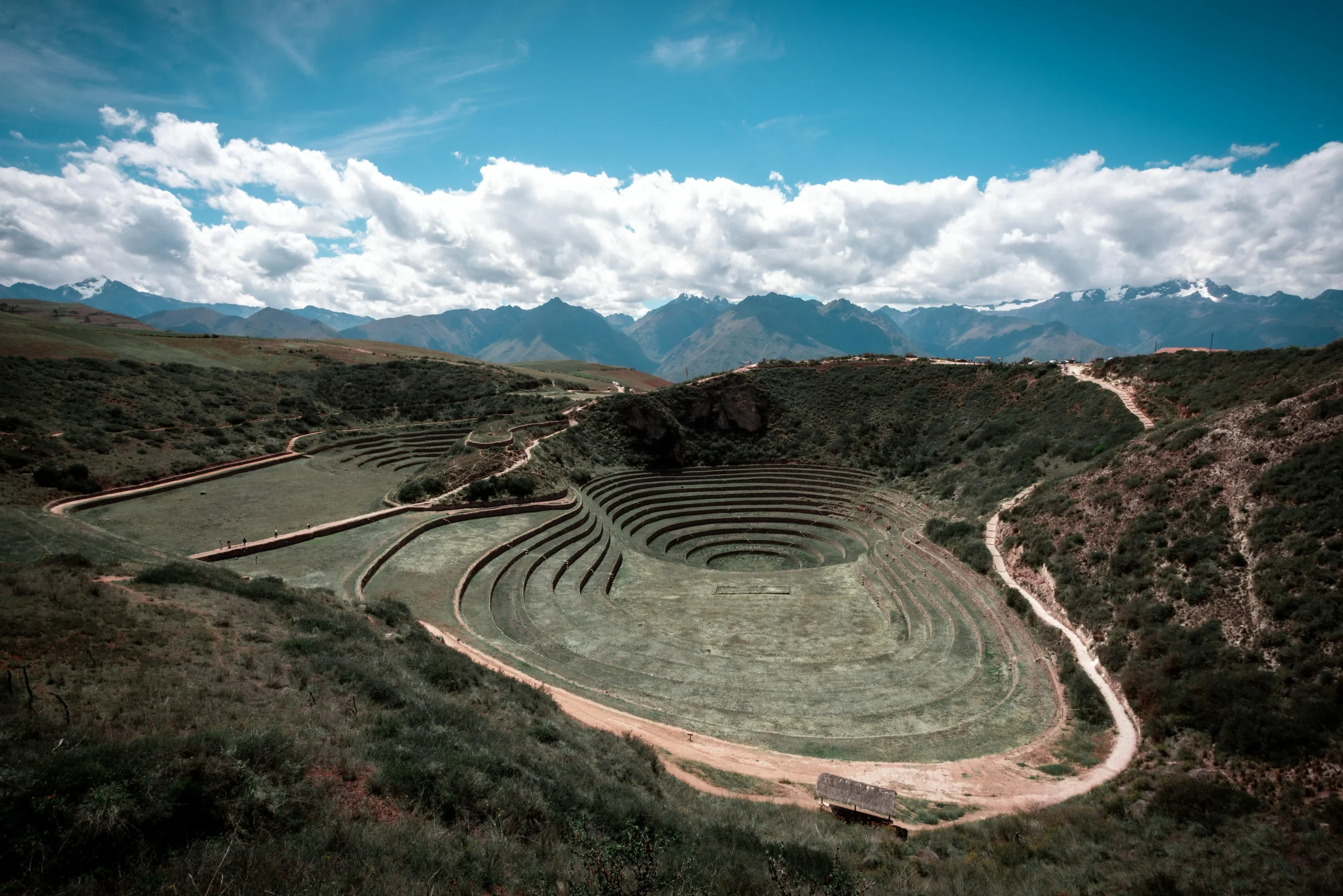
Moray is an Inca site made up of several large, circular depressions lined with terraces, set on a plateau near the village of Maras. The largest ring is about 30 m deep, with stone retaining walls and a drainage and irrigation system that keeps the bottom from flooding.
Was Moray an Inca Agricultural Laboratory?
That is the most widely repeated theory. Because the rings are sunken and shaped like bowls, temperatures differ between the top terraces and the bottom. Cold air settles at the base on still nights, so each level has slightly different conditions. Many archaeologists believe the Incas used these microclimates to test and adapt crops such as maize, potatoes, and quinoa.
It is worth being careful with the numbers you will hear. Some guides and websites say the temperature difference between top and bottom reaches 15°C, while others cite around 5°C. The exact purpose of Moray is also still debated, and some researchers suggest the site had ceremonial or astronomical meaning as well. The honest answer is that Moray was very likely linked to agriculture, but its full purpose is not known for certain.
Visiting Moray
You can walk the paths around the main ring and look down from several viewpoints. Visitors are not allowed to walk on the terraces themselves. The site was damaged by heavy rain in 2010, when part of the main circle collapsed, and access to the terraces is restricted to protect it.
Moray is included in the Cusco Tourist Ticket. Most visitors use the partial ticket that covers Sacred Valley sites, or the general ticket if they are also visiting sites in Cusco. You can buy either at the site or in Cusco.


What Are the Maras Salt Mines?
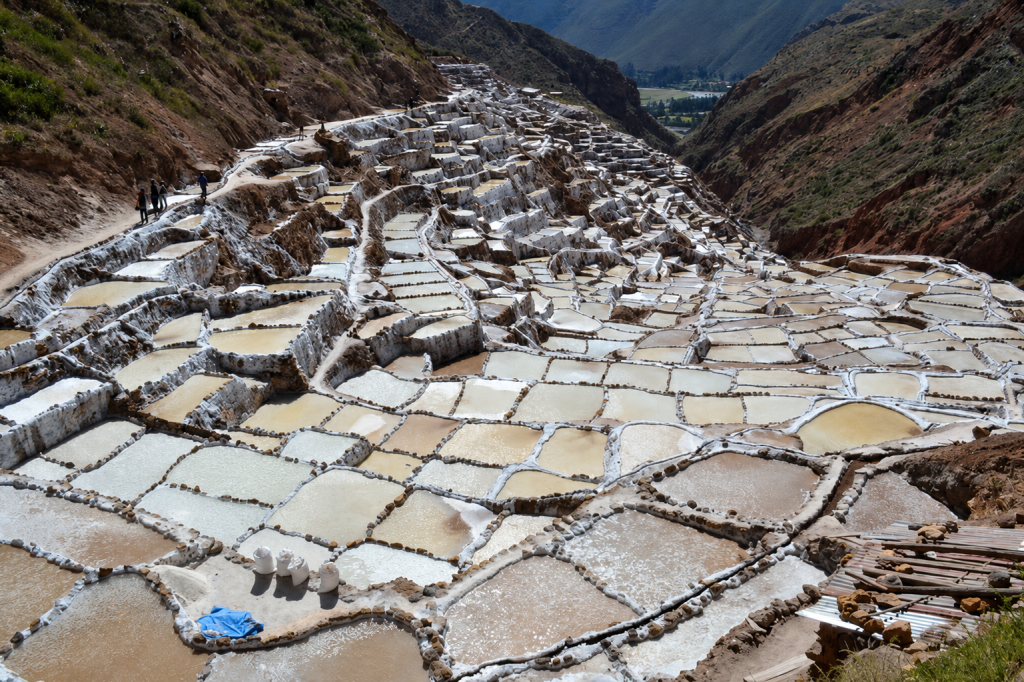
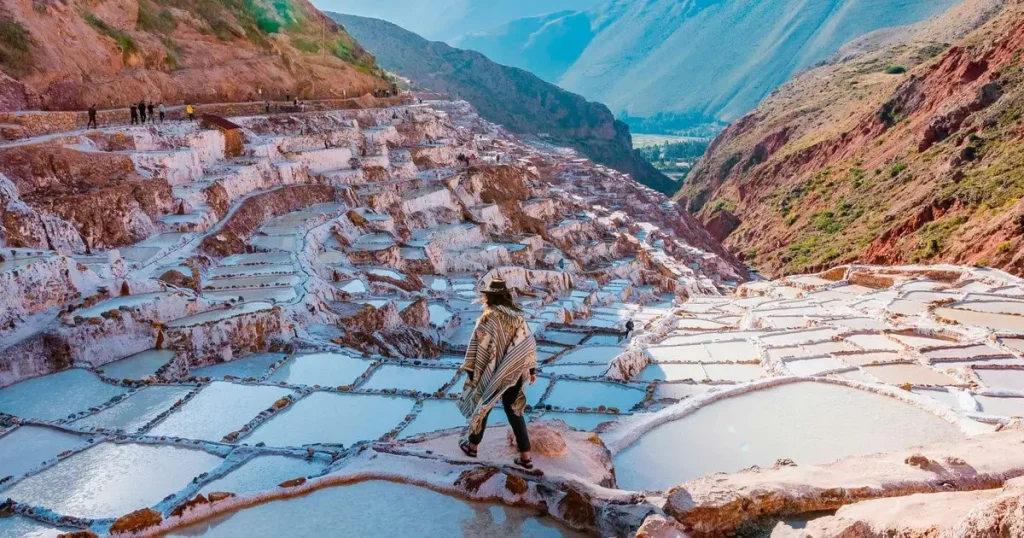
The Salineras de Maras are thousands of small terraced pools carved into a steep hillside below the village of Maras. Estimates range from about 3,000 to more than 4,500 pans, depending on the source. A salty spring at the top of the slope feeds a network of narrow channels, and families flood each pan, let the water evaporate in the sun, and scrape out the salt by hand.
Salt has been produced here since before the Spanish arrived, and the system of shared maintenance between families is believed to date back to Inca times or earlier. Today, the pans are worked by members of the local communities, who own and manage the site.
Why You Can’t Walk Among the Salt Pans
Until 2019, visitors could walk along the narrow walls between the pans. Since June 2019, the communities that run the site have closed the pan area to tourists, after concerns that foot traffic was contaminating the salt. You now follow a path to a viewpoint above the pans, and you still get a clear view of the whole hillside.
If you have seen older photos of people walking through the pools, that is no longer possible. Expect to view the salt mines from above.
Buying Maras Salt
Stalls along the path at the entrance sell salt from the pans, including pink salt, flavored salts, bath salts, and chocolate made with Maras salt. Prices are modest, and buying here supports the families who work the pans.

How to Visit Moray and Maras
On a Guided Tour
Most travelers visit both sites as part of a day tour of the Sacred Valley. Our Sacred Valley tour from Cusco combines Moray and Maras with Pisac, its market, and Ollantaytambo in one full day, leaving Cusco at 7:00 AM and returning around 6:00 PM. If you are continuing to Machu Picchu, our Sacred Valley and Machu Picchu tour in 2 days visits Moray and Maras on Day 1 before the train to Aguas Calientes, with entrance fees included.
Pros of a full-day tour: You see four or five sites without arranging transport, and a guide explains the history.
Cons: Time at each site is limited, and the day is long. If Moray and Maras are your main interest, a half-day tour or private transport gives you more time.
On Your Own
You can also reach Moray and Maras independently, by taxi or private car from Cusco, Urubamba, or the village of Maras. Some travelers walk down from the plateau to the salt mines and continue on foot to the Urubamba valley. If you go independently, check transport back in advance, as public transport near the sites is limited.
Combining Them With Other Sacred Valley Sites
Moray and Maras sit close to Chinchero and the road between Cusco and Urubamba, so they fit naturally into a Sacred Valley itinerary. Our guide to exploring the Sacred Valley covers Pisac, Ollantaytambo, and Chinchero, and our overview of Sacred Valley tours from Cusco compares different ways to see the area.
Best Time to Visit
- Dry season (May to October): Clear skies and firm paths. The salt pans look brightest when the sun is strong and the water evaporates quickly.
- Rainy season (November to April): The landscape turns green, but rain can dilute the pans, so they often look muddier and less white. Afternoon showers are common.
- Time of day: Mornings tend to be quieter. Midday light shows the colors of the pans well but brings more visitors.
Altitude and Practical Tips
Both sites are lower than Cusco, which sits at about 3,400 m, so Moray and Maras are a good outing for your first days while you acclimatize. Our acclimatization guide rates a Sacred Valley day as a moderate activity once you have had time to adjust.
- Bring cash in soles for the Maras entrance and for salt or snacks.
- Wear sun protection. Both sites are exposed, and the sun is strong at altitude.
- Pack a light layer for wind on the plateau.
- Wear shoes with grip. Paths at Moray and Maras are uneven and can be dusty or slippery.
- Expect basic facilities. Services at both sites are limited, so bring water and snacks.
Moray and Maras on Longer Itineraries
If you are planning several days in the region, Moray and Maras usually fit into your Sacred Valley day. Our Cusco and Machu Picchu tour in 4 days includes them on Day 2, on the way to Aguas Calientes. Some treks also pass nearby. On our Lares Trek and Short Inca Trail in 5 days, you visit the Maras salt mines after finishing the Lares section.
Frequently Asked Questions
Yes. Moray is included in both the partial Sacred Valley ticket and the general Cusco Tourist Ticket. The Maras Salt Mines are not included and have a separate entrance fee.
Recent rates are about S/20 per person for foreign visitors and about S/15 for residents of Peru, paid in cash at the entrance. Check the current price before your visit.
No. Since June 2019, visitors are not allowed to walk among the salt pans. You view them from a path and viewpoint above the hillside.
Plan about half a day for both, including the drive between them. On a full-day Sacred Valley tour, you usually spend about an hour at each.
The most widely accepted theory is that the Incas used Moray’s terraces to study how crops grew in different microclimates. Its exact purpose is still debated, and it may also have had ceremonial meaning.