
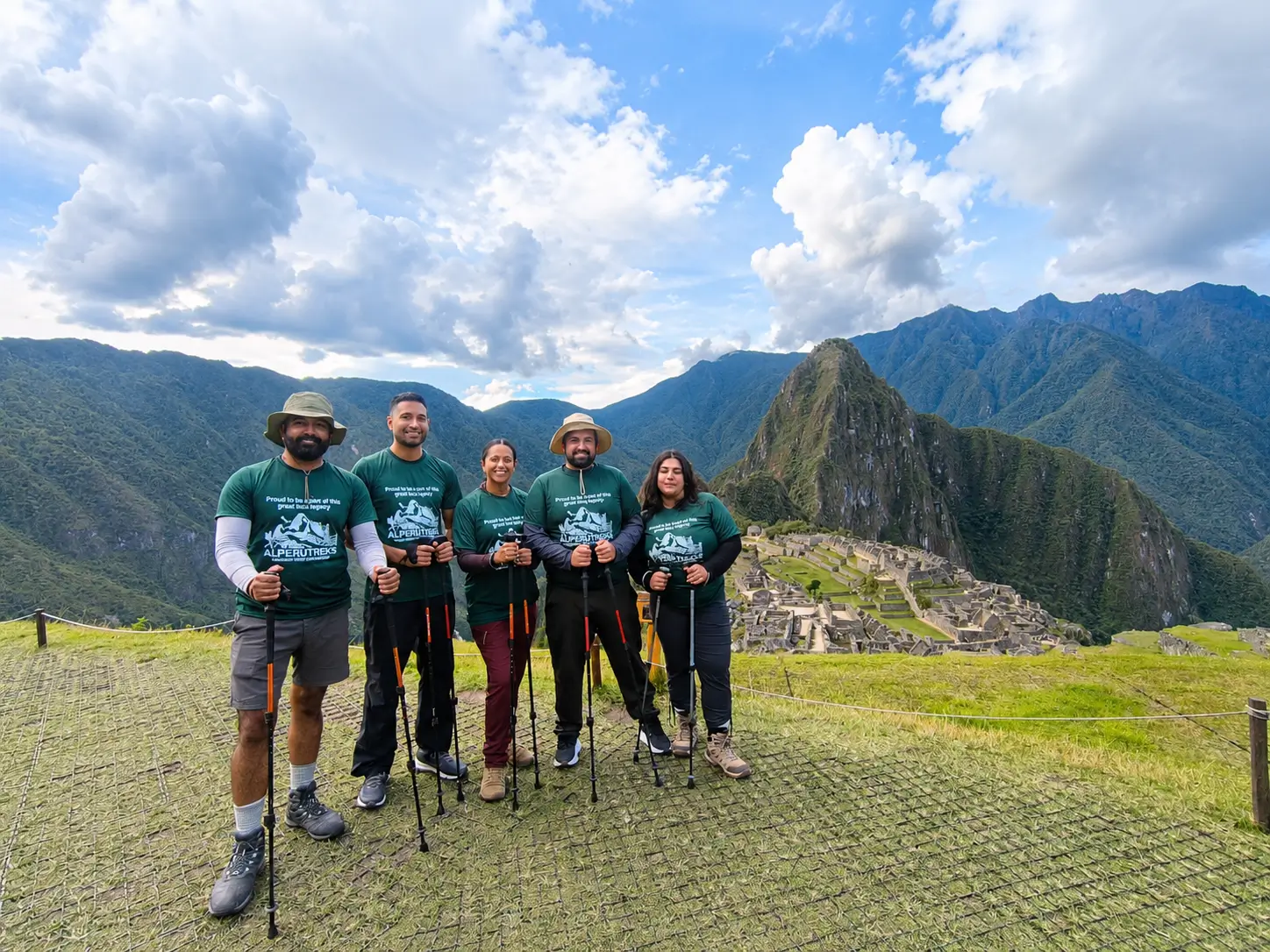
If you’re dreaming of hiking through the Peruvian Andes to reach Machu Picchu, but you want something a little less crowded than the classic route, the Inca Quarry Trek might be exactly what you’re looking for. This incredible alternative trail combines dramatic mountain scenery, ancient Inca stone quarries, hot springs, and a final dose of jungle before arriving at the Lost City of the Incas.
In this guide, we’ll walk you through everything you need to know about the Inca Quarry Trek to Machu Picchu — from the day-by-day itinerary and difficulty level to packing tips, weather conditions, and insider advice from a local Peruvian trekking agency. Whether you’re an experienced hiker or a first-time visitor to Peru, this guide will help you plan a safe, unforgettable adventure.
What Is the Inca Quarry Trek?
The Inca Quarry Trek, also known as the Cachicata Trek, is a 4-day hiking route through the Sacred Valley of the Incas that follows ancient paths once used to transport massive stone blocks from Inca quarries to construction sites like Ollantaytambo.
Unlike the famous Inca Trail, which requires permits months in advance due to a strict daily limit of 500 visitors (including staff), the Inca Quarry Trail has no permit restrictions. That means you can often book this trek with much shorter notice — sometimes just a few weeks ahead.
This route is especially appealing to travelers who want to:
- Avoid the crowds of the classic Inca Trail
- Experience authentic Andean villages and rural Peruvian life
- Visit lesser-known archaeological sites
- Soak in natural hot springs along the way
- Still arrive at Machu Picchu as the grand finale
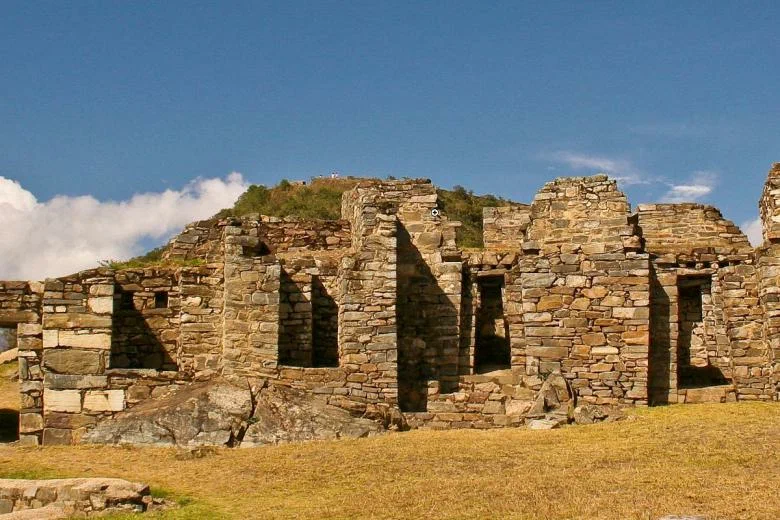
The trail takes its name from the Cachicata stone quarries, where you can still see massive carved rocks abandoned by Inca engineers — a fascinating glimpse into how this ancient civilization moved multi-ton stones across the mountains without wheels or iron tools.
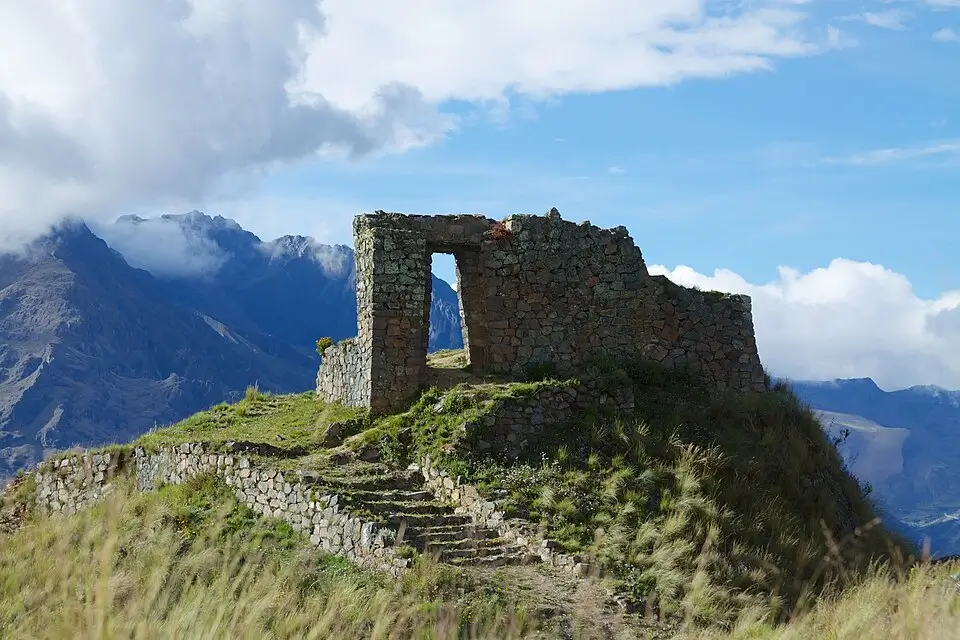

Inca Quarry Trek Itinerary: 4 Days Overview
The Inca Quarry Trek 4 days itinerary is one of the most popular versions of this route, offering the perfect balance between adventure and accessibility. Here’s what a typical day-by-day breakdown looks like.
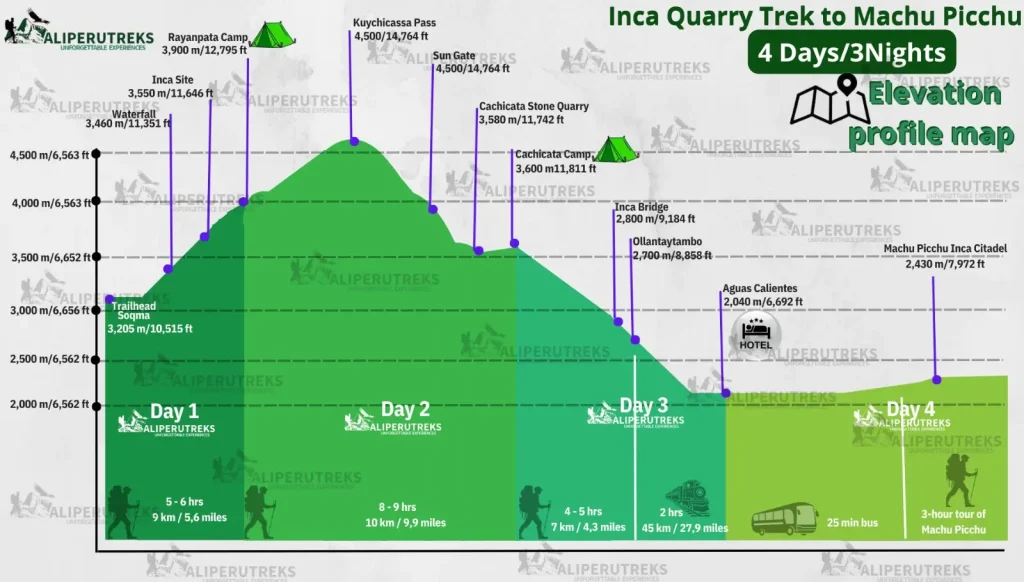
Day 1: Cusco to the Cachicata Quarries (Starting Altitude ~3,400m / 11,150 ft)
Your adventure begins with an early pickup from your hotel in Cusco, followed by a scenic drive to the Sacred Valley. The trek typically starts near the town of Ollantaytambo or a nearby trailhead.
On this first day, you’ll hike toward the Cachicata quarries, where Inca stonemasons once carved enormous blocks of pink rhyolite stone. Along the way, you’ll pass small farming communities and enjoy panoramic views of snow-capped peaks, including Veronica Mountain (5,893m / 19,334 ft).
- Distance: Approximately 8-10 km (5-6 miles)
- Hiking time: 4-5 hours
- Camping altitude: Around 3,900m (12,795 ft)
Day 2: The Highest Point – Inca Quarry Pass (Up to 4,450m / 14,600 ft)
Day 2 is the most physically demanding day of the trek. You’ll climb to the trail’s highest point, a mountain pass offering breathtaking 360-degree views of the Andes.
This day truly captures the spirit of the Inca Quarry Trail, as you’ll walk through high-altitude terrain (called “puna” in Spanish), pass alpine lakes, and may even spot llamas and alpacas grazing freely.
- Distance: Approximately 12-14 km (7-9 miles)
- Hiking time: 6-7 hours
- Highest point: ~4,450m (14,600 ft)
- Camping altitude: Around 3,800m (12,467 ft)
Day 3: Descent Toward Ollantaytambo and Hot Springs
After the challenge of Day 2, Day 3 feels like a well-deserved reward. The trail descends through changing ecosystems — from rocky highlands to greener valleys — passing small Andean villages where locals still farm using traditional methods.
Many itineraries include a stop at natural hot springs (termales) near the end of the day, perfect for soothing tired muscles before continuing toward Ollantaytambo.
- Distance: Approximately 10-12 km (6-7 miles)
- Hiking time: 5-6 hours
- Highlight: Visit to local thermal baths
Day 4: Train to Aguas Calientes and Machu Picchu
On the final day, you’ll travel by train from the Sacred Valley to Aguas Calientes (also called Machu Picchu Pueblo), the gateway town to the ruins. From there, a short bus ride takes you up the winding mountain road to the entrance of Machu Picchu.
You’ll spend several hours exploring the citadel with a professional guide, learning about its history, architecture, and astronomical significance — the perfect ending to your Inca Quarry Trek to Machu Picchu.
How Difficult Is the Inca Quarry Trek?
This is one of the most common questions we receive, and for good reason — altitude and physical exertion can make or break your trip.
The Inca Quarry Trek is generally rated as moderate to challenging. Here’s what affects the difficulty level:
- Altitude: The trek reaches a maximum elevation of around 4,450m (14,600 ft), which is higher than many travelers are used to. Altitude sickness can affect anyone, regardless of fitness level.
- Terrain: Expect a mix of rocky paths, dirt trails, and some steep ascents and descents.
- Daily distances: Ranging from 8 to 14 km (5-9 miles) per day, with Day 2 being the toughest.
- Camping conditions: Nights can get cold, especially at higher campsites, with temperatures sometimes dropping below freezing.
Who is this trek for? If you’re in reasonably good physical condition and can handle a few hours of uphill hiking, you’ll likely be fine. We always recommend spending at least 2-3 days in Cusco before starting any trek to acclimatize to the altitude.
Best Time to Hike the Inca Quarry Trek
Timing your trip correctly can make a huge difference in your overall experience. Peru’s Andean region has two main seasons.
Dry Season (May to September)
This is widely considered the best time for the Inca Quarry Trek and most treks in the Cusco region.
- Clear skies and minimal rainfall
- Daytime temperatures: 15-20°C (59-68°F)
- Nighttime temperatures: Can drop to 0°C or below (32°F) at higher elevations
- This period overlaps with the busiest tourist season (June-August), so book in advance
Wet Season (November to March)
- Higher chance of rain, especially in the afternoons
- Trails can be muddier and more slippery
- Fewer crowds and lower prices
- Lush, green landscapes — great for photography
Our recommendation: April, May, September, and October are often considered the “shoulder season” — you’ll get good weather with fewer crowds than peak summer months.
What to Pack for the Inca Quarry Trek
Packing smart is essential for staying comfortable and safe during this multi-day adventure. Here’s a practical checklist based on years of guiding travelers through the Andes.
Clothing:
- Moisture-wicking base layers
- A warm fleece or down jacket (nights get cold)
- Waterproof and windproof outer jacket
- Comfortable, broken-in hiking boots
- Hiking pants and quick-dry shorts
- Warm hat, sun hat, and gloves
- Wool socks (bring extras)
Gear:
- A daypack (20-30 liters) for personal items
- Trekking poles (highly recommended for steep sections)
- Headlamp or flashlight with extra batteries
- Reusable water bottle or hydration bladder
- Sleeping bag rated for cold temperatures (often available for rent)
Health & Comfort:
- Sunscreen (SPF 50+, the sun is intense at altitude)
- Sunglasses with UV protection
- Personal first aid kit and any prescription medications
- Hand sanitizer and biodegradable wet wipes
- Snacks like energy bars, nuts, or dried fruit
Documents & Money:
- Original passport (required for entry to Machu Picchu)
- Cash in Peruvian Soles for tips and small purchases
- Travel insurance information
Inca Quarry Trek vs. The Classic Inca Trail
If you’re trying to decide between the Inca Quarry Trail and the more famous Inca Trail to Machu Picchu, here’s a quick comparison to help you choose.
| Feature | Inca Quarry Trek | Classic Inca Trail |
|---|---|---|
| Permit required | No | Yes (limited daily spots) |
| Crowd levels | Low | Moderate to high |
| Booking timeframe | Weeks in advance | 5-6 months in advance |
| Scenery | Quarries, lakes, hot springs | Inca ruins along the path |
| Final entry to Machu Picchu | Via train + bus | Sun Gate (Inti Punku) walk-in |
| Difficulty | Moderate to challenging | Moderate to challenging |
Both treks ultimately lead to the same incredible destination, but the Cachicata Trek Peru route offers a quieter, more flexible alternative without sacrificing the sense of adventure.
Expert Tips for Hiking the Inca Quarry Trek
As a local Peruvian trekking agency, we’ve guided hundreds of travelers through this route. Here are some insider tips you won’t find in a typical guidebook.
- Spend at least 2 nights in Cusco before starting. Acclimatization is the single most important factor in preventing altitude sickness. Cusco sits at 3,400m (11,150 ft), so giving your body time to adjust makes a huge difference.
- Drink coca tea or chew coca leaves. This traditional remedy, widely used by locals, can help ease mild altitude symptoms like headaches and nausea.
- Start hiking early. Mornings are typically clearer and cooler. Afternoon clouds and occasional rain showers are more common, especially during the shoulder seasons.
- Hire a local, licensed guide. Beyond safety, a knowledgeable guide can explain the cultural and historical significance of the quarries — context that dramatically enriches the experience.
- Carry small bills and coins. Many rural communities along the trail don’t have card payment options, so cash is essential for tips, snacks, or small purchases.
- Pack layers, not just one heavy jacket. Temperatures can swing dramatically between midday sun and nighttime cold — layering lets you adjust quickly.
- Don’t skip the hot springs on Day 3. This is a fantastic opportunity to relax sore muscles before the final push to Machu Picchu — and a great cultural experience, as locals use these springs too.
- Bring your passport, not a copy. Entrance to Machu Picchu strictly requires the original passport used during booking — this is one of the most common mistakes travelers make.
Getting to Machu Picchu After the Trek
Unlike the classic Inca Trail, which ends with a dramatic walk through the Sun Gate, the Inca Quarry Trek concludes with a scenic train ride. After finishing the hike near Ollantaytambo, you’ll board a train bound for Aguas Calientes, the closest town to Machu Picchu.
From Aguas Calientes, shuttle buses run frequently up the mountain to the entrance of the archaeological site — a journey of about 25-30 minutes along a winding road with incredible views.
This combination of trekking and train travel makes the Inca Quarry Trek a great option for travelers who want an authentic hiking experience without the logistical pressure of permit deadlines.
Final Thoughts: Is the Inca Quarry Trek Right for You?
The Inca Quarry Trek to Machu Picchu offers everything that makes the Andes so special: dramatic mountain passes, ancient Inca engineering marvels, warm local communities, and a grand arrival at one of the world’s most iconic archaeological sites. If you’re looking for a trekking experience that’s a little less crowded, more flexible to book, and packed with authentic cultural moments, this route deserves a spot at the top of your Peru bucket list.
At Ali Peru Treks, our team of experienced local guides has helped travelers from across the United States and around the world complete this unforgettable journey safely and comfortably. From acclimatization advice to fully equipped camping gear, we take care of the details so you can focus on the adventure.
Ready to start planning your Inca Quarry Trek adventure? Contact us today to request a personalized quote or explore our complete range of Machu Picchu trekking packages — your journey through the heart of the Andes is waiting.