Home » Blog » Salkantay Trek Exclusive: The Unmatched Privilege of Camping Facing Machu Picchu at Llactapata
Salkantay Trek Exclusive: The Unmatched Privilege of Camping Facing Machu Picchu at Llactapata
Ali Peru Treks
5 min read
Aug 11, 2026
378 views
The Salkantay Trek is world-renowned as one of the best alternatives to the Inca Trail to Machu Picchu. However, not all experiences are created equal. The vast majority of travel agencies operate this route in a standard, mass-tourism format, having groups camp down at the bottom of the valley (Lucmabamba or La Playa Sahuayaco), where views are limited and the logistics are cheaper and conveniently easy for companies.
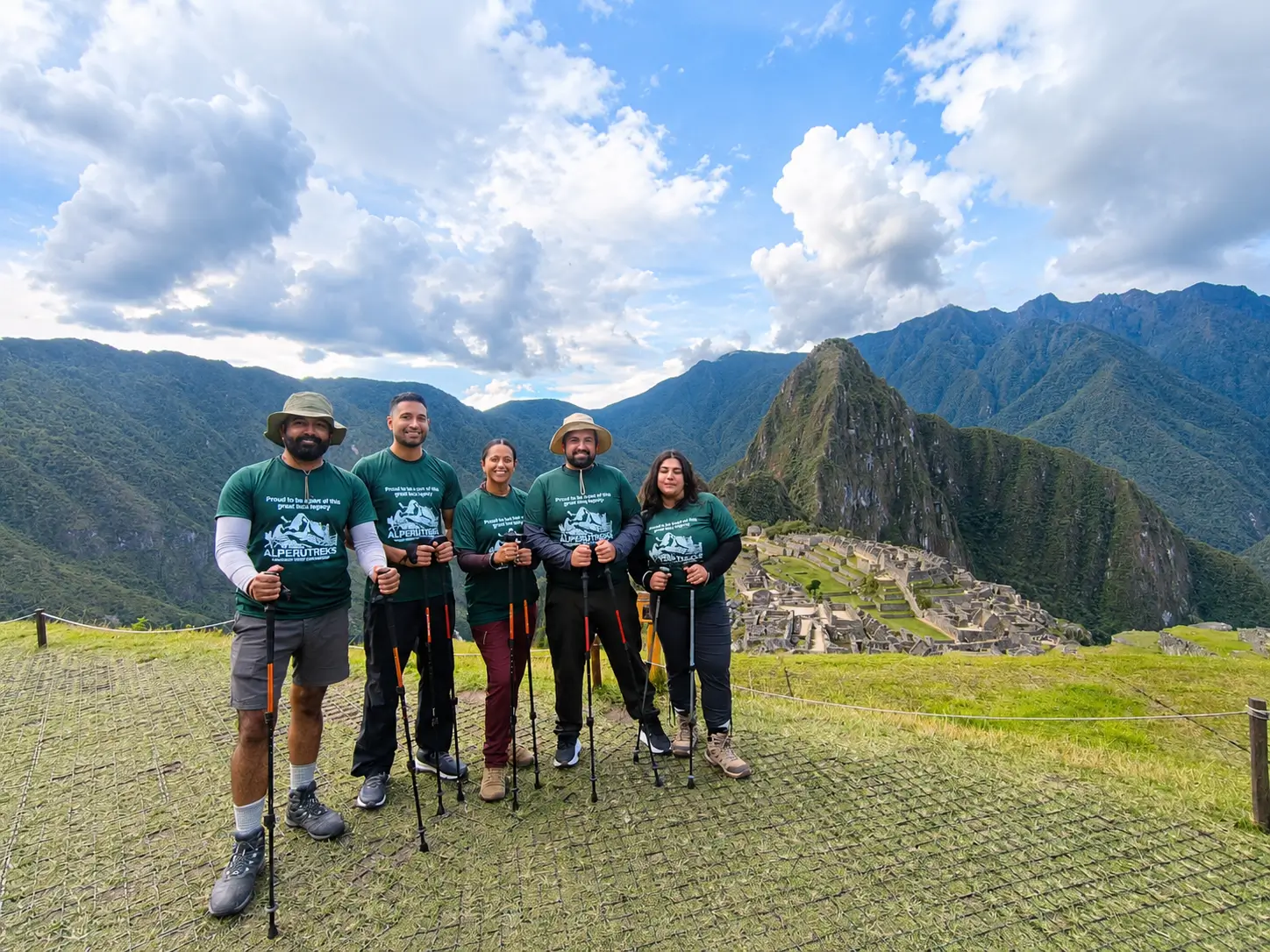
At Ali Perú Treks, we stand out by designing a superior itinerary. On Day 3, we take the adventure to a truly privileged level: camping on the mountain ridge of Llactapata, directly facing the mythical citadel of Machu Picchu and Huayna Picchu Mountain.
Below is the detailed itinerary for this exclusive experience and the reasons why this choice transforms an ordinary trek into an unforgettable expedition.
The Differentiating Value: Why Does Camping at Llactapata Change Your Experience?
Sunrise and Sunset with Views of Machu Picchu: While traditional groups only get a brief, distant glance at Machu Picchu while passing through during their day’s hike, our travelers enjoy the citadel’s silhouette at sunset and witness the stunning sunrise over the ruins from the comfort of their campsite.
World-Class Photography: Llactapata offers the most exclusive vantage point on the entire route. From this spot, you can appreciate the geographical and historical relationship between Mount Salkantay, Llactapata, and Machu Picchu, while also enjoying exceptional conditions for night astrophotography.
Exclusive and Private Overnight Stay: Because very few agencies commit the necessary logistics to camp here, the surroundings are remarkably quiet, peaceful, and free from the mass tourism found in the lower valleys.
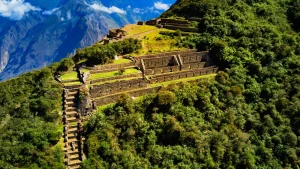
Genuine Archaeological Connection: Llactapata was a sacred Inca site strategically aligned with Machu Picchu. Spending the night there allows you to connect with Inca history from the exact same perspective as ancient rulers and priests.
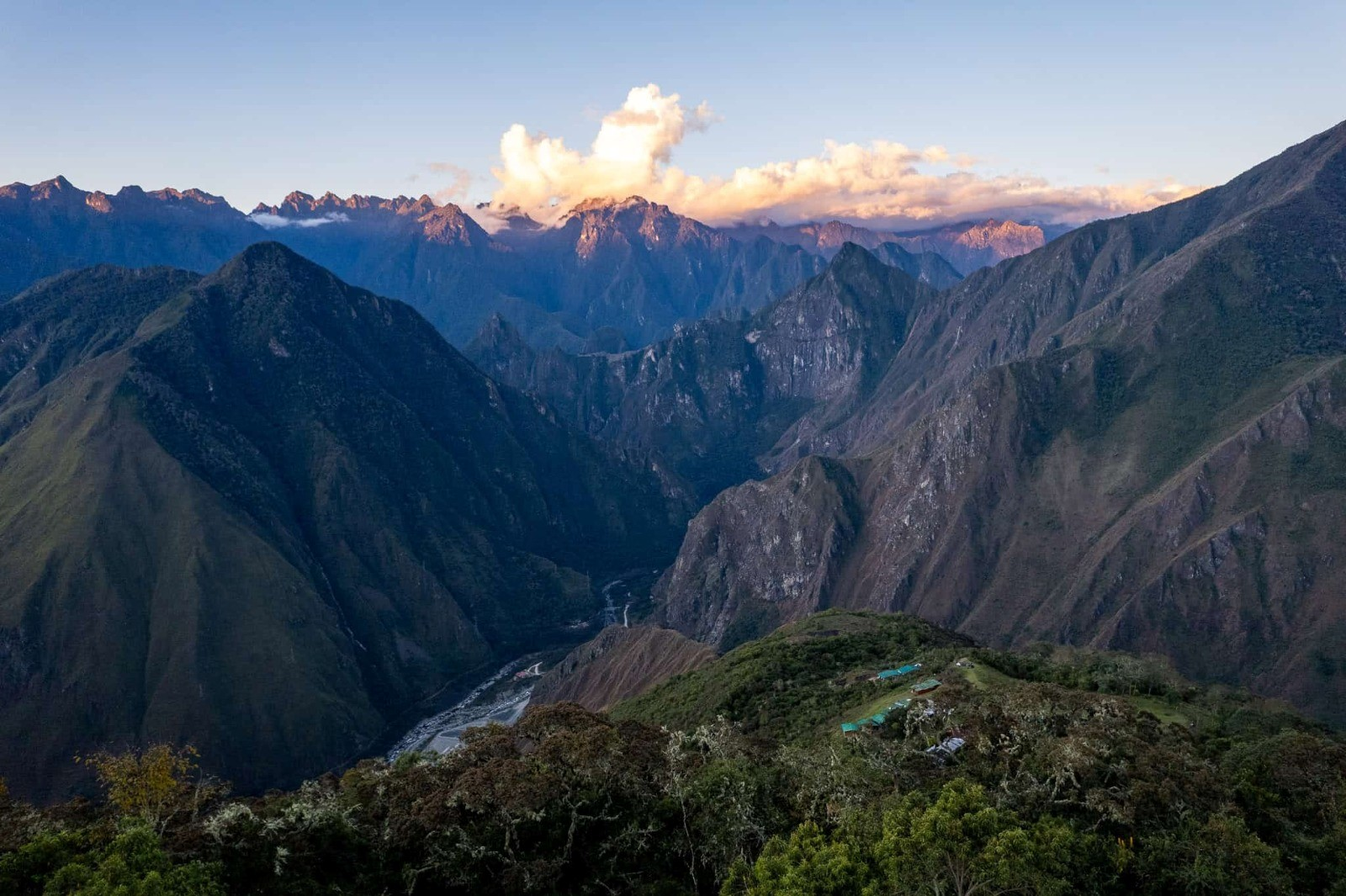
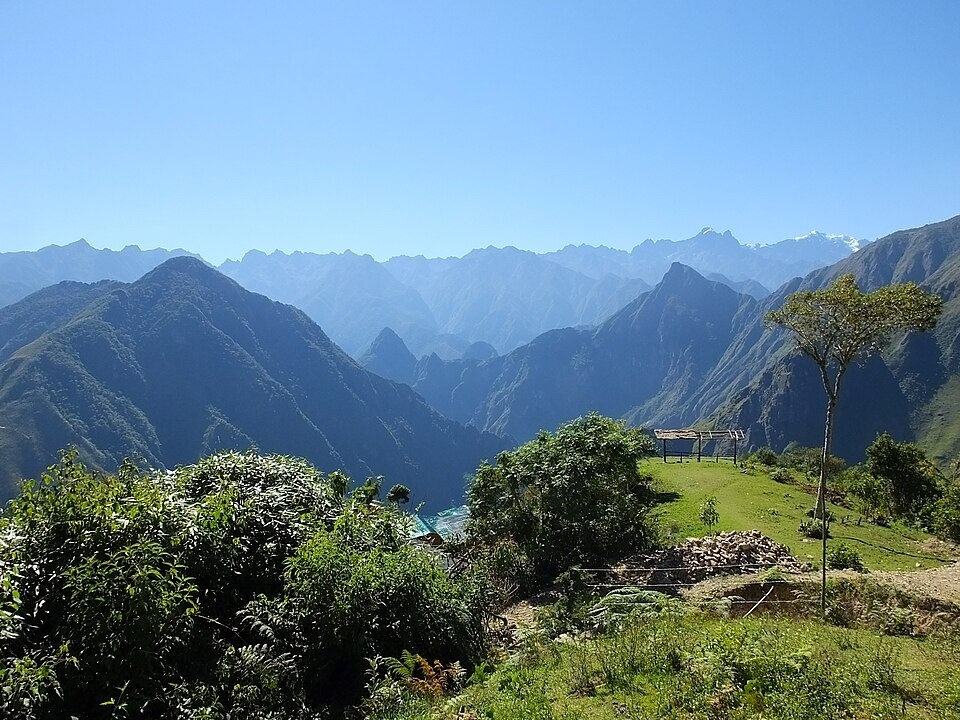
Epic sunrise over the Andes mountains from the Llactapata ruins with a clear view of Machu PicchuBeautiful Machu Picchu View from Llactapata Campsite
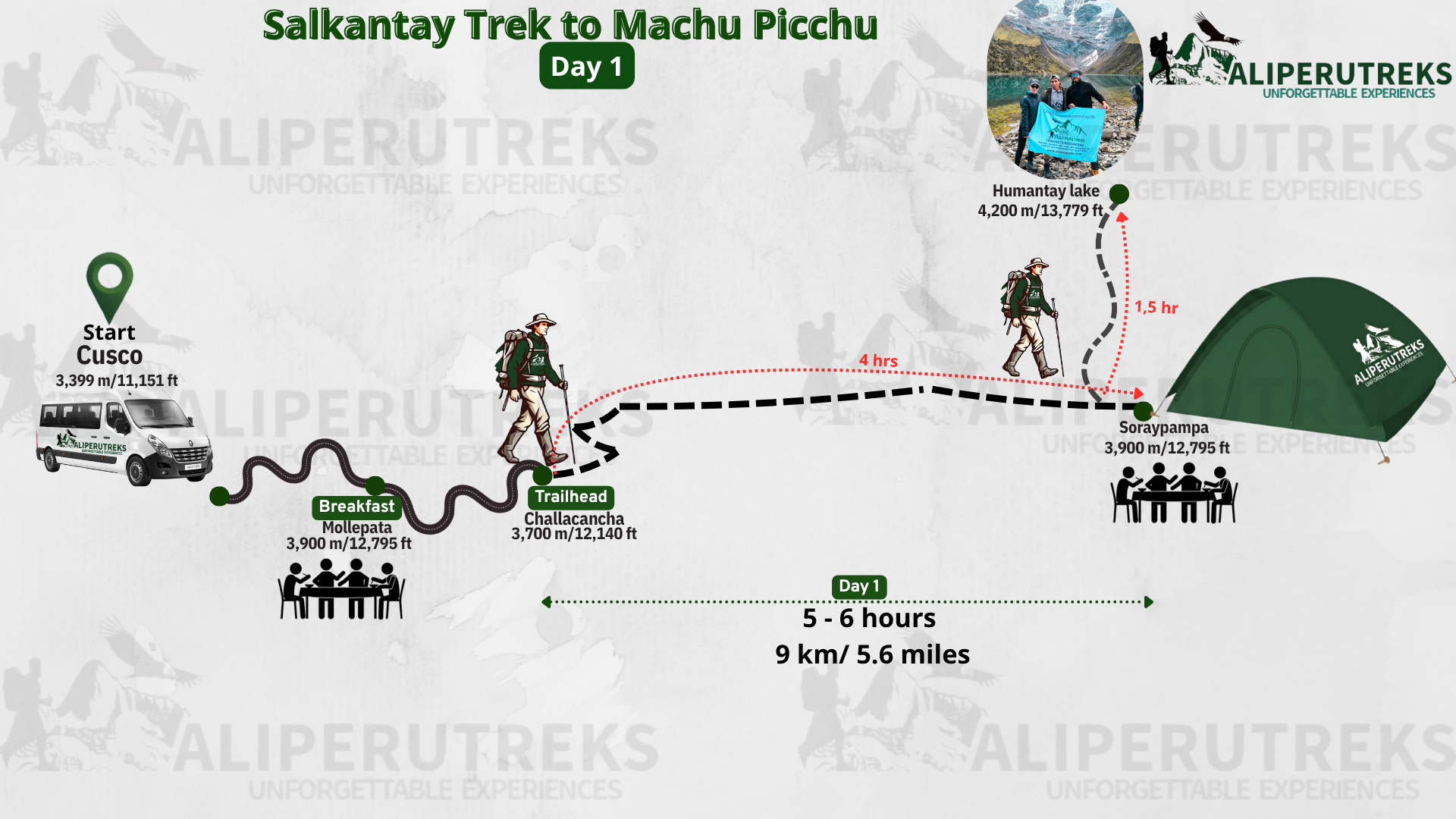
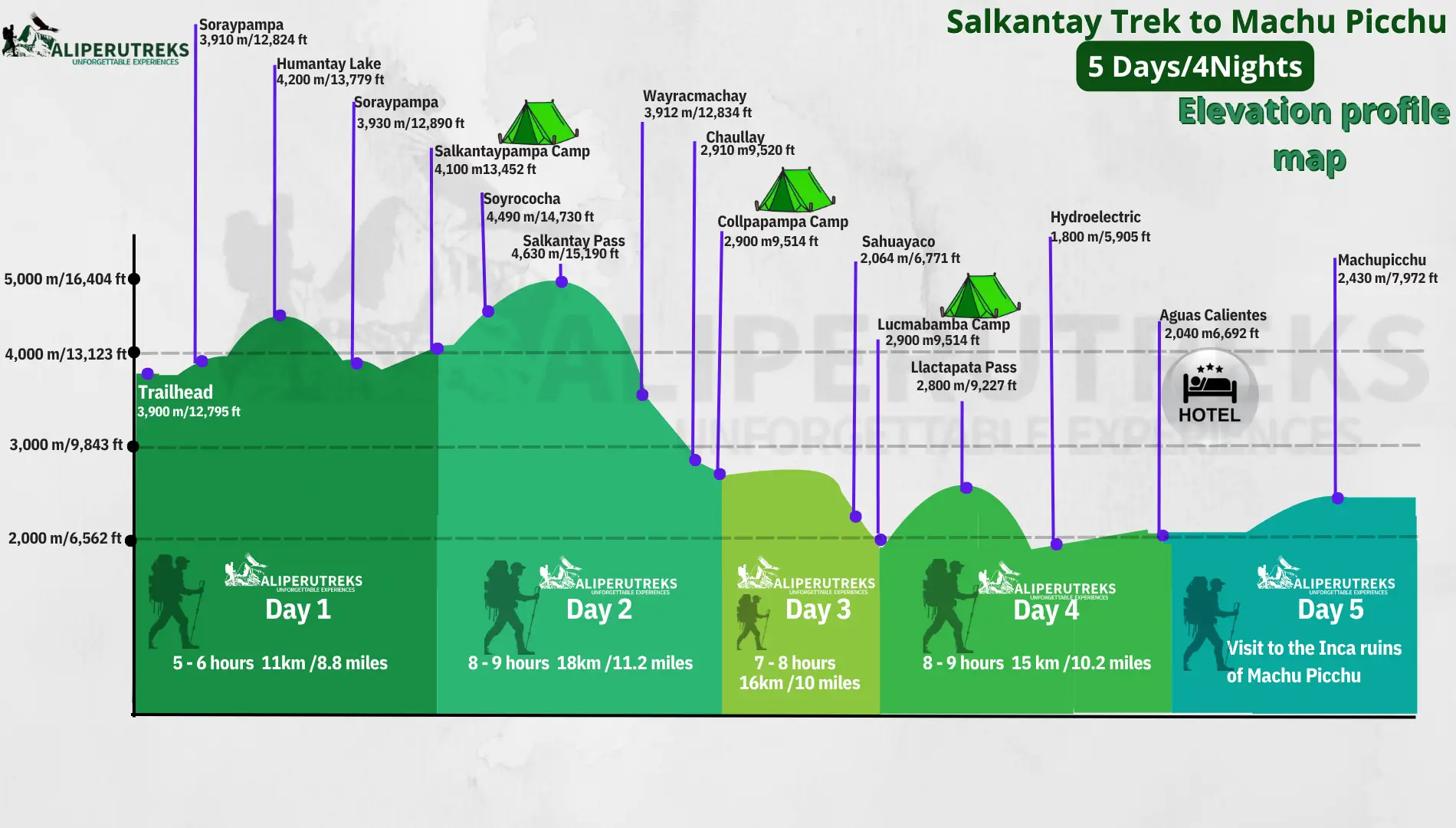
Maximum altitude: 13,779 ft (4,200 m) at Humantay Lake.
Summary: We begin with an early pickup in Cusco and drive to Mollepata and Challacancha, where we start our hike toward Soraypampa. In the afternoon, we make the uphill trek to breathtaking Humantay Lake for ideal acclimatization before returning to our base camp.
Map of the hiking route from Salkantay to Machu Picchu, Day 1
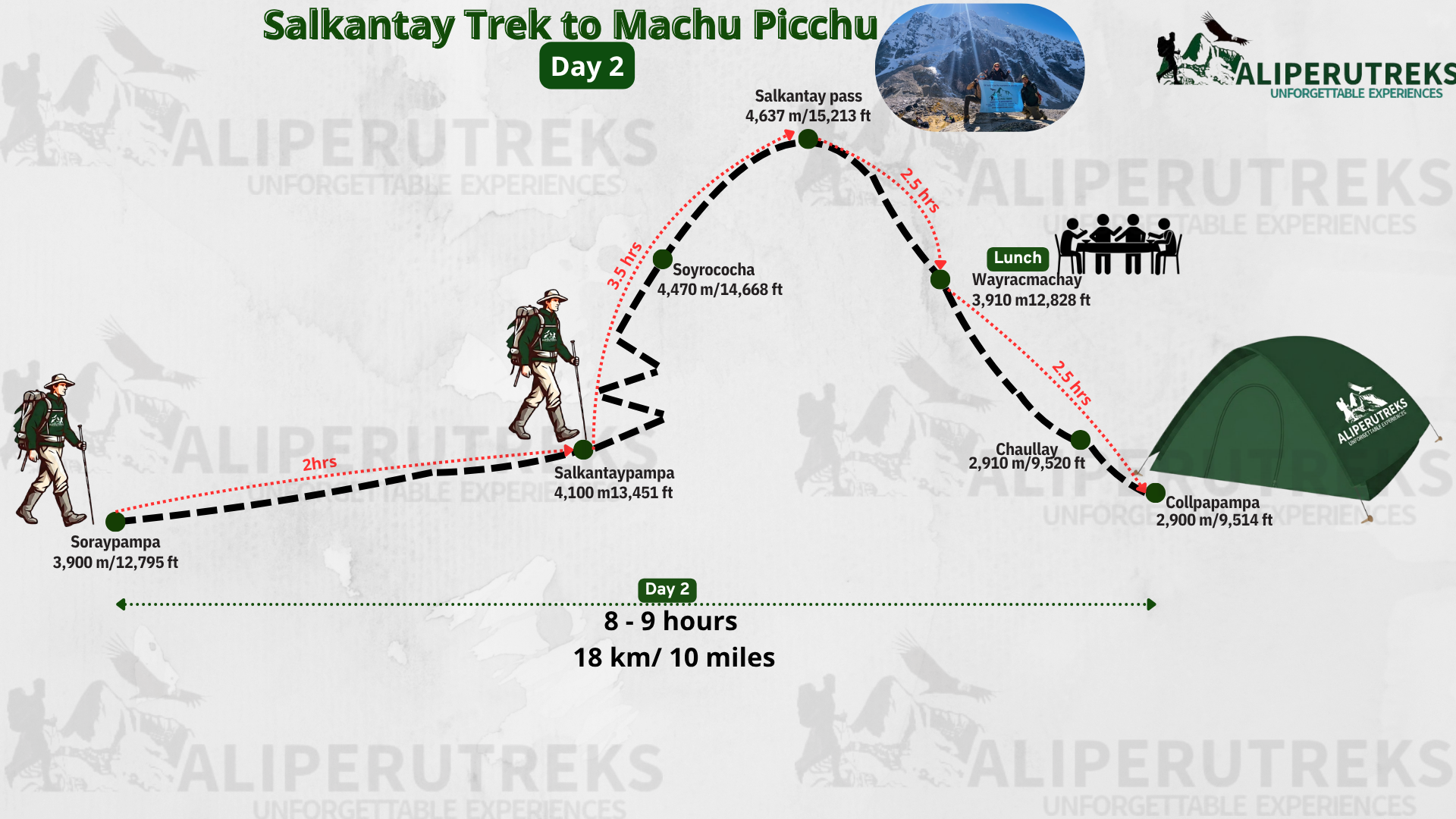
Day 2: Soraypampa – Salkantay Pass – Chaullay – Collpapampa
Distance: Approx. 10 miles (18 km).
Hiking time: 8 to 9 hours.
Maximum altitude: 15,190 ft (4,630 m) at Salkantay Pass.
Summary: The most demanding day of the trek. We steadily ascend to Salkantay Pass, where being so close to the imposing apu (sacred peak) grants us spectacular alpine scenery. After a brief ceremony honoring the mountains, we gradually descend toward the cloud forest until reaching our campsite in Collpapampa.
Map of the hiking route from Salkantay to Machu Picchu, Day 2
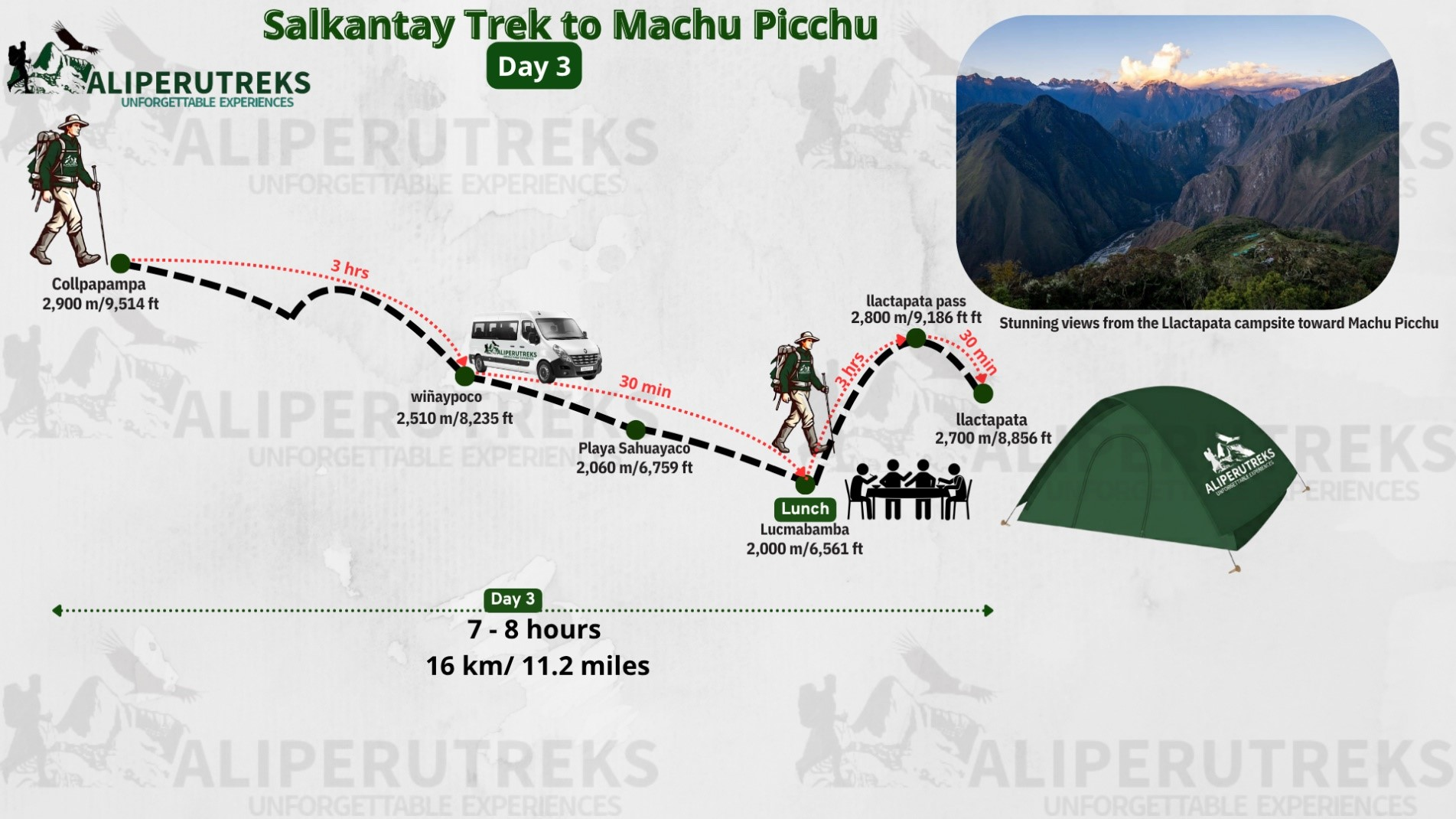
Day 3: Chaullay – Lucmabamba – Archaeological Ascend to Llactapata (The Exclusive Campsite)
Distance: Approx. 11.2 miles (16 km).
Hiking time: 7 to 8 hours.
Campsite altitude: 8,856 ft (2,700 m).
Summary: We hike down through the Santa Teresa River valley, enjoying the rich biodiversity and local plantations of coffee and tropical fruits. Upon reaching Lucmabamba, we follow an original stone-paved Inca Trail uphill directly toward the Llactapata archaeological site.
Privileged Experience: We arrive at our private campsite on the summit in the afternoon. Directly in front of us, the majestic panoramic view of Machu Picchu unveils across the canyon. We enjoy a hot drink at sunset followed by an evening under the stars with the illuminated silhouette of the mountain range.
Map of the hiking route from Salkantay to Machu Picchu, Day 3
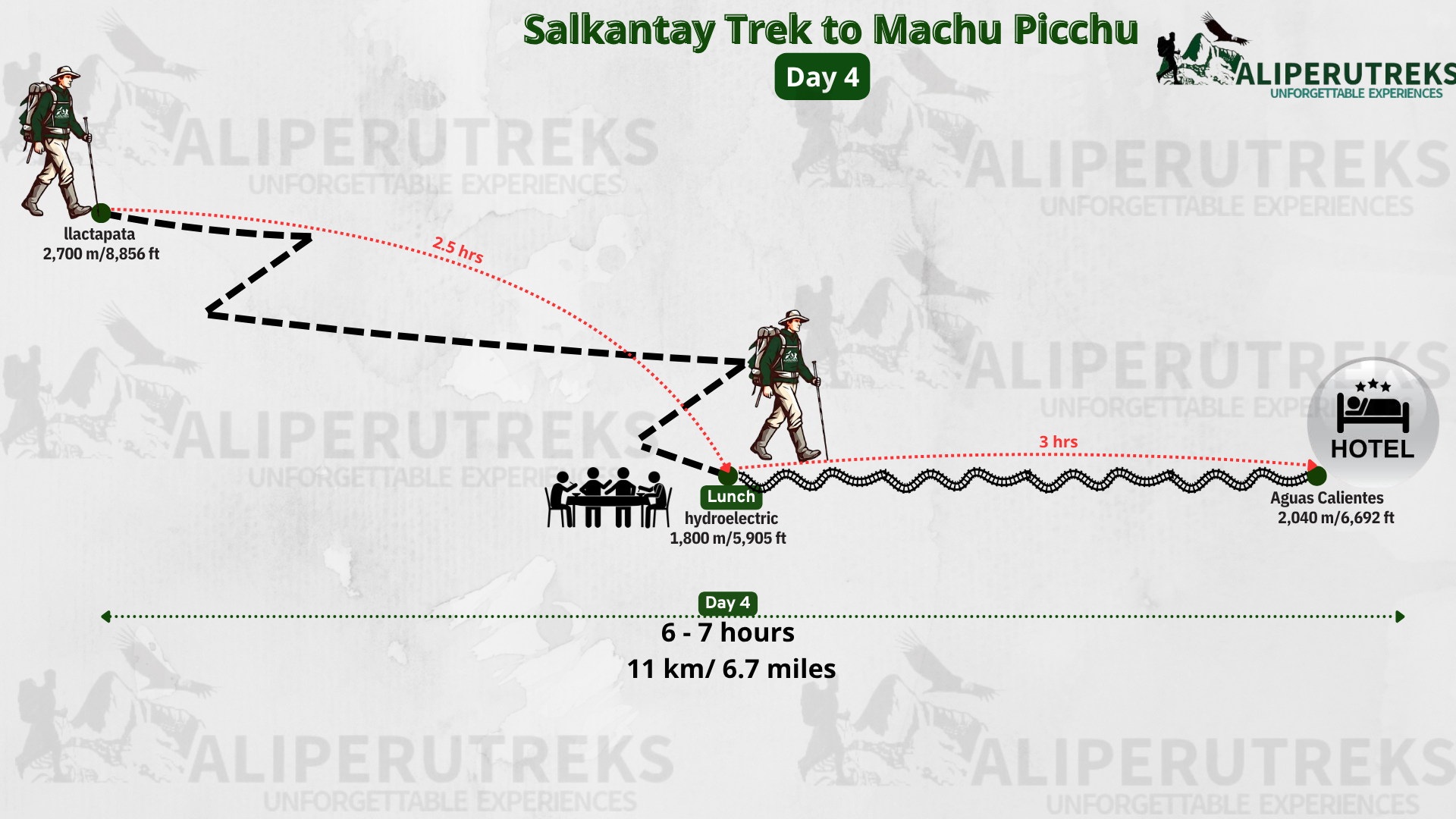
Summary: We wake up to the first rays of sun illuminating the Inca citadel. After a hearty breakfast with unbeatable views, we begin a 2.5 hour zigzag descent toward the Hidroeléctrica train station. We continue along a flat walk bordering the railway line and the Urubamba River until reaching the picturesque town of Aguas Calientes, where we stay in a hotel with full amenities.
Map of the hiking route from Salkantay to Machu Picchu, Day 4
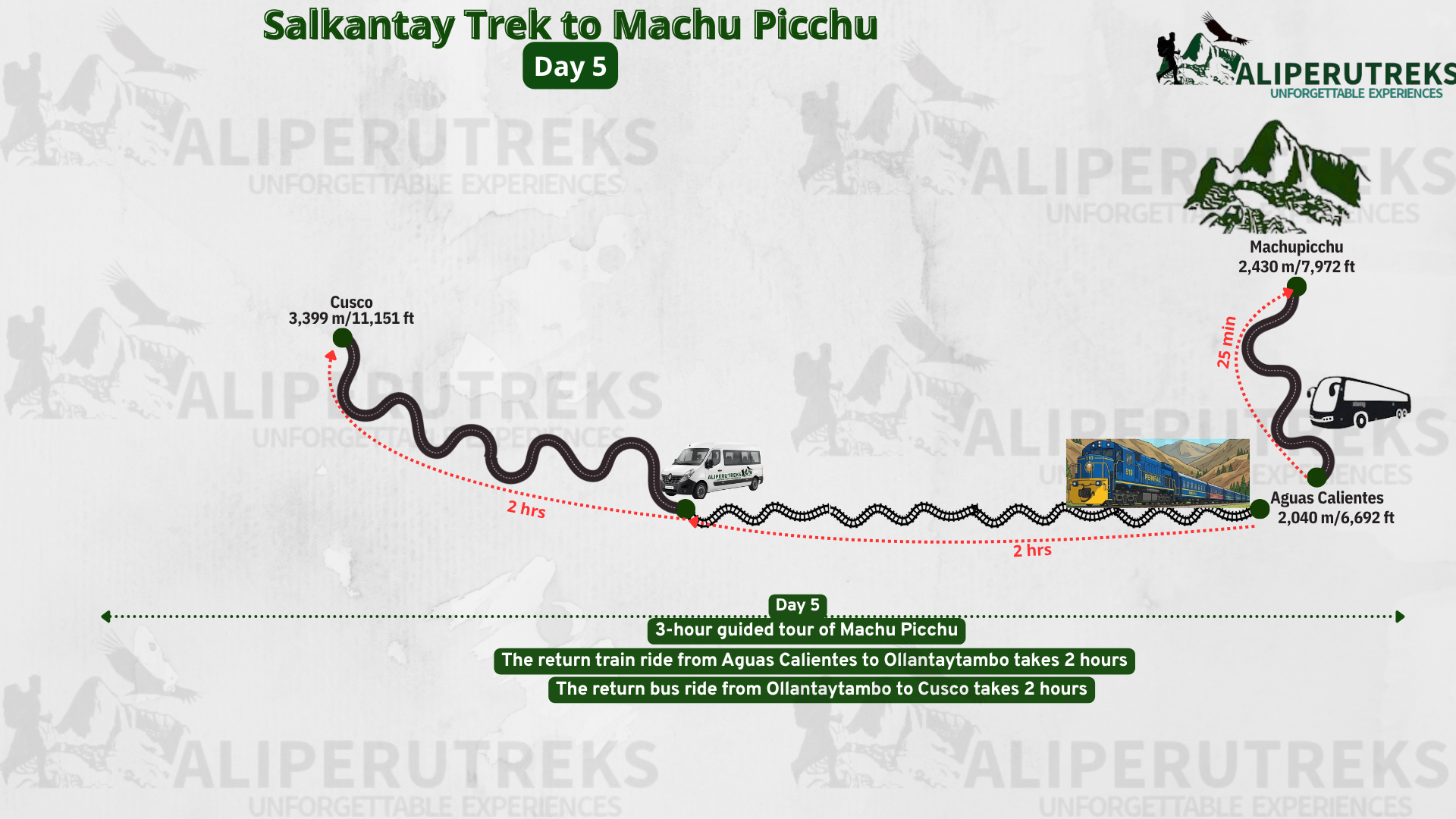
Day 5: Aguas Calientes – Historic Sanctuary of Machu Picchu – Cusco
Summary: We board the early bus up to the Inca citadel of Machu Picchu. We take an official guided tour of its main temples, plazas, and agricultural terraces. In the afternoon, we ride the panoramic train back to Ollantaytambo, followed by private transport back to the city of Cusco.
Map of the hiking route from Salkantay to Machu Picchu, Day 5Salkantay Trek 5 Days altitude map showing elevation profile from Cusco to Machu Picchu
Comparison Table: Ali Perú Treks vs. Traditional Agencies
Feature
Traditional Agency (Standard)
Ali Perú Treks (Exclusive Experience)
Day 3 Campsite
Bottom of the Valley (Lucmabamba / La Playa).
Mountain Ridge at Llactapata.
Machu Picchu View
Brief glance in passing during the hike.
Continuous panoramic view (Sunset, night, and sunrise).
Campsite Atmosphere
Noisy, crowded, and near roads/towns.
Peaceful, private, and surrounded by untouched nature.
Original Inca Trail
Covered in a hurry just to complete the schedule.
Walked at a relaxed pace to appreciate Inca engineering.
Experience the Difference with Ali Perú Treks
Don’t let your journey to one of the Wonders of the World be a rushed trek among crowds. At Ali Perú Treks, we prioritize quality, logistical comfort, and the true value of every landscape.
The Ancascocha Trek passes four main Inca sites on its way to Machu Picchu. Perolniyoc (also called Raqaypata) sits on a cliff above a waterfall at about 3,550 m, Rayan Pata is a ceremonial site at about 3,800 m, Paucarcancha guards the junction of two valleys at about 3,100 m, and Patallacta (also called Llactapata)…
Moray and the Maras Salt Mines are two neighboring sites on the high plateau above the Sacred Valley, about 50 km from Cusco, and most travelers visit them together in half a day. Moray is a set of circular Inca terraces, and Maras is a hillside of thousands of salt pans still worked by local…
Plan at least three days in Cusco if you want to see the city and visit Machu Picchu, and four to five days if you also want the Sacred Valley or a high-altitude hike like Rainbow Mountain. Three days is the practical minimum because Cusco sits at 3,399 m (11,152 ft), and your first day…
Yanama Pass, at about 4,660 m (15,290 ft), is the highest point on the trek from Choquequirao to Machu Picchu. It sits in the Vilcabamba range, between the village of Yanama (about 3,500 m) and the Totora valley, and crossing it is usually the longest day of the route: 8 to 10 hours, with a…
The Choquequirao cable car is a planned public-private project that would link the Inca site of Choquequirao with the Apurímac and Cusco sides of the canyon, cutting a journey that now takes about two days on foot to roughly 20 minutes. As of November 2026, it has not been built. The project is still in…
The Choquequirao trek starts at Capuliyoc (about 2,950 m), drops to the Apurímac River at Playa Rosalina (about 1,550 m), and climbs back up through Santa Rosa and Marampata to the ruins at about 3,050 m. That means a descent of roughly 1,400 m followed by a climb of about 1,500 m, each way. This…
Yes, Choquequirao is open. The archaeological park reopened in the second half of April 2026, after a rainy-season closure that began on February 1, 2026. However, Peru’s Ministry of Culture has closed the site during heavy rains in several recent years, so if you plan to visit between December and April, expect the possibility of…
Both routes visit Choquequirao and finish at Machu Picchu, but they get there in very different ways. The 6-day trek is an out-and-back hike to Choquequirao through the Apurímac Canyon, followed by a road transfer and train to Aguas Calientes. The 8-day trek is a full traverse on foot, crossing the Vilcabamba range over Yanama…
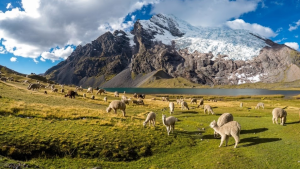
On the Ausangate llama trek, a caravan of llamas led by local herders carries the camping equipment and your duffel bag, so you hike with only a daypack. Llamas are used because they are native to the high Andes, they are lighter on the trail than horses, and hiring them supports the herding families who…
The Ausangate trek follows high Andean trails around the base of Ausangate (about 6,384 m), crossing three passes between 4,850 and 4,980 m, passing turquoise lakes, and camping at Upis, Pucacocha, and Queullacocha before finishing at Rainbow Mountain (5,036 m). The route changes slightly between our four treks, so this guide lists the stops in…