
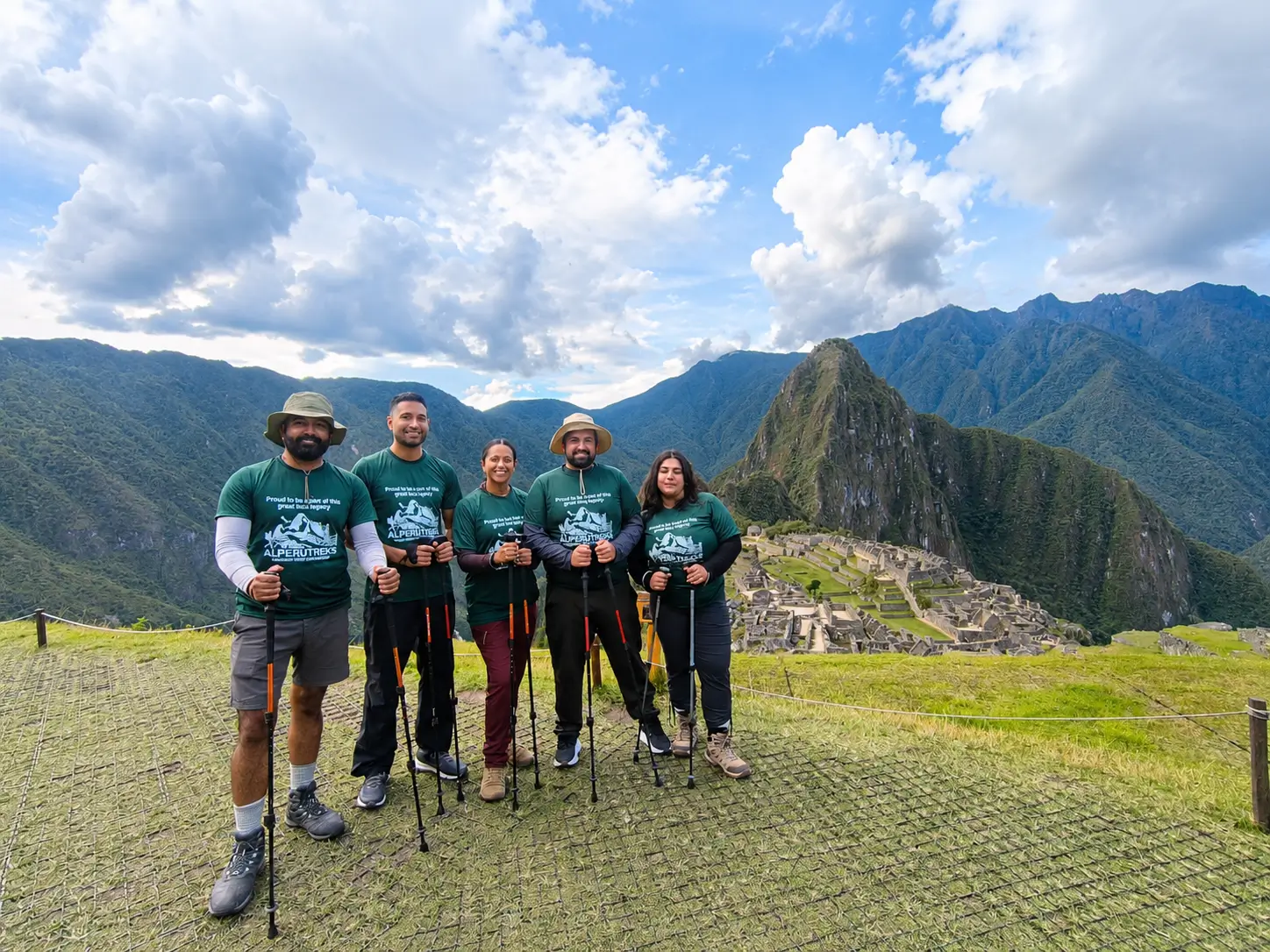
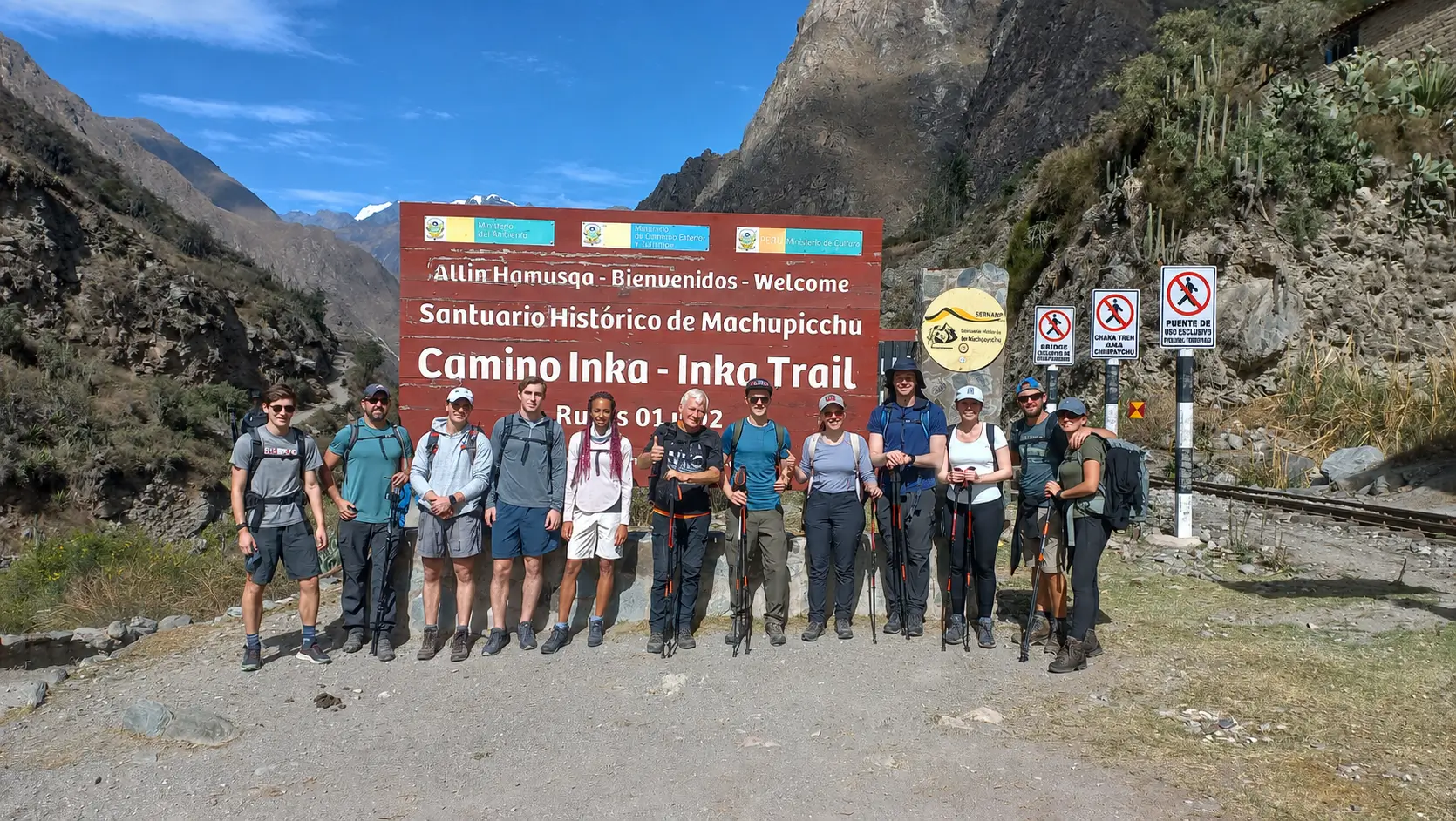
If you’ve started researching Machu Picchu, you’ve probably run into two very different things sharing the same name: “the Inca Trail” as a specific 4-day hike, and “the Inca Trail” as shorthand for any ancient stone path in Peru. They’re not the same thing, and understanding the difference will save you from booking confusion later.
The Inca Trail is a 26.7-mile (43 km) hiking route through the Andes that ends at Machu Picchu’s Sun Gate — the only entrance to the citadel you can walk through on foot, the way messengers and pilgrims did 500 years ago. It’s regulated by Peru’s government, limited to a set number of permits per day, and closed entirely every February for trail maintenance.
In this guide, as a locally-based trekking operator that runs this route regularly, we’ll walk you through what the Inca Trail actually is, its history, the day-by-day route, how hard it really is, and what you need to know before booking — permits, seasons, and preparation included.
What Is the Inca Trail, Exactly?
The “Inca Trail” usually refers to the Classic Inca Trail, a 4-day, 3-night trek that begins near Ollantaytambo in Peru’s Sacred Valley and finishes at Machu Picchu. It’s the only official trekking route that grants access to the citadel through Inti Punku, the Sun Gate — every other trekking route (Salkantay, Lares, Inca Quarry, Ancascocha) arrives by train or bus instead.
Along the way, you pass through three distinct ecosystems — high Andean grassland, cloud forest, and subtropical vegetation — and visit several Inca archaeological sites that most Machu Picchu visitors never see: Llactapata, Runkurakay, Sayacmarca, and Wiñay Wayna among them.
There are a few versions of this trek worth knowing apart:
- Classic Inca Trail (4 days/3 nights): The standard, most-booked route, camping each night.
- Short Inca Trail (2 days/1 night): Covers only the final 7.5 miles (12 km) from Km 104, including Wiñay Wayna and the Sun Gate, with a hotel night in Aguas Calientes instead of camping.
- Inca Trail 5 Days: The same classic route at a more relaxed daily pace with an extra acclimatization/rest day.
- Private and Luxury versions: Same route, but with a dedicated group and upgraded camp comfort instead of a shared departure.
If your goal is simply “hike an original Inca route and walk through the Sun Gate,” the Classic Inca Trail 4-day trek is the one people mean by default.
A Brief History of the Inca Trail and the Qhapaq Ñan
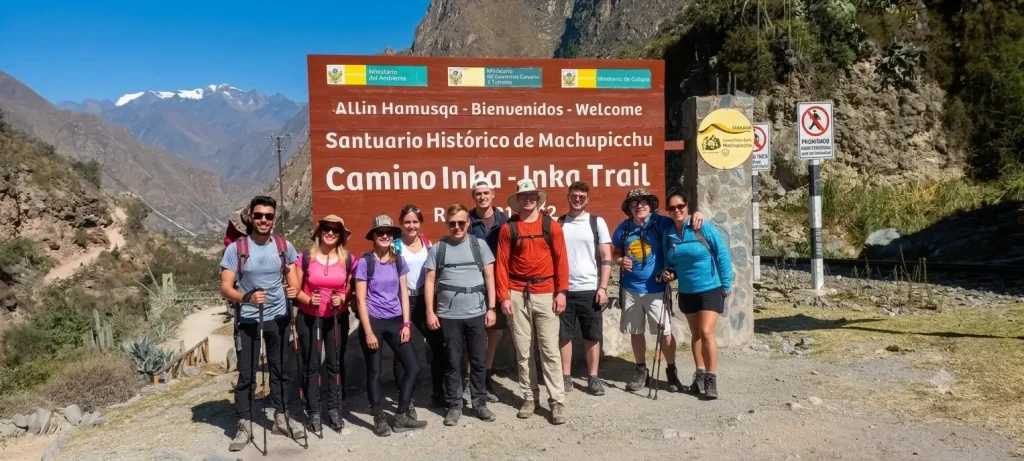
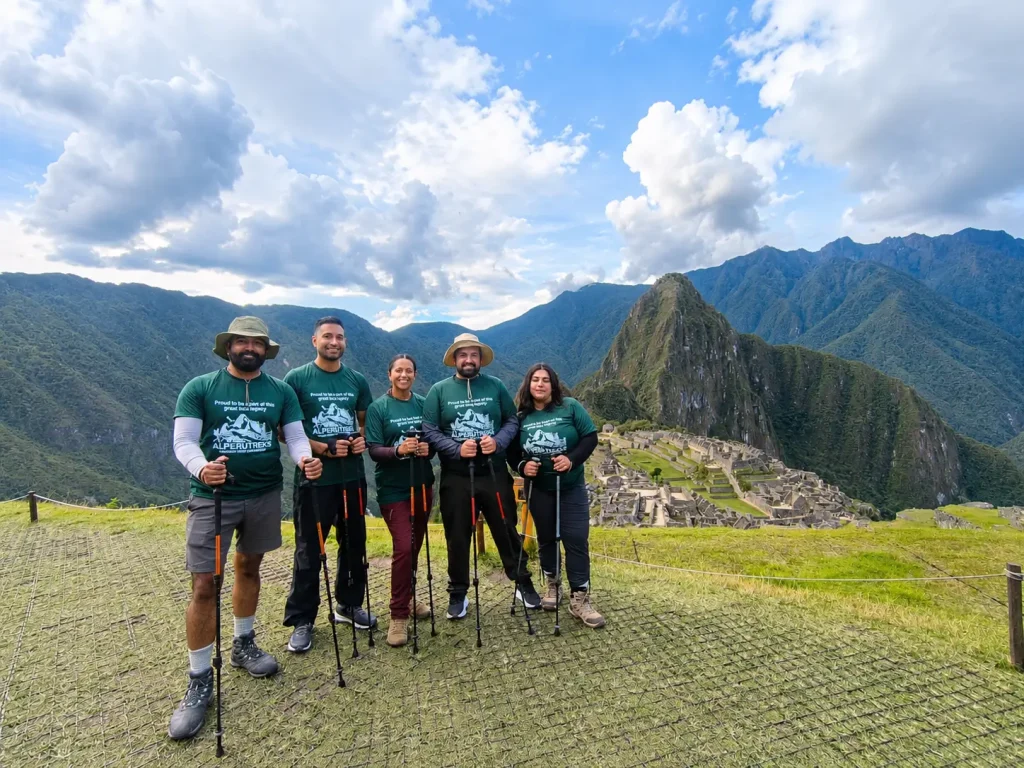
The trail wasn’t built as a hiking route — it was built as infrastructure. It’s a surviving segment of the Qhapaq Ñan, the Inca road network that once stretched roughly 18,600–24,800 miles (30,000–40,000 km) across what is now Peru, Bolivia, Ecuador, Colombia, Argentina, and Chile. UNESCO inscribed the Qhapaq Ñan as a World Heritage Site in 2014, recognizing it as an extensive Inca communication, trade, and defense network connecting the Andes to the coast.
The specific stretch that hikers walk today connected Cusco, the Inca capital, to Machu Picchu, likely used by nobility, priests, and messengers rather than the general population. The stonework, drainage channels, and terracing you’ll see along the route — much of it still intact — reflect Inca engineering built without iron tools, mortar, or the wheel.
Machu Picchu itself was rediscovered for the outside world by Hiram Bingham in 1911, but the trail leading to it wasn’t developed as a modern trekking route until decades later. Today, it’s regularly ranked among the top hikes in the world.
Where Is the Inca Trail Located?
The Inca Trail is located in the Cusco region of southern Peru, within the Machu Picchu Historic Sanctuary. The Classic 4-day route begins at kilometer 82 of the Cusco–Machu Picchu railway, near the town of Piscacucho, roughly a 2-hour drive from Cusco through the Sacred Valley. From there, it’s a footpath the entire way to Machu Picchu — no roads, no vehicle access, and no way in or out except on foot (or by helicopter evacuation in a genuine emergency).
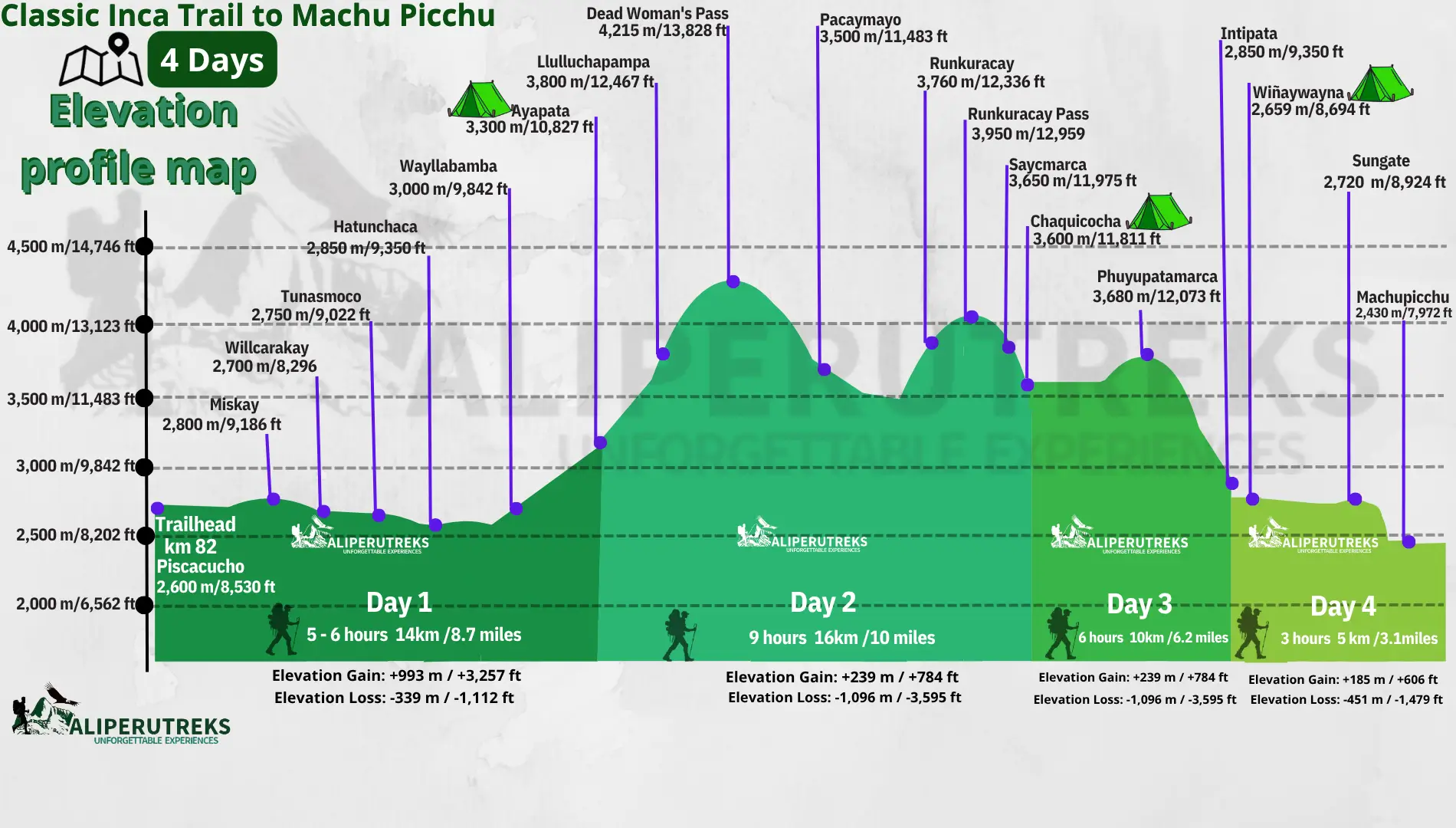
For a full breakdown of the route with elevation profiles for each day, see our detailed Inca Trail map guide.
Inca Trail Distance, Duration, and Elevation at a Glance
| Factor | Information |
|---|---|
| Total distance | 26.7 miles / 43 km |
| Duration | 4 days, 3 nights |
| Starting altitude | 8,923 ft / 2,720 m (Km 82) |
| Highest point | 13,828 ft / 4,215 m (Dead Woman’s Pass) |
| Ending point | Machu Picchu via Inti Punku (Sun Gate), 7,970 ft / 2,430 m |
| Difficulty | Moderate to challenging |
| Mountain passes crossed | 3 |
| Best season | May–September (dry season) |
| Trail closure | Closed every February for maintenance |
How the 4-Day Classic Inca Trail Works, Day by Day
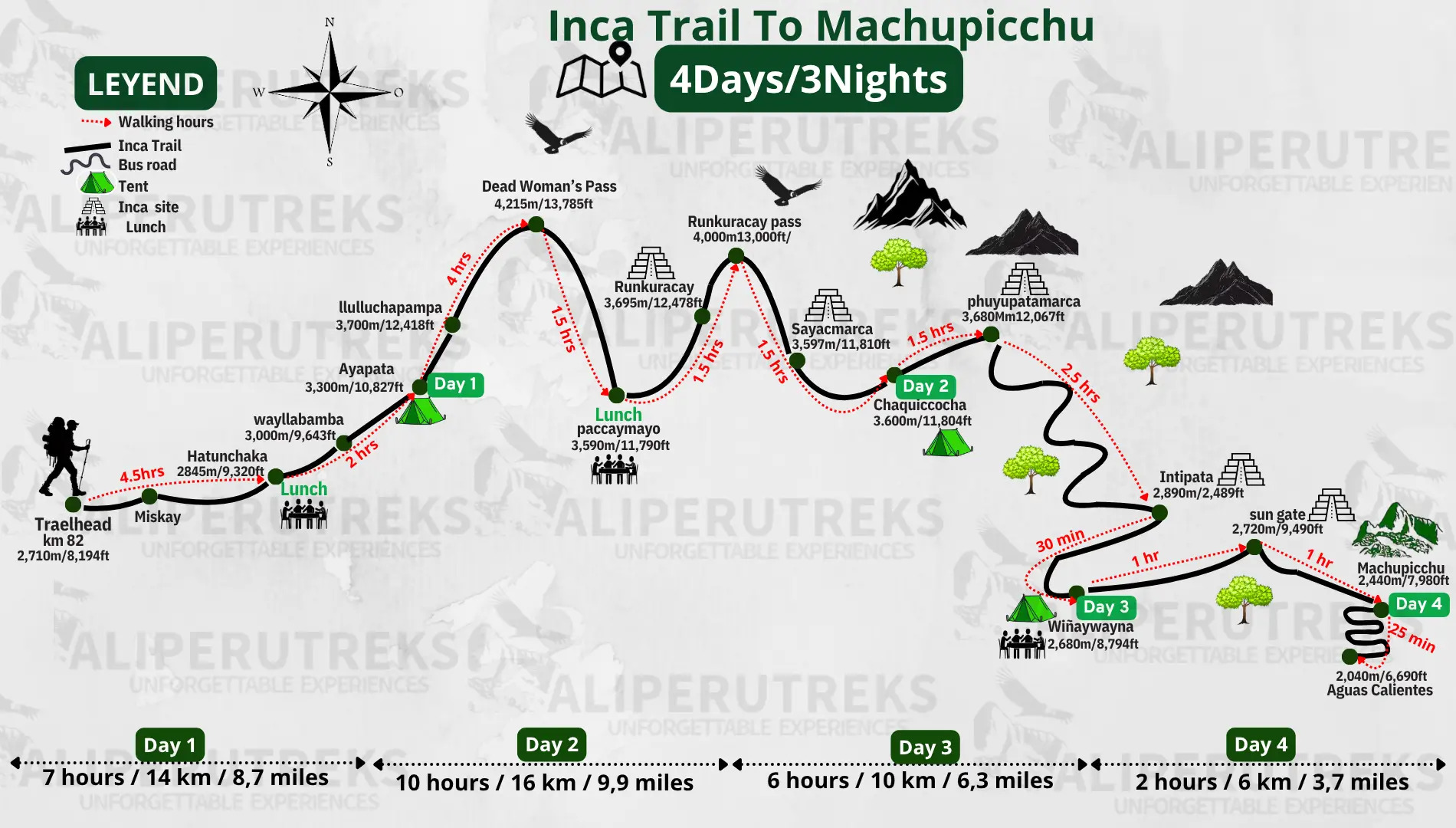
Day 1: Km 82 to Wayllabamba
A gentle warm-up day that eases you into the altitude. You’ll pass the ruins of Llactapata and Willkaraqay, follow the Urubamba River valley, and camp in Wayllabamba at around 9,840 ft (3,000 m). It’s the easiest day of the trek and a good gauge of your fitness before Day 2.
Day 2: Wayllabamba to Pacaymayo — Dead Woman’s Pass
The hardest day by a wide margin. You’ll climb roughly 3,900 ft (1,200 m) to reach Dead Woman’s Pass (Warmiwañusca) at 13,828 ft (4,215 m), the trek’s highest point, named for the silhouette of the ridgeline rather than any historical event. Most hikers rate this the toughest day of any Peru trek. A long descent to camp at Pacaymayo follows.
Day 3: Pacaymayo to Wiñay Wayna
The longest day in distance but arguably the most rewarding — you’ll pass two more Inca sites, Runkurakay and Sayacmarca, descend into cloud forest, and reach Phuyupatamarca before dropping to camp near Wiñay Wayna, one of the best-preserved archaeological complexes on the entire trail, known for its agricultural terraces and ceremonial fountains.
Day 4: Sun Gate and Machu Picchu
An early start (often before sunrise) to reach Inti Punku, the Sun Gate, in time for your first view of Machu Picchu. From there it’s roughly an hour’s walk down into the citadel for a guided tour, followed by the descent to Aguas Calientes and the train back toward Cusco.
How Difficult Is the Inca Trail?
The Inca Trail is rated moderate to challenging. It doesn’t require technical climbing skills or specialized mountaineering gear, but it does demand sustained cardiovascular endurance, some experience with multi-day hiking, and comfort walking on uneven, centuries-old stone steps for several hours a day. Day 2, with the climb to Dead Woman’s Pass, is where most travelers feel the difficulty most acutely — a combination of steep elevation gain and thinning air.
Most healthy adults in reasonable fitness complete it successfully, including many first-time trekkers, but it isn’t a casual walk. For a fuller breakdown of what makes each day difficult and how to train for it, we’ve put together a dedicated guide on Inca Trail difficulty.
Inca Trail Permits: What You Need to Know
This is the part that surprises a lot of first-time visitors: you cannot simply show up and hike the Inca Trail. Access is strictly regulated by Peru’s Ministry of Culture, which caps the trail at roughly 200 trekker permits per day (with additional permits allocated separately to guides, cooks, and porters). Permits are:
- Non-transferable and tied to your passport number
- Not sold directly to individuals — only licensed tour operators can purchase them on a hiker’s behalf
- Released annually, typically selling out for May–August months 4 to 6 months in advance
- Unavailable in February, when the entire trail closes for maintenance
Because of this quota system, booking early matters more for the Inca Trail than for almost any other trek in Peru. You can check real-time permit availability directly, and it’s worth confirming that whichever agency you book with is officially licensed and permitted — unlicensed operators cannot legally obtain Inca Trail permits at all.
Best Time to Hike the Inca Trail
The dry season, May through September, offers the clearest skies and most reliable trail conditions, which is also why it’s the busiest and sells out first. October and November are a solid shoulder-season option — mostly dry, noticeably fewer crowds. December through March brings the wet season, with February closed entirely; the trail can still be hiked in the shoulder months of the wet season, but expect rain, especially in the afternoons.
For a month-by-month breakdown of temperatures, rainfall, and crowd levels, see our full guide on the best time to hike the Inca Trail.
How to Prepare: Acclimatization and Physical Training
Altitude, not distance, is what catches most travelers off guard. Cusco itself sits at 11,150 ft (3,400 m), higher than the trailhead you’ll start from.
- Spend at least 2 full days in Cusco before starting. This is the single most effective thing you can do to reduce your risk of altitude sickness.
- Train with stairs and inclines, not just flat cardio — the trail is almost entirely up or down.
- Hydrate consistently in the days leading up to the trek; dehydration compounds altitude symptoms.
- Talk to your doctor about altitude sickness medication before you travel, especially if you have a history of altitude sensitivity.
For a deeper look at symptoms, prevention, and what to do if you feel unwell, see our guide on acclimatizing to Cusco’s altitude.
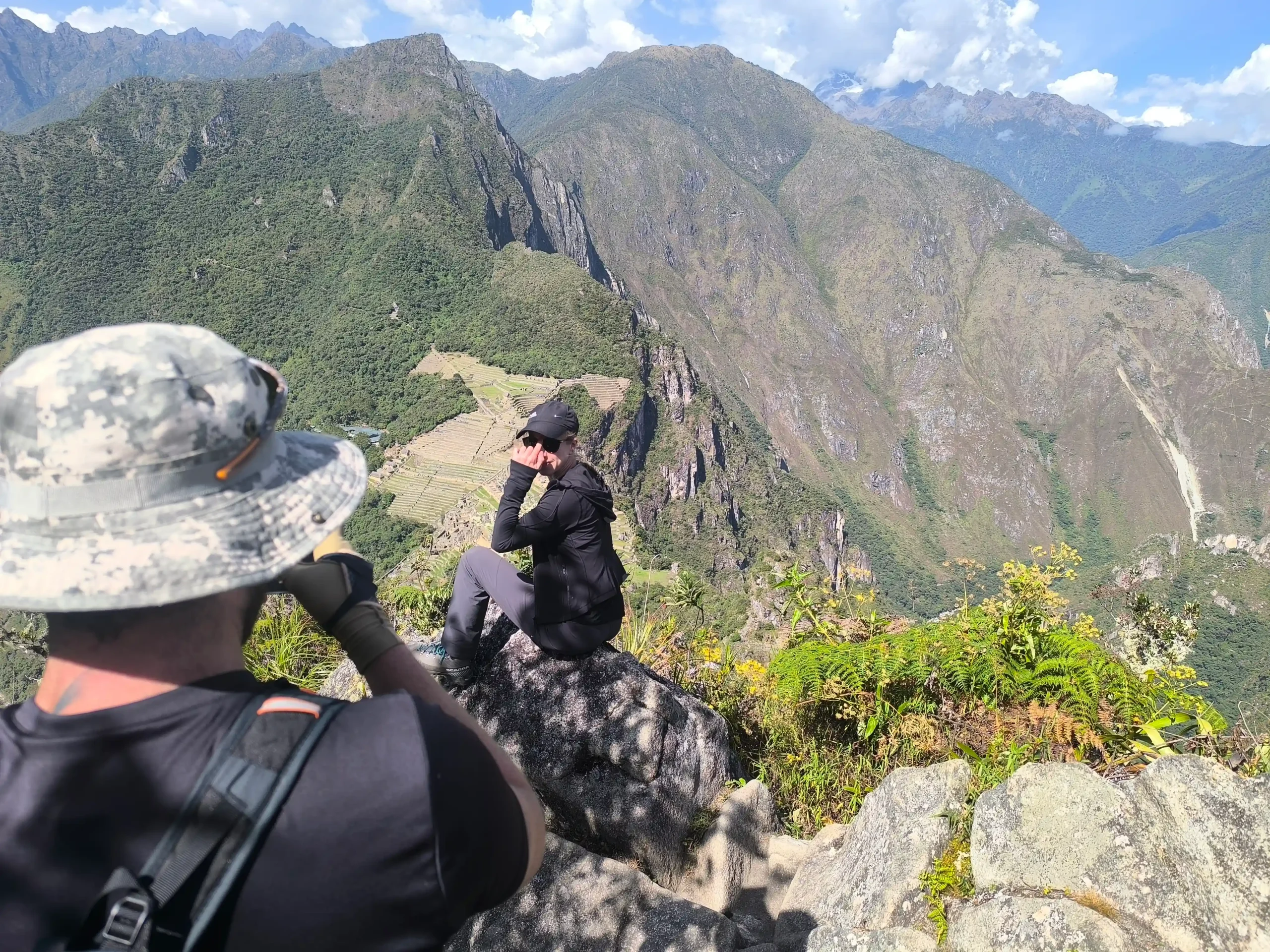
What to Pack for the Inca Trail
You’ll carry a daypack yourself each day; porters carry your main duffel between campsites. Priorities: a broken-in pair of hiking boots (never new ones), a warm sleeping bag rated for near-freezing nights, layered clothing for temperature swings between camps, sun protection, and a headlamp for the early Day 4 start. We’ve built out a complete Inca Trail packing list with the full gear breakdown by category.
Local Expert Tips
A few things that make a real difference and that most generic guides skip:
- Don’t rush Day 1. It feels easy, so people push the pace — then arrive at Day 2’s climb already fatigued. Save your legs.
- Start Day 2 as early as your itinerary allows. Afternoon cloud cover and light rain are far more common at Dead Woman’s Pass than in the morning.
- Pack a separate “trail day” outfit from your “camp night” layers — sweating through one set and freezing in it at 3,000+ meters after sunset is a common, avoidable mistake.
- Bring cash in Peruvian soles for tips. Porters and cooks work extremely hard on this route, and small bills are more practical than large notes at camp.
- Treat every water source as needing purification, even if it looks clean — your guide’s boiled or filtered water is the safe option.
Inca Trail vs. Other Routes to Machu Picchu
If Inca Trail permits are sold out for your dates, or four days of camping isn’t the right fit, a few well-established alternatives exist:
- Short Inca Trail: The final 12 km of the same original route, including the Sun Gate, over 2 days with a hotel night instead of camping — no permit scarcity issue in the same way, but it still requires the same permit type.
- Salkantay Trek: No permit quota at all, generally more physically demanding due to higher passes, and arrives at Machu Picchu by train rather than on foot through the Sun Gate.
- Lares Trek: A culturally-focused alternative through Andean weaving villages, with a gentler daily profile than the Inca Trail or Salkantay.
The key trade-off: only the Inca Trail (Classic or Short) lets you walk in through Inti Punku. Every alternative route is a strong hike in its own right, but the Sun Gate arrival is unique to this trail.
Frequently Asked Questions
No, but some multi-day hiking or regular cardio training beforehand will make the trek noticeably more enjoyable, especially on Day 2.
No. Peruvian regulations require every hiker on the Inca Trail to be accompanied by a licensed tour operator and guide — independent trekking is not permitted on this route.
For May–August departures, 6 to 8 months ahead is recommended given the daily permit quota. For the shoulder months, 3 to 5 months is usually enough.
No — the Inca Trail permit and the Machu Picchu entrance ticket are separate authorizations, though a good tour operator bundles both into your package.
Licensed operators carry emergency oxygen and first-aid kits, and guides are trained to recognize symptoms early. Spending 2+ days acclimatizing in Cusco beforehand significantly lowers your risk.
No. Machu Picchu is the destination — a 15th-century Inca citadel. The Inca Trail is one of several routes used to reach it, distinguished by being the only one that arrives on foot through the Sun Gate.
It depends more on fitness and acclimatization than age. Reasonably fit hikers of a wide age range complete it each year, but the trail does have a minimum age requirement set by regulation, and anyone with cardiovascular or respiratory conditions should consult a doctor first.
The Qhapaq Ñan is the entire Inca road network across South America. The Inca Trail to Machu Picchu is one specific, well-preserved segment of it — the most famous, but a small fraction of the whole system.
Conclusion
The Inca Trail is more than a scenic hike — it’s a walk along a surviving piece of Inca infrastructure, through cloud forest and mountain passes, ending at the one entrance to Machu Picchu the Incas themselves would recognize. It’s demanding, permit-limited, and requires real preparation, but for travelers willing to train and book ahead, it remains one of the most rewarding multi-day treks in South America.
If you’re ready to plan your dates, our team can walk you through availability, permits, and logistics for the Classic Inca Trail 4-day trek — as a 100% locally-owned Cusco operator, we handle the permit process directly and guide the route regularly.