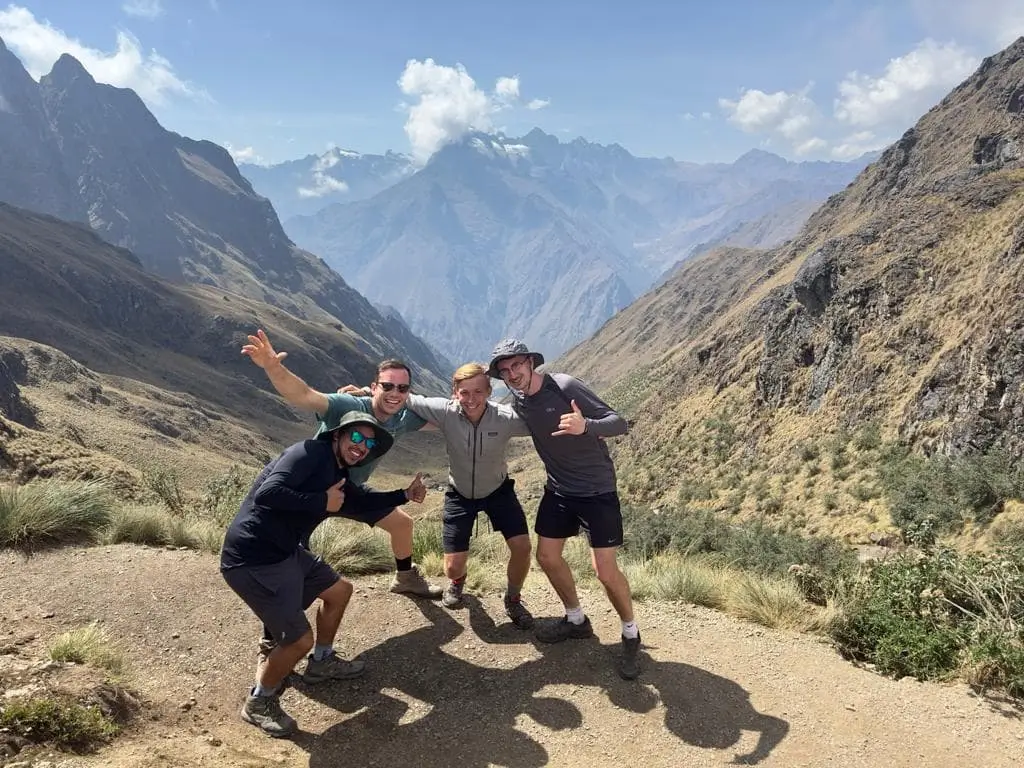
If you’re planning a trip to Machu Picchu, you’ve probably hit the same fork in the road as most travelers researching Peru treks. The Inca Trail vs Salkantay Trek debate is one of the most common questions American hikers ask before booking.
Both routes end at the same incredible citadel, but they get you there in very different ways. They differ in scenery, difficulty, permits, accommodation style, and how far in advance you need to plan.
As a Cusco-based agency that has guided travelers on both trails for years, we put together this honest, detailed comparison so you can pick the route that actually fits your fitness level, budget, and travel dates.
By the end of this guide, you’ll know exactly which trail is right for you, what to expect day by day, and how to plan your 2026 (or 2027) trip without any surprises.
Inca Trail vs Salkantay Trek at a Glance
Before going into detail, here’s a quick side-by-side overview of both treks.
| Feature | Inca Trail 4 Days | Salkantay Trek |
|---|---|---|
| Distance | 26 miles (42 km) | 46 miles (74 km) |
| Duration | 4 days / 3 nights | 5 days / 4 nights |
| Highest point | 13,828 ft (4,215 m) – Dead Woman’s Pass | 15,253 ft (4,650 m) – Salkantay Pass |
| Difficulty | Moderate to challenging | Challenging |
| Permit required | Yes, limited daily quota | No permit limit |
| Accommodation | Camping only | Camping or mountain lodges |
| Machu Picchu entrance | On foot, through the Sun Gate | By bus, from Aguas Calientes |
| Inca ruins along the way | Several | Very few until Machu Picchu itself |
| Best for | History lovers, early planners | Flexible travelers, scenery lovers |
This table already hints at how the Salkantay Trek vs Inca Trail decision usually plays out: ancient stonework and tradition on one side, wild Andean scenery and flexibility on the other.
What Makes the Classic Inca Trail Special
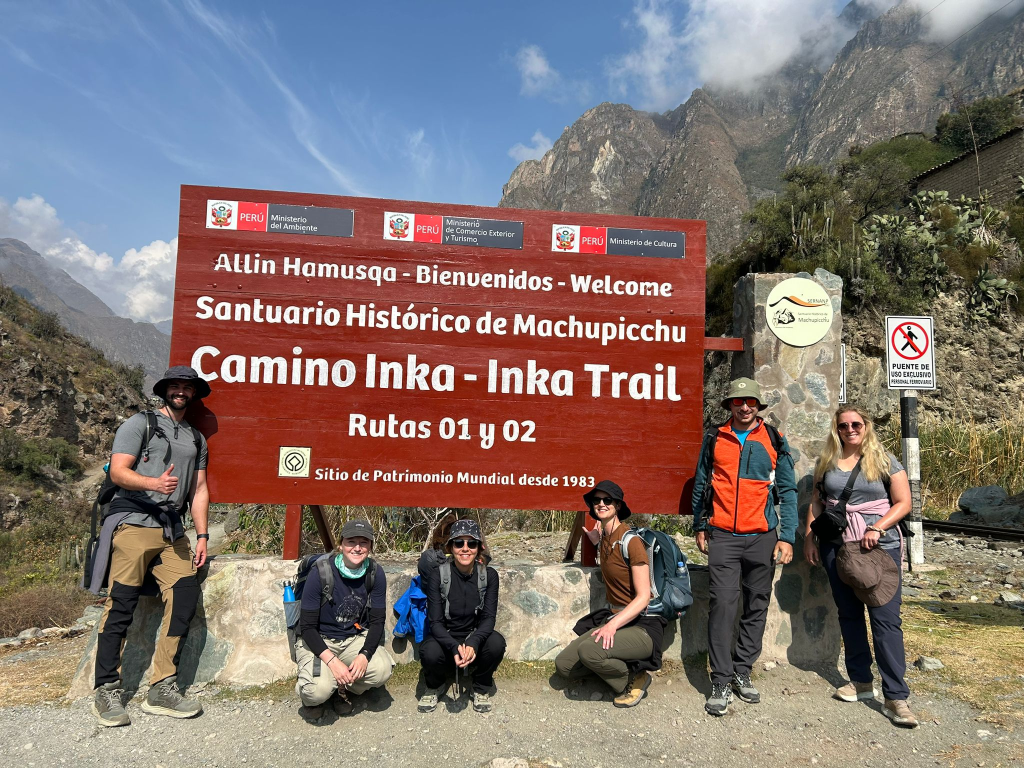
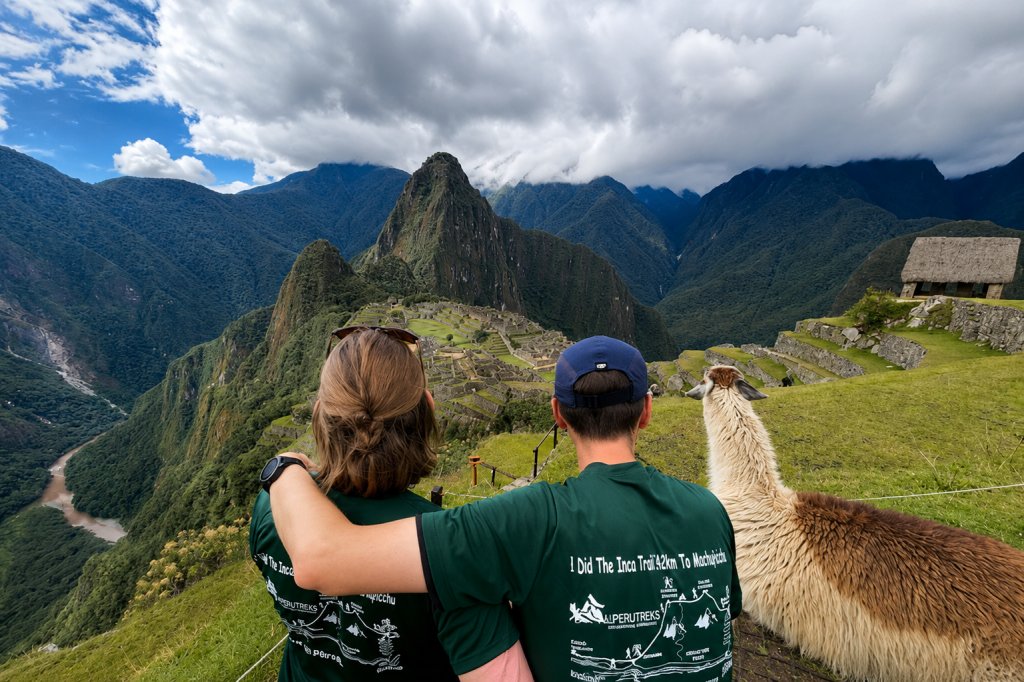
The Inca Trail is the only route that ends by walking through the Sun Gate (Inti Punku) directly into Machu Picchu, the same entrance used by Inca travelers hundreds of years ago.
It follows part of the original royal road built by the Incas to connect Cusco with Machu Picchu, using stone pathways, tunnels, and staircases carved straight into the mountainside.
It’s the most famous trek in South America, and along the way you’ll pass through three Inca archaeological sites that most Machu Picchu visitors who arrive by train never get to see.
Inca Trail Difficulty and Altitude
The Inca Trail itinerary is rated moderate to challenging. You don’t need to be an athlete, but a baseline level of fitness and a few weeks of prior preparation make a real difference.
The toughest stretch is Day 2, when you climb to Dead Woman’s Pass (Warmiwañusca), the highest point on the trail at 13,828 feet (4,215 m).
Most of the difficulty comes from the combination of altitude and uneven Incan stone steps, not from technical climbing. Expect 6 to 9 hours of walking per day, with Day 2 being the hardest by far.
Inca Trail Permits and Why You Need to Book Early
This is the detail that surprises most American travelers: the Peruvian government issues only 500 total permits per day, and that number includes guides, porters, and cooks. That leaves roughly 200 spots for trekkers.
Permits are tied to your exact passport number at the time of purchase and cannot be transferred or changed afterward. For trekking dates between May and September, permits routinely sell out 4 to 6 months in advance.
As of this update in 2026, several months are already fully booked, with very limited availability left later in the year. If you have a flexible schedule, this is one of the main reasons travelers end up choosing Salkantay instead.
One more recent change worth knowing: under current regulations, the Inca Trail permit no longer automatically includes your Machu Picchu entrance ticket. That has to be purchased separately, so make sure your operator confirms it’s included in your package.
The trail also closes every February for annual maintenance, so it’s never available that month, no matter how early you book.
What Makes the Salkantay Trek Special
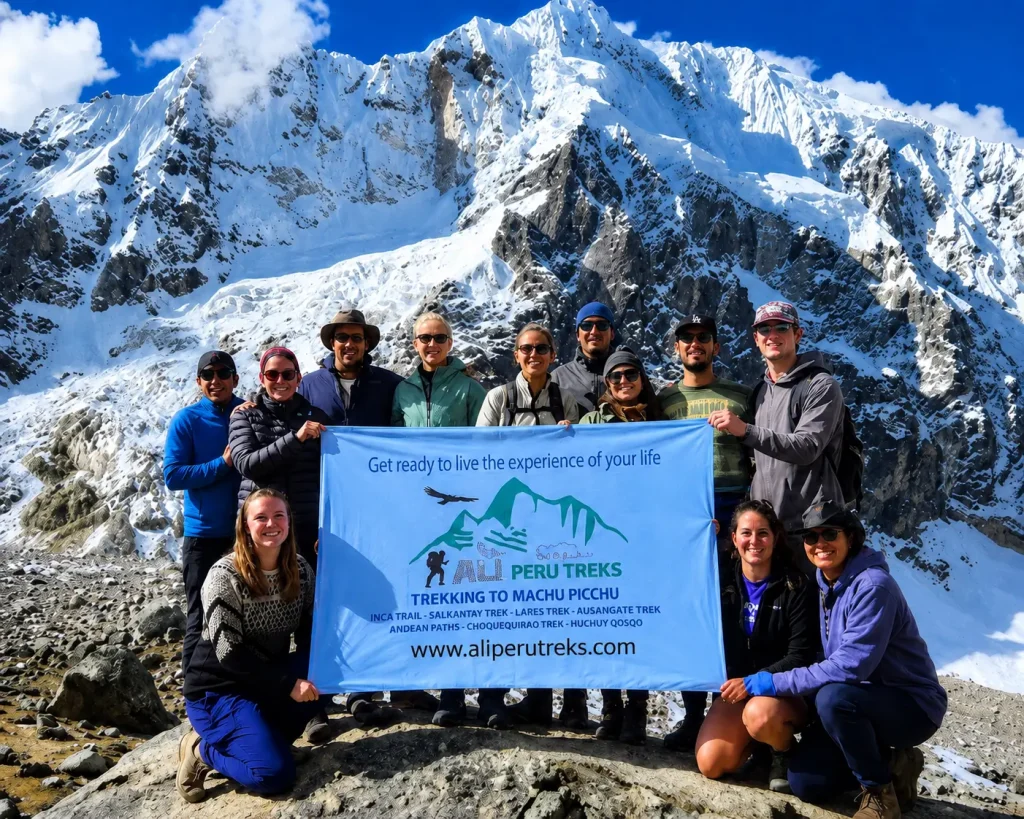
The Salkantay Trek is widely considered the top alternative to the Inca Trail. In 2015, National Geographic even named it one of the 25 best treks in the world.
Unlike the Inca Trail, Salkantay has no permit limit, which gives you far more flexibility, even if you only decide on your trekking dates a few weeks before arriving in Peru.
The trek takes its name from Salkantay Mountain (20,574 ft / 6,271 m), one of the most sacred peaks in Inca cosmology, which towers over the entire route.
Salkantay Trek Difficulty Explained
When people search for salkantay trek difficulty, they often assume it’s easier than the Inca Trail since it doesn’t require a permit. In reality, it’s generally considered the more physically demanding of the two.
The trek crosses Salkantay Pass at 15,253 feet (4,650 m), almost 1,400 feet higher than the highest point on the Inca Trail. Daily distances are also longer, with some days covering more than 12 miles.
On the plus side, the trail itself is wider and less technical than the Inca Trail’s stone staircases, so most of the difficulty comes from altitude and distance rather than terrain.
Salkantay Altitude, Climate and Scenery
The trek begins near Mollepata and climbs through dramatic glacier scenery before descending into cloud forest and eventually subtropical vegetation near Santa Teresa.
A popular highlight is the side hike to Humantay Lake, a turquoise glacial lake at roughly 13,780 feet (4,200 m) that most groups visit on Day 1.
Temperatures swing dramatically along the route. Nights near Salkantay Pass can drop below freezing (32°F / 0°C), while the final stretch near Santa Teresa feels almost tropical.

Salkantay Trek vs Inca Trail Point by Point
Here’s how both routes compare across the factors that matter most to travelers planning a trip.
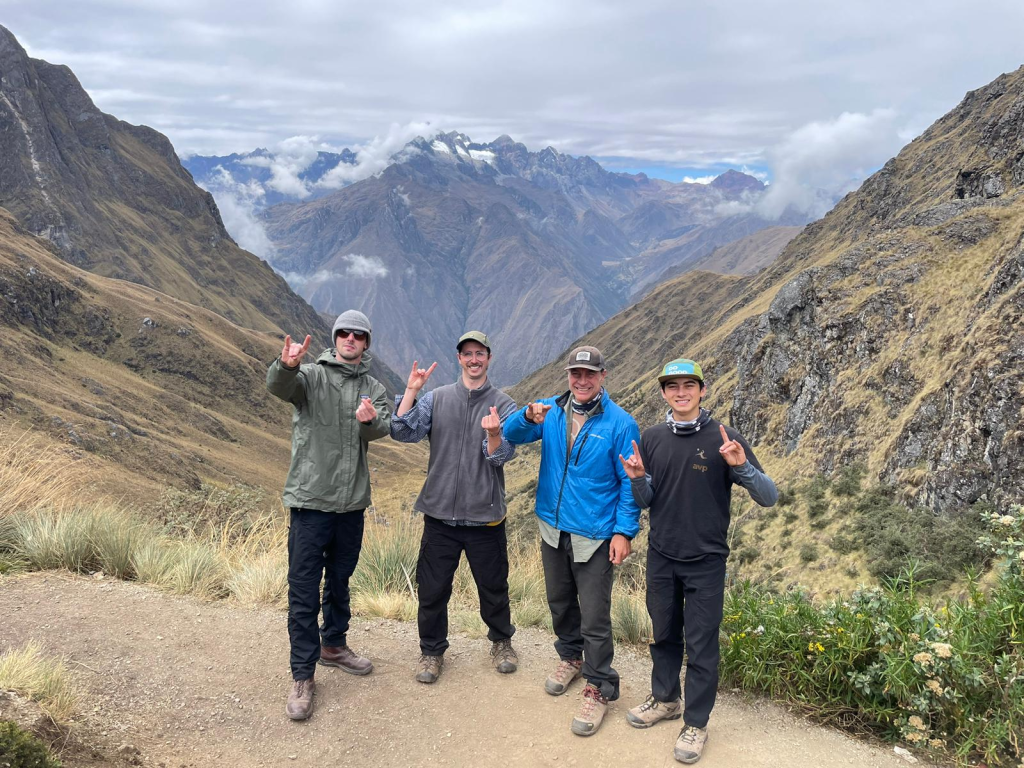
Scenery and landscapes. The Inca Trail mixes cloud forest, mountain views, and dense Inca architecture, with ruins appearing every few hours. Salkantay leans into raw, high-mountain wilderness: glaciers, snow-capped peaks, and a turquoise lake, with far fewer ruins along the way.
Permits and availability. This is the clearest difference. The Inca Trail requires booking months ahead because of the daily quota, while Salkantay can usually be arranged on much shorter notice.
Physical difficulty. Both are demanding, but for different reasons. The Inca Trail challenges you with stone staircases and altitude, while Salkantay challenges you with higher altitude and longer mileage.
Archaeological sites. The Inca Trail passes through Llactapata, Runkurakay, Sayacmarca, Phuyupatamarca, and Wiñay Wayna before reaching Machu Picchu. Salkantay has very few archaeological stops until you reach the citadel itself.
Accommodation style. Inca Trail trekkers camp every night at fixed, government-assigned campsites. Salkantay offers more flexibility, including options with mountain lodges and hot showers on some nights.
Arrival at Machu Picchu. Inca Trail hikers walk through the Sun Gate at sunrise on the final morning, seeing the citadel from above before descending into it. Salkantay trekkers take a train or van from Hidroelectrica to Aguas Calientes (also called Machu Picchu Pueblo), then a short bus ride up to the entrance.
Cost. Because of the limited permits and required park fees, the Inca Trail trek is typically priced higher than Salkantay. Rates change year to year, so always confirm current pricing directly with your operator before booking.
Inca Trail or Salkantay Which Trek Fits Your Travel Style
Deciding between Inca Trail or Salkantay usually comes down to what kind of traveler you are, not which trek is objectively “better.”
Choose the Inca Trail if you:
- Want to walk through the Sun Gate the way the Incas did
- Are fascinated by archaeology and ancient ruins
- Are planning your trip 6+ months in advance
- Don’t mind camping every single night
Choose the Salkantay Trek if you:
- Are booking your trip with less lead time
- Want dramatic glacier and high-mountain scenery
- Like having the option of lodge-style accommodation
- Are comfortable with higher altitude and longer daily distances
Getting to the Trailhead From Cusco
Almost all international travelers fly into Lima’s Jorge Chávez International Airport first, then take a short connecting flight to Cusco’s Alejandro Velasco Astete International Airport (CUZ). A new airport is under construction in nearby Chinchero, but as of 2026 it remains delayed, so Cusco’s current airport is still the gateway for both treks.
From Cusco, Inca Trail groups are usually picked up early in the morning and driven (or taken partly by train) to Km 82, also called Piscacucho, the official trailhead.
Salkantay groups are typically driven about 2.5 to 3 hours to Mollepata or Soraypampa, the starting points for the trek, with the return trip ending by train or van through Hidroelectrica.
Best Time to Hike the Inca Trail or Salkantay Trek in 2026
Both treks share the same weather pattern, since they cross similar terrain in the same mountain range near Cusco.
The dry season (May to September) is the most popular and recommended time to hike, with clear skies and minimal rain, though nights can be quite cold, especially in June and July.
The shoulder months (April and October) offer a good balance of fewer crowds, lower prices, and generally stable weather.
The rainy season (November to March) brings frequent afternoon showers and slippery trails. The Inca Trail also closes completely every February for maintenance.
What to Pack for the Inca Trail or Salkantay Trek
- Broken-in hiking boots with good ankle support, never brand new
- Layered clothing to handle everything from freezing nights to warm afternoons
- A warm sleeping bag rated for temperatures below 20°F (-6°C)
- Trekking poles to protect your knees on steep descents
- Sun protection: hat, sunglasses, and high-SPF sunscreen
- A headlamp with extra batteries for early starts and nighttime camp use
- A reusable water bottle plus purification tablets or a filter
- Cash in Peruvian soles for tips and small purchases, since cards aren’t accepted on the trail
Expert Tips From a Cusco-Based Trekking Agency
After years of guiding both routes, here are the insider tips we share with every traveler before they hit the trail.
- Arrive in Cusco at least 2 full days early. Cusco sits at 11,152 feet (3,399 m), and acclimatizing here before trekking dramatically lowers your risk of altitude sickness.
- Drink coca leaf tea (mate de coca) during your first days in Cusco. It’s a traditional remedy locals use to ease altitude symptoms.
- Porters are legally limited to carrying 20 kg (44 lbs) on the Inca Trail, including their own gear. This law protects porters, so pack light and only have them carry what you truly need on the trail.
- Book through a licensed operator. Independent trekking without a guide isn’t allowed on the Inca Trail, and permits for popular months sell out fast.
- Tip your guides and porters in cash, in soles. This is standard practice in Peru and makes a real difference to the local trekking crews.
- Skip alcohol the night before starting either trek. Combined with altitude, it significantly worsens dehydration and sleep quality.
- If you choose Salkantay, ask about lodge-to-lodge options if you want a bit more comfort without giving up the scenery.
Frequently Asked Questions About the Inca Trail and Salkantay Trek
In terms of altitude and total distance, yes. Salkantay reaches a higher pass and covers more miles per day. The Inca Trail’s difficulty comes more from its uneven stone steps combined with altitude.
No. Salkantay has no daily quota, which is one of its biggest advantages for travelers who can’t commit to dates months in advance.
The Classic Inca Trail covers approximately 26 miles (42 km) from Km 82 to Machu Picchu.
Both are achievable for beginners in good general health, as long as you prepare physically beforehand and allow time to acclimatize in Cusco.
Yes, some travelers combine a shorter trek like Salkantay with a future Inca Trail trip, though most visitors choose one route per trip due to time and budget.
It depends on what you value most. The Inca Trail offers more ruins and historical sites, while Salkantay offers more dramatic glacier and mountain views.
Final Verdict Inca Trail vs Salkantay Trek
There’s no universal winner in the Inca Trail vs Salkantay Trek debate. Both lead you to the same extraordinary citadel, just through very different journeys.
If history, ancient ruins, and walking through the Sun Gate matter most to you, and you can plan months ahead, the Inca Trail 4 days route is worth the early booking.
If you value dramatic mountain scenery, more flexible planning, and the option of extra comfort along the way, the Salkantay Trek is likely the better fit.
Whichever trail calls to you, the most important step is booking with an experienced local team that knows the terrain, the weather, and how to keep you safe at altitude.
Ready to start planning your 2026 trek to Machu Picchu? Reach out to our team at Ali Peru Treks for a personalized quote, or browse our Inca Trail and Salkantay Trek packages to find the itinerary that fits your trip best.