
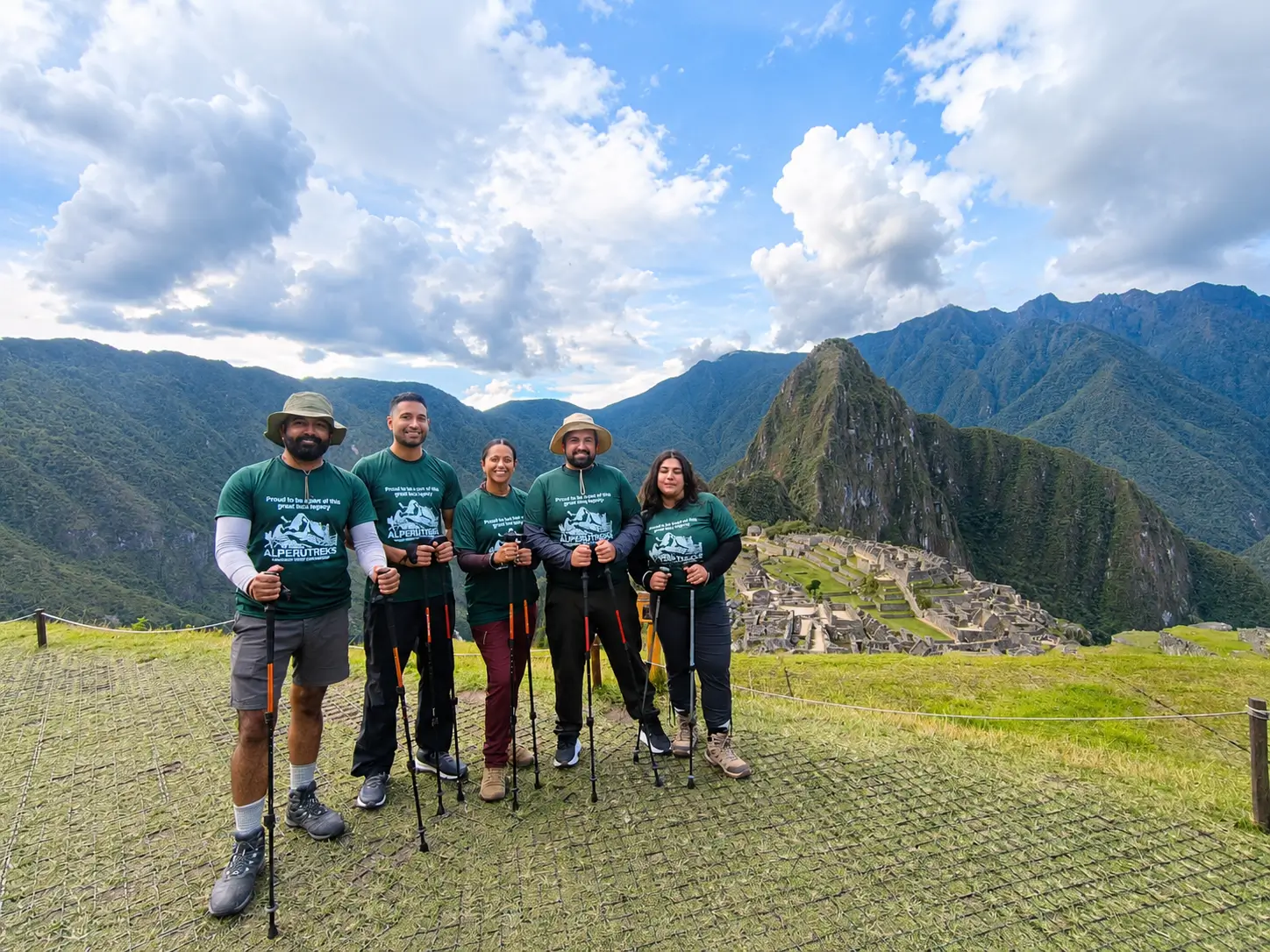

Machu Picchu stays open all of February, even though the Inca Trail is closed for the whole month. February brings the most rainy days of the year, about 20 days with some rain and 141 mm (5.6 in) on average, plus warm days near 25°C (77°F). It’s also one of the quietest months to see the citadel, and the daily cap sits at the regular 4,500 visitors all month.
If you can live with wet weather and you don’t need to arrive on foot via the Inca Trail, February offers something the dry season can’t: a calmer, greener Machu Picchu. Here’s how to decide, and how to plan around the rain. For a year-round overview, see our guide to the best time to visit Machu Picchu.
February at Machu Picchu at a Glance
| What you need to know | February |
|---|---|
| Average high / low | 25°C / 13°C (77°F / 55°F) |
| Average rainfall | 141 mm (5.6 in) |
| Days with some rain | About 20 (the most of any month) |
| Daily sunshine | About 5 hours |
| Daily visitor cap | 4,500 all month |
| Classic and Short Inca Trail | Closed February 1–28 |
| Treks that still run | Salkantay, Lares, and other alternative routes |
| Trains from Cusco | Bus + train “bimodal” service on all PeruRail departures |
Averages for the citadel at 2,430 m (7,970 ft). Individual years vary.
Why the Inca Trail Closes in February (and What Stays Open)
Every February, Peru’s Ministry of Culture closes the Inca Trail network, including the Classic 4-day route and the 2-day Short Inca Trail, for maintenance, cleaning, and ecological recovery. No permits are issued. The trail reopens on March 1. Our page on the Inca Trail in February explains the closure in detail.
What doesn’t close:
- The Machu Picchu citadel, open daily with timed entry
- Trains from Cusco and Ollantaytambo to Aguas Calientes
- Huayna Picchu and Machu Picchu Mountain, bookable with the right ticket
- Alternative treks such as the Salkantay Trek in 5 days and the Lares Trek in 4 days, which don’t need Inca Trail permits
Salkantay crosses a high pass that can be cold, muddy, or snowy in February, so it suits fit hikers who accept rough conditions. Lares stays lower and passes through Andean weaving communities, which makes it a gentler option in the wet season. Our roundup of alternatives to the Inca Trail compares them side by side.

What the Weather Is Like at Machu Picchu in February
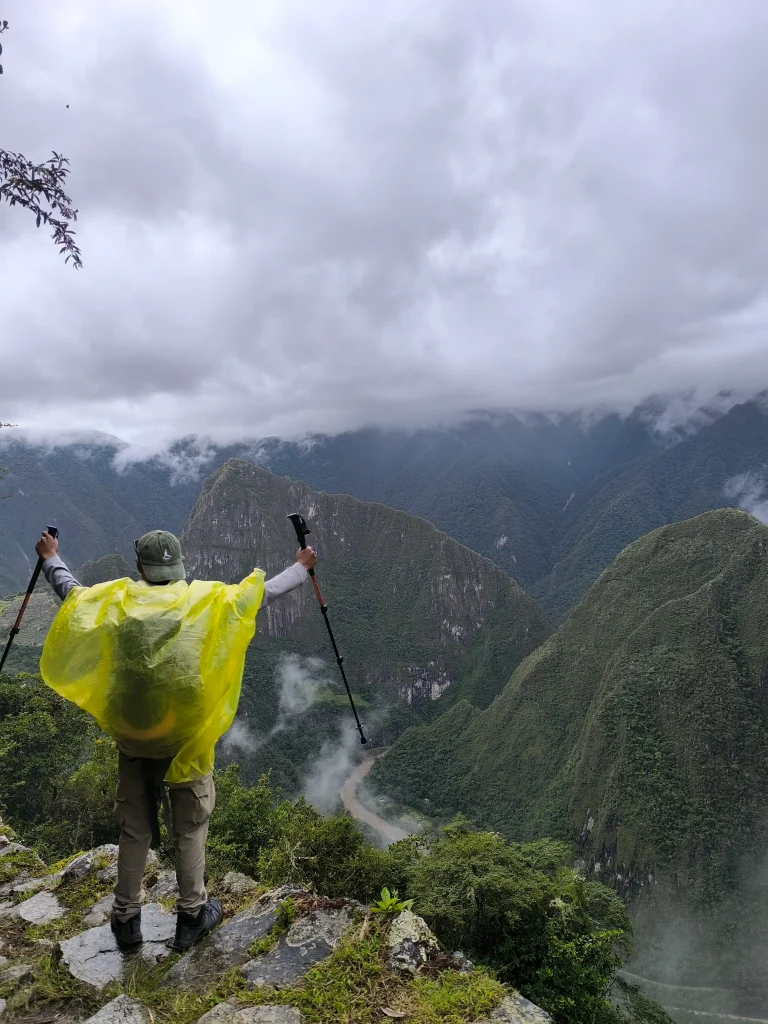
February is the rainiest month by number of wet days, while March edges it slightly in total rainfall. In practice, that means you should plan for rain at some point during your visit. Showers often come and go, and cloud can shroud the ruins and Huayna Picchu, then clear for a short window.
The upside is the light. When the cloud breaks, the terraces glow under soft, diffused light, and the surrounding mountains turn a deep green you won’t see in July. Orchids and other cloud-forest plants are in full growth.
The downsides are real:
- Slippery granite steps along every circuit
- Limited long-range views for parts of the day
- Heavier rain bursts that can soak an unprepared visitor in minutes
How Busy Is Machu Picchu in February?
February is consistently one of the least crowded months at the citadel. The Inca Trail closure means no trekker groups arrive through the Sun Gate. Most North American and European travelers avoid the peak of the wet season, and the cap sits at 4,500 all month, compared with 5,600 during high season.
That said, tickets for specific slots still sell out on some days, especially early-morning entries and mountain climbs. In early February, Cusco hosts Carnival celebrations (in 2027, the main days fall on February 7 and 9), and the city gets lively with water fights, music, and local visitors. Expect to get splashed in the streets if you’re in Cusco that weekend.
Tickets and Routes for a February Visit
Machu Picchu runs on three circuits and 10 routes, each with a fixed one-way path and hourly time slots. Our guide to the Machu Picchu circuits breaks down what you’ll see on each.
For 2027, foreign adults should budget about:
- S/163 (about US$47) for the standard routes, including the S/11 SERNANP conservation fee
- S/211 (about US$61) for routes with Huayna Picchu, Machu Picchu Mountain, or the Great Cavern
Buy only through the official platform, tuboleto.cultura.pe, or through an authorized agency. Enter your name and passport number exactly as printed, because they’re checked at the gate. Our guide on how to buy Machu Picchu tickets covers each step.
February-specific note: seasonal routes such as the Sun Gate (1-C) and Inca Bridge (1-D) are tied to high-season dates, so they’re generally not part of a February visit. Focus on circuits 2 and 3 for the most complete walk through the urban sector and temples.
Getting There in February
From January to April, all PeruRail departures from Cusco run as bimodal services: a bus from Wanchaq Station to the Sacred Valley, then the train to Aguas Calientes. Many travelers find it simpler to spend a night in the Sacred Valley and board in Ollantaytambo, which cuts early wake-ups and gives you time to explore the valley. Our Sacred Valley guide explains what to see along the way.
Rain-related track inspections and landslides can delay or reschedule trains in the wet season. Build in a buffer day before any onward flight. Our guide to getting to Machu Picchu from Cusco compares train classes, bus routes, and timing.
Pros and Cons of Machu Picchu in February
Pros
- One of the quietest months of the year at the citadel
- Lush landscapes and atmospheric cloud
- Easier availability for hotels and trains than in peak season
- Warm daytime temperatures
Cons
- Highest number of rainy days
- Inca Trail and Short Inca Trail are fully closed
- Views can be obscured for part of your visit
- Greater chance of transport delays
- Fewer routes on sale than in high season
Who Should Visit Machu Picchu in February?
February works well for:
- Travelers whose only window is February (university breaks, for example)
- Visitors who prefer fewer people over perfect weather
- Photographers who like moody, cloud-wrapped scenes
- Trekkers happy to take Salkantay or Lares instead of the Inca Trail
Consider another month if:
- Hiking the Classic Inca Trail is your priority. March, the following month, reopens it.
- You have only one day and want the clearest possible views
- Slippery steps worry you on Huayna Picchu or Machu Picchu Mountain

What to Pack for February
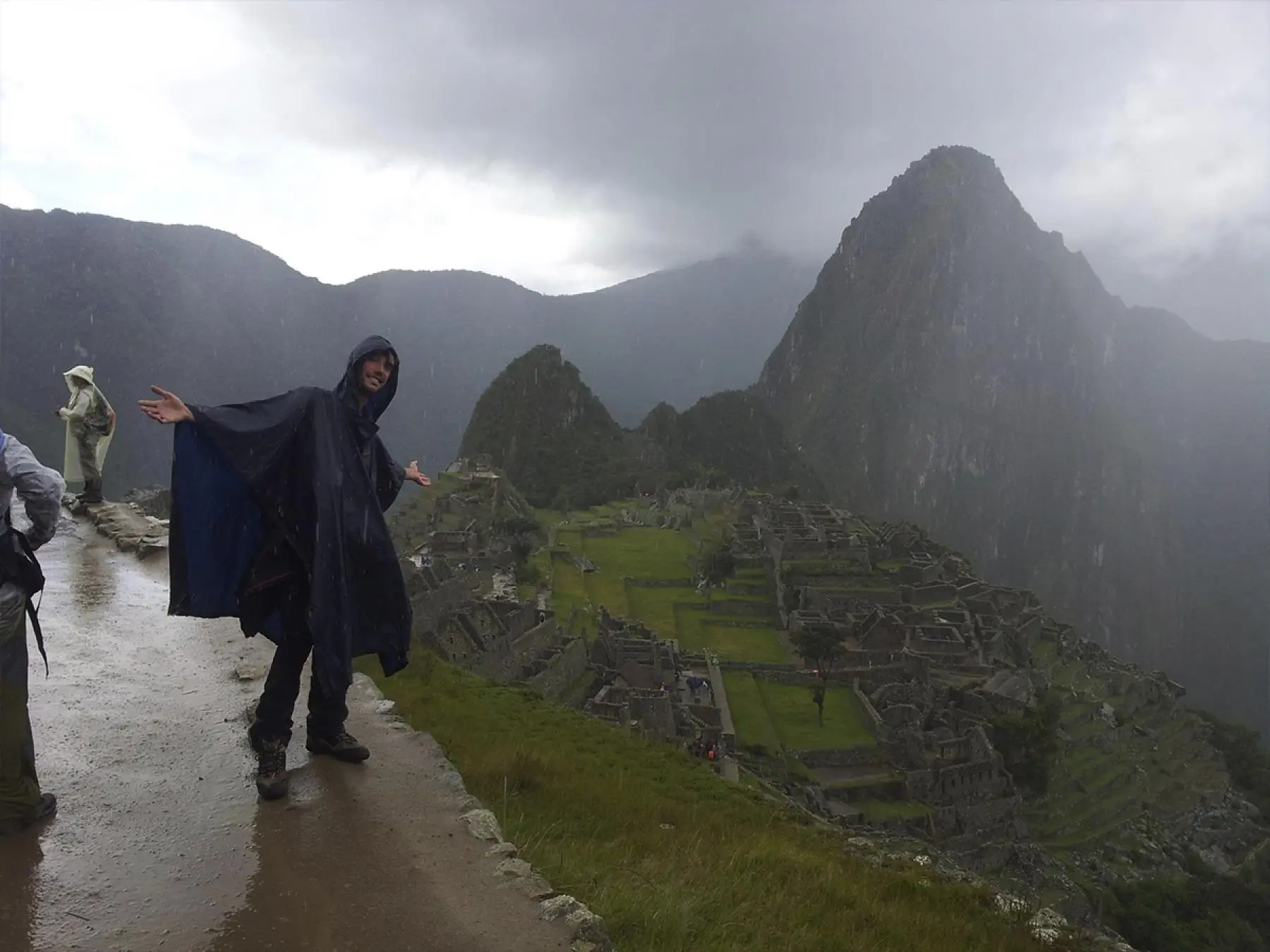
- Waterproof jacket and a poncho large enough to cover your daypack
- Water-resistant hiking shoes with good tread
- Quick-dry pants and shirts, plus one warm layer for Cusco’s evenings
- Sunscreen and a hat, because the UV index stays 11+ even through cloud
- Insect repellent for Aguas Calientes and the lower parts of the site
- A waterproof pouch for your passport and ticket
Our Peru packing guide covers layering for Cusco’s altitude and cold nights.
Practical Tips for a February Trip
- Choose a morning entry and stay flexible. If cloud is thick at the first viewpoint, keep walking. Conditions often change within the hour.
- Spend time in the Sacred Valley. It sits lower than Cusco and gives you an easier start while you adjust to the altitude. If you arrive feeling unwell, read our advice on altitude sickness in Cusco.
- Keep a buffer day. Don’t schedule Machu Picchu the day before an international flight.
- Consider a guided package. A Cusco and Machu Picchu tour over 4 days handles the train, bus, tickets, and guide, so a rescheduled train is someone else’s problem to solve.
Frequently Asked Questions
Yes. The citadel is open every day in February. Only the Inca Trail network, including the Short Inca Trail, closes for the month.
Not on the Inca Trail, which is closed February 1–28. The Salkantay and Lares treks run in February and connect with the train to Aguas Calientes.
It has the most rainy days, about 20 on average. March has slightly higher total rainfall, at about 151 mm (5.9 in), versus 141 mm (5.6 in) in February.
Yes. February is one of the least crowded months, with a regular cap of 4,500 visitors a day and no Inca Trail groups arriving.
The Inca Trail reopens on March 1 each year.