
If you’re planning the trip of a lifetime to Peru, you’ve probably already discovered that you can’t just show up at Machu Picchu and walk in. Learning how to buy Machu Picchu tickets the right way — before you land in Peru — is the single most important step in your entire itinerary.
Every year, thousands of travelers arrive in Cusco only to find out that the circuit they wanted, or even the entire day they wanted, is sold out. The good news? With the right information, buying your Machu Picchu tickets 2026 is straightforward, and in this guide, we’ll walk you through exactly how it works, what it costs, and the insider tips only a local agency can give you.
Why Machu Picchu Requires Advance Tickets
Machu Picchu isn’t a typical tourist attraction you can visit on a whim. It’s a fragile 15th-century Inca citadel and UNESCO World Heritage Site sitting above the Sacred Valley, and Peru’s Ministry of Culture strictly limits daily visitor numbers to protect it.
Depending on the season, only 4,500 to 5,600 visitors are allowed per day, split across timed entry slots and specific walking circuits. This means:
- You cannot buy a ticket at the entrance gate — there is no box office at Machu Picchu itself.
- Tickets are tied to a specific date, time, and circuit — no walking around freely.
- Popular circuits and the Huayna Picchu hike sell out months in advance during high season.
Understanding this system upfront is what separates a smooth trip from a stressful scramble in Aguas Calientes.
How to Buy Machu Picchu Tickets Online (Step-by-Step)
Here’s exactly how to buy Machu Picchu tickets through the official government channel.
1. Go to the Official Ticketing Website
The only official platform is tuboleto.cultura.pe, run directly by Peru’s Ministry of Culture. Be cautious: several unofficial-looking websites mimic the real one and charge inflated prices. Always type the URL directly rather than clicking through an ad or a random search result.
2. Choose Your Visit Date
Select the date you’d like to visit. The calendar shows real-time availability — dates that are completely full appear greyed out, while dates with at least one open circuit remain selectable.
3. Select Your Circuit
This is the most important decision in the entire process, because you cannot switch circuits once inside — park rangers check your ticket at multiple control points. We’ll break down the circuit options below.
4. Choose Your Entry Time
Entries are grouped into morning and afternoon time blocks. Morning slots (especially 6:00–8:00 AM) are the most requested because of cooler temperatures and better light for photos.
5. Enter Passport Information
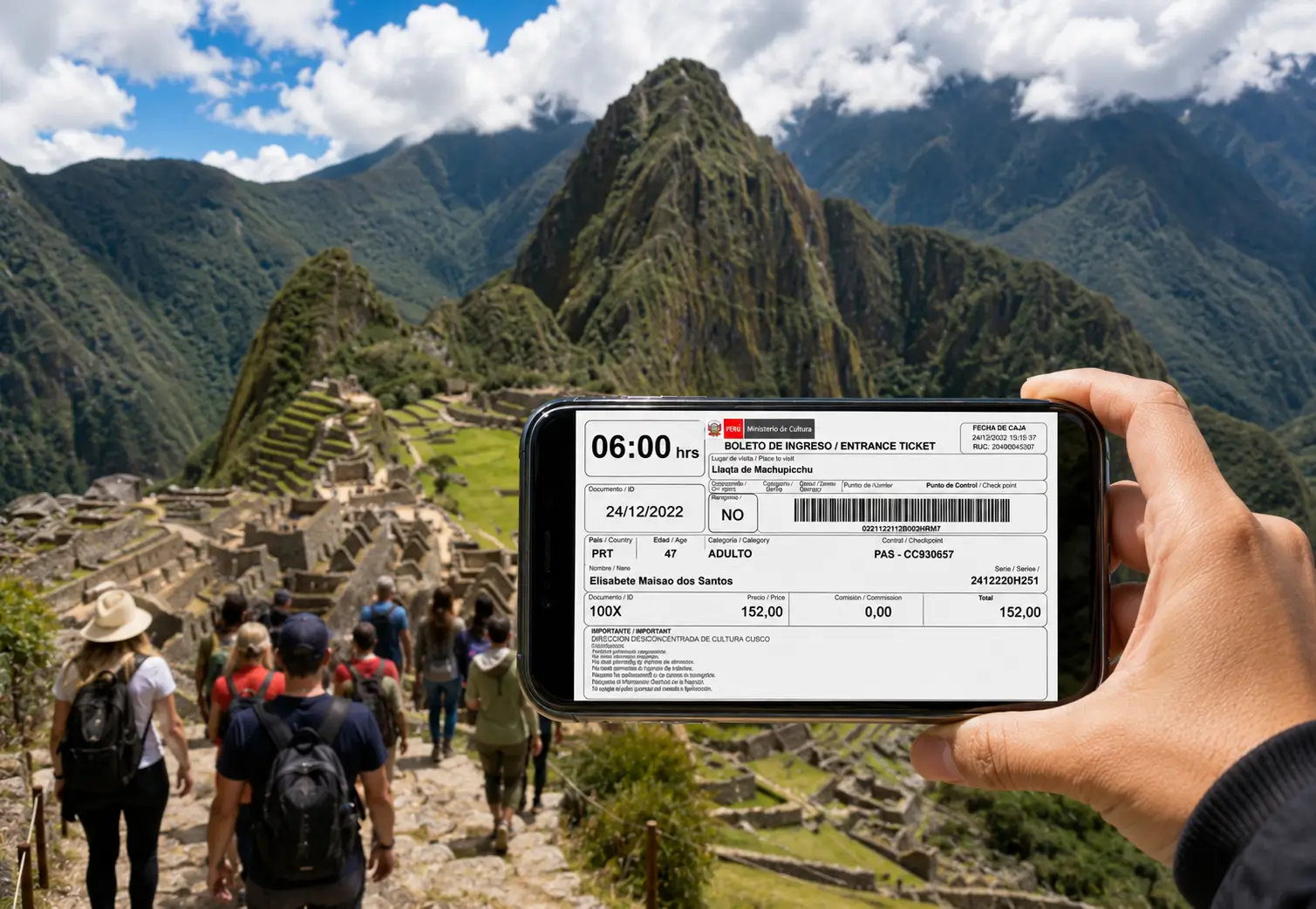
You’ll need to enter the exact passport number you plan to travel with. This is checked against your physical passport at the entrance gate, so double-check it before submitting.
6. Pay and Download Your Ticket
Payments are typically processed in US dollars via credit card. Save (and print, if possible) your PDF ticket — you’ll need to show it along with your passport on entry day.
Machu Picchu Entrance Fee and Ticket Price Breakdown (2026)
The Machu Picchu entrance fee is set by the Peruvian government and is the same whether you buy online or through an authorized agency (agencies simply add a small service fee for handling the booking on your behalf).
Here’s a general idea of the Machu Picchu ticket price for 2026, though we recommend confirming exact current rates on the official site since small adjustments happen periodically:
- Standard citadel circuits (foreign adult): approximately $40–$50 USD
- Circuit + Huayna Picchu Mountain: approximately $53–$62 USD
- Circuit + Machu Picchu Mountain: approximately $53–$62 USD
- Foreign children (under 18): discounted rate
- Students with a valid ISIC card: discounted rate (bring the physical card and matching passport)
Note: Prices are quoted in Peruvian Soles on the official platform and converted to USD by your card issuer, so the final charge can vary slightly with the exchange rate.
Understanding the Machu Picchu Circuits
As of 2026, Machu Picchu operates under a circuit system designed to control visitor flow and protect the ruins from erosion.
Circuit 1 – The Panoramic Circuit
Covers the upper terraces and the classic postcard viewpoint by the Guardian’s House. Some routes within this circuit connect to the Sun Gate (Inti Punku) or the Inca Bridge, both closed during part of the low season (mid-October through late December).
Circuit 2 – The Classic Circuit
The most popular option and usually the first to sell out. It combines panoramic viewpoints with a walk through the main archaeological sectors — the Temple of the Sun, the Sacred Plaza, and the Intihuatana stone. This is generally the best pick for first-time visitors.
Circuit 3 & 4 – Lower and Alternative Routes
Cover the lower agricultural terraces and residential sectors, offering a quieter experience with fewer crowds, though without the classic elevated postcard view.
Huayna Picchu and Machu Picchu Mountain (Add-On Hikes)
These require a separate, combined ticket (citadel + mountain) and have their own strict daily caps:
- Huayna Picchu: only 400 permits per day — the steepest and most sought-after hike, with cable-assisted sections near the summit.
- Machu Picchu Mountain: a higher, longer hike with fewer crowds and sweeping views over the whole valley.
Key Travel Facts for U.S. Visitors
- Altitude: Machu Picchu sits at roughly 7,970 ft (2,430 m) above sea level — noticeably lower than Cusco (11,150 ft), which helps with acclimatization.
- Climate: Warm and humid, generally between 50–70°F (10–21°C), with cooler mornings and possible afternoon mist.
- High season: June 19 – November 2 (plus holidays like Easter Week and New Year’s) — clearer skies, bigger crowds.
- Low season: November 3 – June 18 — more rain, but noticeably fewer visitors and easier last-minute availability.
- Difficulty: The standard circuits are moderate, with stone stairs and uneven paths; Huayna Picchu and Machu Picchu Mountain are strenuous.
- What to bring: Original passport, rain jacket, sun protection, refillable water bottle, comfortable hiking shoes, and small cash in Soles for restrooms in Aguas Calientes.
Getting to Machu Picchu: The Logistics Behind Your Ticket
Your entrance ticket is only one piece of the puzzle. To actually reach the citadel, you’ll also need:
- Train tickets from Ollantaytambo (or Poroy, near Cusco) to Aguas Calientes, booked separately through PeruRail or Inca Rail.
- Ground transport from Cusco to the Ollantaytambo train station, usually a 1.5–3 hour drive.
- Consettur shuttle bus tickets from Aguas Calientes up to the entrance gate — a completely separate purchase from your entry ticket, priced around $12–13 USD round trip. Alternatively, hikers can walk up the Hiram Bingham Road in about 80 minutes at no cost.
Because these pieces need to line up with your entry time slot, it’s easy to see why so many travelers prefer to have a local agency coordinate the full chain of bookings rather than juggling three separate platforms.
Expert Tips: What a Local Agency Knows That You Won’t Find Online
- Book Huayna Picchu 3–6 months ahead. It is the single fastest ticket to sell out, especially for May–September travel dates.
- Aim for an 8:00–9:00 AM entry. Early enough to beat the midday crowds, late enough to avoid the morning fog that can obscure the classic photo.
- There is zero re-entry. Once you exit the citadel, your ticket is closed — plan bathroom breaks and water before entering, since facilities are outside the gate.
- Acclimatize in Cusco first. Spending 1–2 nights in Cusco or the Sacred Valley before your Machu Picchu day significantly reduces altitude sickness risk, since Cusco sits over 3,000 ft higher than the ruins themselves.
- Refresh the calendar if a date looks sold out. Cancellations get released periodically, and dates can reopen minutes later.
- Never buy from street vendors or unofficial resellers in Aguas Calientes or Cusco promising “guaranteed” last-minute tickets — these are frequently invalid or overpriced.
- Keep your printed ticket and passport together. Rangers scan the QR code and verify it against your physical passport simultaneously at the gate.
Final Thoughts: Make Your Machu Picchu Trip Stress-Free
Now that you know how to buy Machu Picchu tickets, the process should feel a lot less intimidating. The key is simple: book early, choose the right circuit for your fitness level and interests, and make sure your train and bus logistics line up with your entrance time.
Between the Machu Picchu entrance fee, train tickets, shuttle buses, and circuit selection, planning a 2026 visit involves more moving parts than most travelers expect — and a single mismatched booking can throw off your whole day.
That’s exactly where Ali Peru Treks comes in. Our local team handles the entire booking chain for you — entrance tickets, trains, transport, and expert guides — so you can focus on enjoying one of the New Seven Wonders of the World instead of navigating government websites.
Ready to plan your trip? Contact Ali Peru Treks today to get a personalized quote and secure your Machu Picchu tickets for 2026 with zero stress.