Contents
- 1 Introduction: Why the Inca Trail 4 Days Is Still the World’s Greatest Trek
- 2 What Is the Classic Inca Trail?
- 3 Classic Inca Trail Itinerary: Day-by-Day Breakdown
- 4 Inca Trail Permits 2026: Everything You Need to Know
- 5 Best Time to Hike the Inca Trail
- 6 Inca Trail Difficulty: Are You Ready?
- 7 Cost of Inca Trail 4 Days: What to Expect
- 8 Inca Trail Packing List: What to Bring
- 9 Expert Tips: What Only a Local Agency Will Tell You
- 9.1 1. Acclimatize Before You Trek — No Exceptions
- 9.2 2. Train on Stairs, Not Flat Ground
- 9.3 3. The Dead Woman’s Pass Is Mental, Not Just Physical
- 9.4 4. Tip Your Porters — They Earn It
- 9.5 5. Don’t Hike the First Day in Brand New Boots
- 9.6 6. Bring More Soles (Peruvian Currency) Than You Think
- 9.7 7. The Control Gate Opens at 5:30 AM — Not Before
- 9.8 8. Book Your Huayna Picchu Tickets Separately
- 10 Inca Trail Booking 2026: How to Reserve Your Spot
- 11 Machu Picchu 4-Day Trek: Frequently Asked Questions
- 12 Why Book With Ali Peru Treks?
- 13 Conclusion: Start Planning Your Inca Trail 4-Day Adventure Today
Introduction: Why the Inca Trail 4 Days Is Still the World’s Greatest Trek
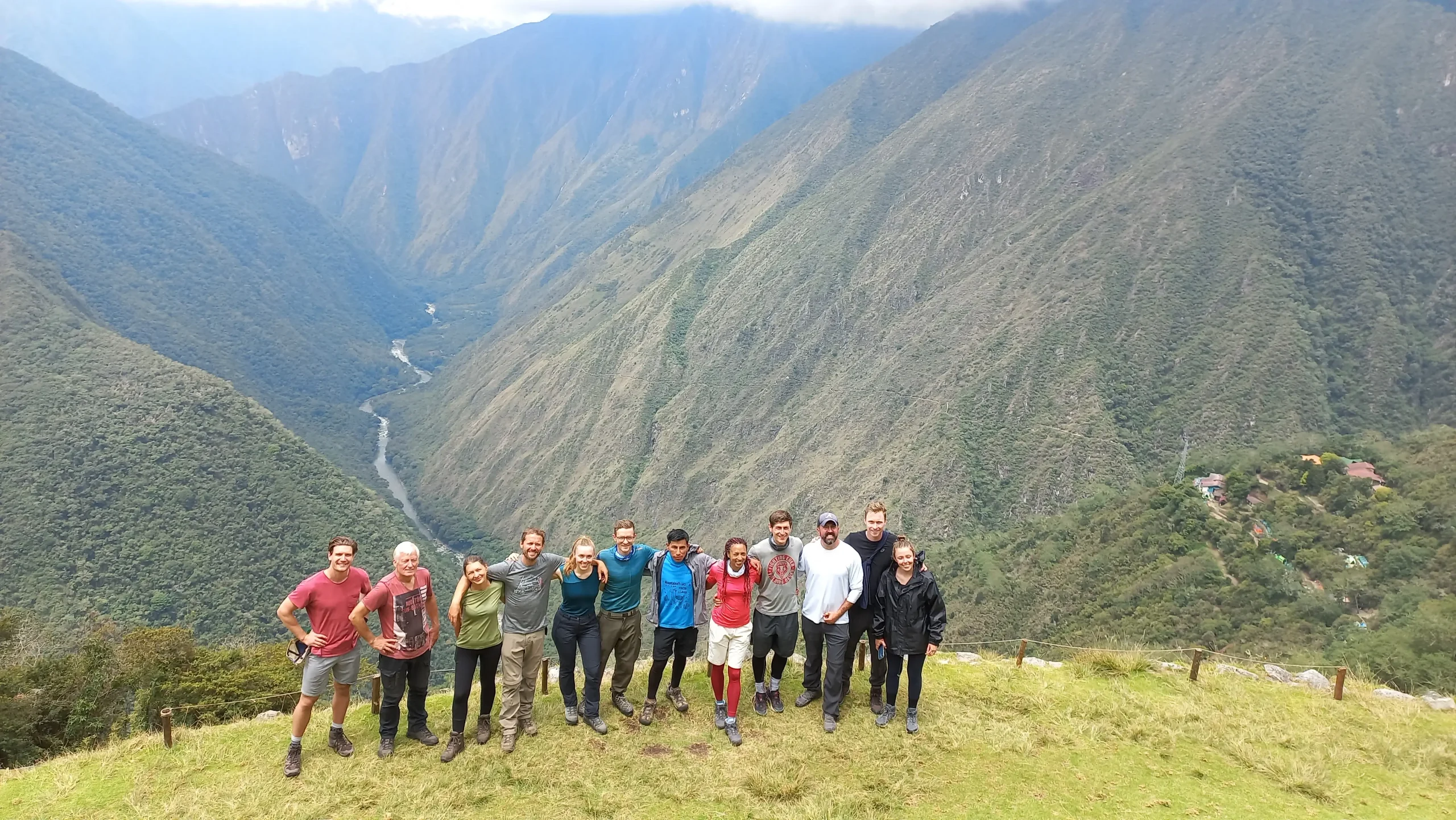
Imagine waking up before dawn, standing at the Sun Gate — Inti Punku — with a sea of clouds slowly dissolving below your feet to reveal the ancient citadel of Machu Picchu. No bus. No crowds. Just you, the mountain wind, and one of the most breathtaking views on Earth.
That moment is the reason millions of travelers from the United States and around the world put the Inca Trail 4 days on their bucket list every year.
This isn’t just a hike. The classic Inca Trail to Machu Picchu is a 26-mile (43 km) journey through living Inca history — past cloud forests, alpine tundra, and over a dozen ancient ruins — all leading to one of the New Seven Wonders of the World.
But here’s the thing most people don’t know: booking the Inca Trail in 2026 requires planning months in advance. Permits are strictly limited by the Peruvian government, and they sell out fast — sometimes within hours of release.
This complete guide covers everything you need to know: the classic Inca Trail itinerary, what the trek is really like day by day, how to get your Inca Trail permits for 2026, what to pack, how much it costs, and tips that only a local agency would know.
Let’s get started.
What Is the Classic Inca Trail?
The classic Inca Trail is the original, most celebrated trekking route to Machu Picchu. It follows the same ancient stone path that Inca messengers — called chasquis — used to travel across the Inca Empire (Tawantinsuyu) hundreds of years ago.
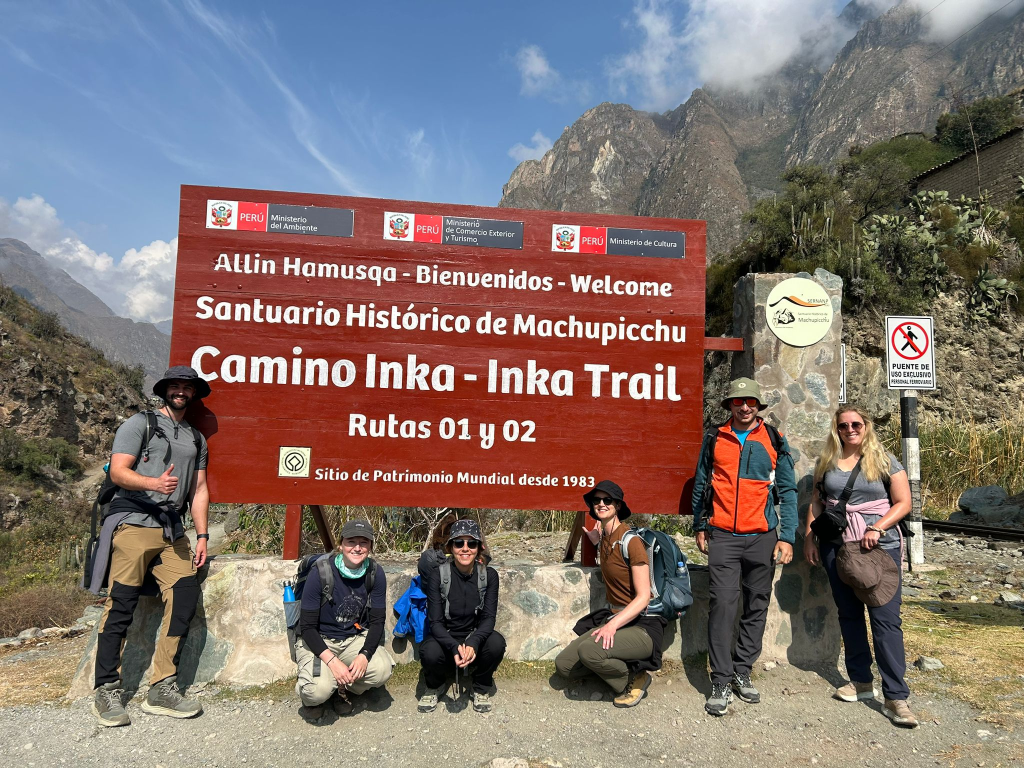
The trail begins at Km 82 (the official starting point near Ollantaytambo) in the Sacred Valley, cuts through the high Andes, and ends at the iconic Sun Gate (Inti Punku) with a dramatic first view of Machu Picchu below.
Key facts at a glance:
- Total Distance: 26 miles / 43 km
- Starting Elevation: 8,924 ft / 2,720 m (Km 82)
- Highest Point: Dead Woman’s Pass (Abra de Huarmihuañusca) — 13,796 ft / 4,215 m
- End Point: Machu Picchu — 7,972 ft / 2,430 m
- Duration: 4 days / 3 nights
- Group Size Limit: Max 500 people per day (including guides and porters)
- Difficulty Level: Moderate to Challenging
The trail is legally restricted — you can only hike it with a licensed, government-authorized tour operator. Independent hiking is not permitted.
Classic Inca Trail Itinerary: Day-by-Day Breakdown
Day 1 — Km 82 to Wayllabamba (The Warm-Up)
Distance: 7.5 miles / 12 km Elevation gain: +1,312 ft / +400 m Estimated hiking time: 5–6 hours Difficulty: Easy to Moderate
Your 4-day Inca Trail tour begins early in the morning. You’ll be picked up from your hotel in Cusco (around 5:00–5:30 AM) and driven roughly 2 hours to the trail’s official starting point at Km 82 (Piscacucho), located in the Urubamba Valley.
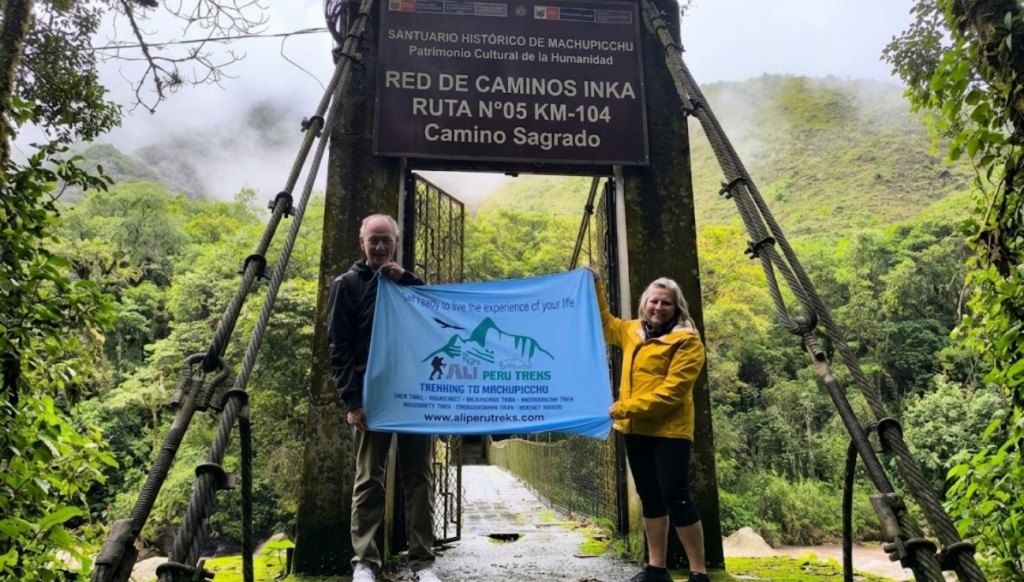
After crossing the Urubamba River on a footbridge, you’ll officially step onto the ancient Inca stone path and check in your permit at the control gate.
Highlights of Day 1:
- Llactapata ruins — An impressive Inca agricultural complex with panoramic views of the Urubamba Valley, about 2 hours into the trail
- Cusichaca Valley — A lush, green valley with terraced fields still in use today
- Wayllabamba village — Your first campsite, at 9,843 ft / 3,000 m, set in a beautiful woodland meadow
Day 1 is considered the easiest day on the trail — ideal for stretching your legs, getting used to the altitude, and getting to know your fellow trekkers. Your team of licensed porters and chefs will have already set up camp and prepared dinner by the time you arrive.
Local Tip: Don’t overdo it on Day 1, even if you feel great. The hardest day is tomorrow. Drink at least 2–3 liters of water, avoid alcohol, and go to bed early.
Day 2 — Wayllabamba to Pacaymayo (The Hardest Day)
Distance: 7.5 miles / 12 km Elevation change: From 9,843 ft to 13,796 ft, then down to 11,972 ft Estimated hiking time: 8–10 hours Difficulty: Challenging
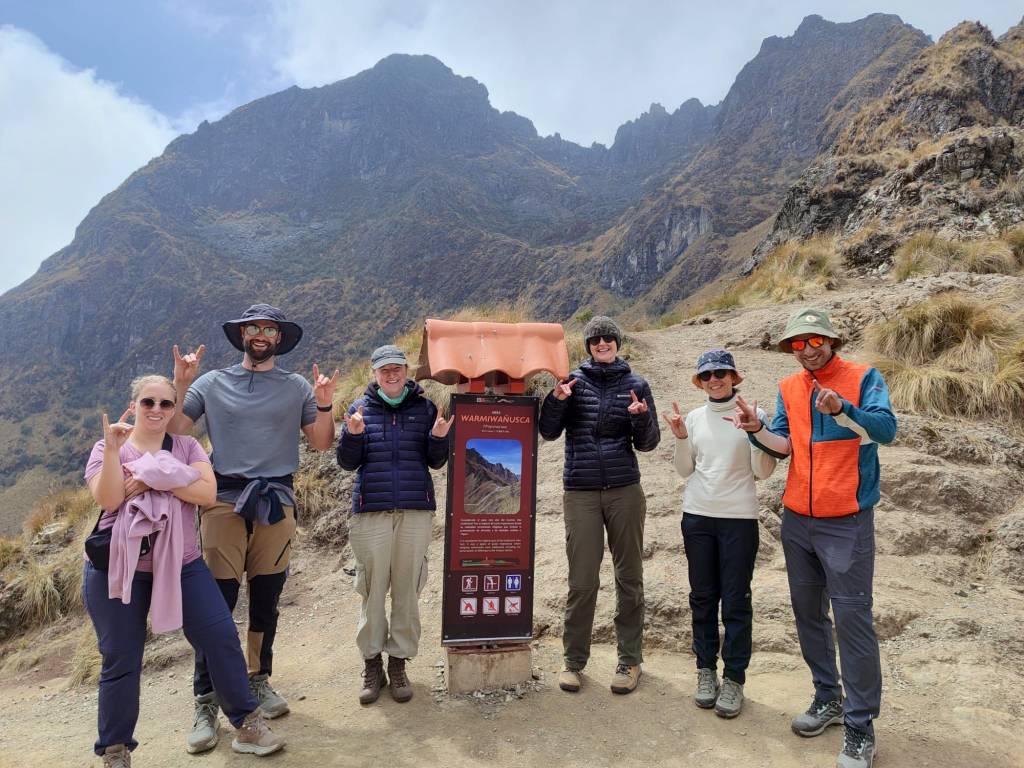
This is the day most trekkers talk about for years. Day 2 includes the infamous Dead Woman’s Pass (Abra de Huarmihuañusca), the highest point on the entire trail at 13,796 ft / 4,215 m.
The ascent from Wayllabamba is relentless — roughly 4,500 ft / 1,375 m of vertical gain over about 4 miles. It’s steep, rocky, and at altitude, every step requires focused breathing. But it’s also profoundly beautiful.
Highlights of Day 2:
- Dead Woman’s Pass (Abra de Huarmihuañusca) — The summit at 13,796 ft is an emotional milestone. Clear skies offer jaw-dropping views of surrounding Andean peaks
- Runkurakay Pass (Second Pass) — At 12,989 ft / 3,960 m, the second high pass comes just a few hours after the first
- Runkurakay ruins — A circular Inca watchtower with a commanding view of the valley below
- Pacaymayo campsite — Your overnight stop, nestled in a high valley at 11,972 ft / 3,650 m
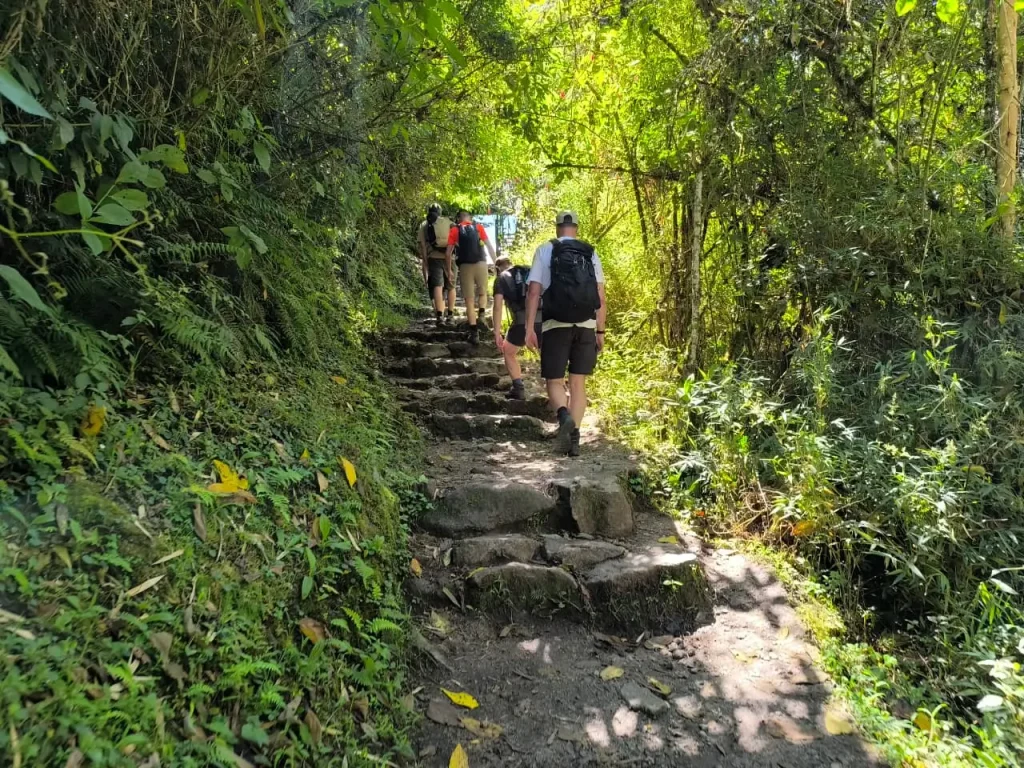
The descent from Dead Woman’s Pass to Pacaymayo is steep on ancient Inca stone steps. Trekking poles are highly recommended here.
Local Tip: Start Day 2 as early as 5:30 AM. Most groups begin the Dead Woman’s Pass ascent before the sun has fully risen — the cool morning air makes the climb significantly more manageable.
Day 3 — Pacaymayo to Wiñay Wayna (The Scenic Reward)
Distance: 10 miles / 16 km Elevation: 11,972 ft to 8,858 ft (gradual descent) Estimated hiking time: 7–9 hours Difficulty: Moderate
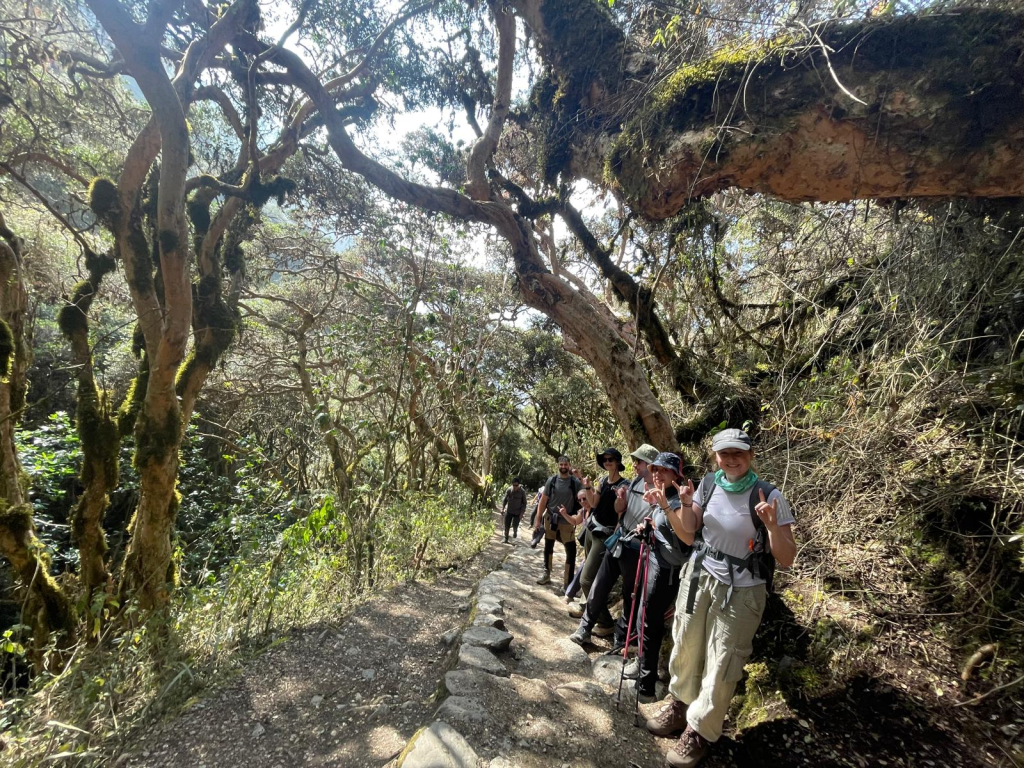
Day 3 is when the Inca Trail truly reveals its magic. You’ve conquered the hardest climbs — now the trail takes you through the cloud forest ecosystem, past cascading orchids and mossy stone walls, and to some of the most spectacular ruins on the entire route.
Highlights of Day 3:
- Sayacmarca ruins — A dramatic clifftop fortress with near-vertical walls. Meaning “inaccessible town,” it’s easy to see why the Incas chose this location
- Phuyupatamarca — “Town above the clouds” at 11,975 ft / 3,650 m — on a clear morning, this site offers the first distant view of Machu Picchu’s mountain peak
- Cloud forest descent — The trail drops steeply through subtropical cloud forest, with hundreds of species of orchids and hummingbirds
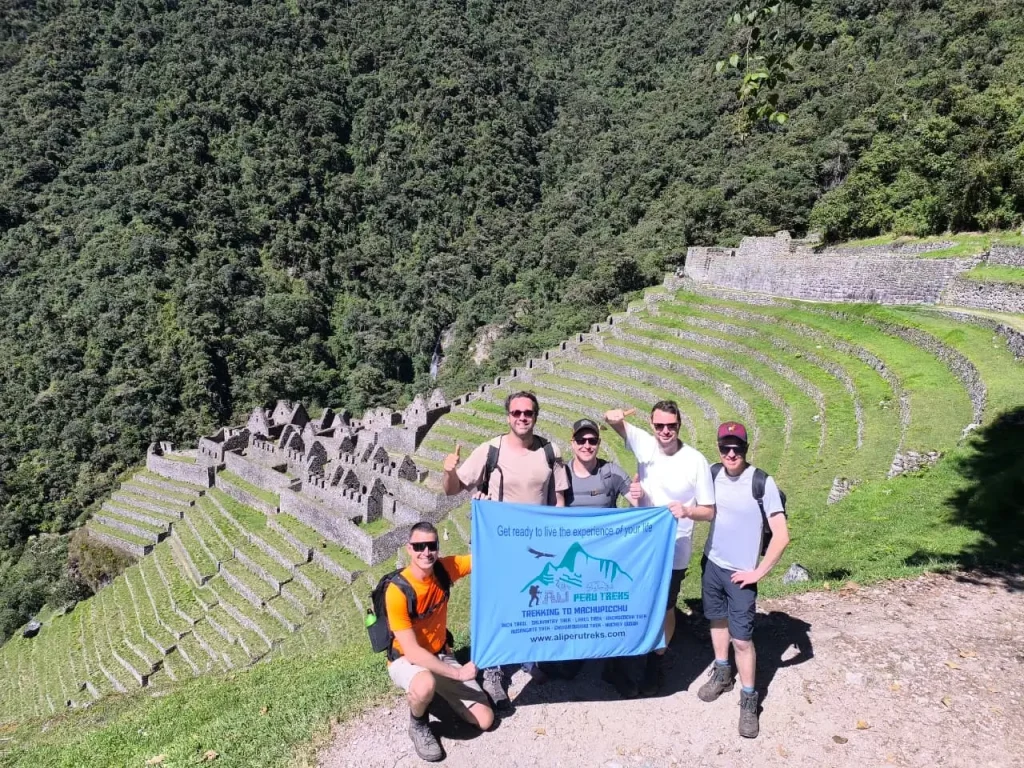
- Wiñay Wayna — Meaning “Forever Young” in Quechua, this is one of the most elaborate Inca sites on the trail. Stunning terraced agricultural platforms and ceremonial fountains. Your final campsite is located nearby, at around 8,858 ft / 2,700 m
Wiñay Wayna is one of the largest and most important Inca sites on the entire trail. Arrive before the afternoon clouds roll in for the best views and photos.
Local Tip: Bring a headlamp on Day 3 morning. Groups often depart Wiñay Wayna at 4:00–4:30 AM on Day 4 to reach the Sun Gate in time for sunrise — so the night before, you’ll want to have everything packed and accessible in the dark.
Day 4 — Wiñay Wayna to Machu Picchu (The Arrival)
Distance: 3 miles / 5 km Elevation change: Descent from 8,858 ft to 7,972 ft Estimated hiking time: 1.5–2 hours to Sun Gate; then time at Machu Picchu Difficulty: Easy (but emotional)
The final day begins in darkness. Groups leave camp at 4:00–4:30 AM to hike the last stretch through the cloud forest before reaching the Sun Gate (Inti Punku) at sunrise.
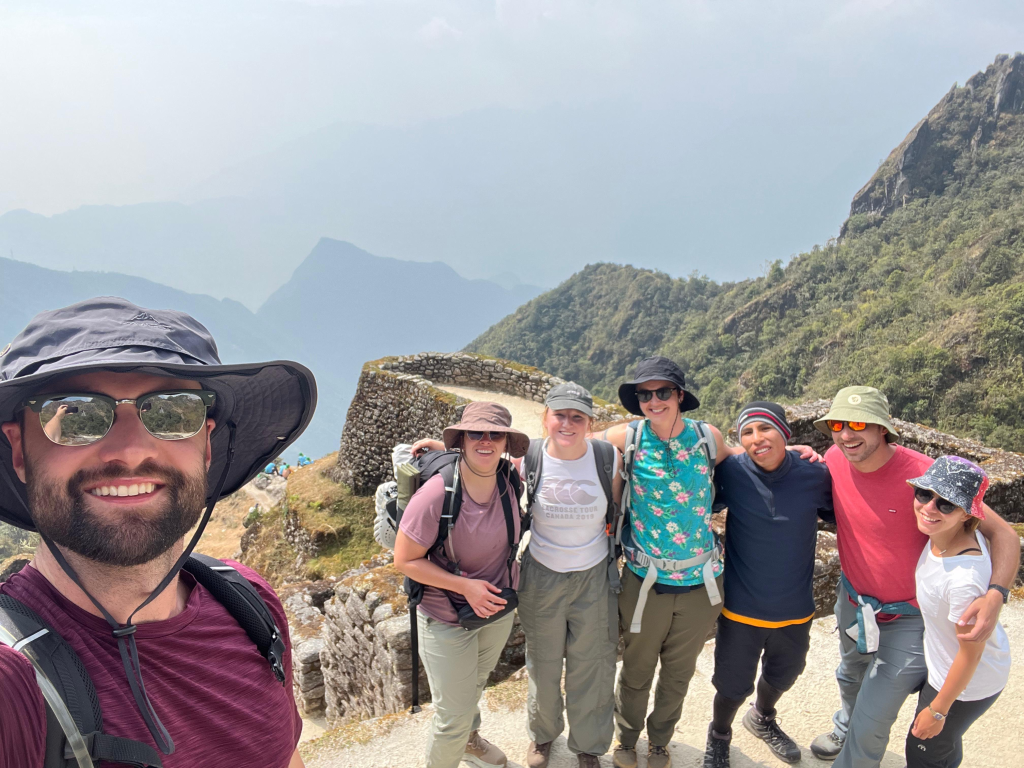
As the morning mist lifts, Machu Picchu appears below you — the citadel bathed in golden light, surrounded by emerald mountains on all sides. After three days of hiking, this moment is unforgettable.
After celebrating at the Sun Gate, you descend to explore Machu Picchu itself with your licensed guide. Your guide will lead you through the site’s key structures:
- The Temple of the Sun
- The Intihuatana (hitching post of the sun)
- The Temple of the Three Windows
- The agricultural terraces
- The Royal Tomb
After the guided tour, you’ll have free time to explore on your own or optionally hike up Huayna Picchu Mountain (pre-booked separately) or Machu Picchu Mountain for elevated views.
In the afternoon, you take the bus from Machu Picchu down to Aguas Calientes (the town at the base of the mountain), where you’ll have time to shower, eat, and celebrate. Then take a scenic train back to Cusco via Ollantaytambo.
Inca Trail Permits 2026: Everything You Need to Know
Why Permits Sell Out So Fast
The Peruvian Ministry of Culture limits the Inca Trail 4 days trek to 500 people per day — this includes trekkers, guides, porters, and support staff. In practice, that means around 200 tourist trekkers per day get to set foot on the trail.
For 2026, permits are expected to be released starting in October 2025 and will go on sale through licensed tour operators only. Individual travelers cannot buy permits directly — you must book through an authorized agency.
Key Permit Rules for 2026:
- Passport required: Your exact passport number is linked to your permit. Changes or transfers are not possible.
- No permit, no trail: If you show up without a permit, you will not be allowed past the control gate.
- High season (June–August): Permits for these months historically sell out within hours of release.
- Your operator handles the permit: When you book a 4-day Inca Trail tour, your agency secures the permit on your behalf.
- Book early: For peak season 2026, we recommend booking 6–10 months in advance.
Important: Only book through a government-licensed tour operator. Permit scams are a real issue — if someone offers you a “permit” without a tour package at a suspiciously low price, it is almost certainly fraudulent.
Best Time to Hike the Inca Trail
Peak Season: May – October (Dry Season) Recommended
The best time to hike the Inca Trail for most American travelers is during Peru’s dry season, from May through October.
- Weather: Clear skies, low chance of rain, excellent visibility
- Trail conditions: Dry stone paths make for safer, faster hiking
- Temperature: Days are warm (60–75°F / 15–24°C), nights can drop to 32–40°F / 0–4°C
- Crowds: This is peak season — trails and Machu Picchu will be busier, but the permit cap manages congestion effectively
- Best months: May, September, and October offer dry weather with fewer crowds than June, July, and August
Shoulder Season: April & November
Excellent times to hike with fewer crowds and reasonable weather. Expect some afternoon showers, but mornings are often clear.
Wet Season: December – March (Rainy Season) Not Recommended
The trail is closed every February for maintenance. During other wet season months, expect daily heavy rainfall, muddy paths, and limited mountain views. The trail is technically hikeable but significantly more challenging and less enjoyable.
For US travelers planning their first trip: The period from late May to early June is widely considered the sweet spot — dry weather, not yet peak-crowd July, and lush green scenery from the April rains.
Inca Trail Difficulty: Are You Ready?
The Inca Trail hike 4 days 3 nights is rated moderate to challenging. It is not a technical mountaineering route — there are no ropes or extreme scrambles. But it is a serious multi-day trek at high altitude, and underestimating it is the #1 mistake first-time hikers make.
Physical Demands:
- Cumulative elevation gain: 3,300 ft / 1,000 m
- Highest altitude: 13,796 ft / 4,215 m (Dead Woman’s Pass)
- Daily hiking: 5–10 hours per day on uneven stone terrain
Altitude & Acclimatization
This is the most important factor for US hikers. Cusco sits at 11,150 ft / 3,400 m, and the trail climbs significantly higher. Altitude sickness (Soroche) is a real risk for travelers arriving directly from sea-level cities like New York, Los Angeles, or Miami.
Our recommended acclimatization plan:
- Arrive in Cusco 2–3 days before your hike begins
- Day 1 in Cusco: Rest, drink coca tea (a traditional local remedy available everywhere), avoid alcohol
- Day 2: Light walk or Sacred Valley day tour at lower elevation (9,000 ft / 2,750 m)
- Day 3: Optional acclimatization hike near Cusco
- Day of Trek: You’ll feel noticeably better than your arrival day
Many travelers also visit Aguas Calientes (Machu Picchu town) before the trek — at just 6,693 ft / 2,040 m, it’s a great lower-altitude option for the night before starting.
Fitness Level Required:
You do not need to be an elite athlete, but you should be:
- Comfortable hiking 6–10 miles per day
- Able to climb stairs or hills for extended periods
- Free of serious cardiovascular or respiratory conditions
- Physically active in your daily routine (gym, running, hiking, cycling)
Cost of Inca Trail 4 Days: What to Expect
What’s Typically Included in a Standard Package:
Understanding the cost of Inca Trail 4 days is easier when you know what goes into a full-service tour.
| Included | Details |
|---|---|
| Inca Trail Permit | Required, limited — booked by your operator |
| Professional Licensed Guide | Bilingual English/Spanish |
| Porters | Carry camp equipment and food supplies |
| Camping Equipment | Tents, sleeping pads, dining tent |
| All Meals on Trail | Breakfast, lunch, dinner + snacks |
| Cook & Camp Staff | Dedicated chef team |
| Machu Picchu Entry | Included in most packages |
| Train Return to Cusco | Aguas Calientes → Ollantaytambo |
| Bus | Machu Picchu citadel ↔ Aguas Calientes |
| First Aid Kit | Emergency oxygen available |
Typical Price Range (2026):
- Budget/Standard: $550–$750 USD per person
- Mid-range: $750–$950 USD per person
- Premium/Luxury: $950–$1,400 USD per person
Note: Prices vary based on group size, service quality, equipment standards, and the number of porters per trekker. Always confirm exactly what is and isn’t included before booking.
What’s Usually NOT Included:
- Flights to Cusco
- Hotel in Cusco (pre/post trek)
- Tips for guides and porters (strongly encouraged — $20–50 USD per person is standard)
- Personal gear (sleeping bag, hiking poles, etc.)
- Travel insurance (strongly recommended)
- Optional extras: Huayna Picchu or Machu Picchu Mountain tickets
Inca Trail Packing List: What to Bring
Packing right for the classic Inca trail can make or break your experience. Here’s what experienced guides recommend:
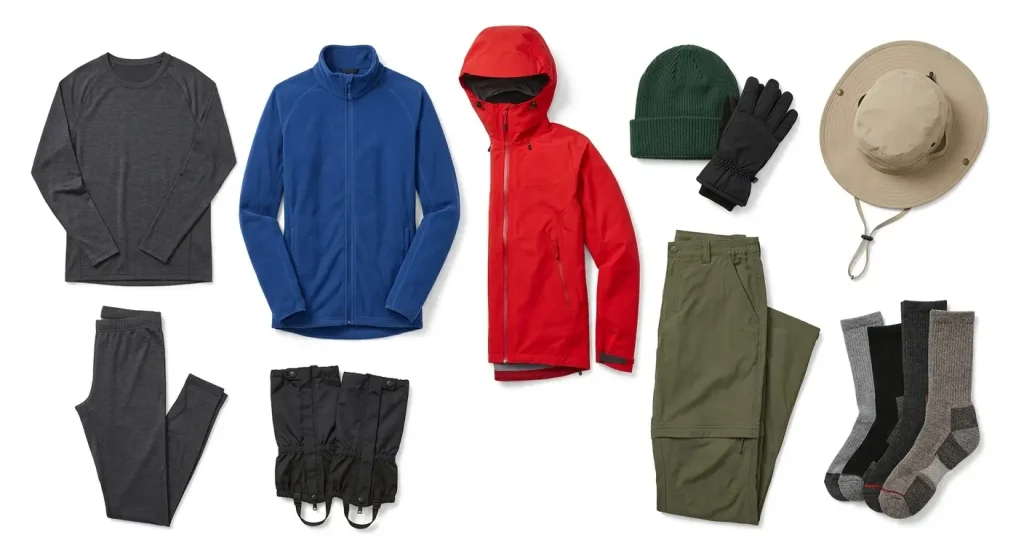
Clothing & Layers:
- Moisture-wicking base layers (tops and bottoms)
- Lightweight fleece or midlayer
- Waterproof, windproof jacket (essential — even in dry season)
- Comfortable hiking pants (convertible zip-off style are popular)
- Warm hat and gloves (for cold mornings and high passes)
- Sun hat or cap
- Thermal socks (3–4 pairs minimum)
- Gaiters (optional but useful in muddy conditions)
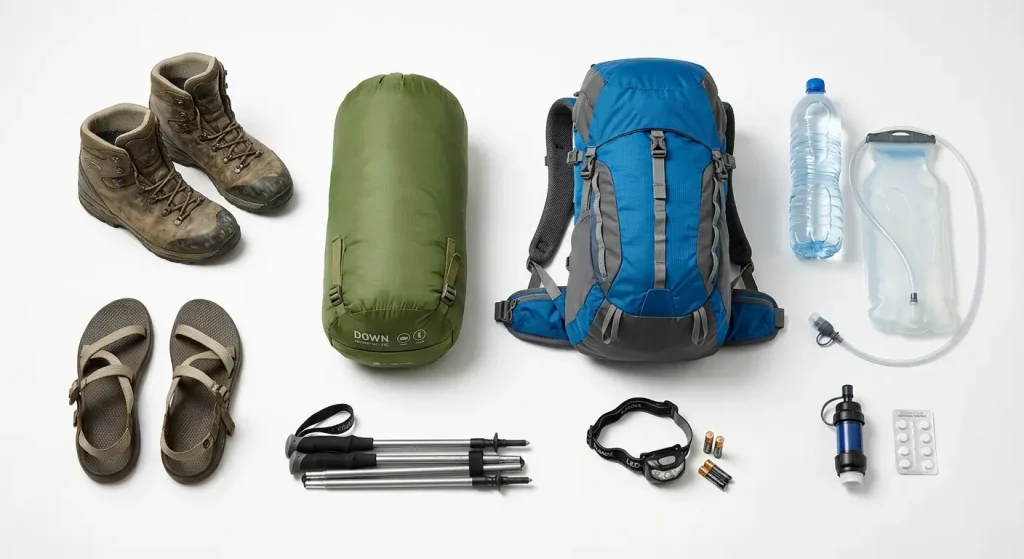
Footwear:
- Broken-in waterproof hiking boots with ankle support (this is critical — do NOT wear new boots)
- Camp sandals or lightweight shoes for evenings
Gear & Equipment:
- Quality sleeping bag (-10°C / 14°F rated recommended — rental available)
- Day pack (25–35L) for personal items during hiking
- Trekking poles (collapsible) — highly recommended, especially for Day 2 descent
- Headlamp + extra batteries
- Water bottles or hydration bladder (3L capacity)
- Water purification tablets or filter
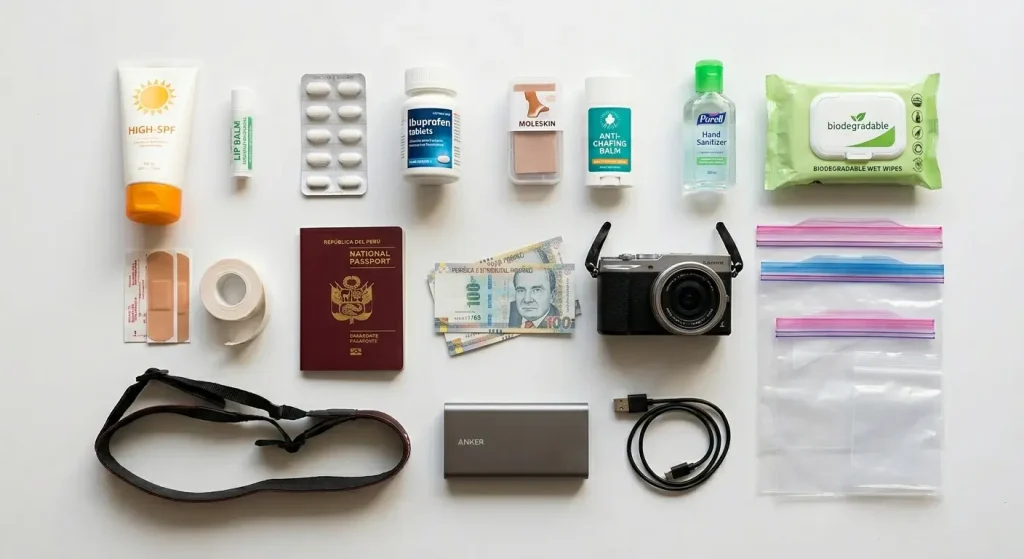
Health & Hygiene:
- High-SPF sunscreen (UV is intense at altitude)
- Lip balm with SPF
- Altitude sickness medication (Diamox/Acetazolamide — consult your doctor before the trip)
- Ibuprofen or Tylenol for muscle soreness
- Blister prevention (Body Glide or moleskin)
- Hand sanitizer and biodegradable wet wipes
- Personal first aid essentials
Documents & Extras:
- Original passport — required at the permit control gates (copies are not accepted)
- Cash in Peruvian Soles for tips, snacks at camps
- Camera or extra phone batteries/power bank
- Ziplock bags (for waterproofing documents and electronics)
Porter Weight Limit: Each porter is legally allowed to carry a maximum of 20 kg (44 lbs). Your operator will typically allow you to leave a duffel bag of camp gear (7 kg limit) for porters to carry. Everything else goes in your own day pack.
Expert Tips: What Only a Local Agency Will Tell You
These are the insider tips that separate a good Inca Trail experience from a great one:
1. Acclimatize Before You Trek — No Exceptions
Arrive in Cusco at least 2 full days before your trek starts. Don’t arrive the night before. The most common reason people struggle or abandon the trail isn’t fitness — it’s altitude sickness from insufficient acclimatization.
2. Train on Stairs, Not Flat Ground
The Inca Trail has thousands of steep stone steps. The best preparation isn’t distance running — it’s stair climbing with a loaded pack. Hit stadium stairs, stairclimber machines, or hilly trails for at least 6–8 weeks before your trip.
3. The Dead Woman’s Pass Is Mental, Not Just Physical
Guides who have hiked this trail hundreds of times say the summit comes down to mental resilience. Hike at your own pace, breathe deeply (slow in, slow out), take short breaks every 20 minutes, and never compare yourself to others.
4. Tip Your Porters — They Earn It
Porters are the unsung heroes of the Inca Trail. They carry enormous loads and are often on the trail before and after trekkers each day. A minimum of $20–30 USD per porter per trek is the standard recommendation from trail guides and porter associations.
5. Don’t Hike the First Day in Brand New Boots
This sounds obvious, but it happens constantly. Break in your hiking boots at home for at least 4–6 weeks before your trip. Blisters on Day 1 can ruin the entire experience.
6. Bring More Soles (Peruvian Currency) Than You Think
The camps at Wayllabamba and Wiñay Wayna have small kiosks selling drinks, snacks, and souvenirs. They only accept Peruvian Soles. Bring extra cash for tips, optional purchases, and post-hike celebrations in Aguas Calientes.
7. The Control Gate Opens at 5:30 AM — Not Before
On Day 4, the gate from Wiñay Wayna to the Sun Gate opens at exactly 5:30 AM. Groups queue from 4:00–4:30 AM to be first in line. Being at the front matters — you want to reach Inti Punku before the sun fully rises to get that magical first view through the mist.
8. Book Your Huayna Picchu Tickets Separately
Huayna Picchu (the steep mountain that appears behind Machu Picchu in photos) has its own limited ticket quota — 200 people per session. These tickets sell out independently of your Inca Trail permit. Book them at the same time you book your trek. Same applies to Machu Picchu Mountain.
Inca Trail Booking 2026: How to Reserve Your Spot
Step-by-Step Booking Process:
- Step 1 — Choose Your Dates Pick your preferred start date and 1–2 backup options. For peak season (June–August 2026), aim to book 6–9 months in advance.
- Step 2 — Contact a Licensed Operator Only book with a Peruvian government-authorized agency. This is not optional — independent hiking is prohibited by law.
- Step 3 — Provide Passport Details Your full name, passport number, nationality, and date of birth are required at the time of booking. These details cannot be changed after permit purchase.
- Step 4 — Confirm Your Deposit Most agencies require a deposit of $200–$300 USD to secure your permit. Full payment is typically due 4–8 weeks before your start date.
- Step 5 — Start Training Once booked, start your preparation program immediately. 6–8 weeks of consistent cardio and strength training will make a real difference on the trail.

Red Flags to Avoid When Booking:
- Agencies offering permits without requiring your passport number
- Prices significantly below market rate (under $450 USD)
- No official RUC (Peruvian tax ID) number or government authorization certificate
- No detailed itinerary, inclusions list, or written contract
- Permits sold “individually” without a tour package
Machu Picchu 4-Day Trek: Frequently Asked Questions
Yes — by a wide margin, for most trekkers. While alternatives like the Salkantay Trek, Lares Trek, and Inca Jungle Trail are excellent, the classic Inca Trail is the only route that arrives at Machu Picchu via the Sun Gate on foot, using the original Inca path. The combination of history, archaeology, and landscape is unmatched.
If you can comfortably hike 6–8 miles per day over hills and have no serious health conditions, you can do this trek. Proper acclimatization and not rushing Day 2 are more important than raw fitness.
Your licensed guide carries emergency oxygen and has first aid training. If symptoms are severe, the protocol is to descend immediately. In most cases, symptoms are mild (headache, fatigue, nausea) and can be managed with hydration, rest, and medication. Consult your doctor about Diamox (Acetazolamide) before your trip.
Yes. The trail is one of the safest trekking routes in South America, with a constant presence of licensed guides, fellow trekkers, and ranger checkpoints. Many solo female travelers hike it every year without issue.
Strongly yes. Make sure your policy covers high-altitude trekking, emergency evacuation, and trip cancellation. Companies like World Nomads and Allianz offer policies tailored for adventure travel in South America.
Absolutely. When booking your 4-day Inca Trail tour, notify your operator of any dietary requirements. Most quality agencies can accommodate vegetarian, vegan, gluten-free, and other dietary needs with advance notice.
Why Book With Ali Peru Treks?
At Ali Peru Treks, we’re not a call center — we’re a team of local Peruvian guides and trekking experts based in Cusco who live and breathe these mountains.
Here’s what sets us apart:
- Government-licensed and officially authorized for Inca Trail permits 2026
- Small groups (max 8–12 travelers) for a personalized, non-rushed experience
- Professional trail chefs who prepare fresh, high-quality meals on the trail — not instant noodles
- Expert bilingual guides with deep knowledge of Inca history, archaeology, and Andean ecology
- Premium camping equipment including comfortable 3-person tents for 2, sleeping pads, and full camp tables and chairs
- Safety-first approach — emergency oxygen, first aid certified staff, and satellite communication
- Responsible tourism — we follow Leave No Trace principles and pay our porters fairly above the legal minimum wage
We’ve helped hundreds of Americans, Canadians, and international travelers have the Inca Trail experience of their lives — and we want to do the same for you.
Conclusion: Start Planning Your Inca Trail 4-Day Adventure Today
The Inca Trail 4 days is more than a hike. It’s a journey through one of the world’s greatest civilizations, across high-altitude passes that will test you, and into a sunrise at Machu Picchu that you will remember for the rest of your life.
But getting there requires planning. Inca Trail permits for 2026 are limited and will sell out. The trekkers who have the best experience are those who book early, prepare properly, and choose the right local partner to guide them.
Whether you’re planning for spring, summer, or fall 2026, now is the time to act.