
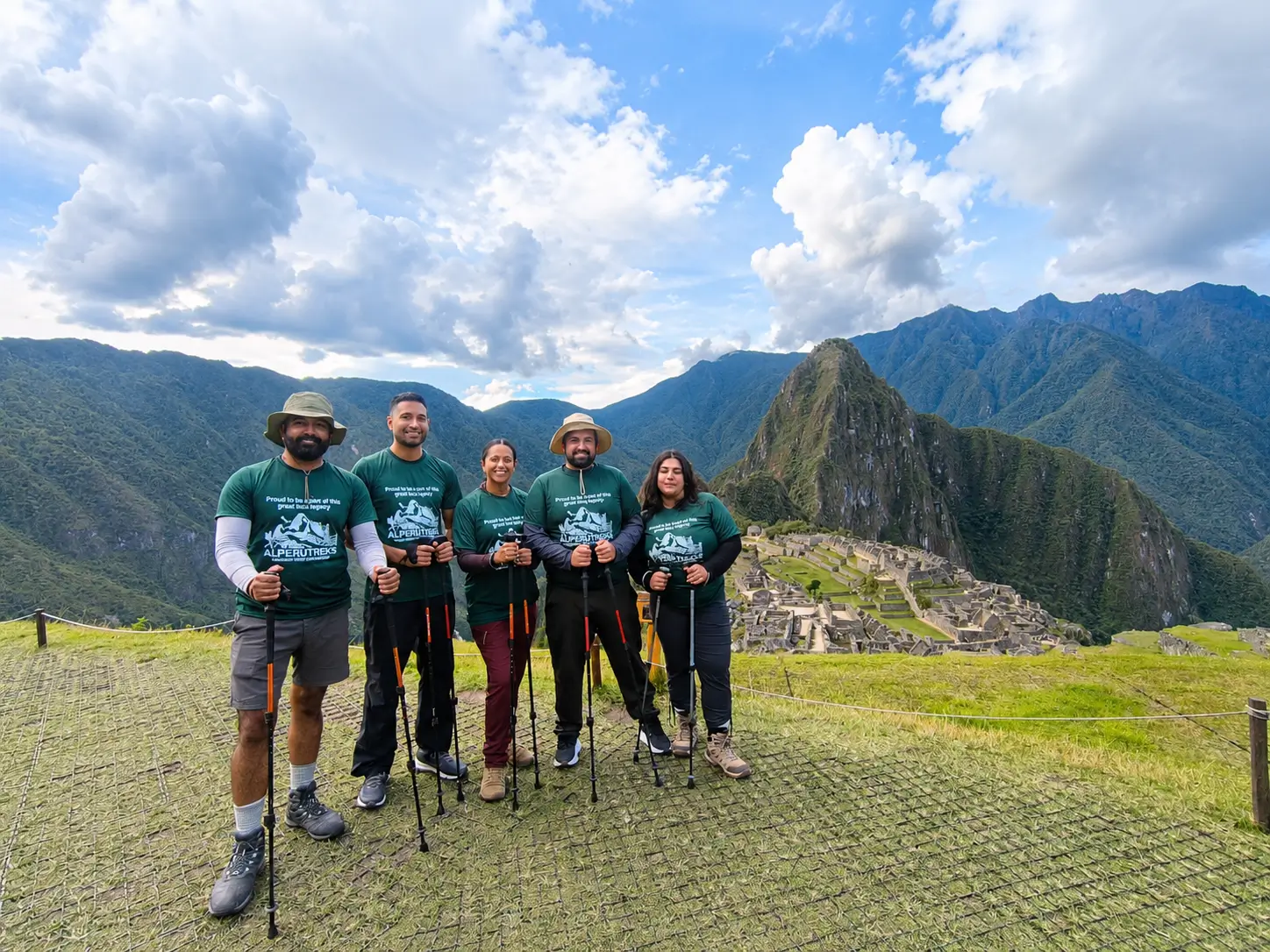
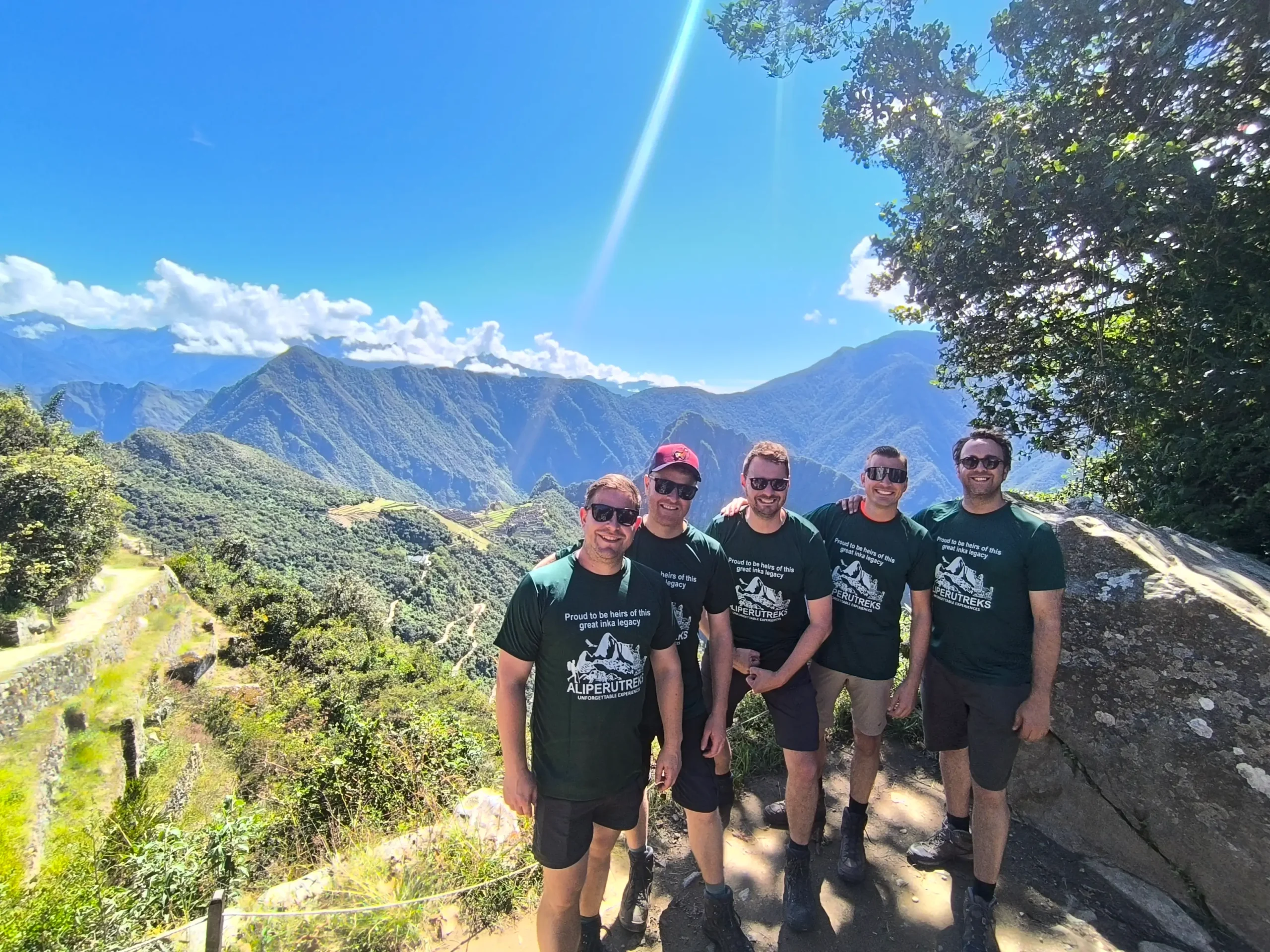
The 4-day and 5-day versions of the Inca Trail follow the same ancient stone path: roughly 43 km (26 miles) from Km 82 to Machu Picchu, over the same high passes, past the same ruins and under the same permit system. So what does the fifth day actually buy you?
Time, not distance. The extra day redistributes the hardest hours of the trek, changes where you sleep and shifts when you reach the Sun Gate. It doesn’t make the trail shorter, lower or flatter. Below, we compare both formats day by day, with hiking hours, camp altitudes and the trade-offs that matter, so you can judge which rhythm fits your fitness, your schedule and your comfort at altitude.
The short answer
- The 4-day suits fit hikers who are comfortable with long days at altitude and have limited time. Expect one very long day (about 9 to 10 hours of walking on Day 2 in the itinerary we run) and a pre-dawn start on the final morning.
- The 5-day suits hikers who prefer to split the hardest section into two shorter days, want more time at the ruins, or like arriving at Machu Picchu for a guided visit after a night in a bed.
- Neither is easy. Both climb to about 4,215 m (13,828 ft), both are usually rated moderate to challenging, and acclimatizing in Cusco matters more than the number of days on the trail.
Same Trail, Different Rhythm
Both formats start at Km 82 (Piscacucho), climb over Dead Woman’s Pass, cross the Runkurakay and Phuyupatamarca passes, pass through cloud-forest ruins such as Sayacmarca and Wiñay Wayna, and enter Machu Picchu through the Sun Gate (Inti Punku). What changes is how those 43 km and that climbing are spread across the calendar.
Several things are identical whichever length you choose:
- Permits. Peru’s Ministry of Culture lets about 500 people start the trail each day, roughly 200 of them trekkers and the rest guides, porters and cooks. Hikers on 4-day, 5-day and longer itineraries draw from the same daily allocation. A longer trek does not come with its own quota.
- Season. The trail is closed every February for maintenance and open from March through January.
- Rules. You must trek with a licensed operator and guide, and the passport you carry must match the one used to obtain your permit.
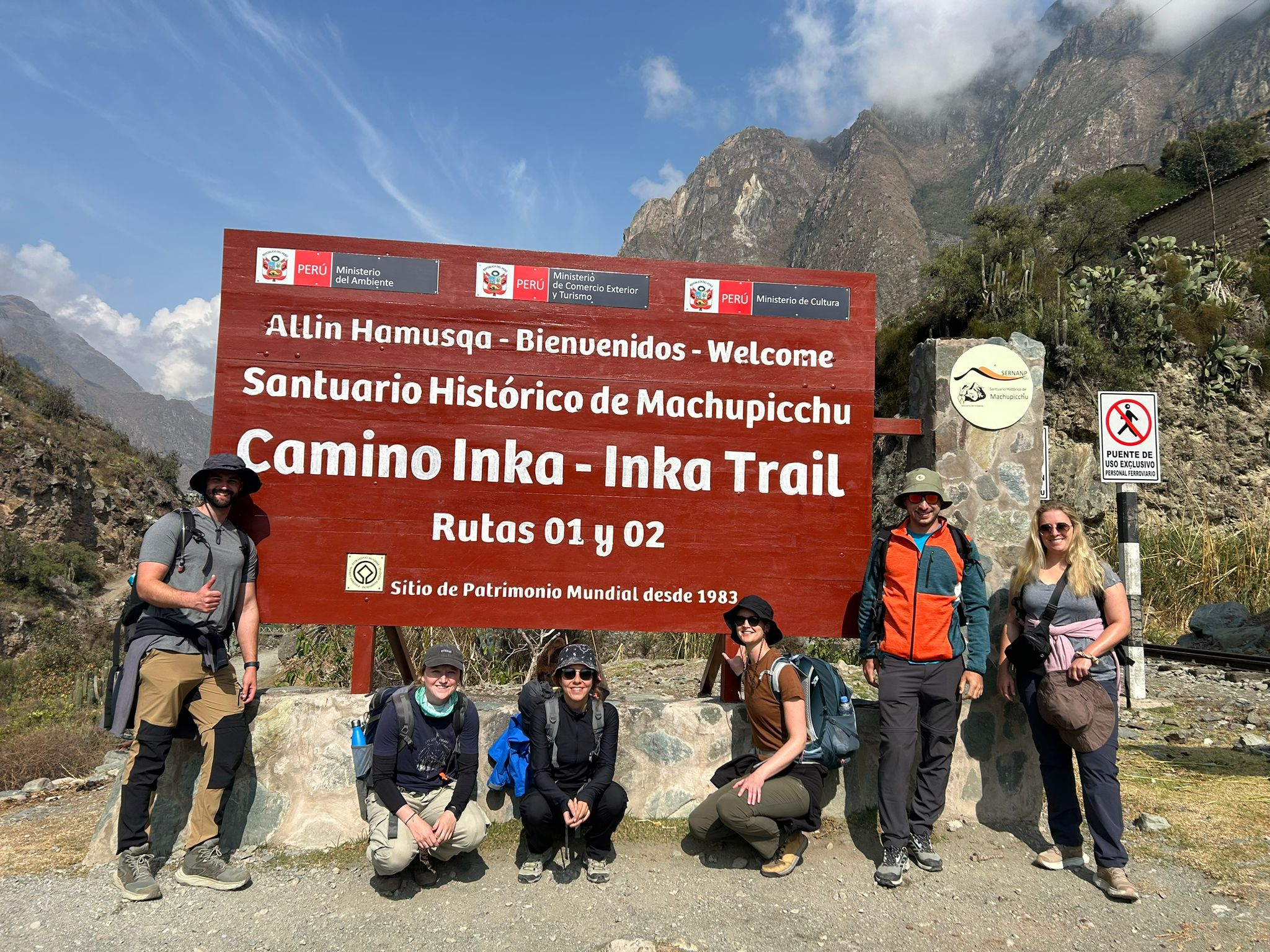
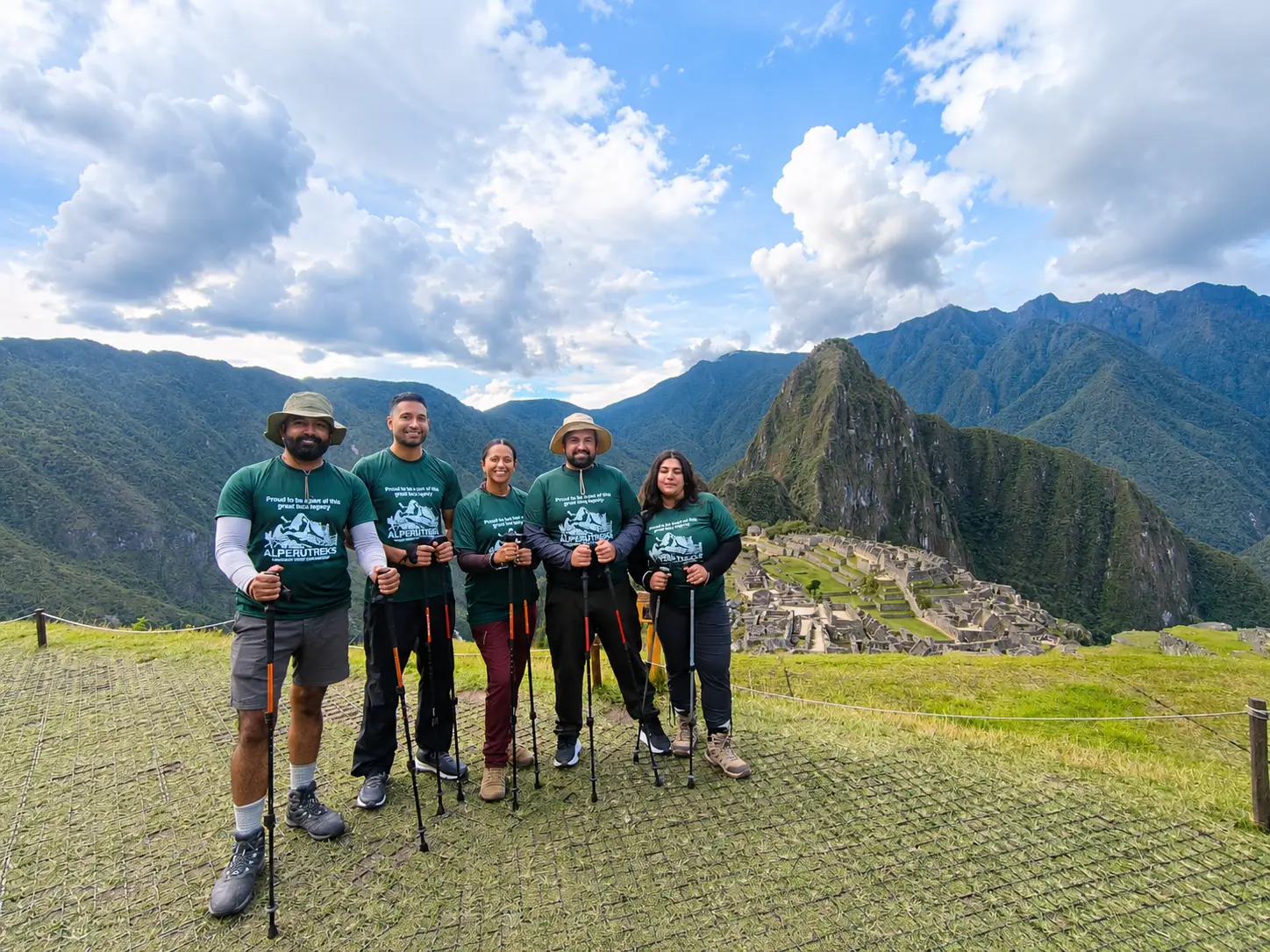
Why Five-Day Itineraries Aren’t All the Same
Four-day itineraries are fairly standardized. Five-day itineraries are not. Depending on the operator, the extra day can be used to shorten the first days, move the campsites, add a night in Aguas Calientes or change when you reach the Sun Gate. Two “5-day” quotes can therefore describe noticeably different experiences.
The figures in this guide follow the day-by-day plans we run at Ali Peru Treks. Other operators’ camps can differ by a few kilometres and a few hundred metres. If you are comparing options, ask for the day-by-day plan with campsite names and altitudes so you are comparing like with like.
Day by Day: How the Hiking Load Is Distributed
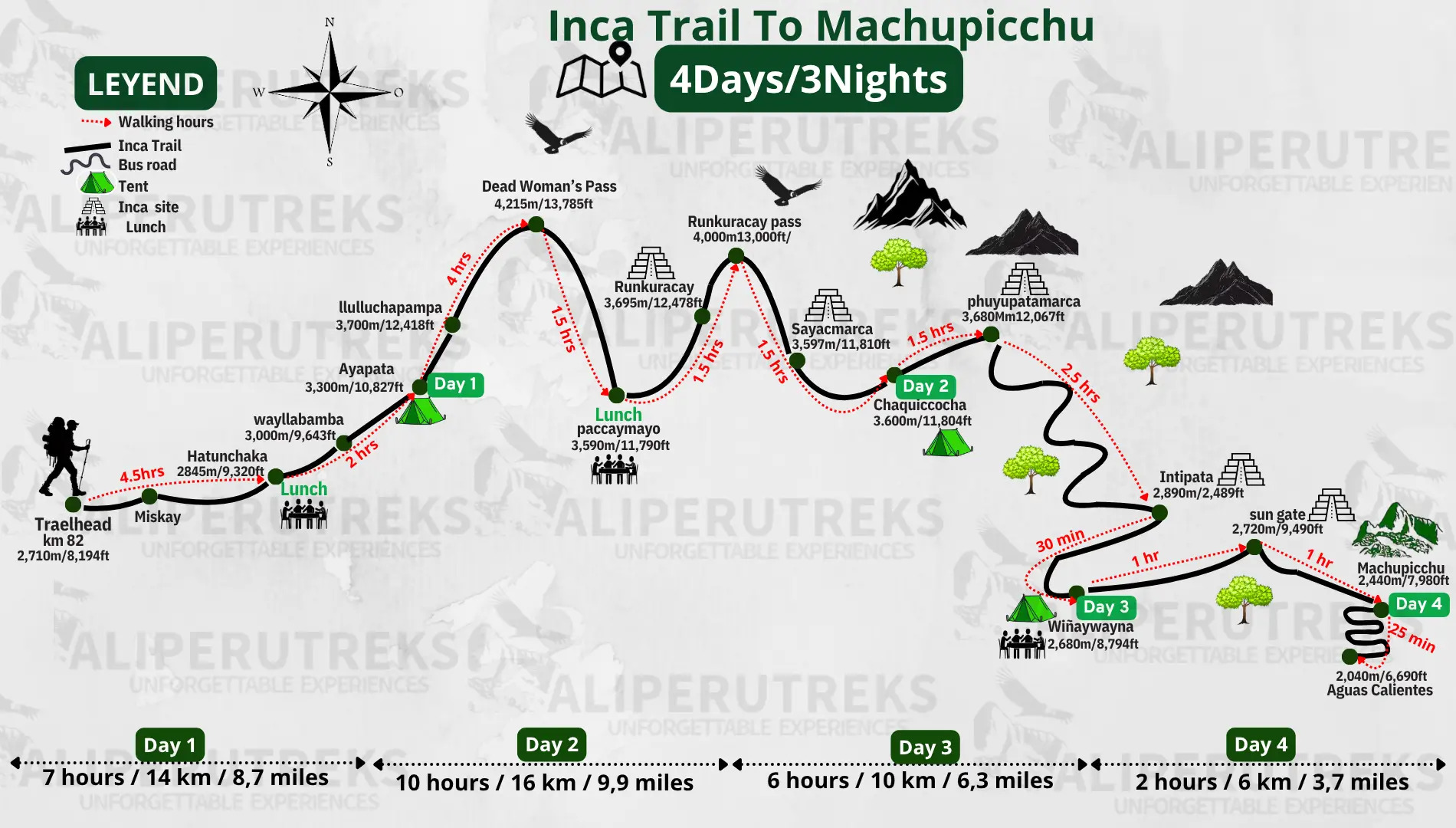
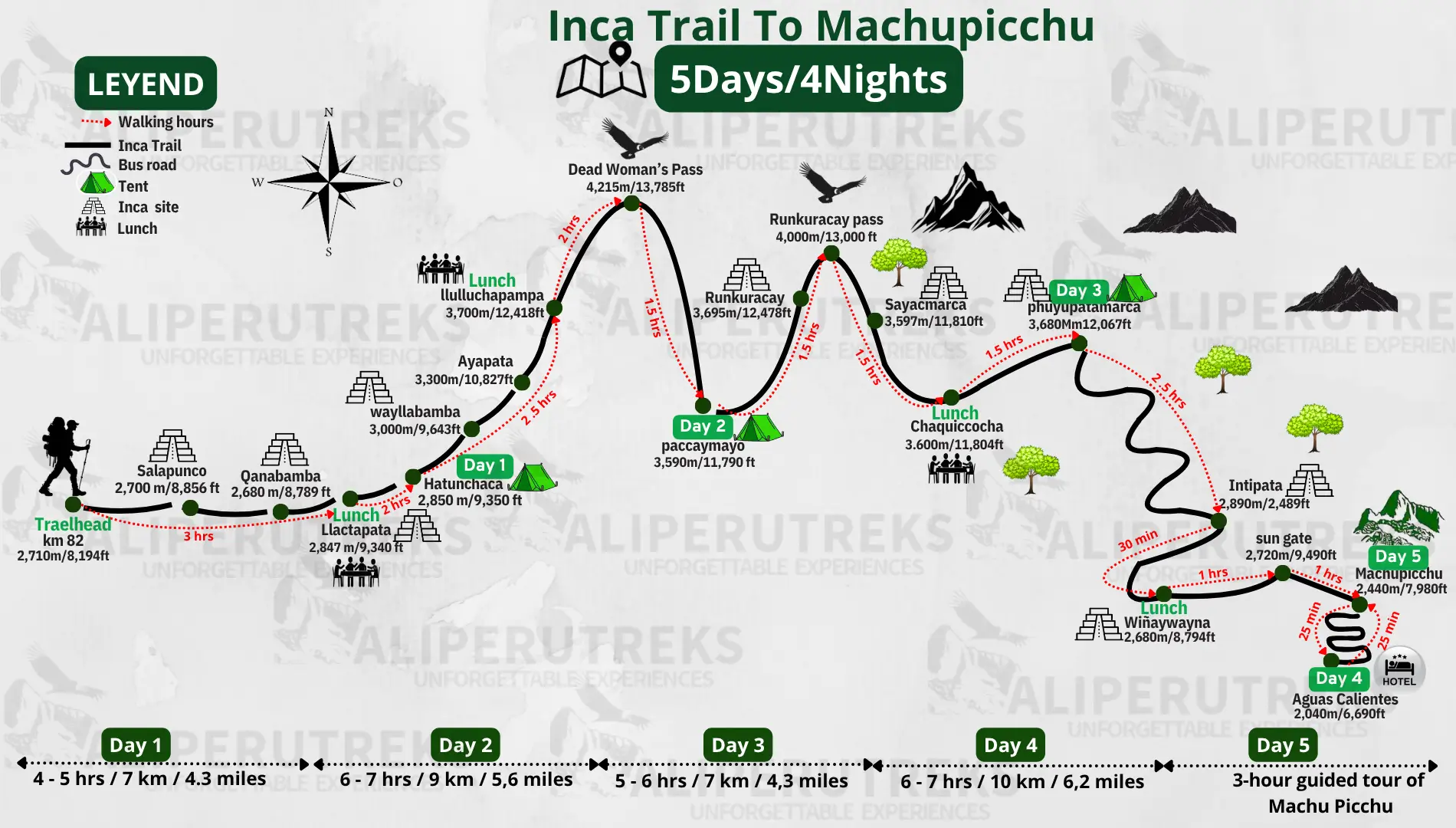
The table below compares the two formats day by day. For a fuller description of each day on the classic route, see our day-by-day breakdown of the classic trek.
| Day | Classic 4-day | 5-day |
|---|---|---|
| Day 1 | About 6 h of walking · roughly 580 m of climbing · camp at 3,300 m | 4–5 h · roughly 270 m of climbing · camp at 2,930 m |
| Day 2 | 9–10 h · Dead Woman’s Pass, Runkurakay pass and Sayacmarca · camp at 3,600 m | 6–7 h · Dead Woman’s Pass only · camp at 3,500 m |
| Day 3 | 5–6 h · Phuyupatamarca and Intipata, descent to Wiñay Wayna · camp at 2,650 m | 5–6 h · Runkurakay pass and Sayacmarca · camp at 3,680 m (Phuyupatamarca) |
| Day 4 | About 2 h to the Sun Gate and the citadel, guided visit, train home the same day | 6–7 h · Wiñay Wayna, Sun Gate in the late afternoon, Machu Picchu · night in a hotel in Aguas Calientes (2,040 m) |
| Day 5 | n/a | Guided visit to Machu Picchu, then train home |
Walking times are approximate, at a steady group pace, and exclude long stops. Daily distances vary by source and operator, so hours of walking are a more reliable basis for comparison than kilometres.
Day 1: A Gentler Start on the Five-Day
On the 4-day, the first day climbs from about 2,720 m at Km 82 to a camp near 3,300 m: around six hours of steady uphill through valley farmland and past the ruins of Llactapata. The 5-day version stops earlier, at a camp near 2,930 m after four to five hours, and climbs about half as much. That makes for a softer introduction, especially for travelers arriving from sea level. On both itineraries, though, most of the acclimatization happens in Cusco, not on the trail.
Day 2: The Day That Changes the Most
Day 2 is the crux of the whole comparison. On the 4-day we run, hikers cross Dead Woman’s Pass (about 4,215 m or 13,828 ft), drop into the Pacaymayo valley, climb a second pass at Runkurakay (about 4,000 m) and continue to Sayacmarca and a camp near 3,600 m. That is nine to ten hours in total. (Some operators stop at Pacaymayo and push the second pass into Day 3, which makes Day 2 shorter and Day 3 longer.)
On the 5-day, Day 2 ends at Pacaymayo after the pass, in six to seven hours. The second pass and Sayacmarca move to Day 3. That is the heart of the difference: the extra day splits the trail’s hardest stretch in two.
One nuance is worth knowing. Because the first camp of the 5-day sits lower, the climb up to the pass is not smaller: roughly 1,300 m from camp to pass, versus roughly 900 m on the 4-day. What shrinks is everything that comes after the pass. For a closer look at the climb itself, read our guide to Dead Woman’s Pass.
Day 3: Cloud Forest, Passes and Stone Steps
On the 4-day, Day 3 is a five- to six-hour descent through cloud forest via Phuyupatamarca (“Town Above the Clouds”) and Intipata to the camp at Wiñay Wayna, the lowest and warmest camp of the trek.
On the 5-day, Day 3 is when you cross the Runkurakay pass and visit Sayacmarca before camping at Phuyupatamarca, the highest camp of that itinerary, with views toward Machu Picchu Mountain and the Vilcabamba range.
The Final Days: Wiñay Wayna, the Sun Gate and Machu Picchu
On the 4-day, the last morning starts well before dawn. Hikers gather at the final checkpoint near Wiñay Wayna, which opens at about 5:30 a.m., and walk for roughly an hour to the Sun Gate. From there it is a descent to the citadel, followed by a guided visit and the train home the same day. It is a memorable morning, but also a long day: a pre-dawn start, a short hike, a two-hour visit and the return journey.
On the 5-day we describe, the last hiking day runs from Phuyupatamarca through Wiñay Wayna to the Sun Gate, which you reach in the late afternoon, and then down to Machu Picchu and by bus to a hotel in Aguas Calientes. The guided visit to the citadel happens the next morning, after a night in a bed. The trade-off is that you see the citadel from the Sun Gate in afternoon light rather than at sunrise.
Altitude and Acclimatization: What the Extra Day Does and Doesn’t Change
It is tempting to assume that more days mean a gentler altitude profile. The camp altitudes tell a more nuanced story:
| Night | Classic 4-day | 5-day |
|---|---|---|
| 1 | 3,300 m | 2,930 m |
| 2 | 3,600 m | 3,500 m |
| 3 | 2,650 m (Wiñay Wayna) | 3,680 m (Phuyupatamarca) |
| 4 | n/a | 2,040 m (hotel in Aguas Calientes) |
The 5-day starts lower and finishes lower, but its third night is spent at the highest camp of either itinerary. So “the 5-day sleeps lower” is only partly true. In both cases the highest point, about 4,215 m, is reached on Day 2.
Two things matter more than the number of days:
- Time in Cusco. The city sits at roughly 3,400 m (11,150 ft). For most people, spending at least two to three nights there before the trek does more for acclimatization than the extra night on the trail.
- Individual response. Acute mountain sickness (headache, nausea, dizziness, fatigue) can affect anyone, regardless of fitness. Talk to your doctor before you travel about prevention, walk slowly, drink plenty of water and tell your guide early if you feel unwell. Our Inca Trail tips guide covers preparation in more detail.
Physical Effort: Is the 5-Day Trek Actually Easier?
Easier day by day, yes. Easier overall, not necessarily.
- The longest day is shorter. Six to seven hours instead of nine to ten leaves more energy at the end of the day and fewer chances for blisters, knee pain and afternoon fatigue.
- You spend more days on your feet. Four full hiking days plus a separate Machu Picchu day means more cumulative fatigue for some people.
- The descents are still demanding. The long stone stairways down to Wiñay Wayna are hard on the knees on either itinerary. On the 5-day they come at the end of a long Day 4, mostly downhill.
- Both are rated moderate to challenging. The extra day reduces the peak load. It does not change the altitude.
| Factor | Classic 4-day | 5-day |
|---|---|---|
| Longest day | 9–10 h (Day 2) | 6–7 h (Days 2 and 4) |
| Pre-dawn start | Yes, on the final morning | No |
| Nights in a tent | 3 | 3 (the fourth night is in a hotel) |
| Machu Picchu visit | Same morning as the Sun Gate hike | Separate, rested morning |
Trekking poles help on the stone steps in either format.
Sun Gate Timing, Sunrise and Crowds
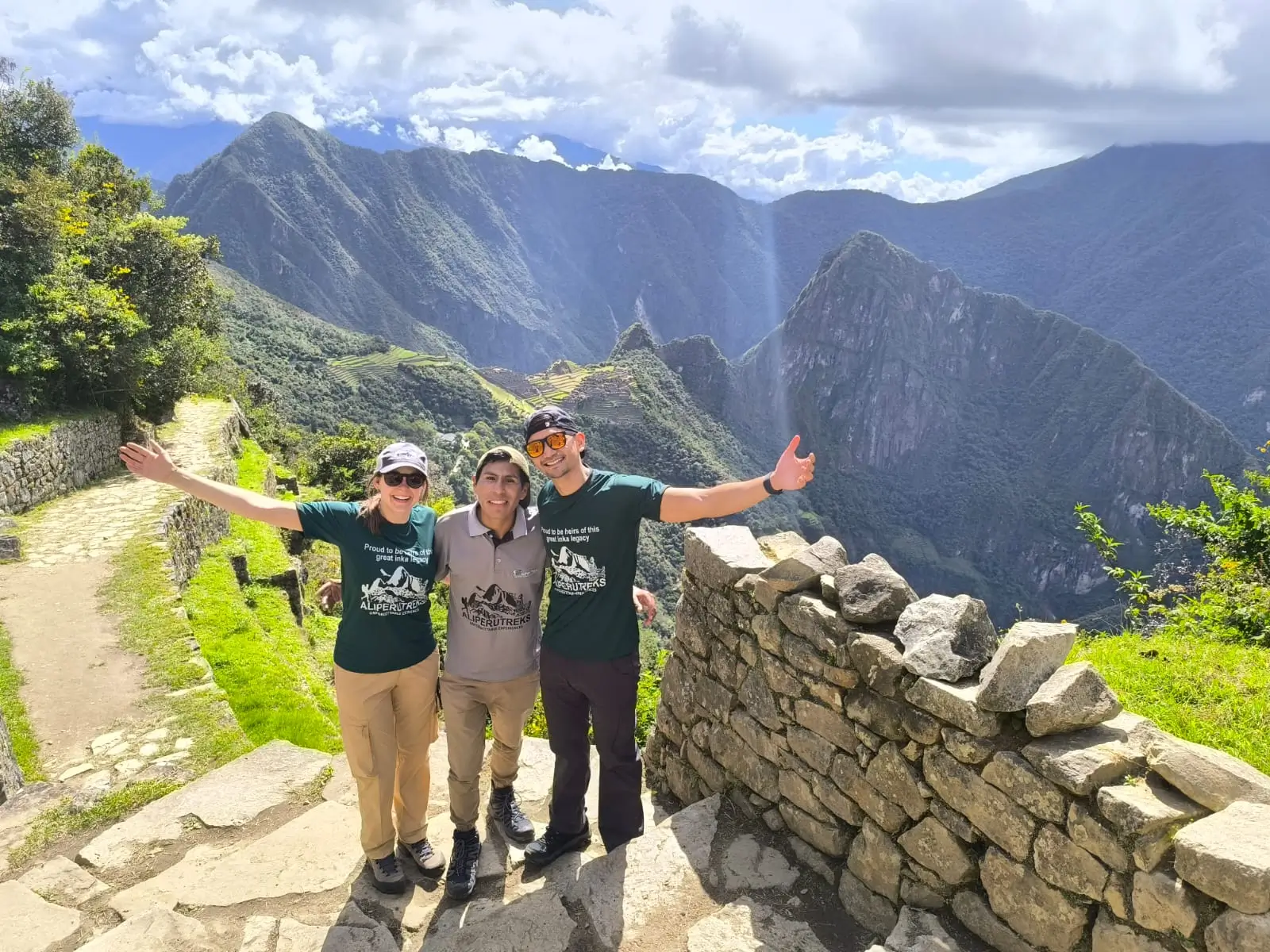
Sunrise. On the 4-day, arriving at the Sun Gate shortly after the checkpoint opens gives you a chance of seeing the first light on the citadel. It is only a chance: cloud often sits in the valley in the early morning, and sunrise views cannot be guaranteed on any itinerary. On the 5-day we describe, you reach the Sun Gate in the late afternoon instead, so you trade sunrise for warmer, lower light and a less rushed arrival.
Crowds. The daily cap on permits is the same, so a 5-day trek does not come with a quieter trail by itself. Where it can feel calmer is in timing: with a different schedule, your group is less likely to reach the same checkpoint, lunch stop and viewpoint at the same hour as many others. Treat that as a tendency that depends on the itinerary, not a guarantee. Machu Picchu’s own visitor flow is a separate matter; our guide to the new Machu Picchu circuits explains how entry works.
Time at the Ruins and Recovery
Shorter walking days leave more room to explore Llactapata, Sayacmarca and Wiñay Wayna without watching the clock, which appeals to photographers and history-minded hikers. On the 4-day the schedule is tighter, and some stops get less time.
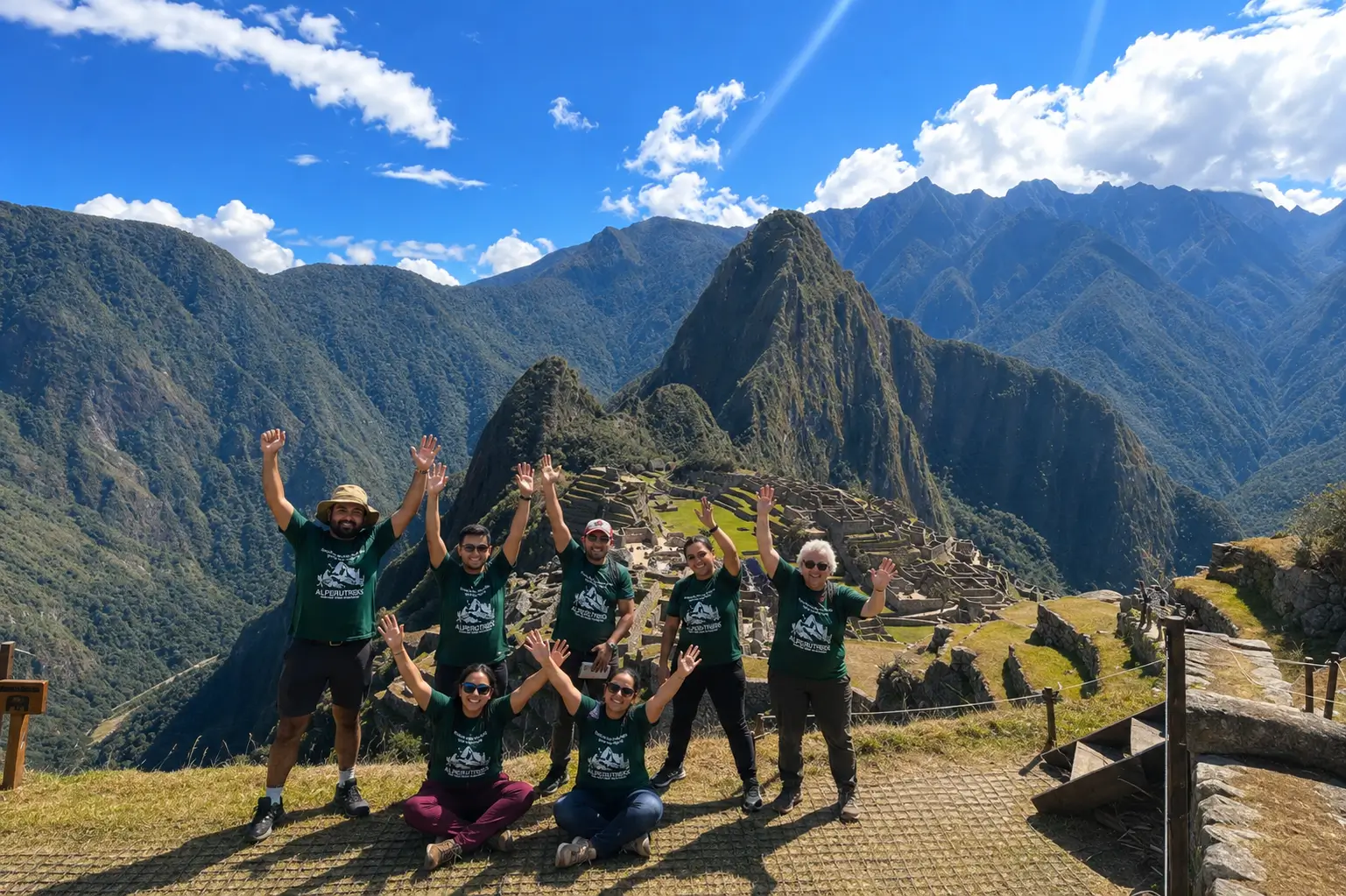
The Machu Picchu visit is the other big difference in experience. On the 4-day, you tour the citadel after a pre-dawn hike. On the 5-day, you visit on a rested morning, with more energy for the details.
Which Pace Suits Which Traveler?
| Traveler profile | Usually leans toward | Why |
|---|---|---|
| Fit hiker with limited vacation days | 4-day | Fewer days; the longest day is manageable with conditioning |
| First multi-day trek | 5-day | Shorter peak day and a softer first day, though training is still needed |
| Worried about altitude | Either, with extra days in Cusco first | The extra day does not lower the pass; acclimatization beforehand is what helps |
| Family with teenagers | 5-day | Shorter days and a more flexible pace |
| Photography or history focus | 5-day | More time at the sites and afternoon light at the Sun Gate |
| Sunrise at the Sun Gate is a priority | 4-day, as structured here | Pre-dawn arrival, although weather decides the view |
| Sensitive knees | Neither is gentle | The 5-day spreads effort, but the stone descents remain; poles and conditioning matter |
Common Mistakes When Choosing
- Assuming five days means a lower or flatter route. The pass is the same height on both.
- Comparing itineraries as if they were identical. Camps, timing and the Sun Gate arrival vary between operators.
- Skipping acclimatization in Cusco. It matters more than the length of the trek.
- Underestimating the descents. The stone steps are tiring, especially for the knees.
- Choosing only for the sunrise. Cloud can hide it on any morning.
- Leaving the decision late. Both formats draw on the same limited permits, and popular dates can sell out months in advance. How the permit system works explains the process.
What Stays the Same on Both
- The route, the passes and the ruins, and the highest point at about 4,215 m.
- The need for a licensed operator, a guide and a permit that matches your passport.
- The February closure and the dry-season pattern: roughly May to October is drier, with cold nights, and November to March is wetter. See month-by-month conditions and Inca Trail weather.
- The gear you need: broken-in boots, layers for cold nights and a rain jacket. Our packing list has the details.
The Bottom Line
The fifth day does not shorten the trail or lower the pass. It splits the hardest day, softens the first one, adds a rest night before Machu Picchu and trades a pre-dawn Sun Gate arrival for an afternoon one.
If you are fit, short on time and drawn to the sunrise, the 4-day is a sound choice. If you want a shorter peak day, more time at the ruins and a calmer Machu Picchu visit, the extra day is worth considering. In both cases the preparation that matters most is the same: time in Cusco, some training and broken-in boots.
Frequently Asked Questions
The route is the same, roughly 43 km. The 5-day spreads the hiking over an extra day, which typically means shorter days, the hardest stretch split across Days 2 and 3, and a different Sun Gate arrival time.
Easier per day, not easier overall. The longest day is shorter (6 to 7 hours versus 9 to 10 in the itineraries we run), but the trail still reaches about 4,215 m and includes the same stone steps.
You follow the same route, around 43 km. Daily distances vary by operator and by source, which is why hours of walking are a more reliable basis for comparison.
Partly. In the itineraries described here, the first night is lower and the final night is in Aguas Calientes, but the third night is at the highest camp. Check the camp altitudes of any itinerary you are considering.
In the format described here, you reach the Sun Gate in the late afternoon rather than at sunrise. Other 5-day formats are structured differently, so check the plan. On any format, sunrise views depend on the weather.
No. Hikers on 4-day and 5-day itineraries draw from the same daily allocation of about 500 permits, of which roughly 200 are for trekkers. The trail is closed every February.
At least two to three nights is a common recommendation. Ask your doctor about altitude prevention before you travel.
Usually, because it includes an extra day of guiding, cooking and porter services and a night of lodging. Prices vary by operator, group size and season, so check the current rates on each operator’s tour page.