
Inca Trail Campsites: Ayapata, Chaquicocha and Wiñay Wayna
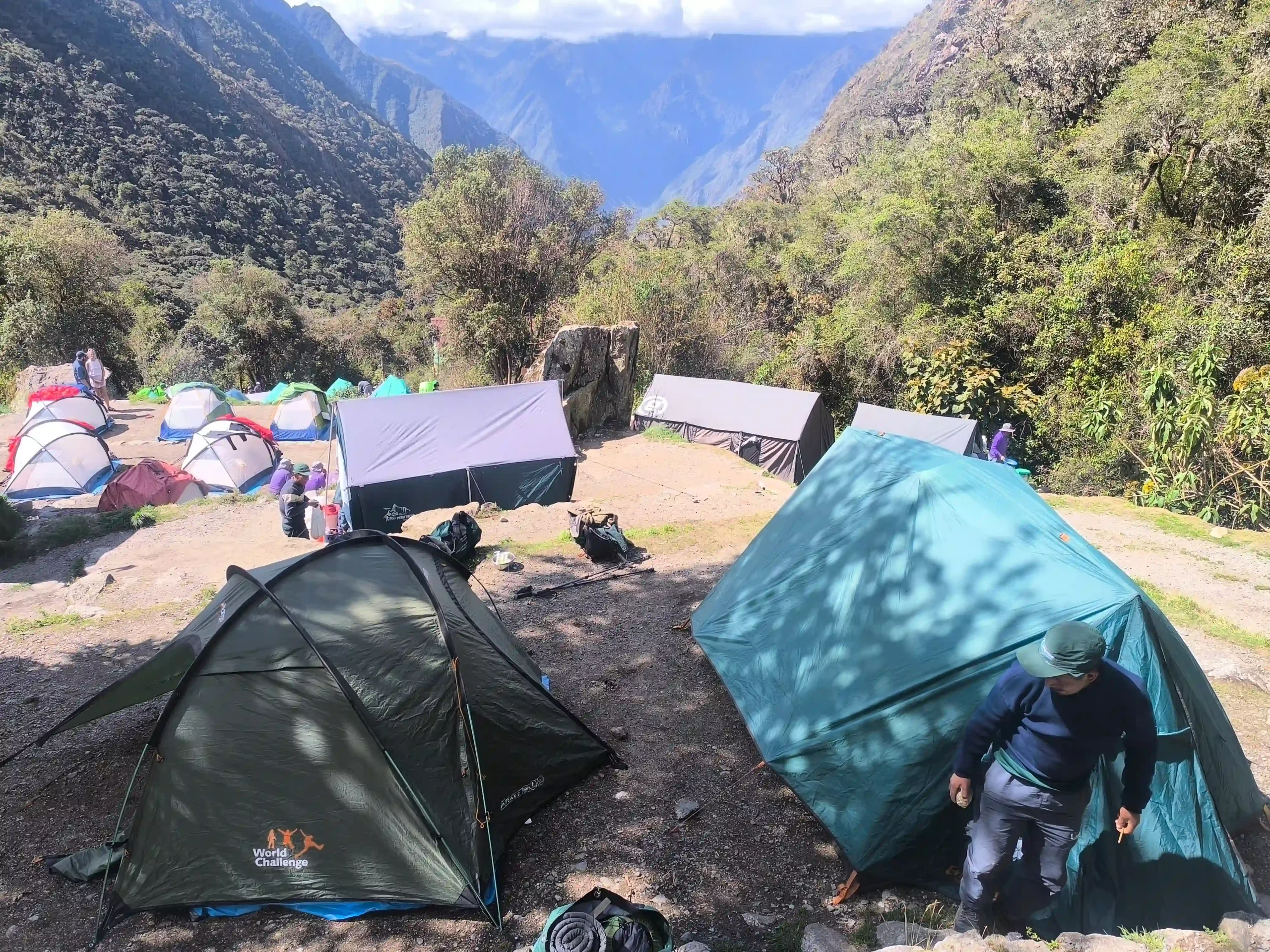
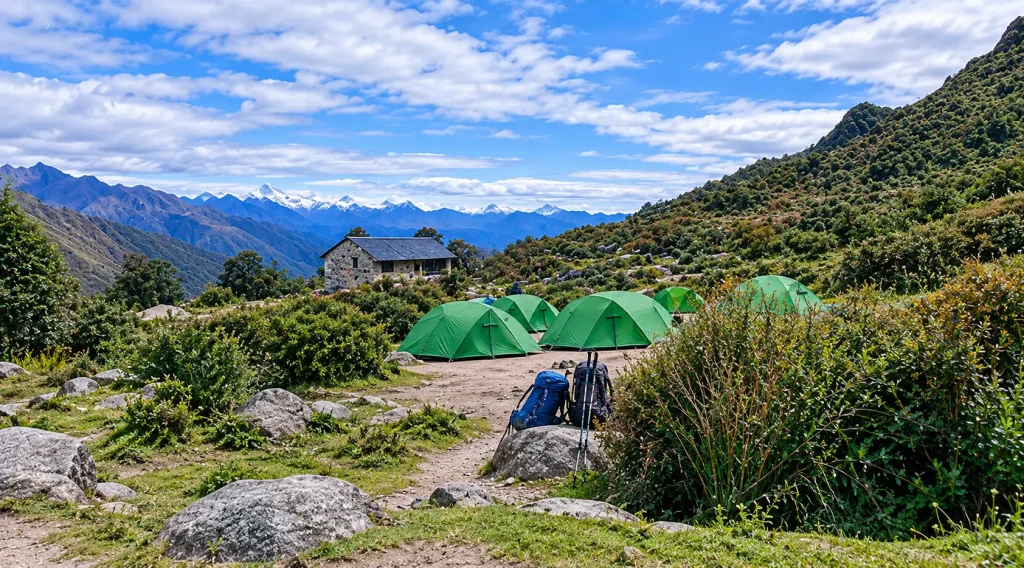
On our 4-day Classic Inca Trail, you camp at Ayapata (about 3,300 m) on Night 1, Chaquicocha (about 3,600 m) on Night 2 and Wiñay Wayna (about 2,650 m) on Night 3. Camps are set up by the crew before you arrive, and camping is only allowed in assigned areas. Campsite names and altitudes vary between operators, so check your own itinerary before comparing sources.
This guide covers what each camp is like, how they compare, what facilities to expect, and where published numbers disagree.
How Camping Works on the Inca Trail
Camping on the trail is regulated. Overnight stays are limited to designated camps, and your crew handles setup and cleanup. On our itinerary, the support team provides:
- Two-person tents and inflatable mattresses
- A dining tent and private toilet tents
- Meals from Day 1 breakfast to Day 4 breakfast, plus tea time
- Filtered drinking water from the first lunch onward
You bring your sleeping bag (or rent one) and a small daypack. Porters carry the rest. See our Inca Trail porters guide for how that works, and our camp comfort standards for the setup.
The Three Camps on Our Classic Inca Trail
| Night 1: Ayapata | Night 2: Chaquicocha | Night 3: Wiñay Wayna | |
|---|---|---|---|
| Altitude | About 3,300 m (10,827 ft) | About 3,600 m (11,811 ft) | About 2,650 m (8,694 ft) |
| Day’s hiking | About 12 km, around 6 hours | 15 km, 9-10 hours | 10 km, 5-6 hours |
| Day’s highlight | Llactapata and the first climb | Dead Woman’s Pass (4,215 m) and Runkurakay Pass (4,000 m) | Phuyupatamarca, an Inca tunnel, Intipata |
| What to expect | A gentle first night | Likely the coldest night, after the hardest day | The lowest and warmest camp, near Machu Picchu |
The daily distances and altitudes above are from our Classic Inca Trail itinerary.
Night 1: Ayapata
Ayapata is your first camp, about 580 m higher than the trailhead at Km 82. You arrive after a roughly 6-hour day that includes a visit to Llactapata. At about 3,300 m, it is slightly lower than Cusco (3,399 m), so travelers who have acclimatized in the city usually find the first night manageable. It is also a good chance to test your sleeping bag and layers. Eat, drink water and go to bed early, since the next day is the hardest.
Night 2: Chaquicocha
Chaquicocha sits at about 3,600 m and follows the longest day of the trek. You climb to Dead Woman’s Pass (4,215 m), cross Runkurakay Pass (4,000 m), and then descend to camp. Another operator describes the site as picturesque but frigid, and it is the camp where good layers matter most. Expect a clear night sky if the weather cooperates, but also the day when you are most tired. See our Dead Woman’s Pass guide for what comes before, and Inca Trail weather for seasonal conditions.
Night 3: Wiñay Wayna
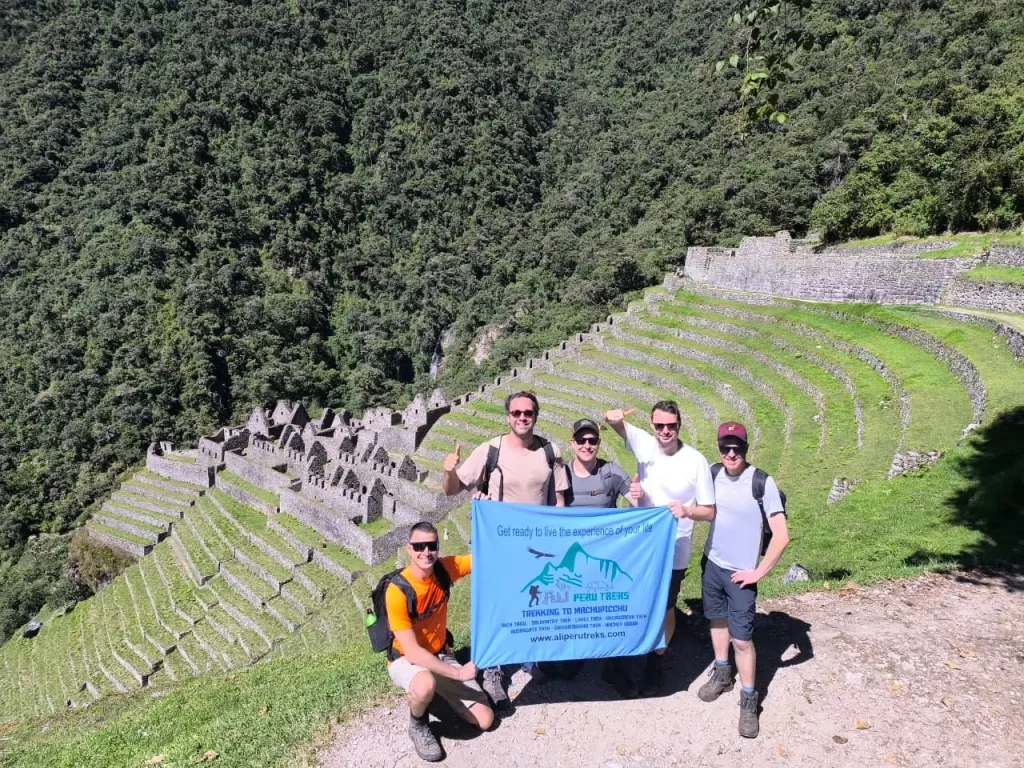
The last camp, near the Wiñay Wayna ruins, is the lowest of the three at about 2,650 m. That generally means a milder night. It is also a convenient position for the final morning, because Machu Picchu and the Sun Gate are within reach. One operator calls it the most popular campsite on the trail because of that proximity, so it can feel busier than the earlier camps.
One operator reports basic showers only at the last camp, and no electricity or cell service on the trail. Facilities differ by operator and season, so ask what to expect rather than relying on a general claim. For the ruins themselves, see our Wiñay Wayna guide.
Why Campsite Names and Altitudes Vary
If you compare itineraries, you will see different camp names. That is normal, because operators choose their own camps within the allowed areas and plan days differently.
| Camp name | Where it appears | Altitude given |
|---|---|---|
| Ayapata | Our Classic itinerary, Night 1 | 3,300 m |
| Wayllabamba (Huayllabamba) | Other operators, Night 1 | About 3,057 m |
| Chaquicocha | Our Classic itinerary, Night 2 | 3,600 m (some sources say 3,650 m) |
| Pacaymayo | Our Luxury itinerary and other operators, Night 2 | About 3,500 m |
| Phuyupatamarca | Our Luxury itinerary, Night 3 | About 3,680 m |
| Wiñay Wayna | Our Classic itinerary, Night 3 | About 2,650 m (one source says 2,600 m) |
Our Luxury Inca Trail uses a different camp sequence, which is why the day lengths differ. Both follow the same route and permit.
What a Typical Camp Evening Looks Like
The pattern is similar at every camp. Porters and the cook arrive ahead of the group, so tents are up and tea time is ready when you walk in. You wash up, rest and eat dinner in the dining tent, where your guide explains the next day’s route and timing. Our itinerary includes meals from Day 1 breakfast through Day 4 breakfast, plus tea time and snacks, and dietary menus at no extra cost. Most trekkers are in their tents early, because wake-up calls come before sunrise and the days are long. Plan your evening around three things: stay warm, drink water and repack your daypack for the morning.
What to Pack for the Camps
The camps are where cold, dampness and altitude matter. Pack:
- A sleeping bag rated for near-freezing conditions (we rent them for $20)
- Warm layers for the evenings, and dry clothes just for sleeping
- A headlamp and a few extra batteries
- Sandals or light shoes for camp
Our Inca Trail packing list and the trekking gear list cover the details.
Tips for Sleeping Better at Altitude
- Hydrate and eat at dinner, but avoid heavy alcohol.
- Keep tomorrow’s layers inside your sleeping bag so they are warm in the morning.
- Do not skip acclimatization before the trek; see our altitude sickness guide.
- If you wake with a headache or nausea, tell your guide.
Pros and Cons of Camping on the Trail
| Pros | Cons |
|---|---|
| Camp is set up for you, with meals and water | Cold nights, especially at Chaquicocha |
| Camps are close to the trail’s main sites | Basic facilities compared with a hotel |
| A night sky with little light pollution | Early starts every morning |
| Your crew handles everything | Camp names and facilities vary, so it pays to ask |
If you would rather sleep in a bed, the Short Inca Trail uses a hotel in Aguas Calientes.
FAQ: Inca Trail Campsites
It depends on the operator. On our Classic Inca Trail, you camp at Ayapata, Chaquicocha and Wiñay Wayna. Other operators use sites such as Wayllabamba and Pacaymayo.
On our itinerary, Chaquicocha at about 3,600 m is the highest camp. The highest point of the trek itself is Dead Woman’s Pass at 4,215 m, which you cross during the day, not overnight.
Chaquicocha, because of its altitude. Wiñay Wayna is the lowest and generally milder.
One operator reports basic showers only at the last camp, but it varies. Ask your operator before you book.
No. Camping is only allowed in the designated camps, and you must go with a licensed operator.