Home » Blog » Incachiriasca Pass: How to Prepare for the Salkantay and Inca Trail
Incachiriasca Pass: How to Prepare for the Salkantay and Inca Trail
Ali Peru Treks
10 min read
Nov 24, 2026
3 views
The Incachiriasca Pass is a high-altitude mountain crossing on the combined Salkantay and Classic Inca Trail route to Machu Picchu. At approximately 5,000 meters (16,404 feet), it is one of the most physically demanding sections of this expedition.
Preparing for the crossing requires more than good cardiovascular fitness. Proper acclimatization, endurance training, cold-weather clothing, and an understanding of altitude sickness are essential for tackling the ascent responsibly.
What Is Incachiriasca Pass?
Incachiriasca Pass, also written as Inka Chiriaska or Inca Chiri Asca, is a high mountain crossing in the Vilcabamba range of the Peruvian Andes, near Mount Salkantay.
The name is associated with the expression Frozen Inca Pass. The route crosses remote high-altitude terrain before descending toward the Inca Canal and Paucarcancha, where trekkers eventually connect with the Classic Inca Trail.
The pass is part of the combined seven-day Salkantay and Inca Trail expedition. It is not the same crossing used on the standard four- or five-day Salkantay Trek.
How High Is Incachiriasca Pass?
Its elevation is generally reported at around 5,000 meters (16,404 feet), although published route references vary slightly.
It is important to distinguish it from two other mountain passes in the region:
Mountain pass
Approximate elevation
Route
Incachiriasca Pass
5,000 m / 16,404 ft
Combined Salkantay and Classic Inca Trail
Salkantay Pass
4,630–4,650 m / 15,190–15,256 ft
Standard Salkantay Trek
Dead Woman’s Pass (Warmiwañusca)
4,215 m / 13,829 ft
Classic Inca Trail
This distinction matters when comparing trekking itineraries. A traveler booking a regular Salkantay Trek should not assume that the route crosses Incachiriasca.
The combined expedition has a different mountain itinerary, a higher pass, and additional physical demands.
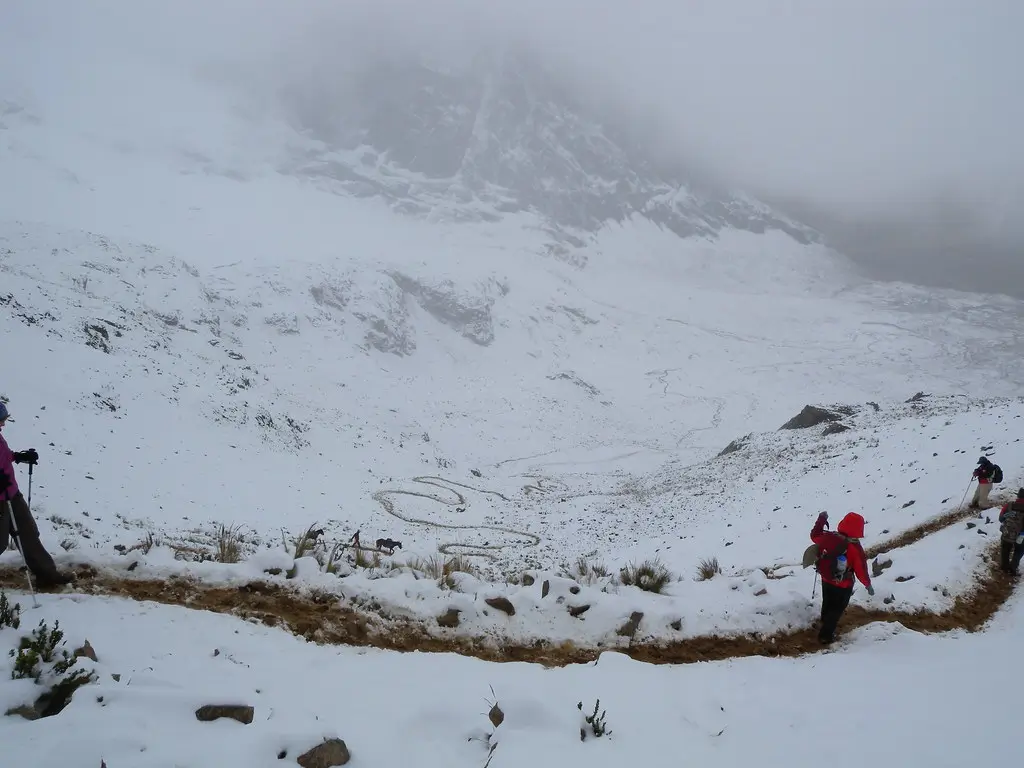
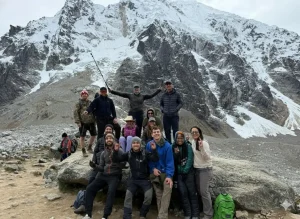
The Incachiriasca Pass connects with the Salkantay hikeHikers walking along the Incachiriasca Pass on their way to the Salkantay Trek
What Makes the Incachiriasca Crossing Challenging?
At approximately 5,000 meters, the amount of available oxygen is substantially lower than at sea level. Your body must work harder during physical activity, even when walking at a relatively slow pace.
However, altitude is only one part of the challenge.
1. Reduced oxygen availability
At high elevations, each breath delivers less oxygen to your body. You may notice that your breathing becomes faster, your legs tire more quickly, and short uphill sections require additional rest.
Even experienced hikers can struggle if they have not acclimatized properly.
2. Long uphill sections
The approach to Incachiriasca involves sustained climbing through exposed Andean terrain. Depending on the itinerary and trail conditions, the ascent can include rocky surfaces, steep sections, and uneven ground.
Maintaining a steady pace is more important than trying to reach the summit quickly.
3. Cold and unpredictable weather
Conditions can change rapidly in the high Andes. Strong winds, low temperatures, rain, and occasional snow are possible at these elevations.
A sunny morning does not guarantee favorable conditions throughout the crossing.
4. The descent is physically demanding too
Reaching the highest point is only half the challenge. The descent can place considerable strain on your knees, ankles, and quadriceps, particularly after several hours of uphill hiking.
Trekking poles and appropriate footwear can help improve balance and reduce the impact of downhill walking.
How to Acclimatize Before Hiking Incachiriasca Pass
Acclimatization is one of the most important parts of preparing for a high-altitude trek in Peru.
Your body needs time to adjust to lower oxygen availability. Arriving in Cusco and beginning a demanding trek the following morning is not a sensible preparation strategy.
Spend time in Cusco before the expedition
Cusco sits at approximately 3,400 meters (11,155 feet) above sea level. Travelers arriving from low elevations may experience altitude symptoms even before beginning their trek.
We recommend spending at least two to three full days in Cusco before starting the expedition. This is a useful baseline, not a guarantee that you will be fully acclimatized.
During this period:
Keep physical activity light during the first day.
Avoid excessive alcohol consumption.
Eat regular, balanced meals.
Drink water regularly.
Get adequate sleep.
Pay attention to headaches, nausea, dizziness, or unusual fatigue.
The CDC’s Yellow Book recommends gradual ascent and staged acclimatization. It also emphasizes that the risk of altitude illness depends on sleeping elevation and the rate of ascent, not simply on physical fitness.
Consider a gradual approach to higher elevations
Before committing to a demanding high-altitude expedition, it can be helpful to spend time at intermediate elevations, provided your itinerary allows it.
A visit to the Sacred Valley, for example, provides an opportunity to explore the region at generally lower elevations than Cusco.
However, a few days at altitude do not eliminate the possibility of acute mountain sickness. Previous experience at high elevations is useful information, but it cannot guarantee how your body will respond on a different expedition.
Speak with a healthcare professional
Travelers with a history of severe altitude sickness or underlying heart or lung conditions should discuss their plans with a qualified healthcare professional before departure.
Medications such as acetazolamide may be appropriate for some travelers, but they should be discussed with a doctor rather than taken solely on the recommendation of a trekking company.
Physical Training for the Incachiriasca Pass
You do not need to be a competitive athlete to prepare for this expedition. However, you should be comfortable hiking for several consecutive days, climbing steep terrain, and walking with a loaded daypack.
The most useful preparation combines aerobic endurance, lower-body strength, and practice on uneven terrain.
Recommended training activities
Activity
What it prepares you for
Brisk walking or hiking
Cardiovascular endurance
Stair climbing
Sustained uphill effort
Hiking on uneven trails
Balance and foot placement
Squats and lunges
Leg strength for climbs and descents
Step-ups
Repeated uphill movements
Core exercises
Stability while carrying a backpack
Longer weekend hikes
Consecutive hours on your feet
Try to build a consistent training routine several weeks before your departure.
Start with manageable sessions and gradually increase the duration and difficulty of your hikes. Practice carrying the daypack you intend to use during the expedition.
Include downhill walking in your training. Many hikers focus almost exclusively on climbing, only to discover that descending for several hours can be equally demanding.
An important distinction: good physical fitness improves your ability to handle sustained effort, but it does not protect you from altitude sickness. Even highly trained athletes can develop acute mountain sickness.
What Should You Pack for Incachiriasca Pass?
Your equipment should account for cold temperatures, strong sunlight, changing weather, and long hours on the trail.
The best approach is to use several lightweight layers rather than relying on one very thick jacket.
Essential clothing
Moisture-wicking base layers.
A warm fleece or insulating midlayer.
A down or synthetic insulated jacket.
A waterproof and wind-resistant outer shell.
Trekking pants suitable for cold and wet conditions.
Warm hiking socks.
Insulated gloves and a warm hat.
A neck gaiter or buff.
Footwear and trekking equipment
Broken-in hiking boots with reliable grip.
Trekking poles with suitable protective rubber tips where required.
A comfortable 25–30-liter daypack.
A rain cover or waterproof pack liner.
A headlamp with spare batteries.
Avoid wearing brand-new hiking boots on the expedition. Blisters and foot discomfort can become serious problems during consecutive days of trekking.
Personal essentials
Sunglasses with UV protection.
High-SPF sunscreen.
Lip balm with sun protection.
Reusable water bottles or a hydration bladder.
Energy snacks.
Personal medication.
Basic blister-care supplies.
Original passport and required travel documents.
The temperature difference between high mountain camps and lower valleys can be considerable. Keep your warm layers accessible rather than packing them at the bottom of your duffel bag.
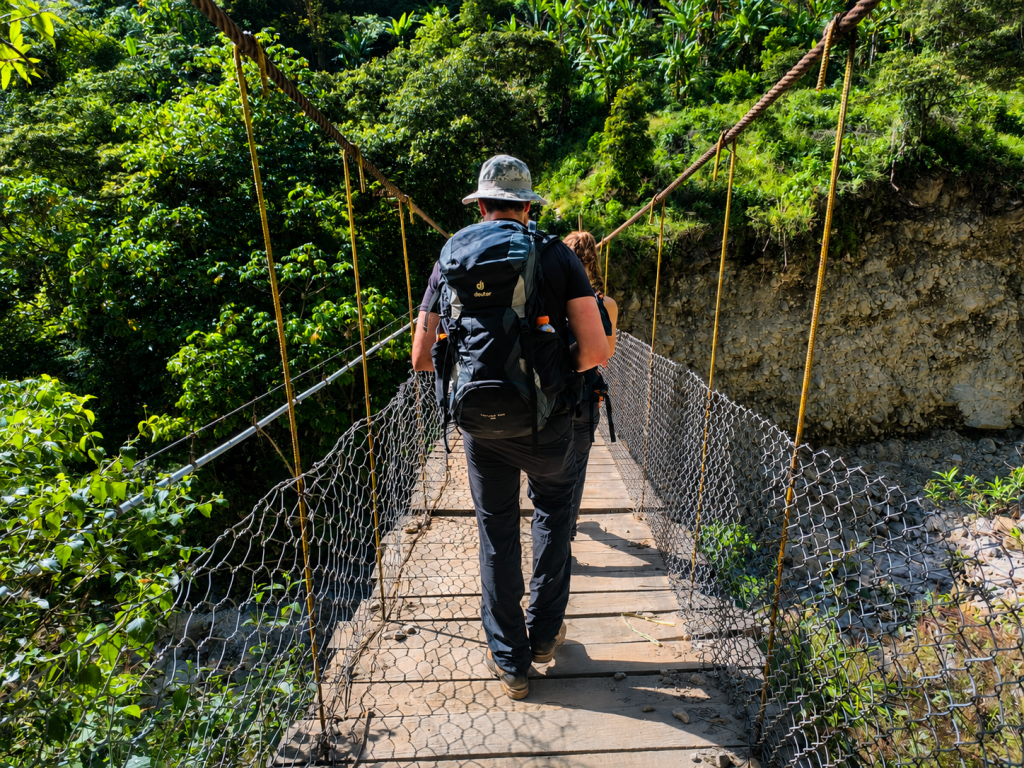
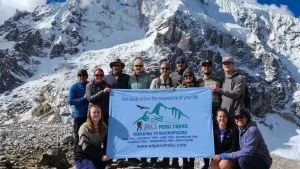
Crossing the Urubamba River on a Salkantay Trek tourSalkantay Trek Snow-Capped Mountain to Machu Picchu
How to Handle the Day of the Crossing
The day you cross Incachiriasca is not the time to test your maximum hiking speed.
A controlled pace helps conserve energy and gives your guide a better opportunity to monitor how the group is responding to the altitude.
Before starting: Eat breakfast, organize your daypack, check your clothing layers, and make sure you have enough water and snacks.
During the ascent: Walk steadily, take short breaks when needed, and avoid rushing to catch up with faster hikers. Inform your guide immediately if you develop a headache, nausea, dizziness, or unusual fatigue.
At the pass: Keep your warm clothing accessible. Exposed mountain passes can be windy and cold, and stopping for photographs should not mean remaining stationary for an extended period without adequate insulation.
During the descent: Use trekking poles to maintain balance, watch your footing on loose or uneven surfaces, and avoid rushing downhill.
A responsible trekking team should be prepared to adjust its pace and respond to altitude-related symptoms rather than treating reaching the summit as the only objective.
Recognizing Altitude Sickness and When to Stop
Acute mountain sickness (AMS) can affect travelers regardless of their age, experience, or physical conditioning.
Common symptoms include:
Headache.
Nausea or loss of appetite.
Dizziness.
Unusual fatigue.
Difficulty sleeping.
Mild symptoms should not be ignored. Tell your guide, stop ascending, and follow the appropriate medical assessment.
More serious warning signs require urgent action. Confusion, loss of coordination, unusual drowsiness, breathlessness at rest, or worsening respiratory symptoms may indicate potentially life-threatening altitude illness.
Suspected severe altitude illness requires immediate medical attention, supplemental oxygen when available, and descent to a lower elevation as directed by the emergency response team.
Continuing uphill despite worsening symptoms can put the entire group at risk.
Is the Incachiriasca Pass Trek Right for You?
This expedition is better suited to travelers who already have some experience with long hikes or who have prepared specifically for challenging mountain conditions.
Previous trekking experience is helpful, although it does not automatically determine whether someone can complete the route.
Before booking, consider the following:
Consideration
What to evaluate
Physical conditioning
Can you hike uphill for several hours?
Altitude experience
Have you previously spent time above 4,000 m?
Acclimatization
Can you arrive in Cusco several days early?
Weather tolerance
Are you comfortable hiking in cold and changing conditions?
Previous injuries
Can your knees and ankles handle extended descents?
Medical considerations
Have you discussed high-altitude travel with your doctor if needed?
The combined route also requires more time and preparation than the standard Salkantay itineraries.
These routes offer different experiences and should not be assumed to include the Incachiriasca crossing.
Before reserving, ask your trekking operator to confirm the actual route, the highest elevation, the expected walking time, sleeping elevations, emergency equipment, and the procedure for assisting hikers who cannot continue.
Frequently Asked Questions About Incachiriasca Pass
How high is Incachiriasca Pass?
Incachiriasca Pass is approximately 5,000 meters (16,404 feet) above sea level. Some published itineraries give slightly different elevations, so confirm the figure with your trekking operator.
Is Incachiriasca Pass the same as Salkantay Pass?
No. The standard Salkantay Pass is approximately 4,630–4,650 meters (15,190–15,256 feet). Incachiriasca is a higher crossing used on certain combined Salkantay and Classic Inca Trail itineraries.
How many days should I spend in Cusco before the trek?
We recommend at least two to three full days in Cusco before starting the expedition. Individual acclimatization needs vary, and travelers with a history of altitude illness may require additional medical advice.
Do I need previous trekking experience?
Previous experience is helpful because the route involves long uphill sections, high elevations, and demanding descents. Travelers should have good hiking endurance and prepare adequately before departure.
Can I cross Incachiriasca Pass if I am physically fit?
Fitness is important, but it does not prevent altitude sickness. Even experienced athletes can become ill at high elevations. Proper acclimatization, symptom monitoring, and a responsible trekking plan remain essential.
A trek + Short Inca Trail route pairs a multi-day mountain trek with the last stretch of the Inca Trail, so you arrive at Machu Picchu on foot through the Sun Gate. We run four versions, based on Salkantay, Ancascocha, Lares and the Inca Quarry Trail. They last 5 to 6 days, cost $850 to…
Inca astronomy is best known for something unusual: instead of connecting bright stars, the Incas and their Andean neighbors saw animals in the dark patches of the Milky Way, which they called yana phuyu, or “dark clouds.” The most important was a mother llama with her nursing baby, followed by a fox, a toad, a…
No, not automatically. We know of no official upper age limit for the Inca Trail, and the oldest reported finisher was 86. What decides whether the trek is realistic is your fitness, how your body handles 4,215 m (13,828 ft), the condition of your knees, and any heart or lung condition. The hardest stretches are…
The best weather for the Salkantay Trek falls between May and September, when the dry season brings clear skies, stable trails, and the clearest views of Nevado Salkantay — at the cost of freezing nights at high camp. April and October are solid shoulder-season picks, while November through March brings rain, mud, and occasional closures.…
Most first-time visitors end up choosing between two plans. You can leave Cusco before dawn, see Machu Picchu and be back in your hotel the same night. Or you can sleep in Aguas Calientes (the town at the foot of the citadel) and visit the next morning. Neither plan is better in every case. The…
For most trekkers, the 5-day Salkantay trek is the safest choice: it spreads the Salkantay Pass over a full day, adds a gentler first day, and costs $650. Pick the 4-day trek ($580) if you are fit, well acclimatized and short on time. Pick the 6-day ($900) or 7-day ($1,000) if you want to walk…
Choose Huayna Picchu if you are comfortable on narrow, exposed stone steps and want a shorter, steeper climb (roughly 2 to 3 hours round trip) that looks straight down on the ruins. Choose Machu Picchu Mountain if you want a longer, steadier climb (roughly 3 to 4 hours round trip), more height gain and a…
The Ancascocha Trek passes four main Inca sites on its way to Machu Picchu. Perolniyoc (also called Raqaypata) sits on a cliff above a waterfall at about 3,550 m, Rayan Pata is a ceremonial site at about 3,800 m, Paucarcancha guards the junction of two valleys at about 3,100 m, and Patallacta (also called Llactapata)…
Moray and the Maras Salt Mines are two neighboring sites on the high plateau above the Sacred Valley, about 50 km from Cusco, and most travelers visit them together in half a day. Moray is a set of circular Inca terraces, and Maras is a hillside of thousands of salt pans still worked by local…
Plan at least three days in Cusco if you want to see the city and visit Machu Picchu, and four to five days if you also want the Sacred Valley or a high-altitude hike like Rainbow Mountain. Three days is the practical minimum because Cusco sits at 3,399 m (11,152 ft), and your first day…