Home » Blog » Inca Trail for Seniors: Is It Too Hard After 60?
Inca Trail for Seniors: Is It Too Hard After 60?
Ali Peru Treks
8 min read
Nov 22, 2026
3 views
No, not automatically. We know of no official upper age limit for the Inca Trail, and the oldest reported finisher was 86. What decides whether the trek is realistic is your fitness, how your body handles 4,215 m (13,828 ft), the condition of your knees, and any heart or lung condition. The hardest stretches are Day 2 (the climb to the pass) and Day 3 (the long stone staircases down). If those worry you, there are slower versions of the same route.
This guide explains what the trail actually demands, where age becomes a factor, and which options suit hikers over 60. For background on the route itself, see what the Inca Trail is.
Short Answer: Age Matters Less Than Four Things
Fitness and acclimatization matter more than your birth year. These four factors do most of the work:
Altitude tolerance. Our altitude guide lists age over 60 as a risk factor for altitude sickness, but it also notes that fitness is not a reliable predictor of who is affected.
Heart and lung health. Anyone with a cardiovascular or respiratory condition should see a doctor before booking.
Knees and joints. The descents on uneven stone steps are harder on joints than the climbs.
Stamina and pace. Hiking days run 5 to 9 hours, so the question is whether you can keep going at a slow, steady rhythm.
What the Classic Inca Trail Demands
The Classic Inca Trail 4 Days covers about 43 km (26.7 miles) over four days and three nights. It is not a technical climb, but it is a sustained effort at altitude. Our Inca Trail difficulty guide puts the daily hiking time at 5 to 9 hours.
Day
What happens
What to know if you are over 60
Day 1
Km 82 to the first camp, about 3,300 m
The easiest day; a good test of your pace
Day 2
About 16 km (9.9 mi) to Dead Woman’s Pass at 4,215 m, then down to camp at 3,600 m
The hardest day. Expect roughly 4 to 5 hours of steady uphill from a 5:00 AM start
Day 3
Long day past several Inca sites, ending in cloud forest
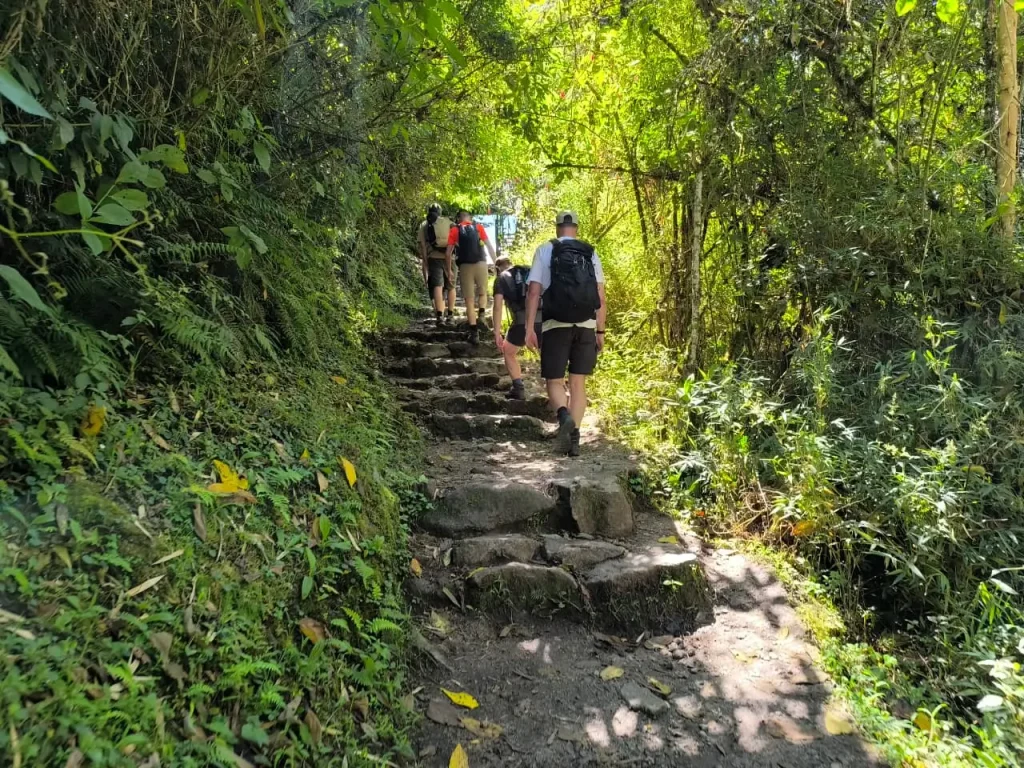
Long descents on stone steps stress the knees
Day 4
Early start, about an hour to the Sun Gate, then Machu Picchu
Mostly walking down; the pace is easier
Our Dead Woman’s Pass guide recommends short, slow steps, brief pauses rather than long stops, and trekking poles with rubber tips to reduce joint strain.
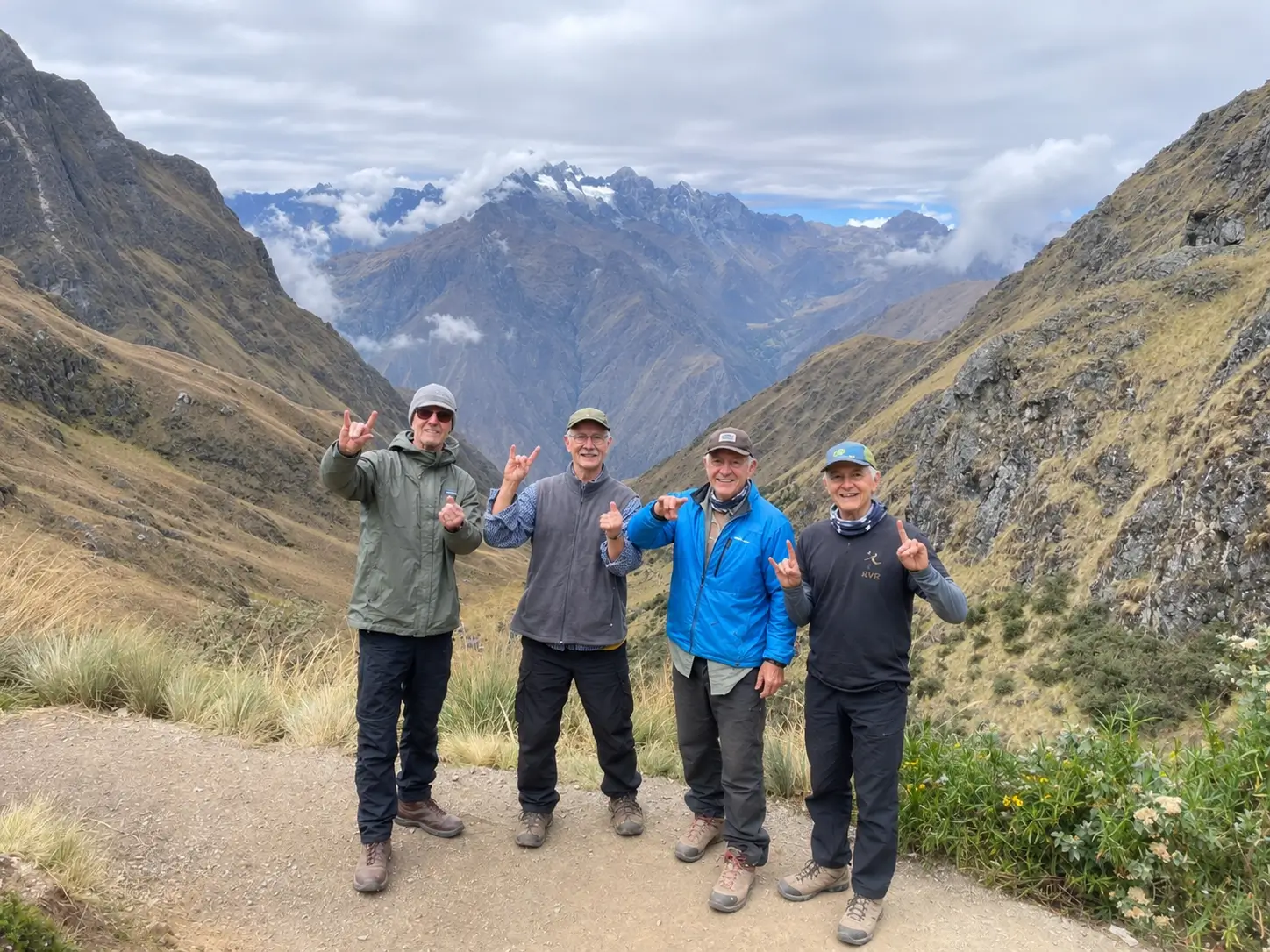
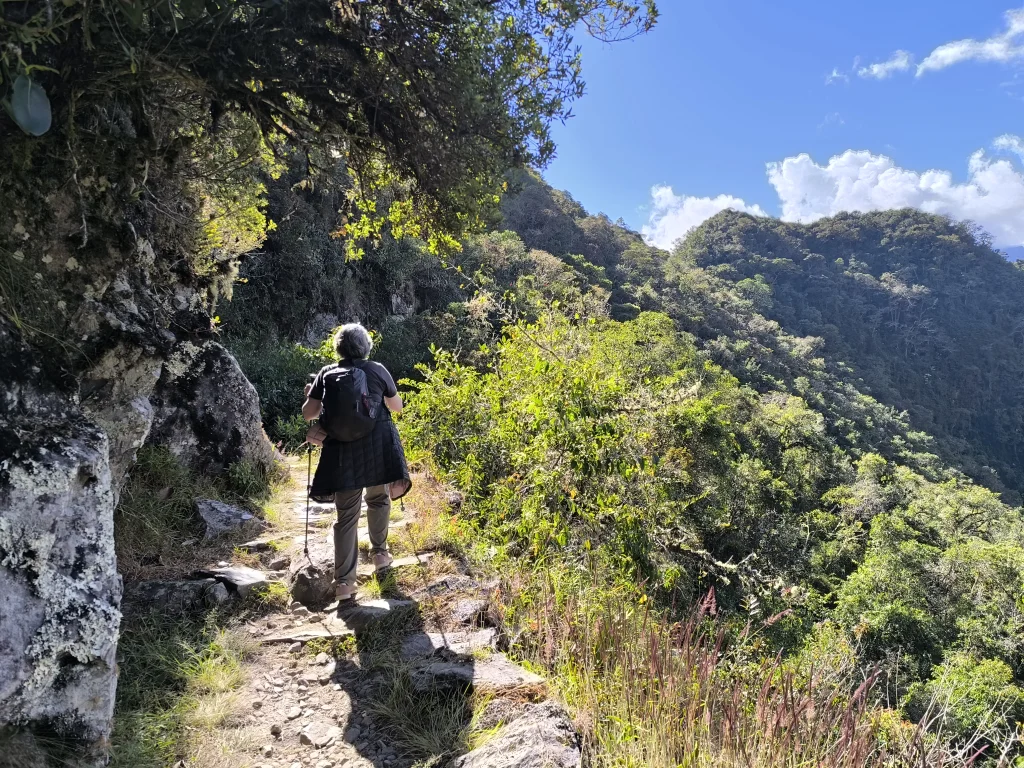
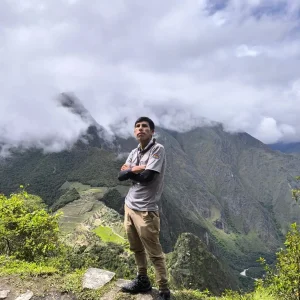
Inca Trail to Machu Picchu after 60Inca Trail to Machu Picchu for Older Hikers
Real-World Benchmarks
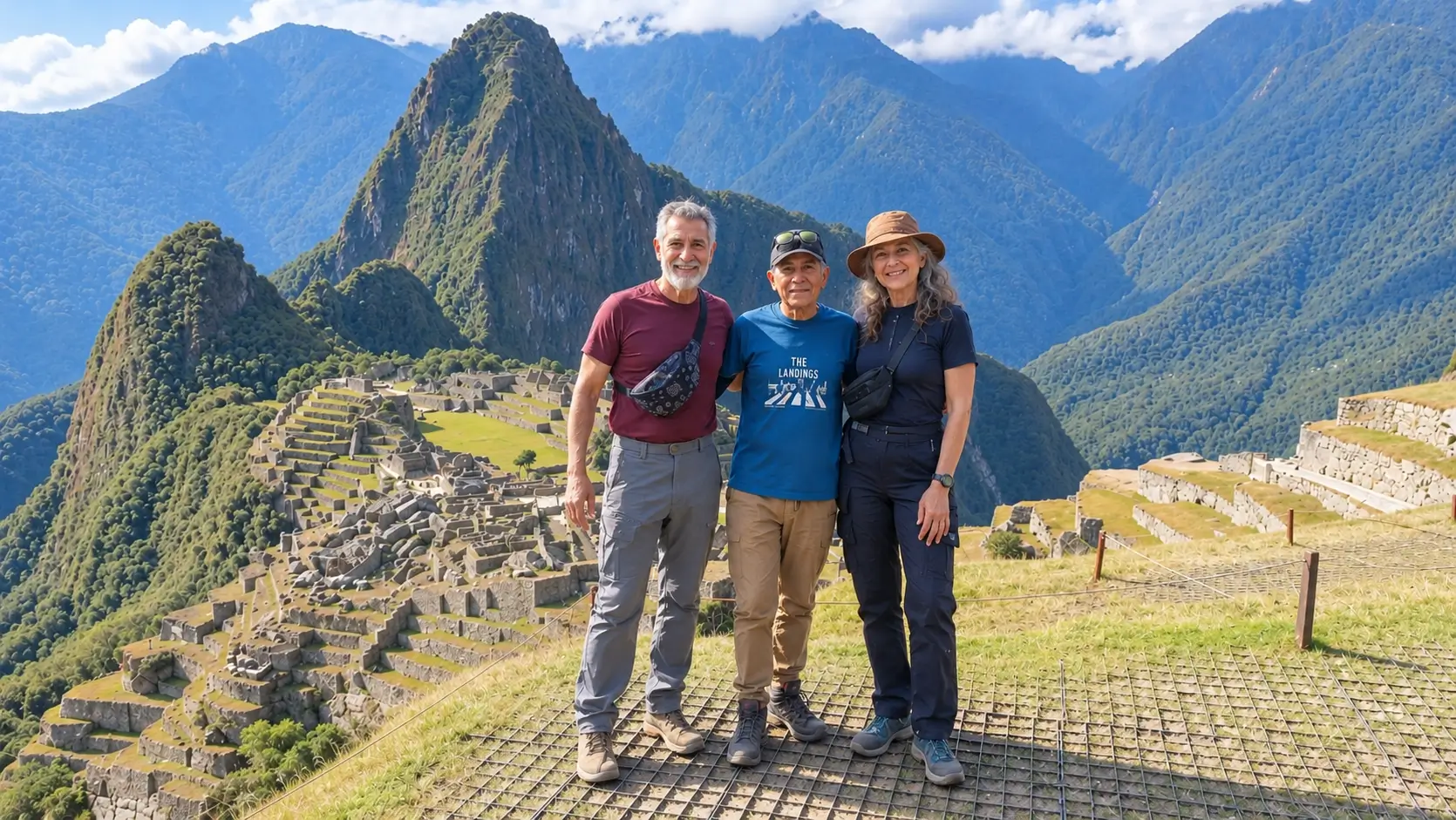
Older hikers do finish the trail. In 2025, Gary Bybee, then 86, completed the 4-day trek with his son and friends, according to his guide the oldest person to do so. His account is useful because it is honest: he sometimes climbed steep sections on hands and knees, and on one day companions helped him for the last 100 yards or so. He recovered and continued the next morning. Peru’s Culture Ministry reportedly told his guide that the previous oldest finishers were 84, 78 and 70.
Those figures show what is possible. They do not mean it will be easy. His guide said most hikers are between 20 and 48, so older trekkers are the exception, and a finish in the 70s or 80s takes serious preparation.
Pros and Cons of the Classic Trail After 60
Pros
Porters carry your main duffel (up to 7 kg, or 15 lb), so you only carry a daypack.
Guides carry emergency oxygen, a first-aid kit and a satellite phone.
You walk the same route at your own steady pace with a guide who knows the altitude symptoms.
Camps and meals are organized, so you do not manage logistics.
Cons
There is no quick road exit. If you cannot continue, the guide coordinates a return to the nearest exit point, and the nearest modern medical facilities are in Cusco.
Day 2 and Day 3 are demanding no matter how slowly you go.
Three nights of camping mean cold nights and basic facilities.
Permits are non-transferable and non-refundable, so a medical problem before departure can cost you the trek.
Gentler Ways to Hike the Inca Trail
If the classic version looks too hard, you have other options. All of them still require reasonable fitness.
6–7 hours on Day 1, then a Machu Picchu tour on Day 2
$500 (group)
Skips the high pass and the full trail
Our comparison of 4 days vs 5 days explains why the longer version suits people with sensitive knees or altitude concerns. If you only have two days, read ourShort Inca Trail vs Classic Inca Trailcomparison. The short route ends with a hotel night and a guided visit to Machu Picchu. It still involves about 620 m (2,030 ft) of climbing and 3 to 4 hours of uphill on Day 1.
How to Prepare If You Are Over 60
See a doctor early
Book an appointment 4 to 6 weeks before departure. Ask about your heart and lungs, and whether altitude medication makes sense for you. Some altitude medications are sulfa-based and not suitable for everyone, so your doctor needs to review any plan. Make sure your travel insurance covers high-altitude trekking and emergency evacuation.
Give your body time at altitude
Cusco sits at 3,400 m (11,150 ft). Plan at least three days there before starting the trek, and consider four to five if you are arriving from sea level. OurInca Trail altitude sickness guide covers symptoms and prevention, and our guide to acclimatizing in Cusco lays out a simple schedule.
Train for descents as well as climbs
Our 8-week Inca Trail training plan is a minimum. If you are over 60 or have not hiked recently, start earlier. Practice stairs, step-ups and long downhill walks with the boots and daypack you will use. Build up to a 4 to 5 hour hike before you leave.
Plan your gear around your joints
Use trekking poles with rubber tips, which also protect the stone. Break in your boots. Keep your daypack light, because porters carry the rest.
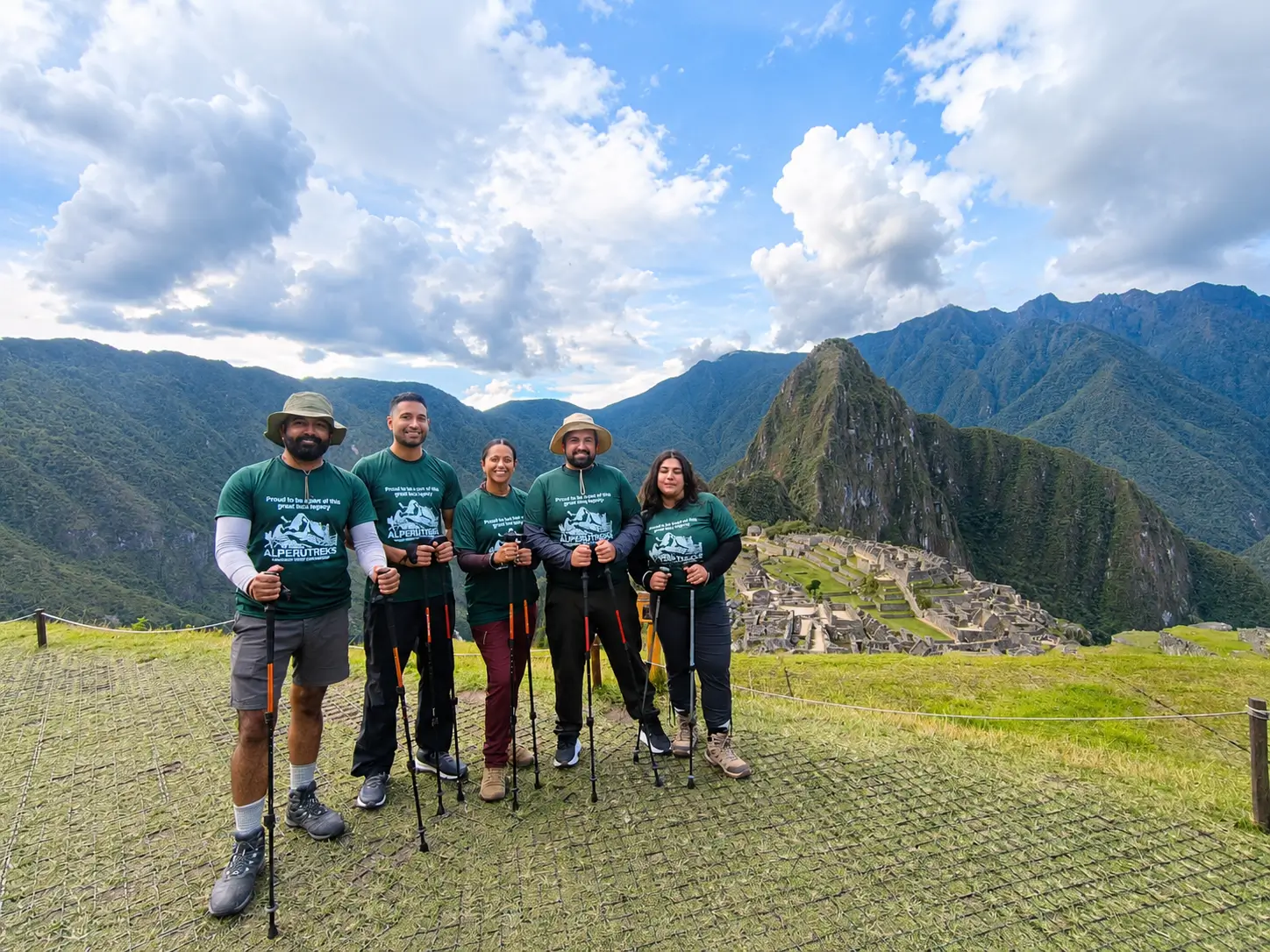
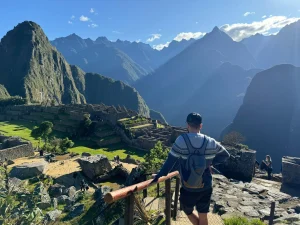
Inca Trail to Machu Picchu for seniorsArrival at Machu Picchu with our adult hikers
Questions to Ask Your Operator
Can the pace be adjusted if I fall behind the group?
Is a later Day 2 start possible?
What oxygen, communication and evacuation equipment does the team carry?
What is the plan if I cannot continue?
What happens to my permit if I cancel for medical reasons?
You will need a licensed operator either way, since the classic trek cannot be hiked independently. Check permit availability early. Permits for May through August are scarce.
When to Choose a Different Route
Consider the short trail or a train visit to Machu Picchu if you cannot comfortably walk 6 to 7 hours on uneven stone steps, if you have severe knee problems or a history of serious altitude illness, or if your doctor advises against high altitude. Our 5-day page does not recommend it for travelers with severe mobility limitations or those who struggle significantly with altitude.
Frequently Asked Questions
Is there an age limit for the Inca Trail?
There is a minimum age set by regulation, but we know of no upper limit. Fitness and health matter more than age.
Can a 70-year-old hike the Inca Trail?
Yes, if they are fit and acclimatized. Peru’s Culture Ministry reportedly named a 70-year-old among previous oldest finishers. A slower itinerary, such as the 5-day or a private departure, improves the odds.
What is the hardest part of the Inca Trail for seniors?
Day 2, the climb to Dead Woman’s Pass at 4,215 m, is the hardest. Day 3’s stone-stair descents are the second challenge, especially for knees.
Should I talk to a doctor before booking?
Yes. See a doctor 4 to 6 weeks before departure, especially with any heart, lung or joint condition, or a history of altitude sickness.
What is the easiest way to see Machu Picchu on foot?
The 2-day Short Inca Trail. It covers about 12 km, tops out at about 2,720 m and ends with a Machu Picchu tour.
Final Thoughts
Being over 60 does not rule out the Inca Trail. Poor preparation does, and so do untreated heart, lung or knee problems. If you are fit, give yourself time in Cusco, train for descents, and choose a pace that suits you, the trek is realistic. If you are unsure, the 5-day or private version is a more forgiving place to start.
The best weather for the Salkantay Trek falls between May and September, when the dry season brings clear skies, stable trails, and the clearest views of Nevado Salkantay — at the cost of freezing nights at high camp. April and October are solid shoulder-season picks, while November through March brings rain, mud, and occasional closures.…
Most first-time visitors end up choosing between two plans. You can leave Cusco before dawn, see Machu Picchu and be back in your hotel the same night. Or you can sleep in Aguas Calientes (the town at the foot of the citadel) and visit the next morning. Neither plan is better in every case. The…
For most trekkers, the 5-day Salkantay trek is the safest choice: it spreads the Salkantay Pass over a full day, adds a gentler first day, and costs $650. Pick the 4-day trek ($580) if you are fit, well acclimatized and short on time. Pick the 6-day ($900) or 7-day ($1,000) if you want to walk…
Choose Huayna Picchu if you are comfortable on narrow, exposed stone steps and want a shorter, steeper climb (roughly 2 to 3 hours round trip) that looks straight down on the ruins. Choose Machu Picchu Mountain if you want a longer, steadier climb (roughly 3 to 4 hours round trip), more height gain and a…
The Ancascocha Trek passes four main Inca sites on its way to Machu Picchu. Perolniyoc (also called Raqaypata) sits on a cliff above a waterfall at about 3,550 m, Rayan Pata is a ceremonial site at about 3,800 m, Paucarcancha guards the junction of two valleys at about 3,100 m, and Patallacta (also called Llactapata)…
Moray and the Maras Salt Mines are two neighboring sites on the high plateau above the Sacred Valley, about 50 km from Cusco, and most travelers visit them together in half a day. Moray is a set of circular Inca terraces, and Maras is a hillside of thousands of salt pans still worked by local…
Plan at least three days in Cusco if you want to see the city and visit Machu Picchu, and four to five days if you also want the Sacred Valley or a high-altitude hike like Rainbow Mountain. Three days is the practical minimum because Cusco sits at 3,399 m (11,152 ft), and your first day…
Yanama Pass, at about 4,660 m (15,290 ft), is the highest point on the trek from Choquequirao to Machu Picchu. It sits in the Vilcabamba range, between the village of Yanama (about 3,500 m) and the Totora valley, and crossing it is usually the longest day of the route: 8 to 10 hours, with a…
The Choquequirao cable car is a planned public-private project that would link the Inca site of Choquequirao with the Apurímac and Cusco sides of the canyon, cutting a journey that now takes about two days on foot to roughly 20 minutes. As of November 2026, it has not been built. The project is still in…
The Choquequirao trek starts at Capuliyoc (about 2,950 m), drops to the Apurímac River at Playa Rosalina (about 1,550 m), and climbs back up through Santa Rosa and Marampata to the ruins at about 3,050 m. That means a descent of roughly 1,400 m followed by a climb of about 1,500 m, each way. This…