Home » Blog » Which Salkantay Trek Should You Choose? 4, 5, 6 or 7 Days Compared
Which Salkantay Trek Should You Choose? 4, 5, 6 or 7 Days Compared
Ali Peru Treks
8 min read
Nov 19, 2026
5 views
For most trekkers, the 5-day Salkantay trek is the safest choice: it spreads the Salkantay Pass over a full day, adds a gentler first day, and costs $650. Pick the 4-day trek ($580) if you are fit, well acclimatized and short on time. Pick the 6-day ($900) or 7-day ($1,000) if you want to walk the Inca Trail and enter Machu Picchu through the Sun Gate. All four cross the same high Andes, but they differ in pace, hotel nights, permits and how you arrive at Machu Picchu.
This guide compares our four Salkantay itineraries side by side, so you can match one to your fitness, budget and calendar.
The Four Salkantay Options at a Glance
Figures come from our tour pages. Distances are the sum of the daily distances listed in each itinerary, and they differ slightly from the headline figures on some pages (see the notes at the end of this section).
4 days
5 days
6 days (Salkantay + Short Inca Trail)
7 days (Salkantay + Inca Trail)
Group price (per person)
$580
$650
$900
$1,000
Distance
About 62 km
About 69 km
About 80 km
About 83 km
Highest point
Salkantay Pass, about 4,650 m
Salkantay Pass, about 4,630 m
Salkantay Pass, about 4,630 m
Listed as 4,630 m
Nights
2 camping, 1 hotel
3 camping, 1 hotel
3 camping, 2 hotel
6 camping
Inca Trail section
No
No
Short Inca Trail (from Km 104)
Classic Inca Trail
Arrival at Machu Picchu
Bus and guided tour (Circuit 2)
Bus and guided tour (Circuit 2)
Sun Gate, then a second day in the citadel
Sun Gate at sunrise
Permit that sells out
No
No
Short Inca Trail permit
Classic Inca Trail permit
Difficulty
Challenging
Challenging
Challenging
Challenging
Students and travelers 17 and under get $30 off on all four. Private departures cost more for small groups, for example $750 per person for two or three hikers on the 4-day. A few data points on our pages disagree, such as the 5-day page’s headline distance of 90 km, so confirm the final numbers with us when you book.
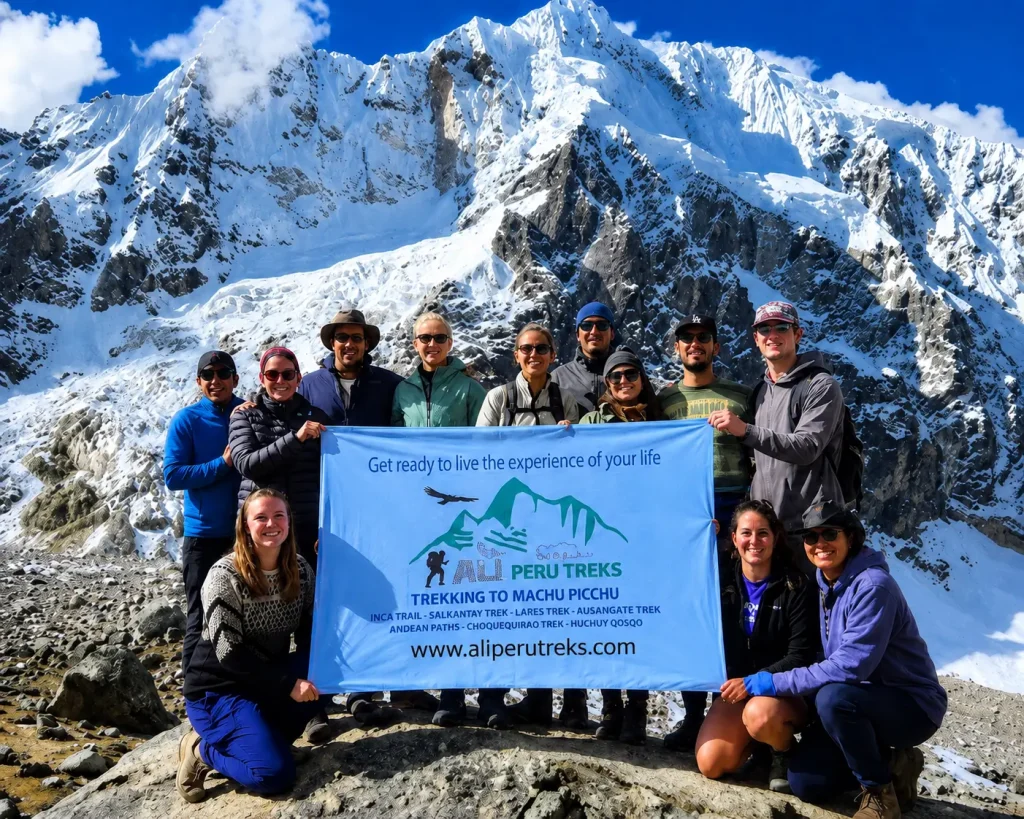
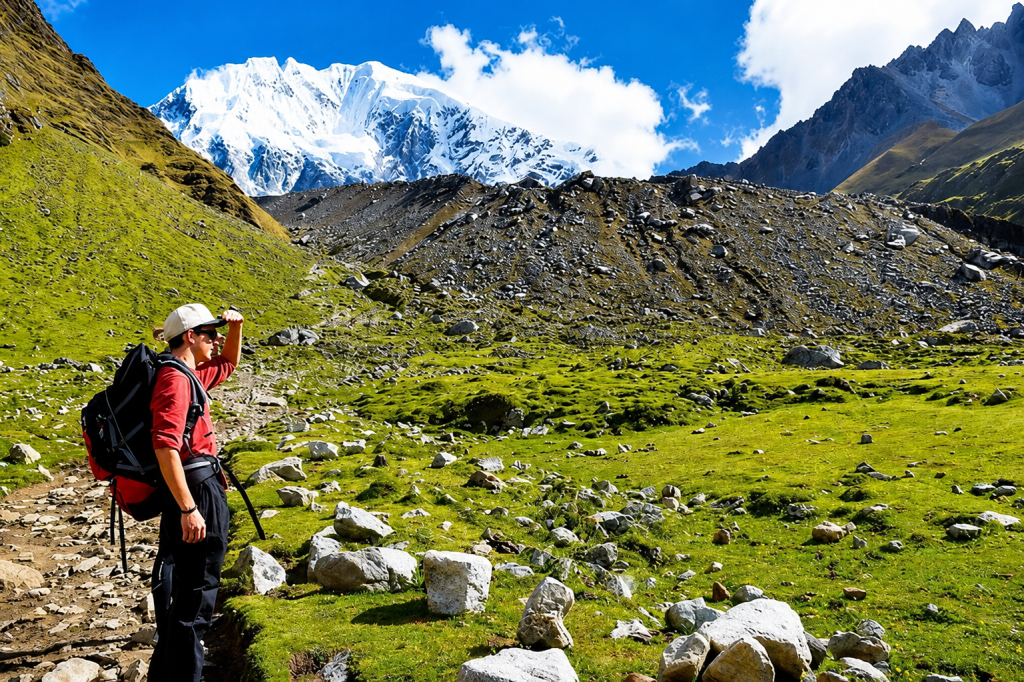
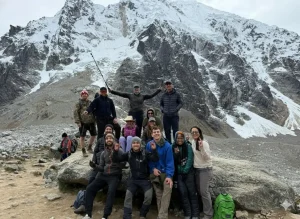
High Mountain Pass Summit Views on a Salkantay Trek to Machu PicchuSalkantay Trek Snow-Capped Mountain to Machu PicchuA hiker looking at the imposing snow-capped Salkantay.
What All Four Have in Common
Every version starts near Soraypampa and Humantay Lake, crosses the Salkantay Pass or the high ground beside it, and descends into cloud forest. Our team provides guides, cooks, horses, tents, meals and emergency oxygen. Your duffel is limited to 7 kg (15 lb), carried by horses, and you carry a daypack. See our packing list for what fits.
None of the four is a casual walk. Pick by pace and logistics. For how Salkantay compares with other routes, read our Salkantay vs. Inca Trail comparison.
4-Day Salkantay Trek: Fast and Demanding
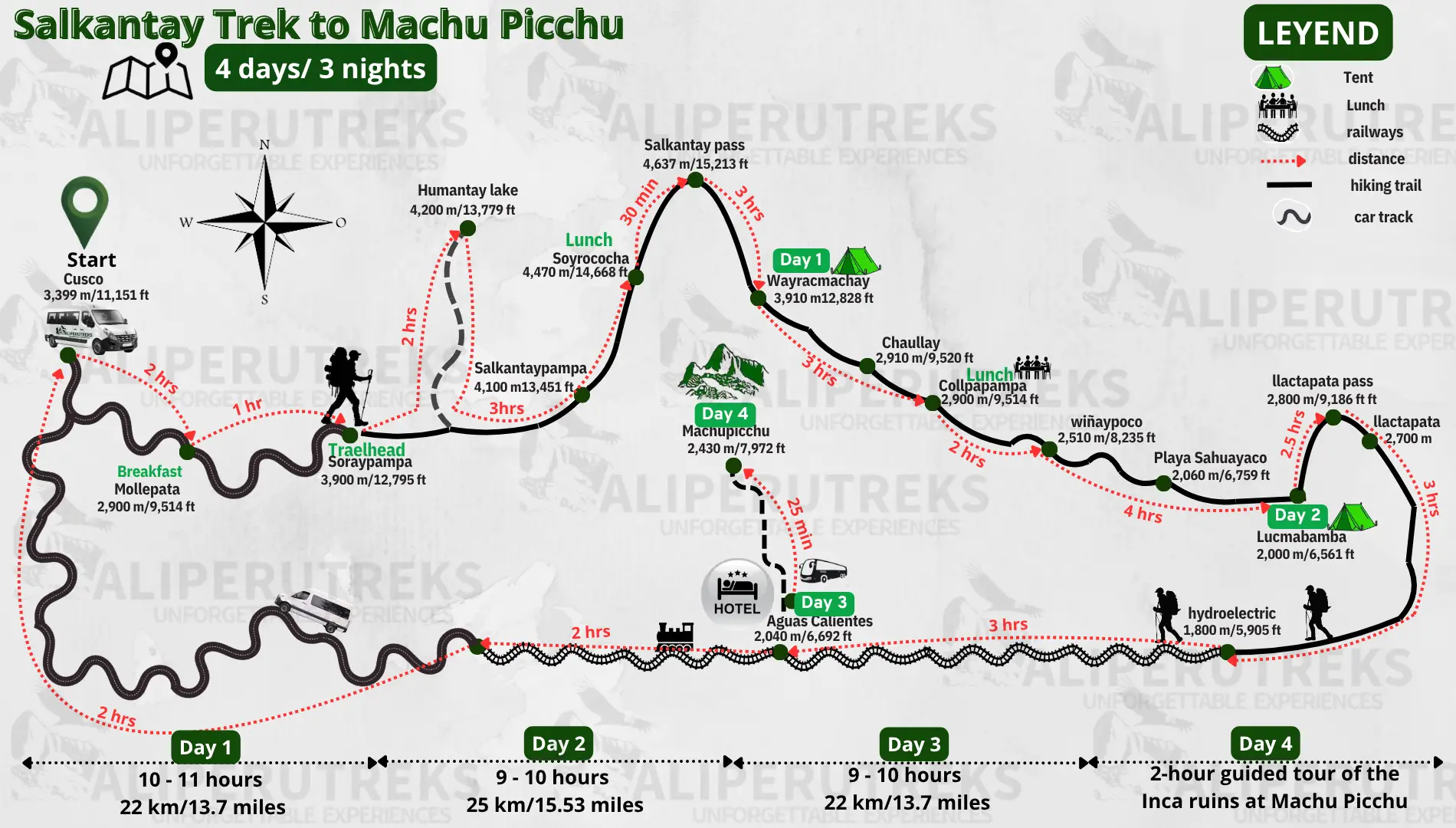
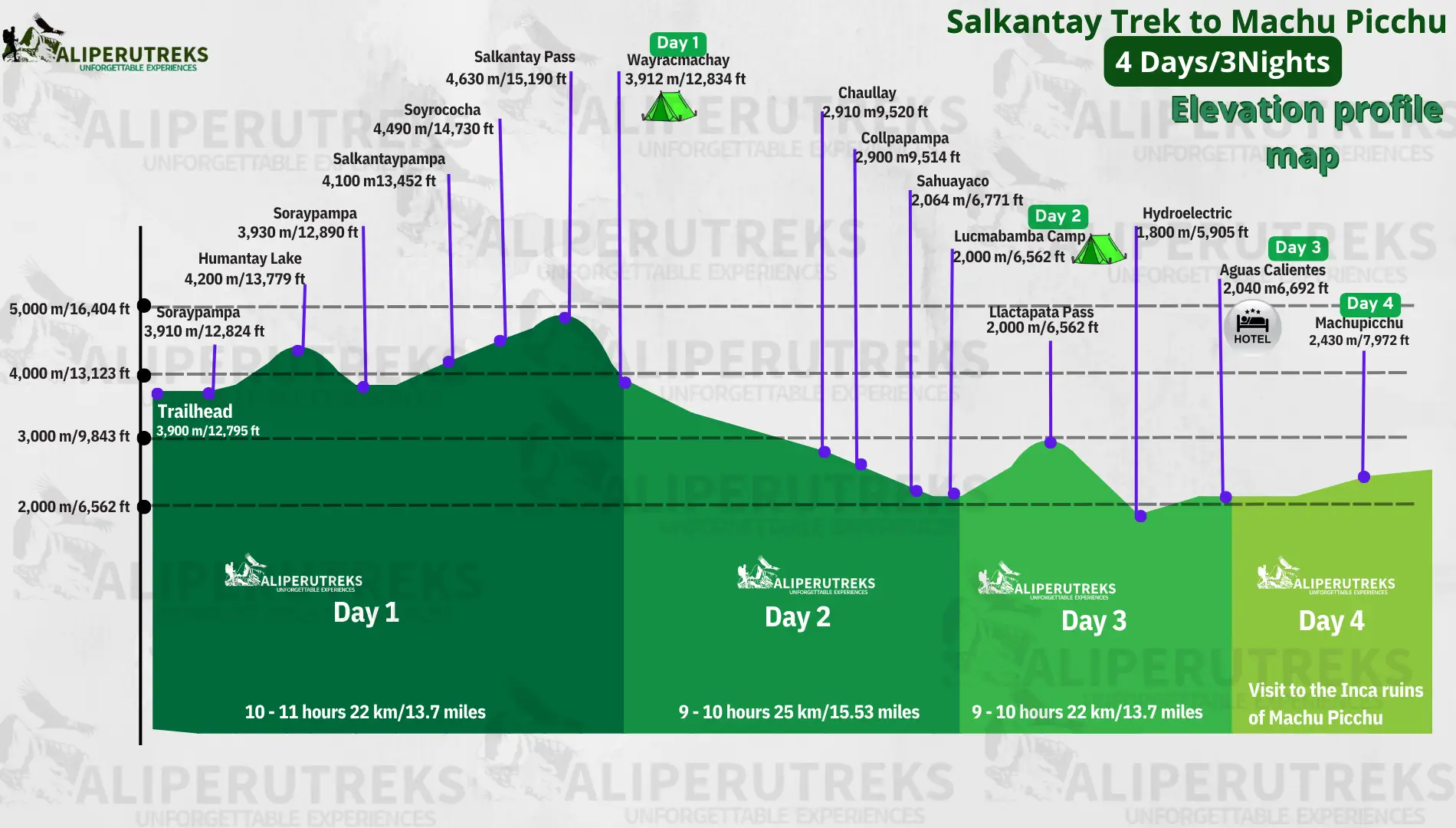
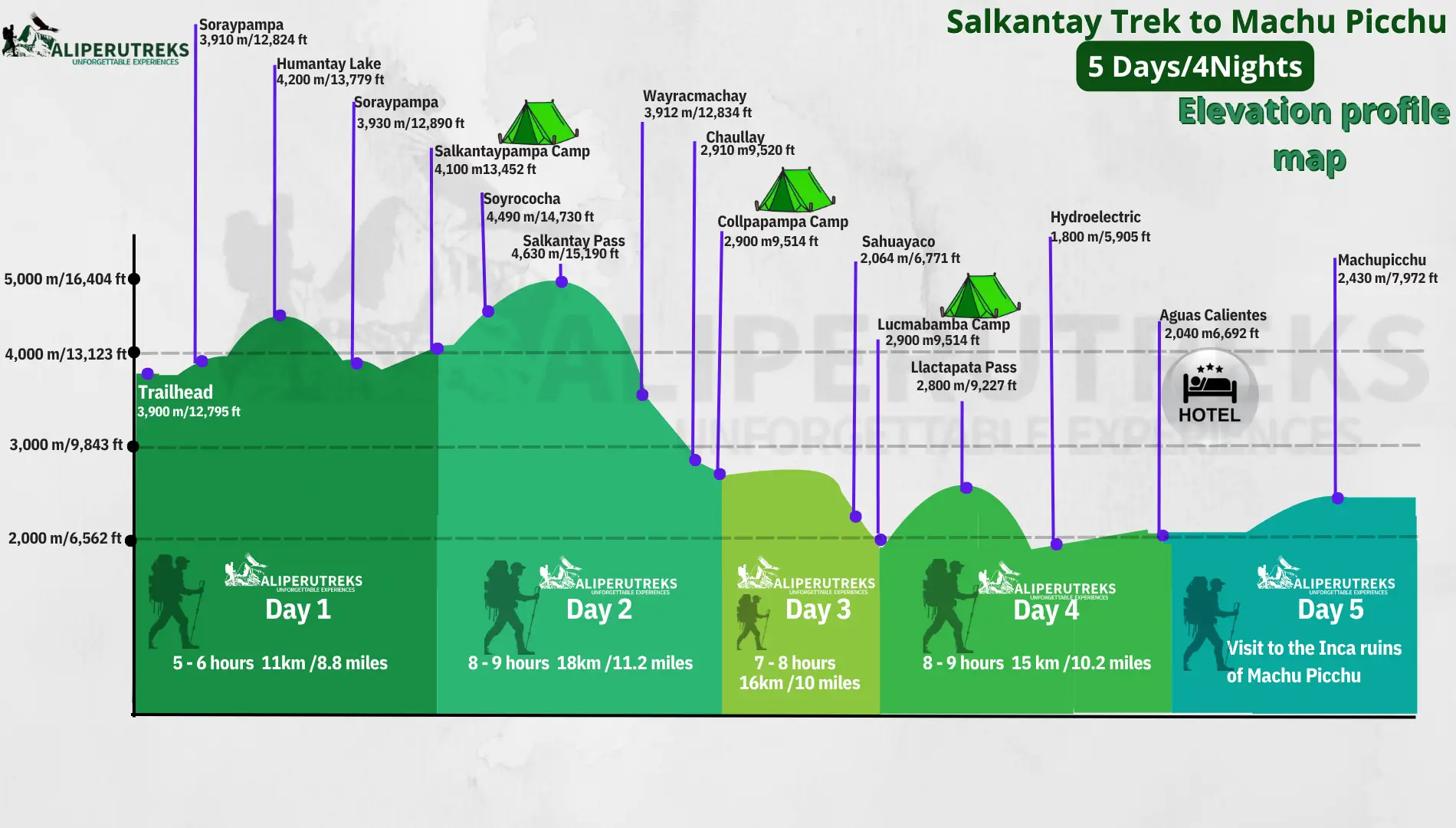
The 4-day trek covers the same landmarks as the 5-day, but it compresses them. On Day 1 you leave Cusco at about 4:00 AM, visit Humantay Lake, cross the pass at about 4,650 m and camp at Wayracmachay (3,900 m). That is about 22 km and 10 to 12 hours, starting from a hotel at 3,400 m.
Pros
The lowest price at $580 and the fewest days away.
Same lake, pass, cloud forest and Machu Picchu visit as the 5-day.
Day 4 is light: a guided tour of Machu Picchu, then the train.
Cons
Day 1 is very demanding. You gain altitude, cross the pass and descend, all in one day.
Days 2 and 3 run 8 to 9 hours each, about 18 km and 22 km.
Less time for acclimatization and recovery. If a day goes badly, there is little slack.
Only one hotel night, so there is less time to rest before Machu Picchu.
Best for: fit hikers who have spent at least two or three days in Cusco and have a tight schedule.
5-Day Salkantay Trek: The Balanced Choice
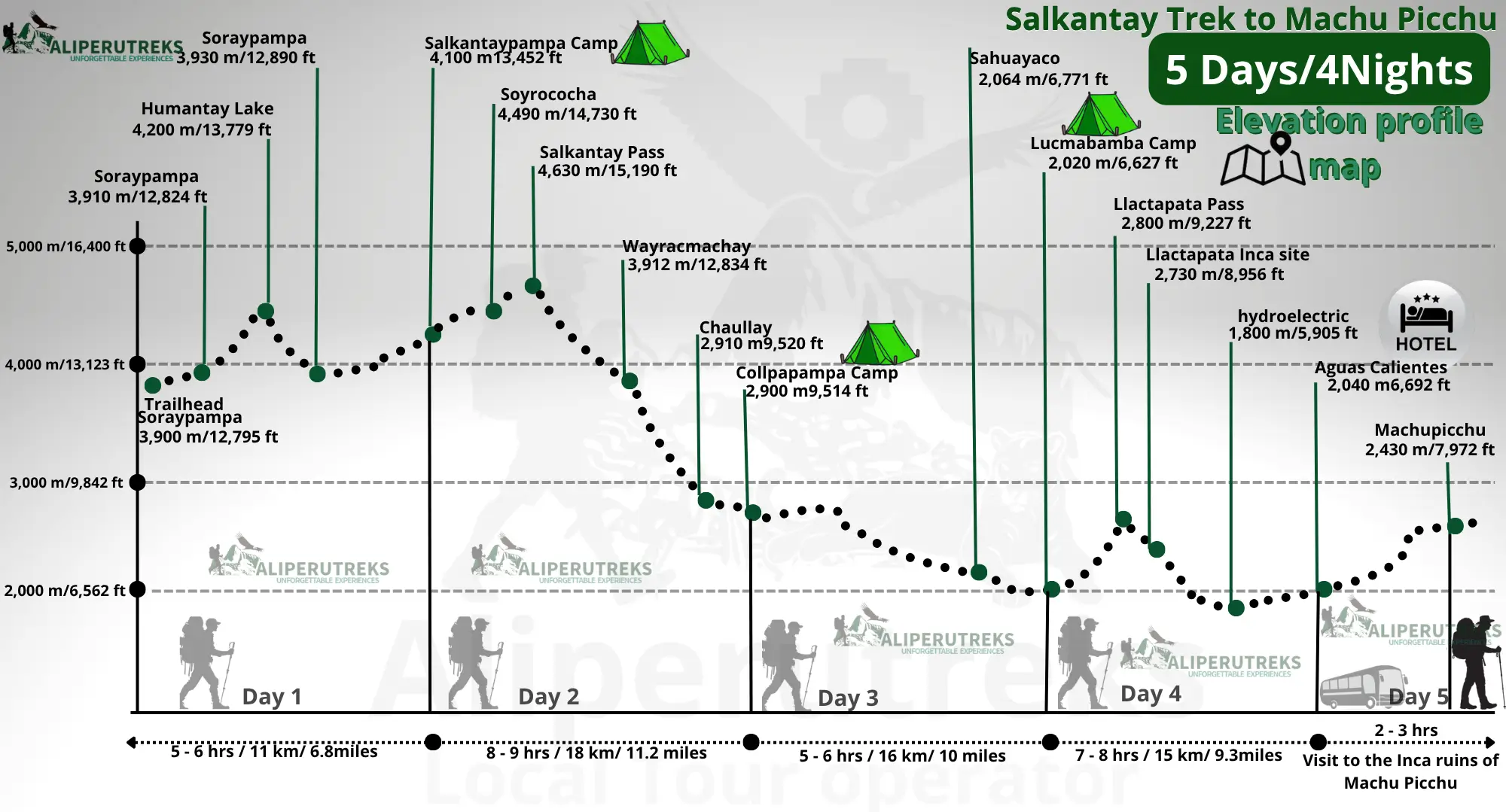
The 5-day splits Day 1 and Day 2. Day 1 is about 11 km to Humantay Lake and a camp near 4,100 m. Day 2 is the pass day, about 18 km and 7 to 9 hours, with a long descent to about 2,900 m. Day 3 is about 16 km to Lucmabamba with a coffee farm visit. Day 4 is the longest, about 24 km, and ends in Aguas Calientes. Day 5 is Machu Picchu.
Pros
Starts with a short, moderate day, which helps you adjust before the pass.
You sleep near 4,100 m only once, before descending on Day 2.
Includes a coffee farm visit and a hotel night before Machu Picchu.
Cons
Day 4 is long, about 24 km and 7 to 9 hours.
Costs $70 more than the 4-day and takes an extra day.
The first two nights can drop to freezing at the high camps.
Best for: most first-time trekkers, and anyone who wants a margin for bad weather or a slow day.
We also run a 5-day variant that camps on the Llactapata ridge facing Machu Picchu on Night 3, instead of at the valley campsite. Ask us about it if the view matters to you.
6-Day Salkantay + Short Inca Trail: Add the Sun Gate
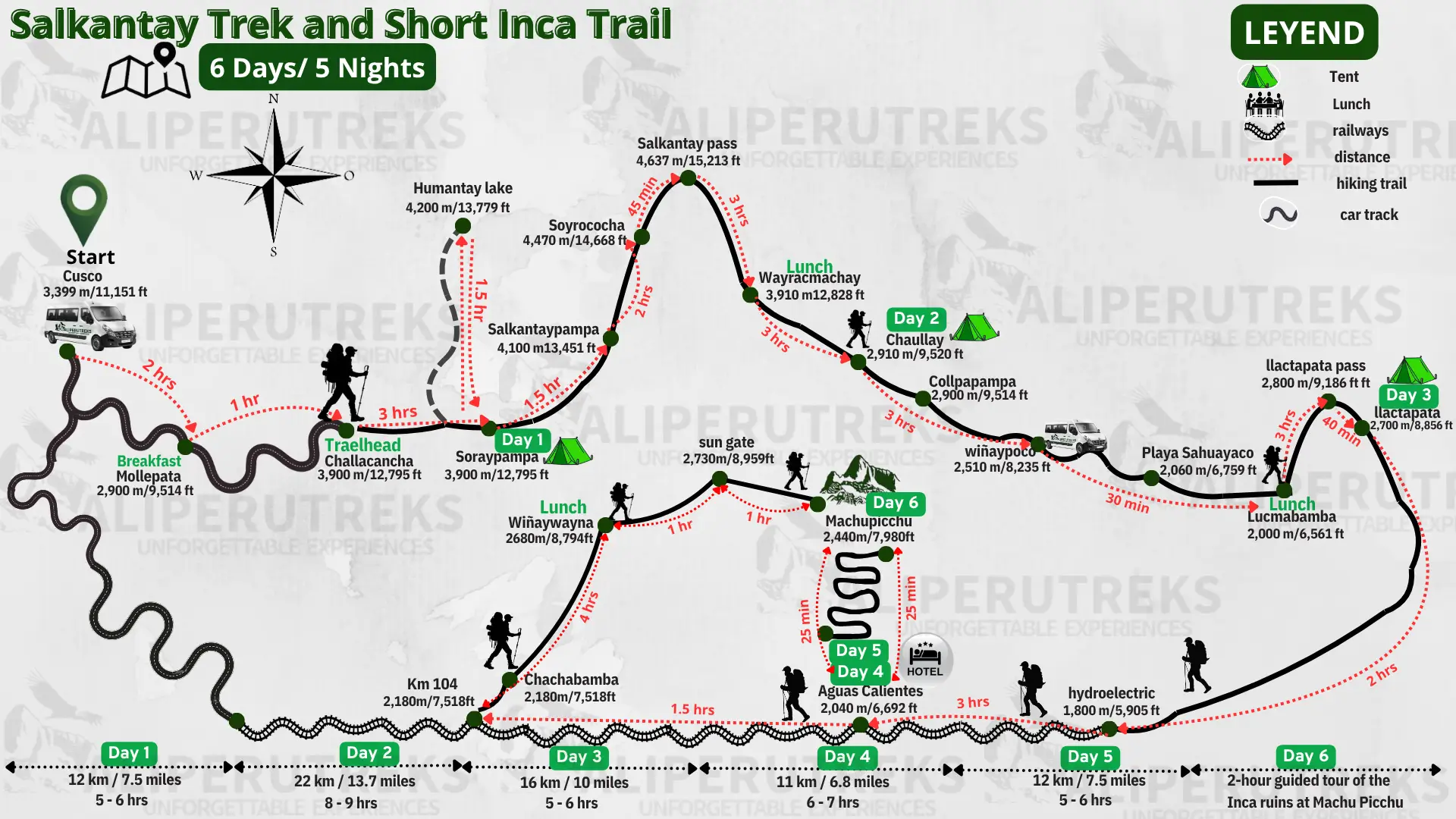
This itinerary, the 6-day version, follows the same four trekking days as the 5-day version, then adds the final stretch of the Inca Trail. On Day 5 you walk about 12 km from Km 104 past Chachabamba and Wiñay Wayna to the Sun Gate, then sleep in Aguas Calientes. Day 6 is a guided tour of Machu Picchu on Circuit 3.
Pros
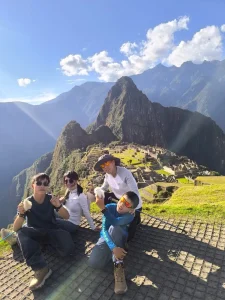
You arrive on foot through the Sun Gate, which the 4- and 5-day do not offer.
Two hotel nights and two days at Machu Picchu.
Day 5 is rated moderate, and the Inca Trail section is at lower altitude (about 2,150 to 2,720 m).
Cons
$250 more than the 5-day.
The Short Inca Trail permit is limited and can sell out months ahead, especially from May to September. It is also closed every February.
You arrive at the Sun Gate in the afternoon, not at sunrise.
Permits cannot be changed or refunded once issued.
Best for: trekkers who want the pass and a taste of the Inca Trail, but not seven days.
7-Day Salkantay + Inca Trail: The Longest Route
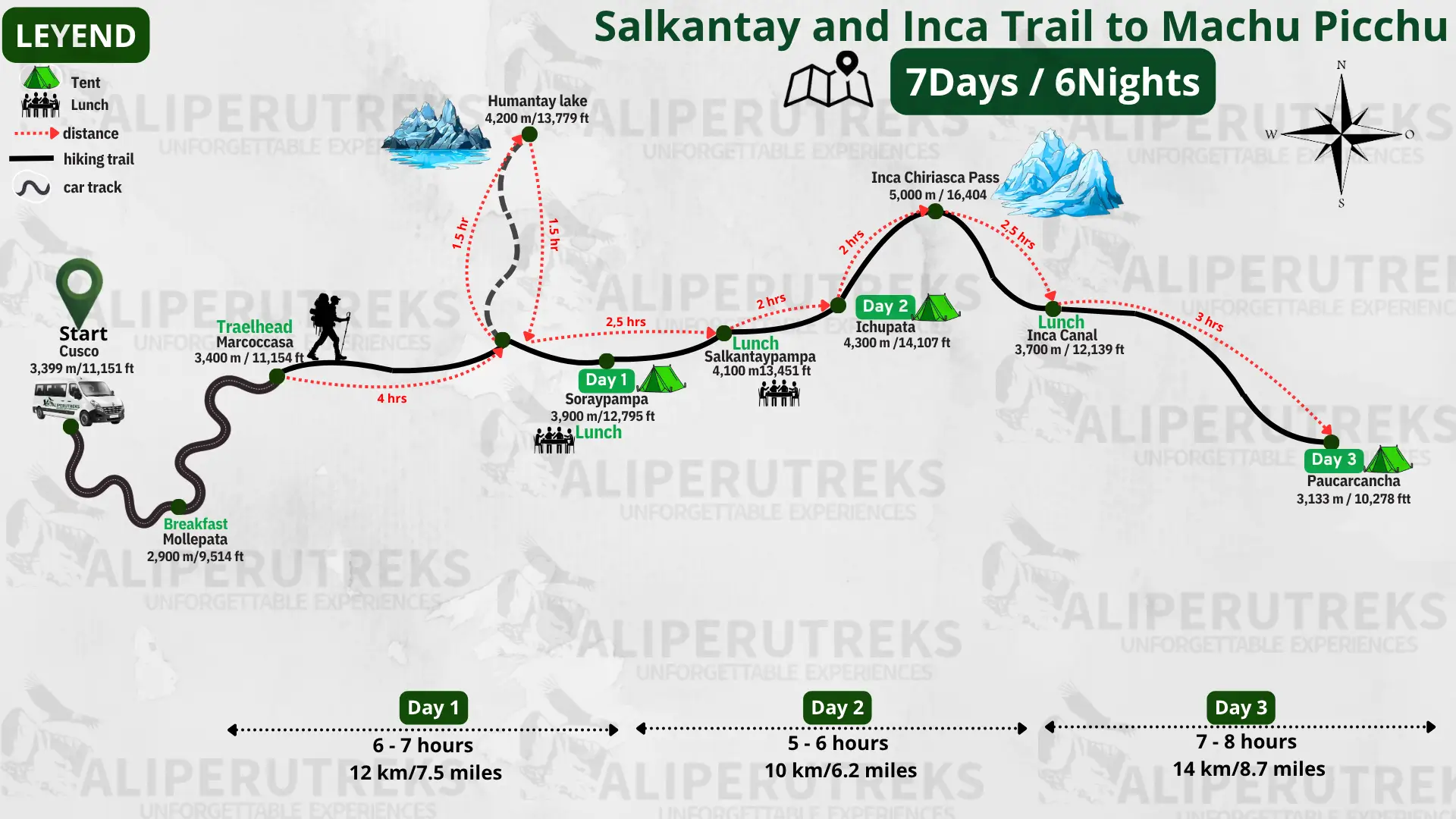
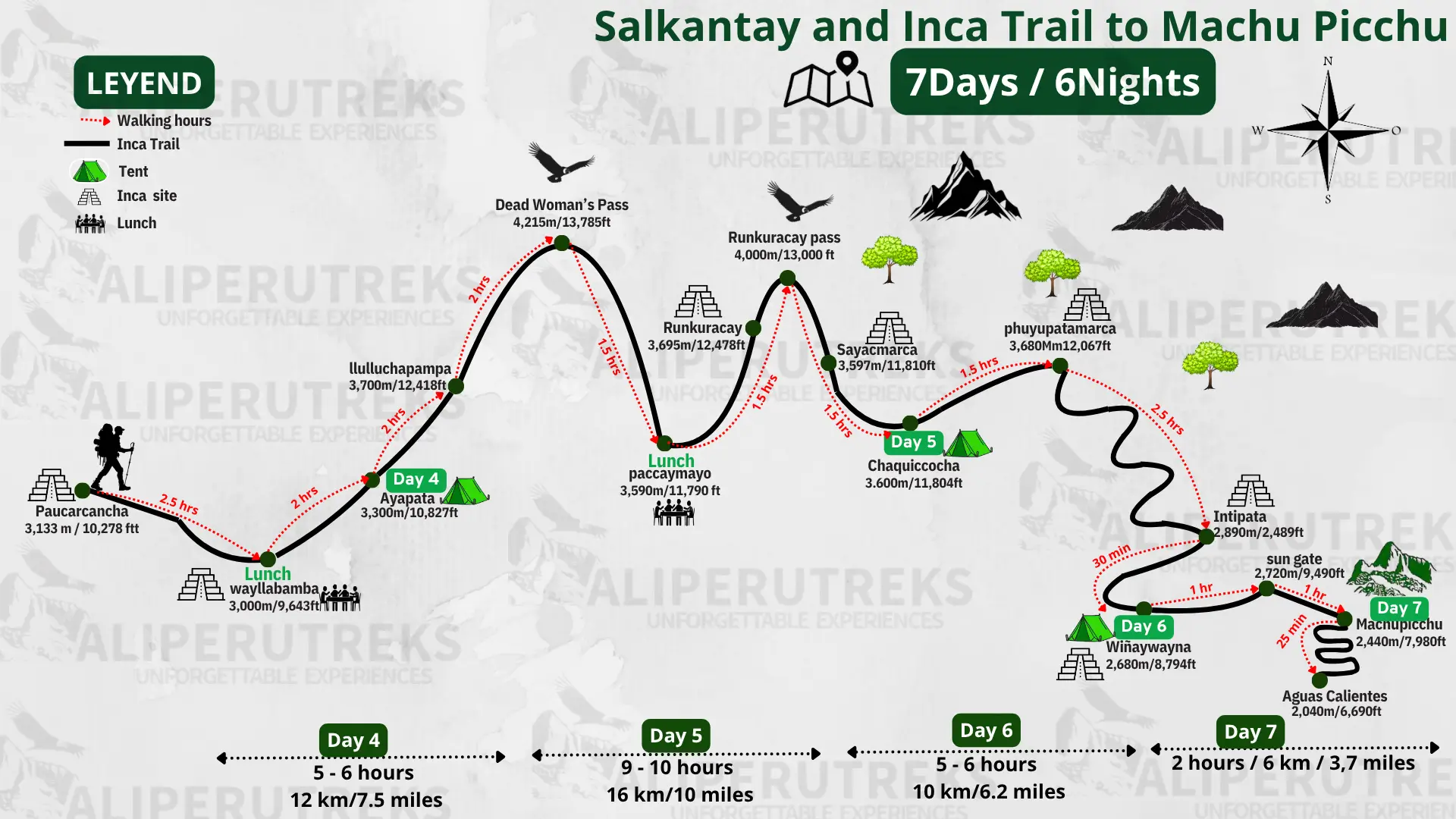
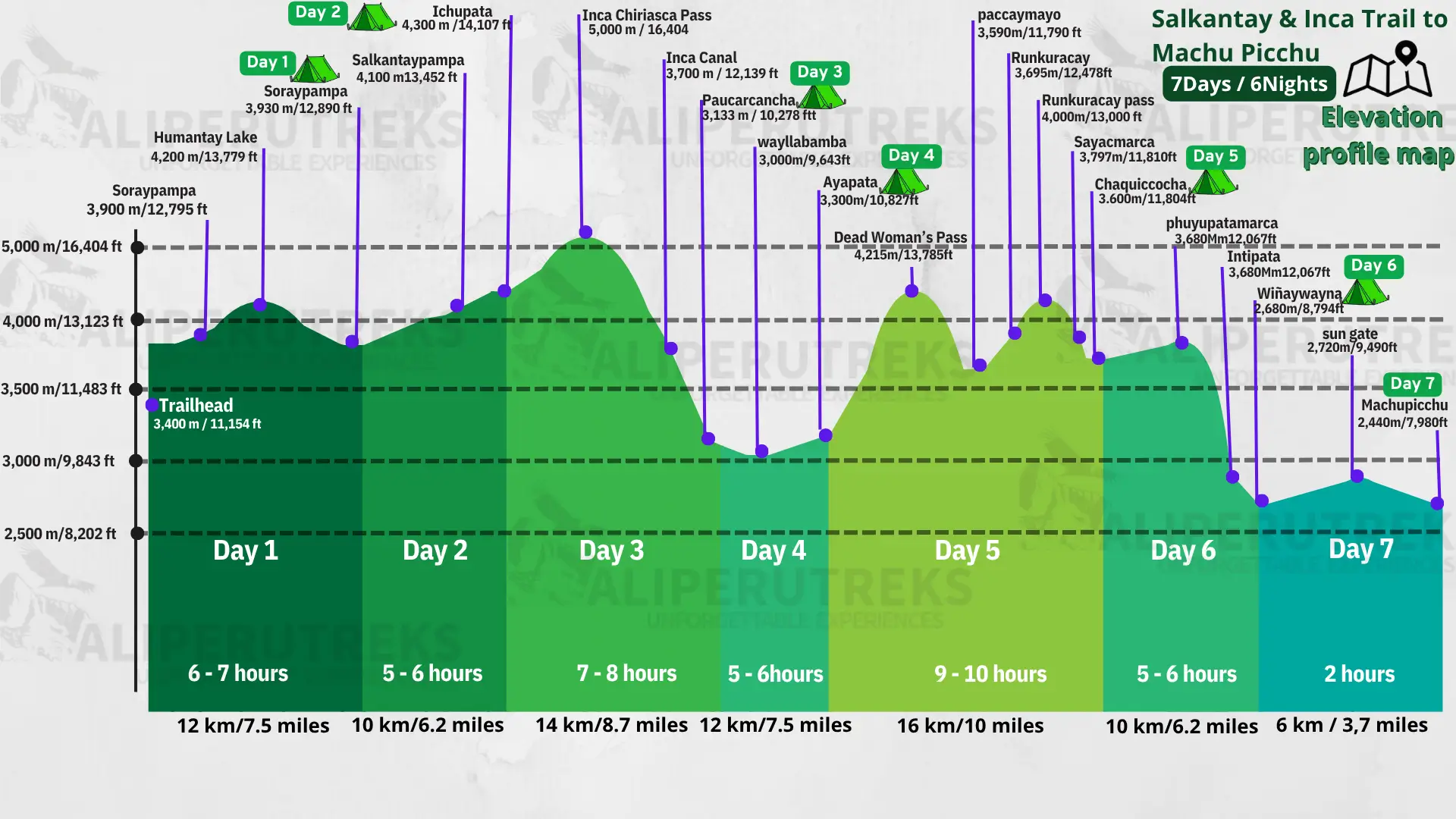
The 7-day trek is a different route from the other three. It starts with Humantay Lake and the high ground near Salkantay, then crosses to the Classic Inca Trail near Paucarcancha and Huayllabamba. From there you follow the standard four-day Inca Trail: Dead Woman’s Pass (4,215 m), Phuyupatamarca and Wiñay Wayna, reaching the Sun Gate on Day 7. Day 5, over Dead Woman’s Pass, runs 9 to 10 hours.
Pros
Both Salkantay scenery and the Classic Inca Trail in one trek.
Sunrise arrival at the Sun Gate, with Machu Picchu entry on Circuits 1 and 3.
Six nights camping, with a gradual build-up.
Cons
The most expensive option, at $1,000.
Needs a Classic Inca Trail permit, which is capped at 500 people per day including staff and can sell out 4 to 6 months ahead for the dry season.
Closed every February.
It does not follow the standard Salkantay route down to Lucmabamba, so it does not include the Lucmabamba coffee farm stop listed on the other itineraries.
Best for: experienced trekkers with a full week who want to compare both trails and can book far ahead.
How to Choose
If you…
Choose
Have 4 days and are fit and acclimatized
4 days
Are a first-time multi-day trekker
5 days
Want a margin for weather or a slow day
5 days
Want to walk through the Sun Gate with a shorter trek
6 days
Want both Salkantay and the Classic Inca Trail
7 days
Are traveling in February
4 or 5 days
Are booking less than 4 months out for May to September
4 or 5 days
Have a tight budget
4 days
If you are undecided, the 5-day is the lower-risk pick, but the right answer depends on your schedule, fitness and budget.
Book permits early. The 6- and 7-day need Inca Trail permits. Check our Inca Trail permit availability before you commit.
Plan the season. The dry season runs from about April to October, with the coldest nights in the middle of the dry season. For details by month, see our Salkantay and Machu Picchu weather guide.
Budget the extras. Sleeping bag rental is about $25 and trekking poles about $15 to $20. See our Salkantay trek price guide for what else to plan for.
Consider the alternatives. If Salkantay does not fit, see how it compares with the Lares trek or the Ancascocha trek.
Frequently Asked Questions
Is the 4-day or 5-day Salkantay trek better?
The 5-day is better for most people because it splits the first two days and gives you time to adjust to altitude. The 4-day suits fit, acclimatized hikers on a tight schedule and covers the same landmarks at a faster pace. Both are rated challenging.
How much does the Salkantay trek cost?
On our group departures, the 4-day costs $580, the 5-day $650, the 6-day (with the Short Inca Trail) $900 and the 7-day (with the Classic Inca Trail) $1,000 per person. Private departures and rentals cost extra.
Do I need a permit for the Salkantay trek?
No permit is required for the 4- and 5-day. The 6-day needs a Short Inca Trail permit and the 7-day needs a Classic Inca Trail permit, and both can sell out months ahead. Machu Picchu tickets also need advance booking.
What is the highest point on the Salkantay trek?
The Salkantay Pass, at about 4,630 m (15,190 ft). Our pages list slightly different figures for the pass, between 4,630 and 4,650 m.
Can I do the Salkantay trek in February?
The 4- and 5-day run year-round, but February is the heart of the rainy season, so expect mud and rain. The 6- and 7-day are closed in February because the Inca Trail closes for maintenance.
No, not automatically. We know of no official upper age limit for the Inca Trail, and the oldest reported finisher was 86. What decides whether the trek is realistic is your fitness, how your body handles 4,215 m (13,828 ft), the condition of your knees, and any heart or lung condition. The hardest stretches are…
The best weather for the Salkantay Trek falls between May and September, when the dry season brings clear skies, stable trails, and the clearest views of Nevado Salkantay — at the cost of freezing nights at high camp. April and October are solid shoulder-season picks, while November through March brings rain, mud, and occasional closures.…
Most first-time visitors end up choosing between two plans. You can leave Cusco before dawn, see Machu Picchu and be back in your hotel the same night. Or you can sleep in Aguas Calientes (the town at the foot of the citadel) and visit the next morning. Neither plan is better in every case. The…
Choose Huayna Picchu if you are comfortable on narrow, exposed stone steps and want a shorter, steeper climb (roughly 2 to 3 hours round trip) that looks straight down on the ruins. Choose Machu Picchu Mountain if you want a longer, steadier climb (roughly 3 to 4 hours round trip), more height gain and a…
The Ancascocha Trek passes four main Inca sites on its way to Machu Picchu. Perolniyoc (also called Raqaypata) sits on a cliff above a waterfall at about 3,550 m, Rayan Pata is a ceremonial site at about 3,800 m, Paucarcancha guards the junction of two valleys at about 3,100 m, and Patallacta (also called Llactapata)…
Moray and the Maras Salt Mines are two neighboring sites on the high plateau above the Sacred Valley, about 50 km from Cusco, and most travelers visit them together in half a day. Moray is a set of circular Inca terraces, and Maras is a hillside of thousands of salt pans still worked by local…
Plan at least three days in Cusco if you want to see the city and visit Machu Picchu, and four to five days if you also want the Sacred Valley or a high-altitude hike like Rainbow Mountain. Three days is the practical minimum because Cusco sits at 3,399 m (11,152 ft), and your first day…
Yanama Pass, at about 4,660 m (15,290 ft), is the highest point on the trek from Choquequirao to Machu Picchu. It sits in the Vilcabamba range, between the village of Yanama (about 3,500 m) and the Totora valley, and crossing it is usually the longest day of the route: 8 to 10 hours, with a…
The Choquequirao cable car is a planned public-private project that would link the Inca site of Choquequirao with the Apurímac and Cusco sides of the canyon, cutting a journey that now takes about two days on foot to roughly 20 minutes. As of November 2026, it has not been built. The project is still in…
The Choquequirao trek starts at Capuliyoc (about 2,950 m), drops to the Apurímac River at Playa Rosalina (about 1,550 m), and climbs back up through Santa Rosa and Marampata to the ruins at about 3,050 m. That means a descent of roughly 1,400 m followed by a climb of about 1,500 m, each way. This…