

Llama Trekking in Peru: Why Llamas Carry the Gear on Ausangate
On the Ausangate llama trek, a caravan of llamas led by local herders carries the camping equipment and your duffel bag, so you hike with only a daypack. Llamas are used because they are native to the high Andes, they are lighter on the trail than horses, and hiring them supports the herding families who live around Ausangate. They also have limits, which is why an emergency horse still walks with every group.
What Is a Llama Trek?
A llama trek is a guided, multi-day hike where llamas, rather than porters, horses, or mules, carry the group’s gear. In Peru, the best-known llama treks run in the Ausangate region of the Vilcanota mountain range, southeast of Cusco, where herding families still keep large flocks of llamas and alpacas.
On our Ausangate and Rainbow Mountain llama trek, the caravan carries the tents, kitchen equipment, food, and your duffel bag of up to 8 kg. You walk alongside the herders for four days, crossing passes close to 5,000 m before reaching Rainbow Mountain on the final morning.
Llamas are not ridden on these treks. They are pack animals, and an adult llama will not carry a person. That is the main reason an emergency horse travels with the group.

Why Llamas Instead of Horses or Mules?
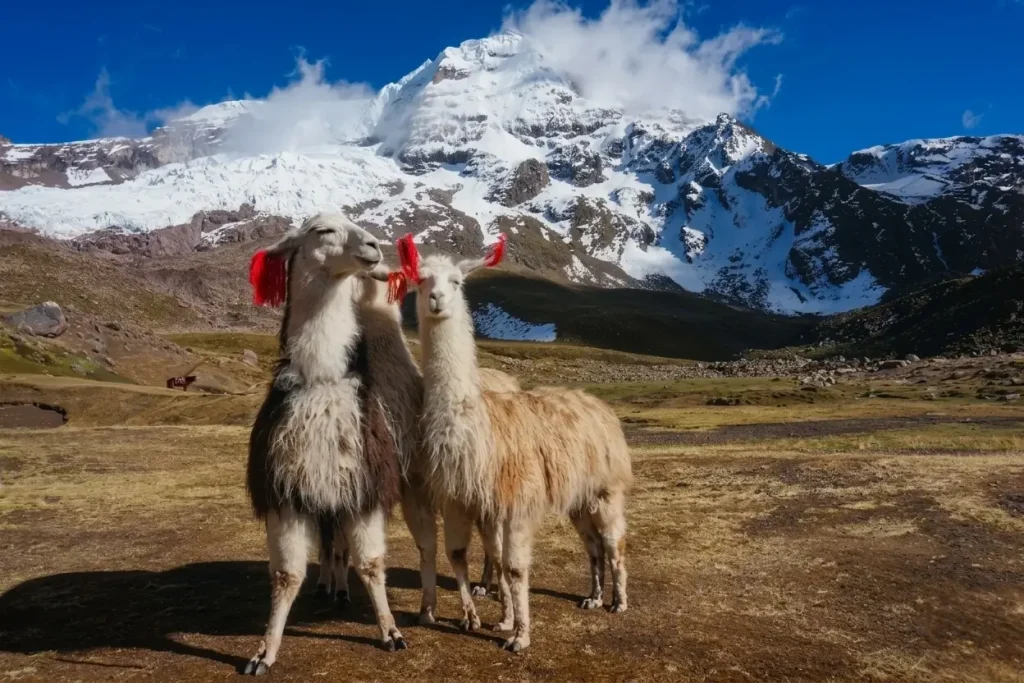
Most treks around Cusco use horses or mules to carry gear. On Ausangate, llamas are the traditional choice for a few practical and cultural reasons.
They Are Built for High Altitude
Llamas are domesticated Andean animals that have lived at high elevations for thousands of years. The Ausangate route stays above 4,000 m for most of its length, with camps between about 4,400 and 4,850 m, and llamas are well adapted to that environment. For the herders who raise them, they are part of daily life at these altitudes.
They Are Gentler on the Trail
Llamas have soft, padded feet instead of hard hooves. On fragile high-Andean trails and wet grasslands, that means less erosion and less damage to the path. Our Ausangate to Rainbow Mountain guide covers this in more detail, along with the full packing list for the route.
They Keep a Tradition Alive
The Incas relied on llama caravans to move goods across the Andes, long before horses arrived with the Spanish. In the Ausangate area, herding is still the main livelihood for many Quechua families. Hiring their llamas and their skills as herders puts money directly into those communities, and it gives trekkers a chance to see how the animals are handled, loaded, and cared for.
They Are Calm, Social Animals
Llamas move in groups and tend to follow a lead animal. They are generally calm around people. They will also make their limits clear: an overloaded llama will lie down and refuse to move until the load is lightened, which is one reason herders are strict about weight.
How Much Can a Llama Carry?
Pack llamas generally carry about a quarter of their body weight, and less for long days in rough terrain. In practice, that means a llama carries far less than a horse or mule, so a llama trek needs more animals for the same amount of gear.
That is why the personal allowance is limited. Here is how it compares across our Ausangate treks:
| Trek | Pack animals | Your duffel allowance |
|---|---|---|
| Ausangate Llama Trek 4 Days | Llama caravan, plus emergency horse | Up to 8 kg, including sleeping bag |
| Ausangate Trek 5 Days to Machu Picchu | Llamas and horses | Up to 7 kg, including sleeping bag |
| Ausangate Trek 4 Days to Machu Picchu | Horses | Up to 7 kg |
| Ausangate Trek 2 Days | Horses | Up to 7 kg |
Whichever route you choose, you carry your own daypack with water, layers, rain gear, and snacks. On the llama trek, plan for a 25 to 35 L daypack and 2.5 to 3 liters of water.
Llamas vs. Horses: Honest Pros and Cons
Neither option is better in every way. Here is how they compare on a trek like Ausangate.
| Llamas | Horses or mules | |
|---|---|---|
| Load per animal | Lighter, about a quarter of body weight | Heavier |
| Impact on trails | Soft, padded feet; less erosion | Hooves cause more wear on wet ground |
| Can carry a person | No | Yes |
| Local tradition on Ausangate | Strong, linked to herding families | Common across Cusco treks |
| Number of animals needed | More | Fewer |
Why choose a llama trek: You want a lower-impact way to move gear, a closer look at Andean herding life, and the slower rhythm of walking with a caravan.
What to accept: Your duffel allowance is small, the caravan needs more animals and herders, and you will still rely on a horse if you need to ride.
What a Day With the Llama Caravan Looks Like
Mornings start with breakfast while the herders load the llamas with the tents, kitchen gear, and duffel bags. The group hikes with the guide, and the caravan moves along the same route with the herders. At camp, you can watch the team unload and look after the animals while the tents go up.
The pace is set by the hardest part of each day rather than by the llamas. Days 1 and 2 are 4 to 5 hours of hiking, Day 3 is the longest at 7 to 8 hours over two passes, and Day 4 starts early to reach Rainbow Mountain around 6:30 AM, weather permitting.
On the 5-day Ausangate trek to Machu Picchu, the same system applies for the first four days, with horses adding support. On the final day, you leave the animals behind and continue to Machu Picchu by road and train.
Is the Llama Trek Hard?
The llama trek is rated challenging. Llamas carry your gear, but they do not change the altitude. You hike for about 4 to 8 hours a day above 4,000 m and cross Arapa, Apacheta, and Warmisaya passes, the last at about 4,980 m, before reaching Rainbow Mountain at about 5,036 m. Nights at the high camps often fall to around -10°C (14°F).
Plan for at least three days in Cusco to acclimatize. Our acclimatization guide explains how to use those days, and our altitude sickness guide covers the symptoms to watch for. The minimum age on the llama trek is 14, and travelers over 60 need a doctor’s letter confirming they are fit for high-altitude trekking.

Packing for a Llama Trek
Because your duffel allowance is 7 to 8 kg, packing light matters. A rented sleeping bag counts toward that weight. Prioritize:
- A sleeping bag rated to at least -15°C (5°F), or rent one for $20.
- A down jacket, thermal base layers, a fleece, a wool hat, and waterproof gloves.
- Broken-in waterproof boots with ankle support.
- Camp shoes and a change of base layers for sleeping.
- Sunscreen, sunglasses, and a wide-brimmed hat for strong UV.
Leave anything you will not need on the trail at our office in Cusco, where luggage storage is free. Our trekking equipment checklist lists the rest.
Where Else Can You Trek With Llamas in Peru?
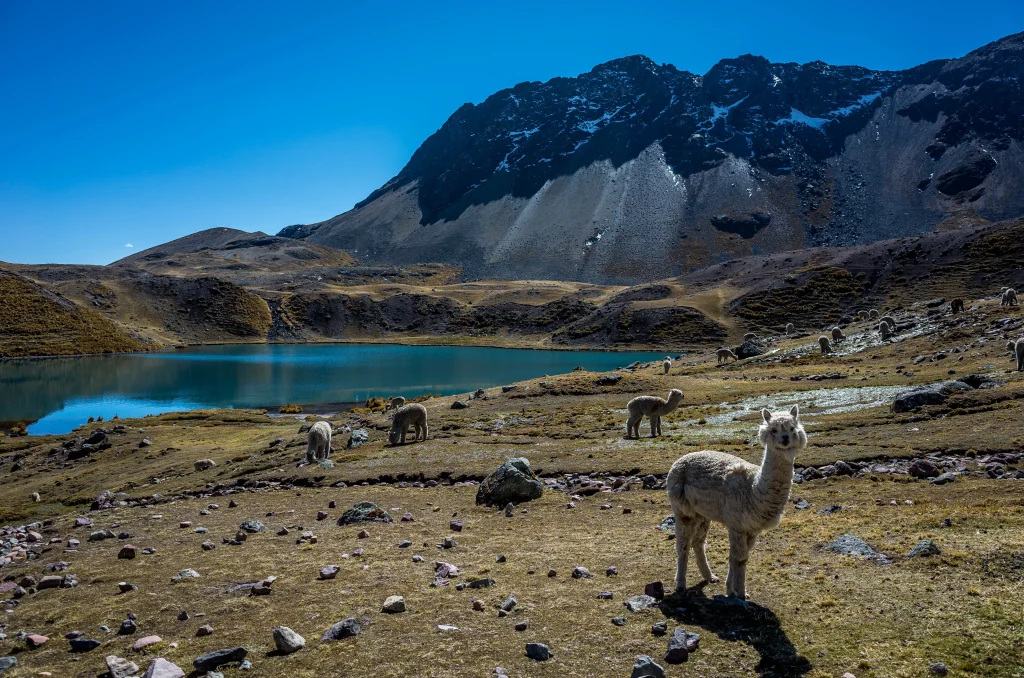
Ausangate is the main region for llama-supported treks near Cusco. On other routes, horses and mules usually carry the gear. On the Lares Trek, for example, you hike through herding communities where llamas and alpacas graze along the trail, and horses carry your duffel bag.
If you want to see llamas without camping, the Ausangate 7 Lakes day hike passes through the same herding country around Pacchanta, with a soak in the local hot springs at the end.
Frequently Asked Questions
Yes, on the 4-day llama trek, a llama caravan carries the camping gear and your duffel bag of up to 8 kg. On the 5-day trek, llamas and horses share the load. The 2-day trek and the 4-day trek to Machu Picchu use horses.
No. Adult llamas are pack animals and cannot carry an adult’s weight. On our llama trek, an emergency horse travels with the group for anyone who needs to ride.
Pack llamas generally carry about a quarter of their body weight, and less over long days in rough terrain. That is why the personal duffel allowance on a llama trek is limited to around 7 to 8 kg.
Llamas are native to the high Andes, their soft, padded feet cause less trail erosion than hooves, and hiring them supports local herding families. The trade-off is that they carry less, so a llama trek needs more animals.
It is challenging because of altitude, not technical terrain. Beginners with good cardio fitness and at least three days of acclimatization can manage it, but it is not ideal as a first multi-day trek.