
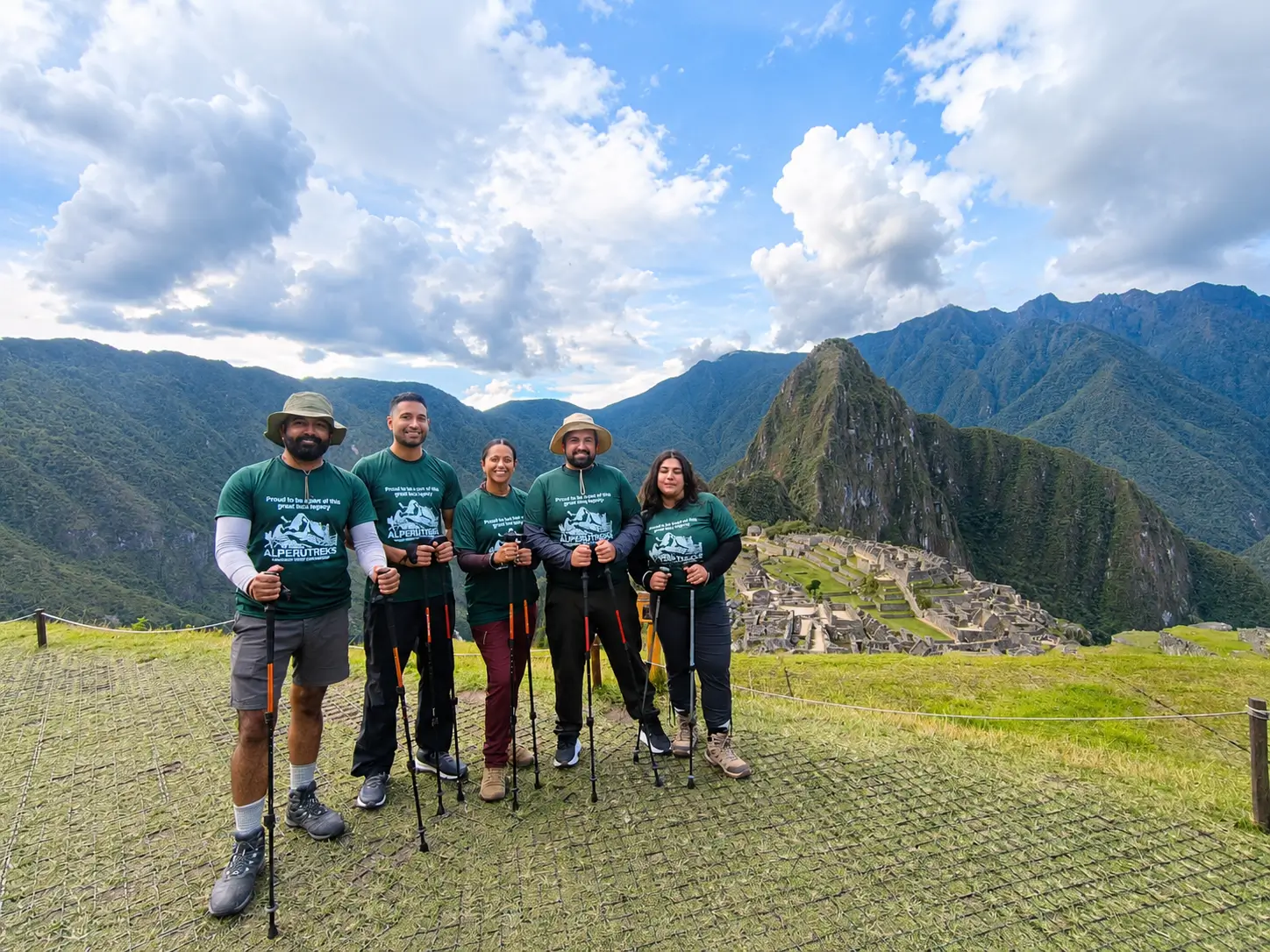

Choquequirao Trek 6 or 8 Days: Which Route to Machu Picchu?
Both routes visit Choquequirao and finish at Machu Picchu, but they get there in very different ways. The 6-day trek is an out-and-back hike to Choquequirao through the Apurímac Canyon, followed by a road transfer and train to Aguas Calientes. The 8-day trek is a full traverse on foot, crossing the Vilcabamba range over Yanama Pass (4,660 m) and walking all the way to Aguas Calientes. Choose the 6-day route if you have less time and want to avoid high altitude. Choose the 8-day route if you want an expedition and are ready for longer days.
Choquequirao 6 Days vs. 8 Days at a Glance
| 6-Day Trek | 8-Day Trek | |
|---|---|---|
| Route type | Out-and-back to Choquequirao, then road and train | One-way traverse on foot to Aguas Calientes |
| Trekking distance | About 50 km | About 105 to 110 km |
| Highest point | Choquequirao, about 3,050 m | Yanama Pass, 4,660 m |
| Lowest point | Playa Rosalina, about 1,550 m | Playa Rosalina, about 1,550 m |
| Nights | 4 camping, 1 hotel | 6 camping, 1 hotel |
| Longest hiking day | 6 to 8 hours | 8 to 10 hours |
| Max group size | 10 | 12 |
| Our difficulty rating | Challenging | Challenging to very challenging |
| From price (group) | $840 | $1,100 |
Prices are the “from” rates per person for shared groups at the time of writing. Private departures cost more for smaller groups.
What the Two Routes Have in Common
Both treks start at Capuliyoc (about 2,950 m), a lookout above the village of Cachora, roughly a three-hour drive from Cusco. From there, the trail drops more than 1,000 m into the Apurímac Canyon, crosses the river at Playa Rosalina, and climbs back up through Santa Rosa and Marampata to the Choquequirao archaeological site at about 3,050 m.
That first section, down and up the canyon, is the hardest part of either route for most hikers. The challenge is the steep descent and climb in a hot, exposed canyon, not altitude. Our Choquequirao trek difficulty guide covers this stretch in detail.
Both treks include a guided visit to Choquequirao, a night in a 3-star hotel in Aguas Calientes, a guided Circuit 2 tour of Machu Picchu, and the train back to Ollantaytambo with a private transfer to Cusco. Horses and muleteers carry the camping gear and your duffel bag of up to 7 kg.
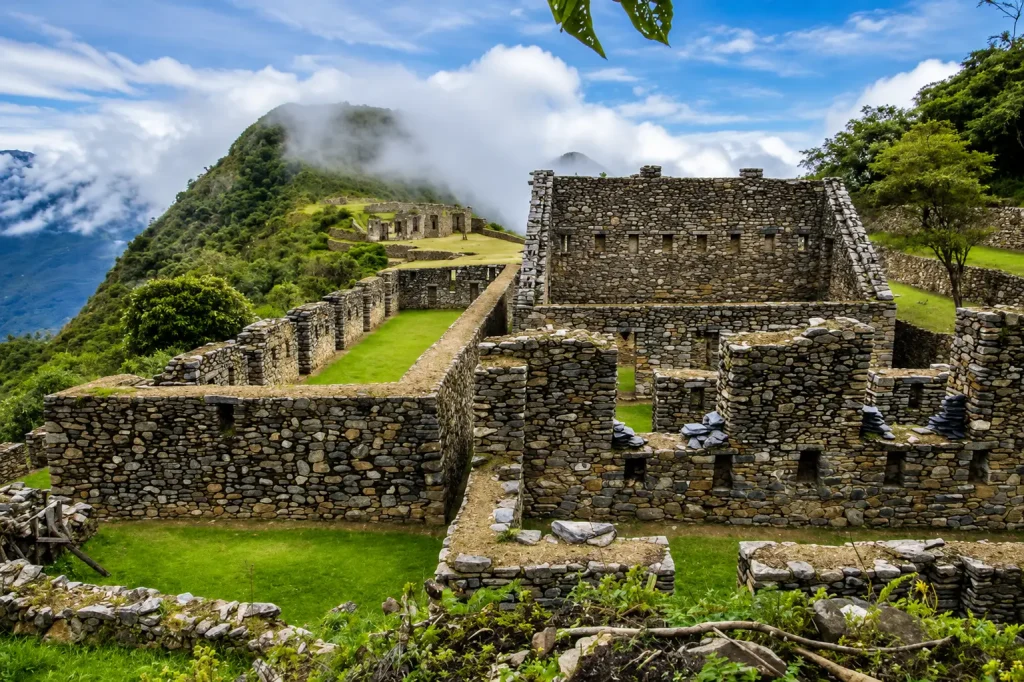
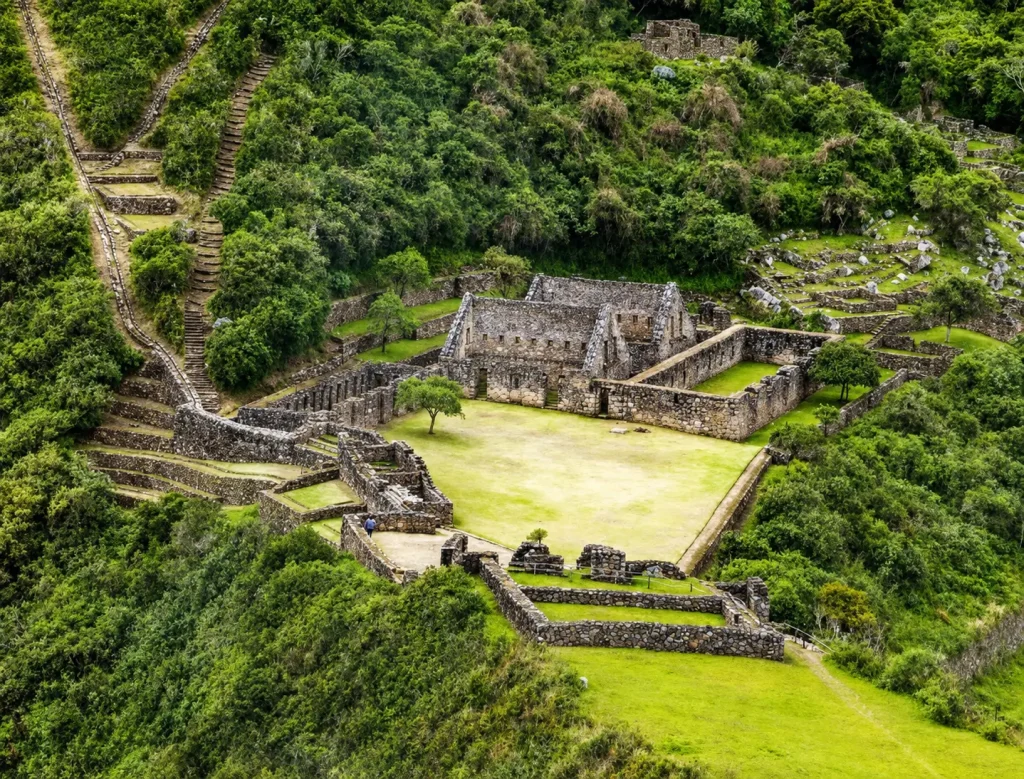
The 6-Day Route: Choquequirao, Then the Train
On the Choquequirao to Machu Picchu trek in 6 days, you hike in and out of the canyon and reach Machu Picchu by road and rail.
| Day | Route | Distance | Hiking time |
|---|---|---|---|
| 1 | Cusco – Capuliyoc – Chikiska | About 10 to 12 km | About 4 hours |
| 2 | Chikiska – Playa Rosalina – Santa Rosa – Marampata | About 10 km | 6 to 8 hours |
| 3 | Marampata – Choquequirao (guided visit) | About 6 km round trip | 6 to 7 hours with the visit |
| 4 | Descent to the river – Coca Masana | About 14 km | 5 to 6 hours |
| 5 | Climb to Capuliyoc – drive to Ollantaytambo – train to Aguas Calientes | About 7 km | About 3 hours |
| 6 | Machu Picchu tour – train and transfer to Cusco | — | 2 to 3 hours at the site |
Pros: It is shorter and cheaper, and the highest point is the citadel itself at about 3,050 m, so altitude is less of a concern. Day 3 gives you a full day at Choquequirao, and groups are capped at 10.
Cons: You cross the Apurímac Canyon twice, which means two big descents and two big climbs. Day 5 includes a drive of about four hours from Capuliyoc to Ollantaytambo before the train. You see less variety of landscape than on the traverse.


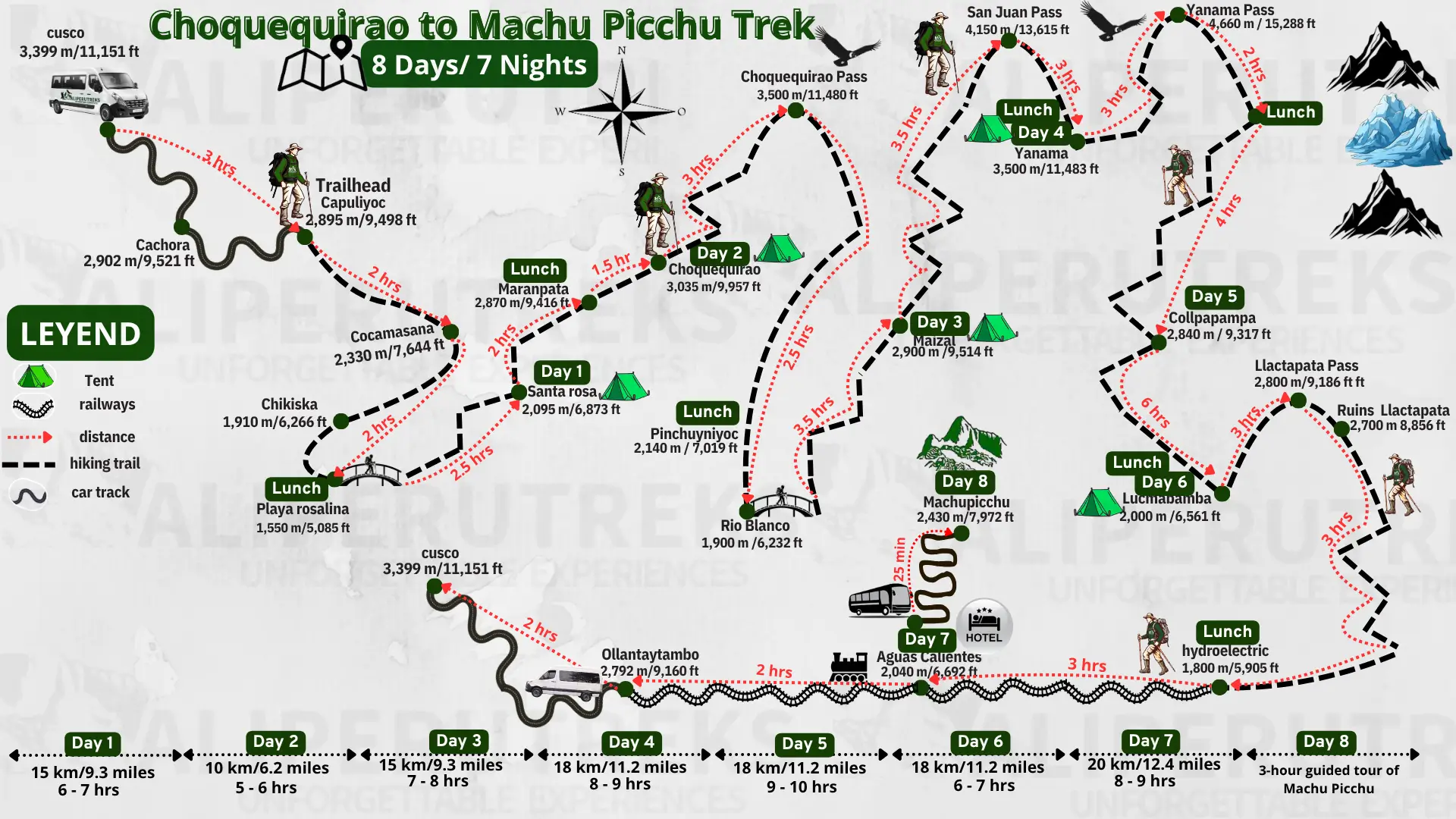
The 8-Day Route: Crossing the Vilcabamba Range on Foot
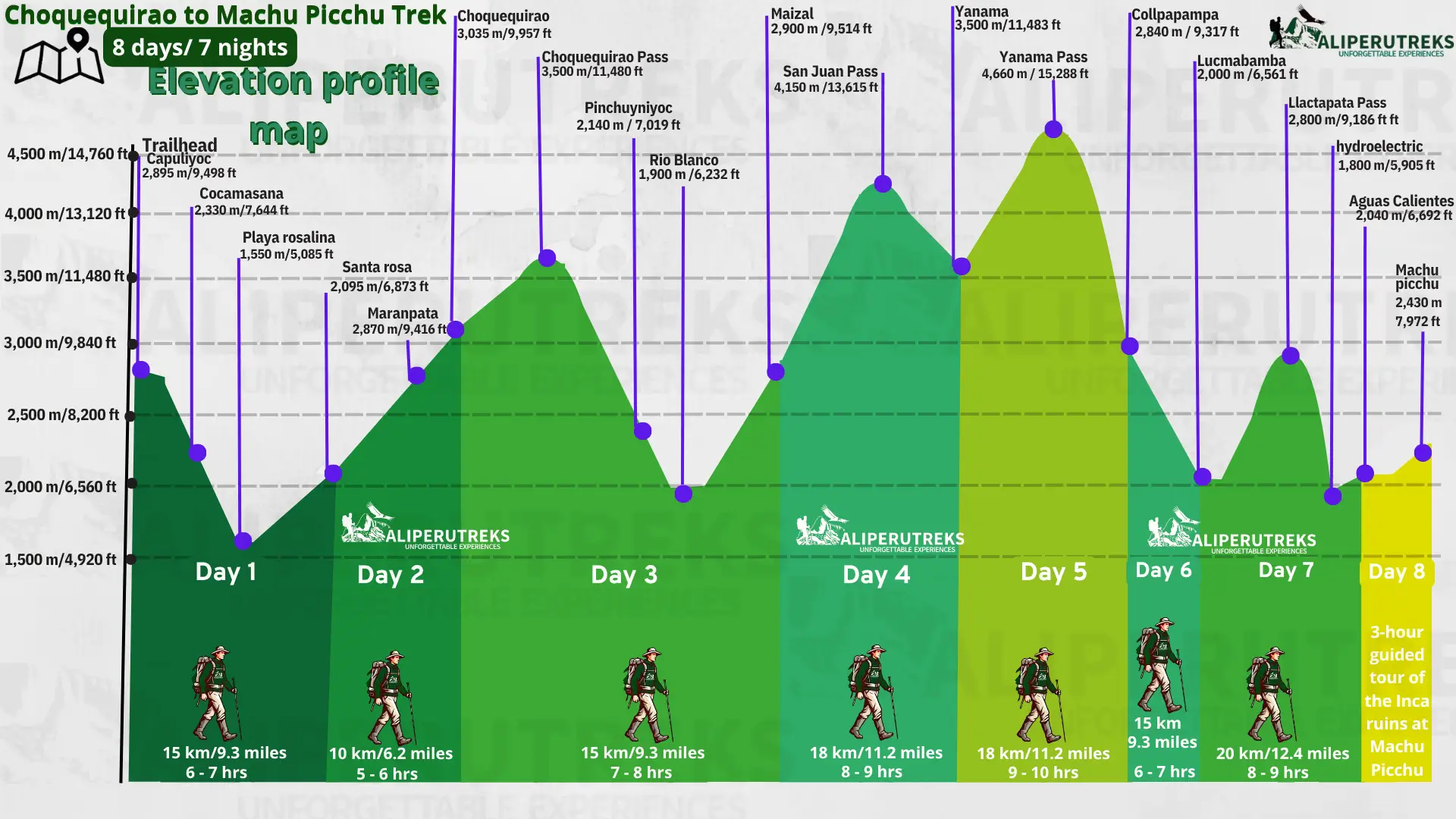
The 8-day Choquequirao trek to Machu Picchu continues past Choquequirao instead of turning back. It is one of the few routes that links the two Inca sites on foot.
| Day | Route | Camp | Hiking time |
|---|---|---|---|
| 1 | Capuliyoc – Playa Rosalina – Santa Rosa | Santa Rosa, about 2,200 m | 6 to 7 hours |
| 2 | Santa Rosa – Marampata – Choquequirao | Choquequirao, about 2,850 m | 6 to 7 hours |
| 3 | Choquequirao visit – Choquequirao Pass – Pinchiunuyoc – Río Blanco – Maizal | Maizal, about 2,900 to 3,000 m | About 8 hours after the visit |
| 4 | Maizal – Victoria Mines – San Juan Pass (4,150 m) – Yanama | Yanama, about 3,500 m | 6 to 8 hours |
| 5 | Yanama – Yanama Pass (4,660 m) – Totora – Colpapampa | Colpapampa, about 2,840 m | 8 to 10 hours |
| 6 | Colpapampa – Santa Teresa valley – Lucmabamba | Lucmabamba, about 2,000 m | 5 to 6 hours |
| 7 | Lucmabamba – Llactapata – Hydroelectric station – Aguas Calientes | Hotel, Aguas Calientes | 7 to 9 hours |
| 8 | Machu Picchu tour – train and transfer to Cusco | — | 2 to 3 hours at the site |
Pros: You walk the whole way, through canyon, cloud forest, high puna, and coffee country. Pinchiunuyoc and the old Victoria silver mines add history beyond Choquequirao itself. From Llactapata, on Day 7, you get a distant view of Machu Picchu before you arrive.
Cons: It is long and demanding. Day 3 includes a second steep descent and climb, Day 5 is 8 to 10 hours with a climb of about 1,150 m and a descent of about 1,800 m, and nights near Yanama are cold. It costs more, needs two extra days, and the remote middle section has very limited services if something goes wrong.
Which Choquequirao Route Should You Choose?
| Your situation | Better fit |
|---|---|
| Limited time, or Machu Picchu is the priority | 6-day trek |
| Worried about high altitude | 6-day trek |
| Want a full day at Choquequirao and fewer total hours of hiking | 6-day trek |
| Experienced multi-day hiker looking for an expedition | 8-day trek |
| Want to walk from Choquequirao to Machu Picchu without vehicles in between | 8-day trek |
| Want mountain scenery and passes, not just the canyon | 8-day trek |
If you are still deciding between Choquequirao and other routes, our guide to alternatives to the Inca Trail compares it with Salkantay, Lares, and others. For a route with high passes but shorter days, the Salkantay Trek is a common choice.
Altitude, Heat and Fitness
The 6-day trek tops out at about 3,050 m, lower than Cusco itself. The 8-day trek reaches 4,660 m at Yanama Pass on Day 5, after four days of hiking, which helps with acclimatization. On both, the canyon floor around Playa Rosalina sits at about 1,550 m and can be very hot in the middle of the day.
Spend at least two to three days in Cusco before either route. Our acclimatization guide explains how to use that time, and our altitude sickness guide covers symptoms to watch for on the 8-day route.
You need strong legs for steep descents as well as climbs. Trekking poles help on both routes. Our trekking gear list covers what we supply and what to bring.
When to Go, and Rainy-Season Closures
The dry season, roughly April or May to October, is the most reliable time for both routes. From November to March, trails can be slippery and landslides are a real risk. In recent years, Peru’s Ministry of Culture has closed Choquequirao during heavy rains, including from March 10 to April 17, 2025, and from February 1, 2026. If you plan to travel between December and March, check the current status before booking.
Machu Picchu Tickets on Both Routes
Both treks include a Circuit 2 ticket for Machu Picchu. Tickets are tied to a specific date and time and can sell out in high season, so book early. Our Machu Picchu circuits guide explains what each circuit covers. Huayna Picchu and Machu Picchu Mountain are optional extras, subject to availability.
Frequently Asked Questions
The 8-day trek is harder overall. It covers about twice the distance, crosses Yanama Pass at 4,660 m, and includes a day of 8 to 10 hours. The 6-day trek is still challenging because you descend into and climb out of the Apurímac Canyon twice.
No. On the 6-day trek, you hike to Choquequirao and back to Capuliyoc, then drive to Ollantaytambo and take the train to Aguas Calientes. On the 8-day trek, you walk to Aguas Calientes via Llactapata and the hydroelectric station.
Our shared group prices start at $840 per person for the 6-day trek and $1,100 per person for the 8-day trek. Both include Choquequirao and Machu Picchu entrance, the train, one hotel night, and a guided Machu Picchu tour.
On the 8-day trek, Yanama Pass at 4,660 m. On the 6-day trek, the highest point is the Choquequirao site at about 3,050 m.
Not always. Choquequirao has been closed during heavy rains in recent years, including in 2025 and 2026. Check the current status if you plan to travel between December and March.