
Inca Trail Elevation Gain: The Complete Altitude Guide
If you’re training for Peru’s most famous trek, one question probably keeps popping up in your research: how much Inca Trail elevation gain will you actually face, and is your body ready for it? It’s a fair question. This isn’t a flat nature walk — it’s a high-altitude Andean crossing that takes you from cloud forest to mountain passes above 13,800 feet.
The good news is that with the right preparation, thousands of hikers of all fitness levels complete this trek safely every year. In this guide, we’ll break down the Inca Trail elevation gain day by day, explain how altitude affects your hike, and share the insider tips our local guides use to help travelers reach Machu Picchu feeling strong, not wrecked.
What Is the Inca Trail Elevation Gain?
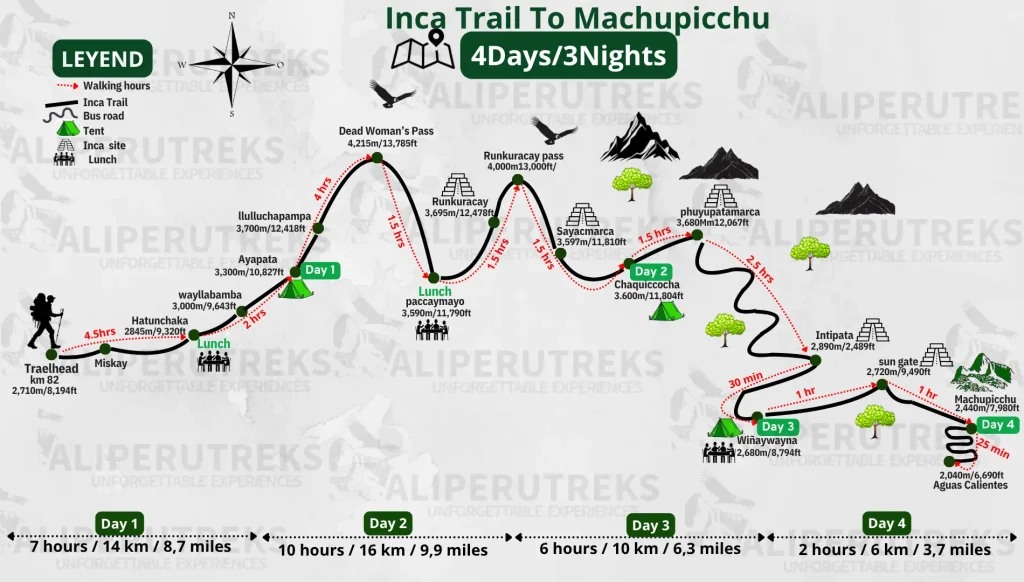
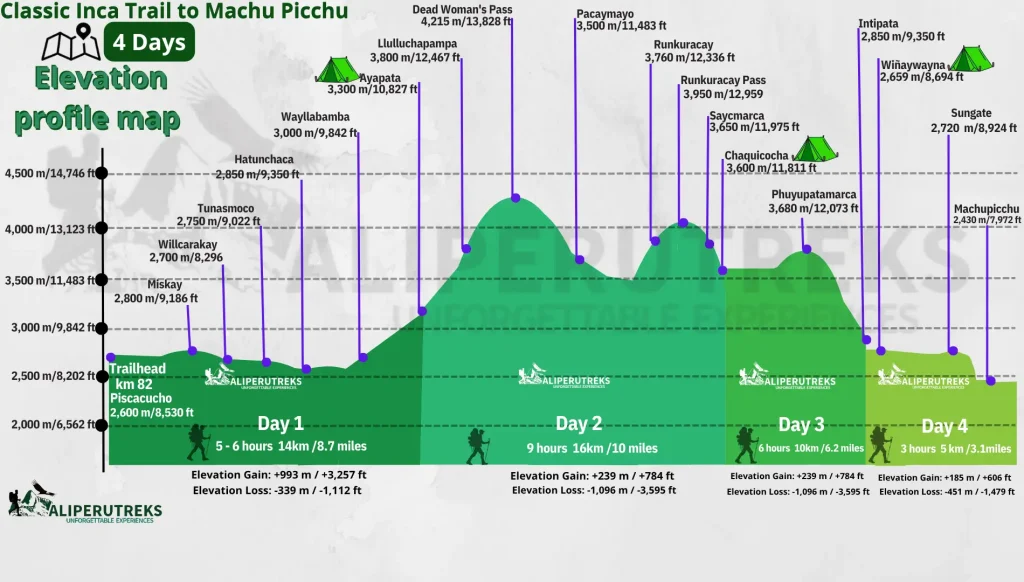
The classic 4-day Inca Trail starts around 8,858 feet (2,700 m) at Kilometer 82, near Ollantaytambo, and climbs to a maximum of 13,828 feet (4,215 m) at Dead Woman’s Pass — the highest point on Inca Trail routes.
Over the full trek, hikers gain and lose a combined total of roughly 9,800 feet (3,000 m) in elevation change across 26 miles (42 km) of trail. That’s the equivalent of climbing and descending a mid-sized mountain multiple times in just four days.
For American travelers used to hiking at sea level or moderate elevations, this is the single biggest factor that makes the Inca Trail feel harder than its distance suggests.
Inca Trail Elevation Profile: Day by Day
Understanding the Inca Trail elevation profile helps you know exactly when the toughest climbs happen — and when you can relax and enjoy the scenery.
Day 1: Km 82 to Wayllabamba
- Starting altitude: 8,858 ft (2,700 m)
- Ending altitude: 9,842 ft (3,000 m)
- Terrain: Gentle, rolling hills through the Sacred Valley
This day is considered a warm-up. Most trekkers handle it comfortably, since the elevation change is mild compared to what’s ahead.
Day 2: Wayllabamba to Pacaymayo (via Dead Woman’s Pass)
- Highest point: 13,828 ft (4,215 m) — the Dead Woman’s Pass elevation
- Elevation gain: Around 3,900 ft (1,190 m) of climbing
- Terrain: Steep stone steps, thinning air, exposed ridgeline
This is the hardest day on the trek, both physically and mentally. It’s also the day most travelers ask about when researching Inca Trail difficulty.
Day 3: Pacaymayo to Wiñay Wayna
- Second pass: Runkurakay Pass at 13,123 ft (4,000 m)
- Third pass: Phuyupatamarca at 12,073 ft (3,680 m)
- Terrain: Two more passes, but shorter climbs than Day 2
Many hikers say this is their favorite day — you pass through cloud forest, Inca ruins, and dramatic mountain views without the same intensity as Day 2.
Day 4: Wiñay Wayna to Machu Picchu
- Machu Picchu elevation: 7,972 ft (2,430 m)
- Terrain: Mostly descent, with a short final climb to the Sun Gate (Inti Punku)
You’ll notice the air feels noticeably thicker and warmer as you descend into the subtropical zone surrounding Machu Picchu.
The Highest Point on the Inca Trail: Dead Woman’s Pass
Known locally as Warmiwañusca, Dead Woman’s Pass earns its name from the mountain silhouette resembling a woman lying on her back — not from any danger.
Still, at 13,828 feet, this is where altitude hits hardest. The climb typically takes 3 to 4 hours, and temperatures can swing from warm sun to biting wind within minutes.
What to expect at the top:
- Strong winds and cooler temperatures, even in dry season
- A short but rewarding rest point with panoramic Andean views
- Noticeably harder breathing, even for fit hikers
Inca Trail Altitude Sickness: Symptoms & Prevention
Inca Trail altitude sickness (also called Acute Mountain Sickness, or AMS) is the most common health concern on this trek — more common than injury or fatigue.
Common symptoms include:
- Headache
- Nausea or loss of appetite
- Dizziness or fatigue beyond normal tiredness
- Difficulty sleeping
How to prevent it:
- Spend 2–3 nights in Cusco (11,152 ft / 3,400 m) before starting the trek
- Stay hydrated — drink more water than you think you need
- Avoid alcohol and limit caffeine the first 48 hours after arrival
- Eat light, carb-friendly meals to help your body adjust
- Consider coca tea, a traditional Andean remedy widely used to ease altitude symptoms
- Ask your doctor about altitude sickness medication (such as acetazolamide) before your trip
If symptoms become severe — confusion, trouble breathing at rest, or extreme dizziness — descending to a lower altitude is the safest immediate action.
Inca Trail Difficulty: How Elevation Shapes the Challenge
When people ask about Inca Trail difficulty, altitude — not distance — is usually the real challenge. At 13,000+ feet, the air contains roughly 40% less oxygen than at sea level, so even fit hikers often feel more breathless than expected.
Difficulty level: Moderate to Challenging Best suited for: Hikers with average-to-good fitness who properly acclimatize beforehand
You don’t need to be an elite athlete, but you do need lungs and legs that have had time to adjust to the Andes.
Machu Picchu Elevation vs. Cusco: Why It Matters
Here’s something that surprises a lot of travelers: Machu Picchu’s elevation (7,972 ft / 2,430 m) is actually lower than Cusco’s (11,152 ft / 3,400 m).
This means the trek’s final stretch is a relief for your body, not a strain. It also explains why Machu Picchu’s climate feels warmer, greener, and more humid than the high-altitude city of Cusco.
Climate and Best Season for the Inca Trail
| Factor | Details |
|---|---|
| Dry season | May–September (most popular, best visibility) |
| Wet season | November–March (trail closed every February for maintenance) |
| Daytime temps | 60–70°F (15–21°C) |
| Nighttime temps at camp | 32–41°F (0–5°C), colder near Dead Woman’s Pass |
For the clearest mountain views and driest trails, June through August is considered peak season — though it’s also the busiest, so permits should be booked months in advance.
What to Pack for the Elevation Change
- Layered clothing (base layer, fleece, waterproof outer shell)
- A warm sleeping bag rated for near-freezing temperatures
- Trekking poles to protect your knees on steep descents
- Sunscreen and UV sunglasses — sun exposure is intense at altitude
- A basic first-aid kit with altitude medication and pain relievers
- Reusable water bottle or hydration bladder
Expert Tips From a Local Peru Trekking Agency
These are the details our guides share with travelers on the trail — the kind of practical, on-the-ground advice you won’t always find in general travel blogs.
- Acclimatize in the Sacred Valley, not just Cusco. Towns like Ollantaytambo sit lower than Cusco, making your first nights easier on the body before the trek begins.
- Walk “Inca pace” — slow and steady. Locals climb at a deliberately slow rhythm to conserve oxygen; rushing uphill is the #1 cause of altitude fatigue.
- Start Day 2 as early as possible. Crossing Dead Woman’s Pass in the morning avoids afternoon winds and gives you more buffer time.
- Hire a licensed guide and porters. Beyond safety, local guides can recognize early altitude sickness symptoms that travelers often dismiss as normal tiredness.
- Book your permit early. Only 500 trekking permits are issued per day (including staff), and they sell out months ahead for dry season dates.
Ready to Take On the Inca Trail?
The Inca Trail elevation gain is real, but it’s also one of the most rewarding physical challenges a traveler can take on — and with proper acclimatization, the right gear, and an experienced local team, it’s absolutely achievable.
At Ali Peru Treks, our guides know every switchback, campsite, and shift in the weather along this route. We handle the logistics, permits, and safety planning so you can focus on the experience of walking an ancient Inca road to Machu Picchu.
Ready to plan your trek? Contact Ali Peru Treks today to check availability and get a personalized Inca Trail package quote.