

How Hard Is the Ausangate Trek? Altitude, Cold and Training
The Ausangate trek is challenging because of altitude and cold, not technical terrain. On our multi-day routes you hike 4 to 8 hours a day above 4,000 m (13,100 ft), cross passes close to 5,000 m, and sleep at camps where nights often drop to -10°C (14°F). No climbing skills are needed, but you do need a solid cardio base, at least three days of acclimatization in Cusco, and warm gear.
How Hard Is the Ausangate Trek? A Quick Answer
We rate the 4-day llama trek, the 4-day trek to Machu Picchu, and the 5-day trek to Machu Picchu as challenging. The 2-day trek is rated moderate to challenging. The trails are not technical, but the combination of sustained altitude, cold nights, and long days is what makes them hard.
| Trek | Our rating | Longest hiking day | Camping nights |
|---|---|---|---|
| Ausangate Trek 2 Days | Moderate to challenging | 6 to 7 hours (Day 1) | 1 |
| Ausangate Llama Trek 4 Days | Challenging | 7 to 8 hours (Day 3) | 3 |
| Ausangate Trek 4 Days to Machu Picchu | Challenging | 7 to 8 hours (Day 2) | 2 |
| Ausangate Trek 5 Days to Machu Picchu | Challenging | 7 to 8 hours (Day 3) | 3 |
Our trek pages say the 4-day and 5-day routes are not ideal as a first multi-day trek. The terrain includes loose scree and steep ascents and descents, so good boots and trekking poles help.
Altitude: The Main Challenge
Cusco sits at 3,399 m (11,152 ft), and every Ausangate route climbs well above it. These are the main high points:
| Location | Approximate altitude |
|---|---|
| Upis camp | 4,400 m (14,435 ft) |
| Surineqocha Lake camp (2-day trek) | 4,800 m (15,750 ft) |
| Arapa Pass | 4,850 m (15,912 ft) |
| Apuchata Pass | 4,900 m (16,076 ft) |
| Warmisaya Pass | 4,980 m (16,340 ft) |
| Rainbow Mountain (Vinicunca) | 5,036 m (16,522 ft) |
Mild headaches, nausea, dizziness, and loss of appetite are common in the first days at altitude. Our altitude sickness guide lists the symptoms to watch for, including persistent headache, fatigue, and shortness of breath with light exertion.
Why the Route Order Matters
The routes handle altitude differently, and that affects how hard they feel:
- 5-day trek and 4-day llama trek: You climb gradually through Upis, Arapa Pass, and Warmisaya Pass, and reach Rainbow Mountain on Day 4, after three nights in the mountains.
- 4-day trek to Machu Picchu: You reach Rainbow Mountain (5,036 m) on Day 1, then cross Pucacocha Pass (4,900 m) on Day 2. It is shorter, but the highest point comes early.
- 2-day trek: You sleep at about 4,800 m on your only night, after a 4:00 AM start from Cusco. It is the quickest route and has the least time to adjust.
If altitude worries you, the 5-day route or the llama trek is the more forgiving choice.
How Many Days to Acclimatize
Our tour pages require at least three days in Cusco (about 3,400 m) or the Sacred Valley before you start, and say four days is better. Our acclimatization guide also recommends three full days minimum before a Rainbow Mountain route. Keep the first days easy, then try a moderate day hike to see how you feel.
Drink about 3 liters of water a day, eat light meals, and limit alcohol before the trek. Coca tea is served at camp. If you are thinking about acetazolamide (Diamox), ask your doctor before you travel.
Guides check oxygen saturation and heart rate daily with a pulse oximeter and carry emergency oxygen. If symptoms are mild, the group slows down. If they become serious, the group descends and the evacuation plan begins.
Cold: What to Expect Day and Night
Sunny days can reach about 15°C (60°F), with strong UV at altitude. Nights are the real test. At the high camps, temperatures often fall to around -10°C (14°F) and can be colder.
Here is what our Ausangate weather guide reports at key points. These are operator estimates, not measured data.
| Location | Altitude | Typical conditions |
|---|---|---|
| Pacchanta trailhead | 4,300 m | Early mornings near 0°C |
| Upis camp | 4,400 m | Cold, clear nights; frost common |
| Anantapata camp | 4,700 to 4,750 m | Coldest camp; nights often near -10°C |
| Pucacocha Pass | 4,900 m | Can stay freezing at midday if windy or overcast |
Snow is possible above about 4,800 m, especially from November to April, and light snow can fall even in the dry season.
Season Trade-Offs
- Dry season (May to October): Clearer skies and better views of the glacier and Rainbow Mountain, but the coldest nights, especially in June and July.
- Rainy season (November to March): Milder nights, but more rain, mud, snow at the passes, and cloud that can hide the views. We advise against January and February for a first multi-day trek.
Gear That Makes a Difference
- A sleeping bag rated to at least -15°C (5°F). You can rent one from us for $20.
- A thermal base layer, fleece, warm down jacket, wool hat, and waterproof gloves.
- Waterproof, broken-in boots with ankle support, and trekking poles.
- A 25 to 30 L daypack for your water (2.5 to 3 liters), rain jacket, and a warm mid-layer.
Llamas or horses carry your duffel bag, up to 7 or 8 kg depending on the trek, including a rented sleeping bag. Our trekking equipment checklist has the full list.
The Hardest Days on the Route
On the 5-day and llama routes, Day 3 is the hardest. You hike about 12 km in 7 to 8 hours, crossing Apuchata Pass, dropping to the Ananta valley, and then climbing to Warmisaya Pass (about 4,980 m) before camping near 4,850 m.
On the 4-day trek to Machu Picchu, Day 1 (6 to 7 hours, ending near 4,750 m after Rainbow Mountain) and Day 2 (7 to 8 hours over Pucacocha Pass) are the demanding ones. Day 3 is a shorter descent to the Pacchanta hot springs, followed by a drive and train to Aguas Calientes.
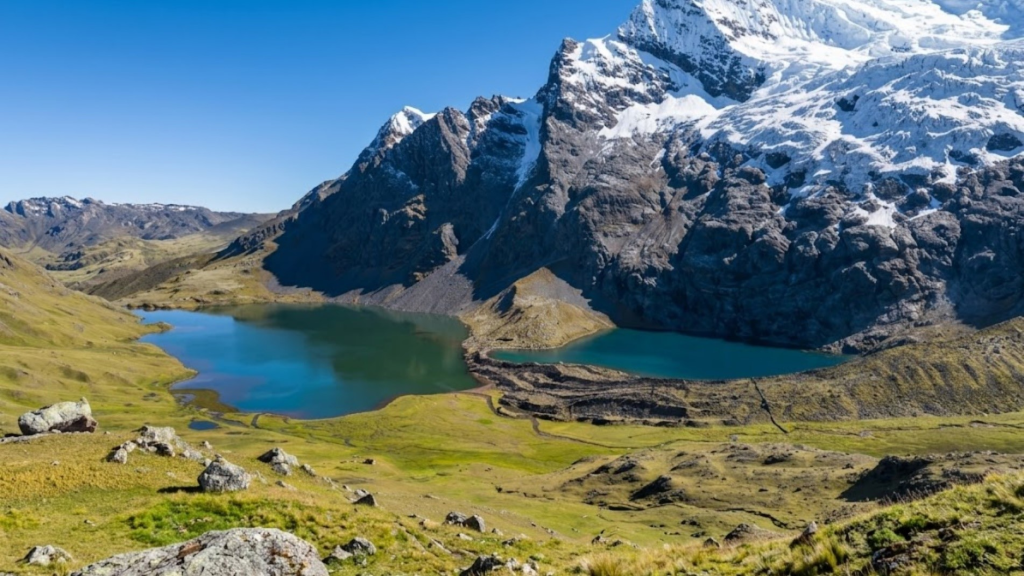
How to Train for the Ausangate Trek
Our trek pages recommend at least four to six weeks of cardio training, such as hill walking, stair climbing, hiking, or swimming. They do not give a weekly plan, so treat that as a minimum. Because you will hike 4 to 8 hours a day for several days, more preparation helps.
A reasonable approach is to:
- Build a cardio base with regular sessions several times a week.
- Practice long days on hills or stairs, working up to several hours at a steady pace.
- Hike with a loaded daypack that matches what you will carry: water, layers, and a rain jacket.
- Break in your boots before you leave home.
Fitness helps, but it does not guarantee you will avoid altitude sickness. Fit hikers can still struggle at 4,500 m, which is why acclimatization matters as much as training.
Is Ausangate Right for Your First Multi-Day Trek?
For most first-timers, probably not. Our trek pages suggest starting with the Salkantay Trek or the Lares Trek before Ausangate. For a sense of how the Lares route compares, see our guide to how hard the Lares trek is.
If you want to test your reaction to altitude first, the Ausangate 7 Lakes day hike reaches 4,850 m over about 10 km, and the Rainbow Mountain and Red Valley day tour covers a 3 to 4 hour hike. Both are shorter, but they still require acclimatization.
Age and health limits depend on the trek. The llama trek has a minimum age of 14, and travelers over 60 need a doctor’s letter confirming they are fit for high-altitude trekking. Anyone with a heart or lung condition should consult a physician before booking.
If You Can’t Keep Up
You are not stranded if the pace gets too hard. A member of staff stays with anyone who needs to go slower, and an emergency horse is available. Groups carry radios, emergency oxygen, and a first aid kit, and lead guides carry satellite phones.
Travel insurance should cover trekking above 5,000 m and emergency evacuation, including helicopter evacuation. Our 5-day and llama trek pages list it as required.
Frequently Asked Questions
It is not ideal as a first multi-day trek. The difficulty comes from altitude, cold, and 4 to 8 hours of daily hiking, not technical terrain. Beginners with strong cardio fitness and three or more days of acclimatization can manage it, but the Salkantay or Lares trek is usually a gentler starting point.
Daytime temperatures can reach about 15°C (60°F), but nights at the high camps often fall to around -10°C (14°F) and can be colder. Bring a sleeping bag rated to at least -15°C (5°F), or rent one for $20.
Spend at least three days in Cusco or the Sacred Valley before you start. Four days is better. Keep the first days easy and add a gentle day hike before the trek.
Both are rated challenging, but Ausangate keeps you higher for longer. Its passes reach about 4,850 to 4,980 m and Rainbow Mountain is about 5,036 m, while the Salkantay Pass is about 4,630 m. Salkantay also descends to lower camps, such as Chaullay at about 2,900 m.
Our trek pages recommend at least four to six weeks of cardio training, such as hill walking, stair climbing, or swimming. Longer is better, and it helps to practice with a loaded daypack on hills.